Zafferano di Sardegna PDO, Sardinian saffron
Price on request Discover
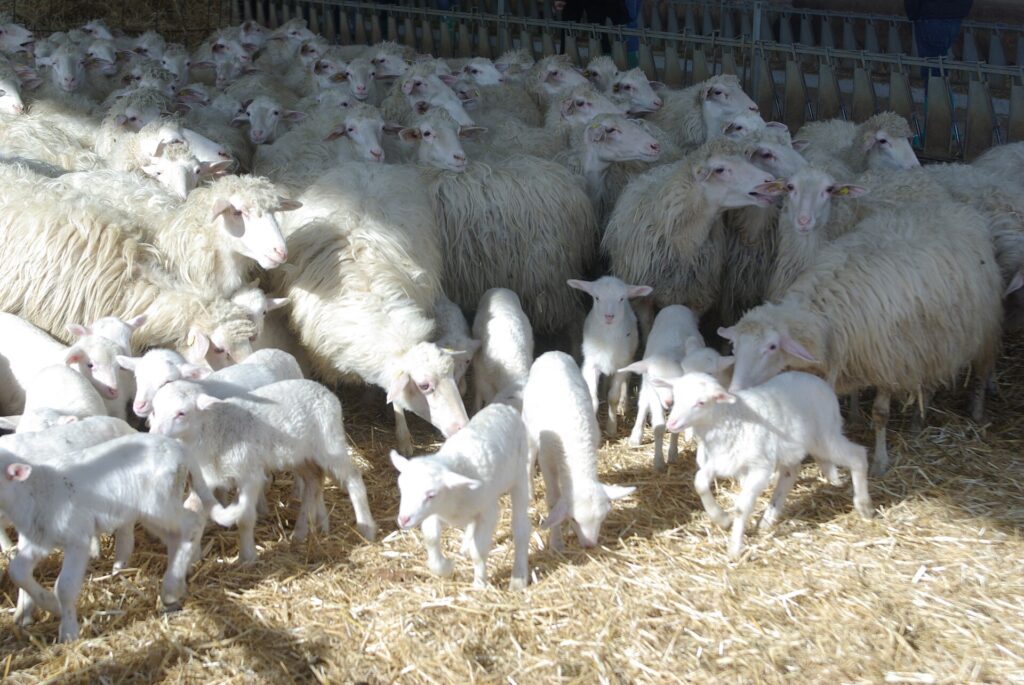
In Sardinia, lamb is far more than a main course: it is the fruit of a pastoral way of life that has shaped the island’s countryside for thousands of years. Agnello di Sardegna PGI (Sardinian lamb) is born, raised and slaughtered on the island, kept alongside its mother and largely pasture-fed. Its meat is pale, tender and lean, with a distinctive, full flavour – the lamb Sardinian families bring to the table on feast days.
Sheep farming in Sardinia goes back to pre-Nuragic times, around 3000 BC, and the island still counts roughly three million sheep. For generations meat was a festive food while bread was the everyday staple, so lamb meant celebration – above all at Christmas and Easter, still the peak seasons today. The lambs belong to the same pastoral cycle as the island’s famous pecorino cheeses: Sardinian sheep are mainly dairy animals.
The lambs come from ewes of the Sarda breed, reared outdoors or semi-outdoors and housed only in winter. The specification defines three types by weight:
Light and cutting lambs also graze natural pasture and eat fresh or dried forage and cereals, and may come from crosses between Sarda ewes and meat-breed rams such as Île de France or Berrichon du Cher. The meat is light pink with firm white fat.
Sardinian lamb has been an EU Protected Geographical Indication since January 2001, with the specification updated in later years. The production area is the whole of Sardinia. The protection consortium, Con.T.A.S., is based in Macomer. PGI lambs wear green ear tags, and the fresh meat, sold whole or in cuts, carries a label showing the consortium and PGI logos, the type, the cut and the slaughterhouse.
Lamb is roasted, or stewed with seasonal vegetables, and also used in sauces and soups. In Sardinian homes you’ll find it roasted in the oven with potatoes or on the spit over a wood fire, stewed with artichokes or wild fennel, and in traditional offal dishes such as cordula. The consortium suggests red wines that are not too full-bodied – a Monica di Sardegna or a young Cannonau work beautifully.
Because it is produced all over the island, you can find it everywhere: in butcher’s shops displaying the PGI label, markets, agriturismi and trattorias from Gallura to Sulcis. The most authentic experience is a farm lunch with roast lamb, often paired with a visit to the sheepfold and a cheese-making demonstration.
Weight and diet: milk-fed lamb (4.5–8.5 kg) drinks only its mother’s milk and is the most delicate; light and cutting lambs also graze and eat forage, giving a fuller flavour.
Look for the label with the PGI and consortium logos, the type and the cut. A generic “Sardinian lamb” without the logo is not the PGI product.
Do you run activities in Sardinia?
Get your own page on Ajò Sardegna: free until 31 May 2027, no commissions, with customer requests coming straight to you. If you like, we prepare the page for you.
Hi!
Can I help you?
Lia is an AI-based virtual assistant and can make mistakes: always check with the operator. Please don't share personal data. Privacy