Casu marzu, Sardinia’s maggot cheese
Price on request Discover
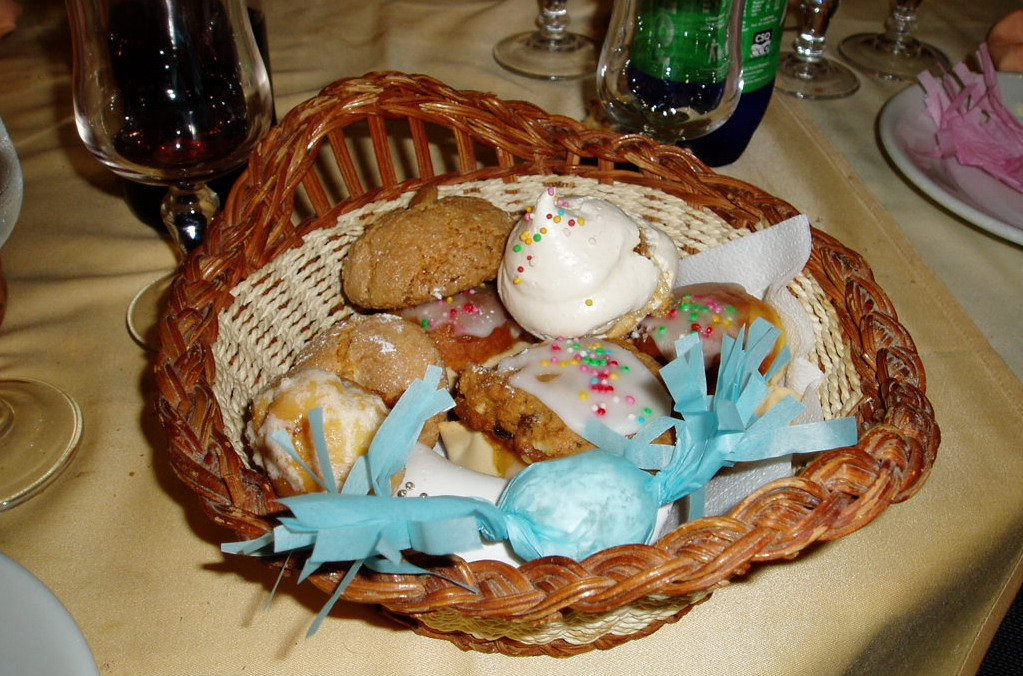
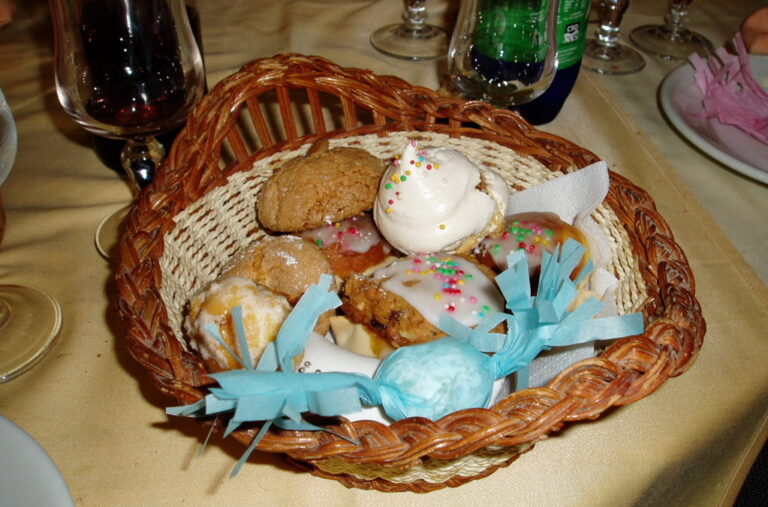
Golden and slightly cracked on the outside, soft and fragrant inside, usually crowned with a whole almond: Sardinian amaretti – amarettus in the south of the island, amarettos elsewhere – are the little sweets that appear whenever Sardinians have something to celebrate. Forget the dry, crunchy amaretti sold across Italy: these are soft almond cookies made with very few ingredients, and every family and every bakery has its own proportions.
Almonds have been at the heart of Sardinian pastry-making for centuries, from gueffus to gattò, and amaretti are one of their best-loved expressions. Sardegna Turismo, the island’s official tourism portal, describes them as golden, crunchy sweets that are a must at every celebration. For generations they were baked at home for the big family occasions – weddings, christenings, village feasts – and served to guests on large trays. Almonds were once peeled and ground by hand, and the women of the family and the neighbourhood would gather for days before a feast to prepare the sweets together.
The base is simple: almonds, sugar and egg white, often scented with lemon zest. The secret lies in the balance between sweet and bitter almonds: the bitter ones, used in a smaller share, give the cookie its name and its unmistakable aftertaste. The official regional record suggests about 70% sweet and 30% bitter almonds, but proportions vary widely, and many home recipes use far fewer bitter almonds.
The almonds are ground finely with the sugar, then lemon zest and egg whites are added. The dough is shaped into small balls or ovals, often rolled in sugar and topped with an almond, then baked briefly – just enough for a golden crust and a soft heart. According to Sardegna Turismo, in northern Sardinia a little sapa (cooked grape must) is added to the dough. Some bakers swap the almond on top for a candied cherry. And the traditional recipe contains no flour.
Sardinian amaretti have no PDO or PGI, but the Autonomous Region of Sardinia lists them as a Traditional Agri-food Product (PAT) in Italy’s national register. The record names them “Amaretto” (also amarettos de mendula, almond amaretti) and gives the whole regional territory as the production area.
Eat them on their own after a meal or with an espresso. They pair beautifully with one of the island’s dessert wines – a Malvasia, a Moscato or a Vernaccia di Oristano – or with a small glass of mirto liqueur. On festive trays they sit alongside other almond sweets such as gueffus, bianchini and papassinos. Kept in a tin, they stay good for several days.
As a product of the whole island, amaretti can be found in pastry shops and traditional sweet workshops all over Sardinia, from the cities to small inland villages. Look for artisan workshops that still use Sardinian almonds and village recipes; many sell directly to visitors. Village feasts and markets are another good place to try them, and some local businesses offer hands-on Sardinian pastry workshops where you can learn to make amaretti with people who have baked them all their lives.
Dry amaretti are crunchy all the way through. Sardinian ones have a thin crust and a soft, almost marzipan-like centre, and are made without flour.
The traditional recipe has no flour, so its ingredients are naturally gluten-free. People with coeliac disease should still choose certified products or ask the baker about cross-contamination.
Do you run activities in Sardinia?
Get your own page on Ajò Sardegna: free until 31 May 2027, no commissions, with customer requests coming straight to you. If you like, we prepare the page for you.
Hi!
Can I help you?
Lia is an AI-based virtual assistant and can make mistakes: always check with the operator. Please don't share personal data. Privacy