Sartizza Sausage Festival in Siligo 2026
Price on request Discover
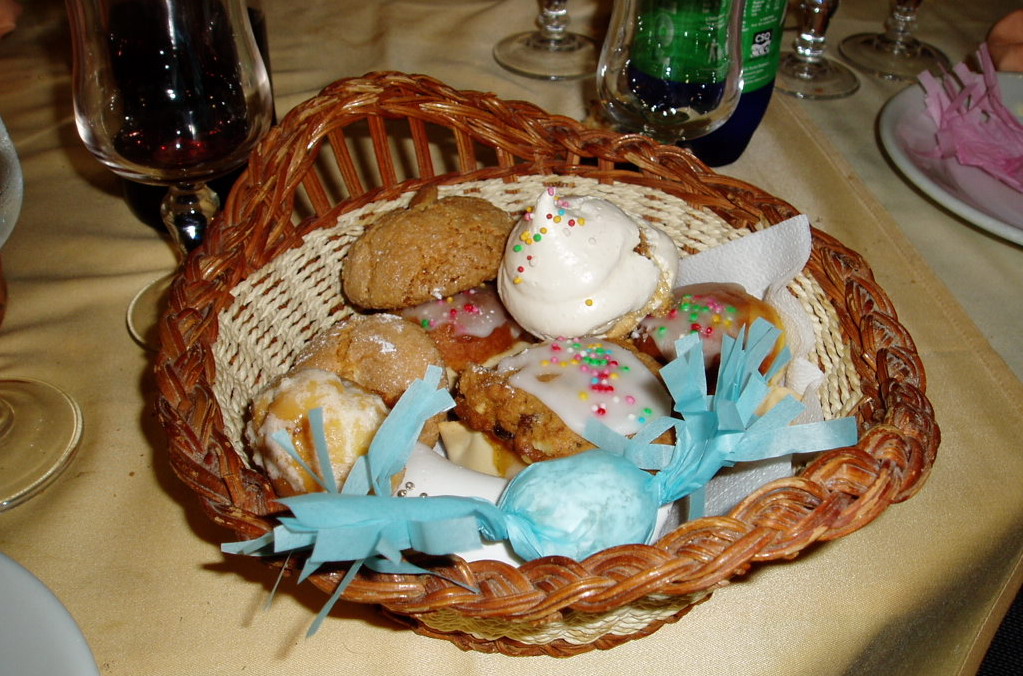
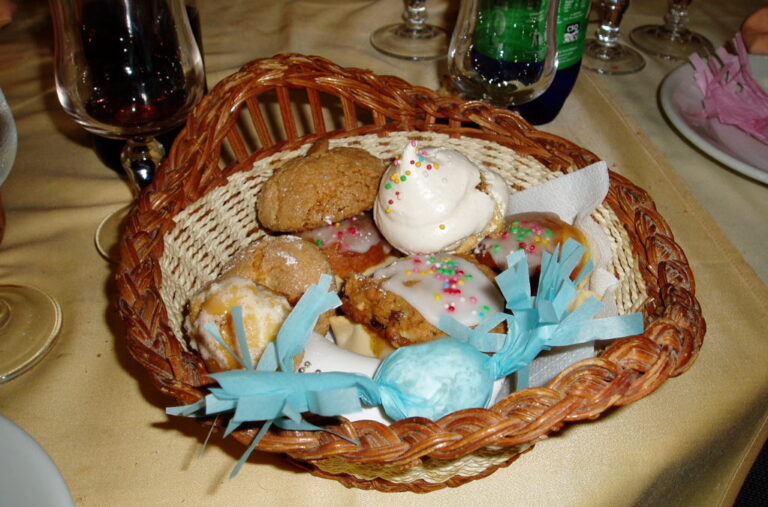
Anyone who grew up in Sardinia spots them instantly: little white balls, each wrapped in brightly coloured tissue paper, twisted at both ends like a sweet and often cut into a fringe. These are gueffus, the almond treats that turn up on every tray at weddings, christenings and confirmations. Unwrap one and you’ll understand why: a crunchy coat of sugar outside, soft lemon-scented almond paste inside.
Gueffus belong to Sardinia’s big family of almond-and-sugar sweets, alongside amaretti and gattò. They are a celebration sweet: families used to make them at home in the days before a ceremony, in large batches, because they keep well and were meant to be shared with relatives, neighbours and guests. The official Sardinian tourism board still lists them among the sweets no island celebration can do without.
Where does the name come from? Nobody knows for sure. The most popular story links it to the medieval Guelphs, the faction loyal to the Pope (the regional register also records the spellings guelfos and guelfus); other theories point to Spanish or to old words for a skein of thread. None is documented, so take it as a good story for the table rather than a fact.
The Sardinian Region’s official description is simple: a small round sweet made of granulated sugar, almonds and lemon. No flour, no eggs, no butter. Sweet almonds are finely ground and cooked in a pan with sugar and a little liquid until the paste comes away from the sides. Lemon zest goes in, the mixture cools, and it is rolled by hand into walnut-sized balls, tossed in sugar, left to dry and wrapped. Gueffus never see the oven, which is what gives them their moist, dense texture.
Every family and bakery adds its own touch: orange-blossom water is common, some add a few bitter almonds, others a dash of anise liqueur or mirto, and some pastry shops now make chocolate-coated versions. Around Ozieri, in the Logudoro, very similar almond sweets go by the name sospiri, while in the Barbagia di Belvì there is a hazelnut-and-honey cousin called bucconettes.
Gueffus have no PDO or PGI, but they are on Sardinia’s official list of Traditional Agri-food Products (PAT). The listing confirms a production method unchanged for over 25 years and names the whole of Sardinia as the production area.
Unwrap and eat in one or two bites, at the end of a meal with other almond sweets or alongside an espresso. For a fully Sardinian pairing, try a sweet island wine such as Malvasia or Moscato, or a small glass of mirto. Keep them in a tin, somewhere cool and dry: the paper isn’t just decoration, it keeps them soft.
Because they are made all over the island, you’ll find gueffus in artisan bakeries and pastry shops from Cagliari to Sassari, from the Oristano area to the Logudoro, especially during wedding season and holidays. Many producers print their name on the paper, a handy way to spot a favourite bakery. If you’d like to see how they’re made, look out for traditional pastry workshops run by local bakeries and associations: rolling and wrapping gueffus yourself beats any written recipe.
The traditional recipe uses only almonds, sugar and lemon, so no flour. If you have coeliac disease or allergies, always check the label or ask the producer about cross-contamination. They contain nuts, of course.
Amaretti are made with egg white and baked, with a cracked surface. Gueffus contain no egg white and are cooked in a pan, giving a soft, compact ball rolled in sugar and wrapped.
Do you run activities in Sardinia?
Get your own page on Ajò Sardegna: free until 31 May 2027, no commissions, with customer requests coming straight to you. If you like, we prepare the page for you.
Hi!
Can I help you?
Lia is an AI-based virtual assistant and can make mistakes: always check with the operator. Please don't share personal data. Privacy