Autunno in Barbagia in Mamoiada 2026: Cortes Apertas
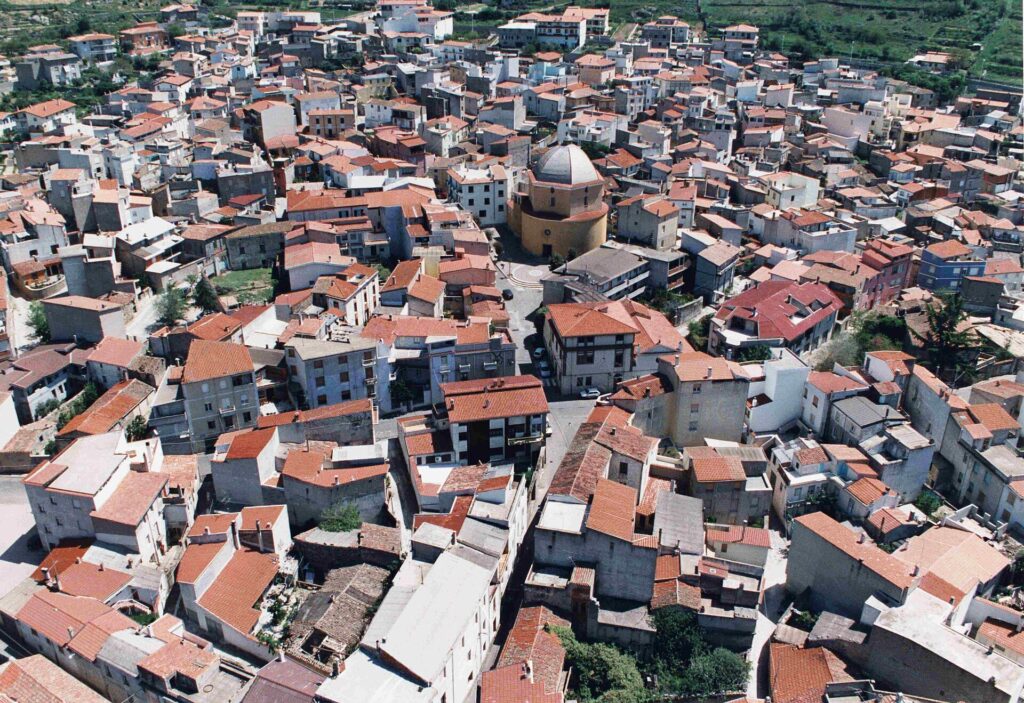
From Friday 6 to Sunday 8 November 2026, Mamoiada takes part in Autunno in Barbagia (“Autumn in Barbagia”) with its Cortes Apertas: for three days, courtyards, old homes and wine cellars open their doors to visitors. It is a perfect chance to get to know the village of the Mamuthones and Issohadores masks, and one of the best areas in Sardinia for Cannonau wine, tasting it alongside traditional bread and sweets.
History and meaning: Mamoiada, masks and wine
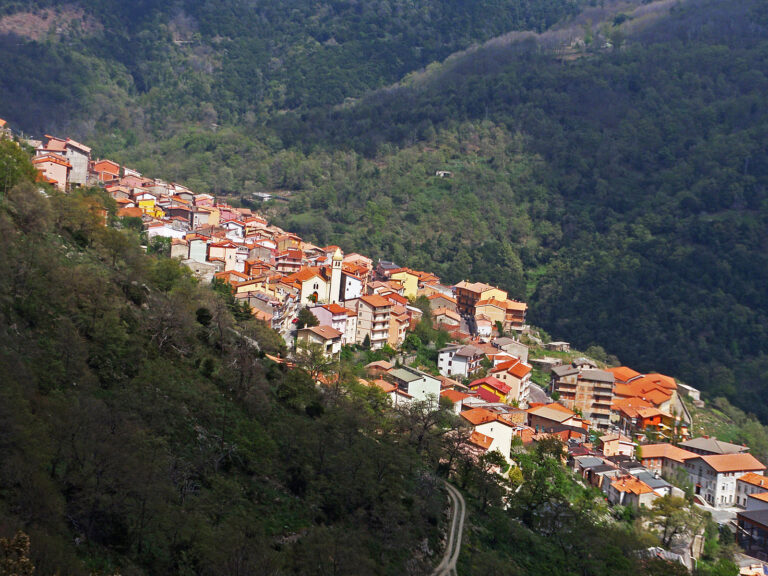
Mamoiada lies at about 640 metres in the Barbagia di Ollolai, roughly 15 kilometres from Nuoro, in the mountainous heart of the island. People have lived here since the Neolithic, and in Roman times the road linking Olbia and Cagliari ran through the area – the name of the Su Hastru quarter still echoes the Roman castrum. In the Middle Ages the village belonged to the Giudicato of Arborea, one of Sardinia’s four medieval kingdoms, before passing to Aragonese and Spanish feudal lords until feudalism ended in 1839.
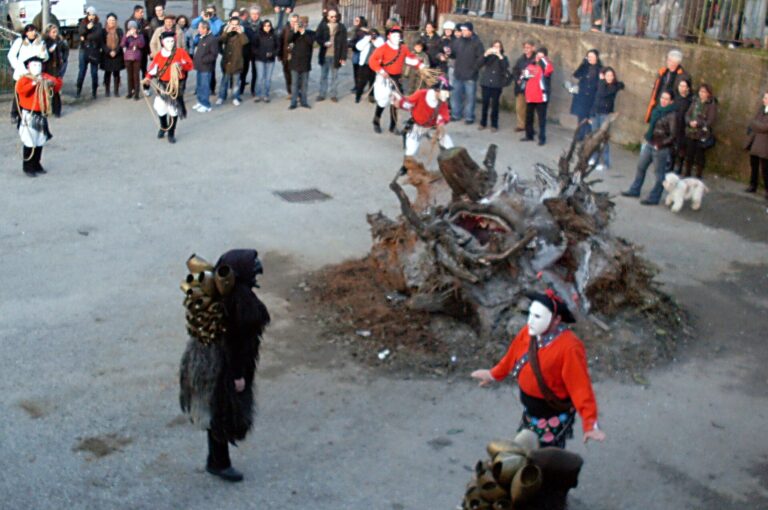
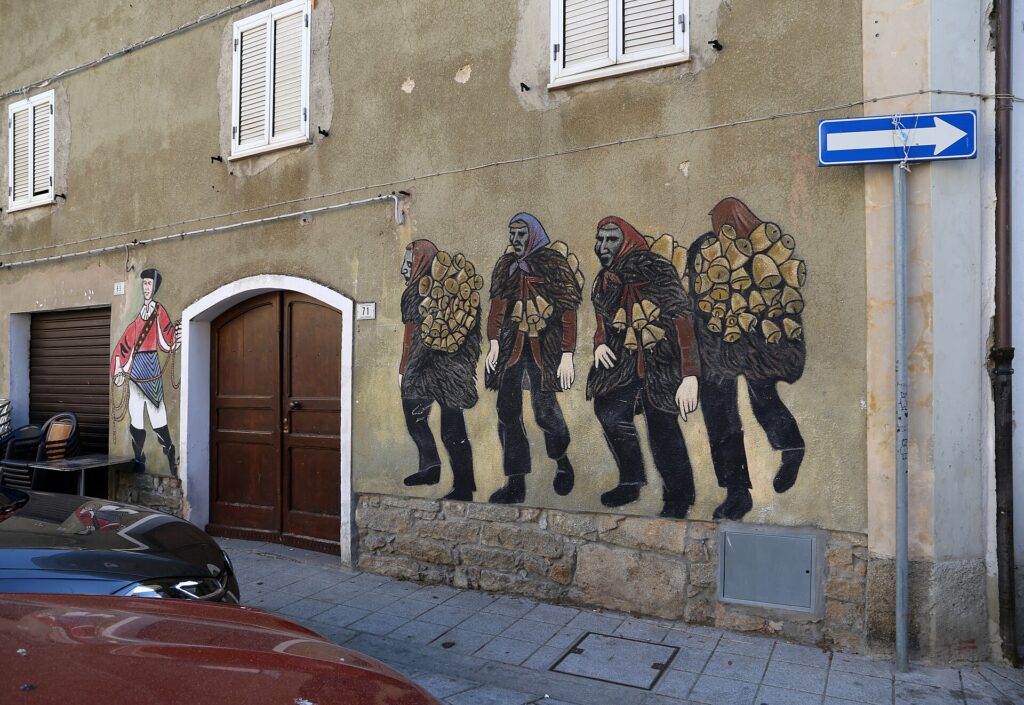
Above all, though, Mamoiada is famous for its masks. The Mamuthones wear a black carved wooden mask, dark sheepskins and a heavy load of cowbells on their backs, which they ring with slow, rhythmic steps. The Issohadores, in red jackets and sometimes a white mask, lead them and throw the soha, a rope used to “catch” someone in the crowd – a gesture said to bring good luck. The ritual is ancient, linked to the cycle of the seasons and good fortune. The masks come out for the first time each year on 17 January, at the bonfires of Sant’Antonio Abate, and again at Carnival.
In recent decades Mamoiada has also become a wine village: dozens of small, often family-run cellars grow mainly Cannonau on hillside vineyards, and wine now sits alongside sheep farming at the heart of the local economy.
What to see and do at Cortes Apertas in Mamoiada
Over the weekend the old centre turns into a trail of open courtyards and cellars. Expect:
- Cannonau tastings in cellars and courtyards, often with the winemakers themselves.
- The Museum of Mediterranean Masks (Museo delle Maschere Mediterranee), open for the occasion, telling the story of the Mamuthones and Issohadores alongside other traditional masks from around the Mediterranean.
- Craftspeople at work, including the carvers who make the wooden masks.
- Bread, sweets and cheese made in family homes, with demonstrations of traditional methods.
Good to know: the Mamuthones’ ritual parade takes place in January and at Carnival. If a performance is planned during Cortes Apertas 2026 it will be in the official programme, but don’t count on it. Check the Comune di Mamoiada and the Autunno in Barbagia channels for times.
Food and wine to try and take home
The star is Cannonau, Sardinia’s best-known red grape, which here gives full-bodied, aromatic wines. Many cellars sell directly, so it’s the easiest way to bring home a few bottles and meet the people who make them.
Alongside the wine you’ll find pane carasau, the paper-thin crispy flatbread of the Barbagia, pecorino sheep’s cheeses, cured meats, and traditional sweets made with almonds, walnuts, honey and sapa (cooked grape must), such as papassinos. Craft workshops also sell wooden masks and small objects inspired by the Mamuthones – a souvenir that really tells the story of the village.
Things to see in and around Mamoiada
As well as the mask museum, the village has the Museo della Cultura e del Lavoro, devoted to farming and shepherding life, and the MATer archaeological museum. The area’s most famous find is Sa Perda Pintà, also called the Boeli stele: a granite standing stone more than two and a half metres tall, carved with concentric circles and cup marks, discovered in 1997 in a vegetable garden.
Among the churches, look for Nostra Signora di Loreto with its frescoed dome. About 5 kilometres out of town, on the road to Gavoi, stands the country sanctuary of Santi Cosma e Damiano. The countryside also hides domus de janas (Neolithic rock-cut tombs), standing stones and a few nuraghi, the Bronze Age stone towers found all over Sardinia.
Mamoiada makes a great base for the Barbagia: Orgosolo, famous for its political murals, is just a few kilometres away, as are Oliena and the Supramonte mountains. Nuoro, with its museums dedicated to Grazia Deledda and to Sardinian dress, is a short drive, while Fonni and Lake Gusana near Gavoi lie to the south.
How to get to Mamoiada and practical tips
A car is the easiest option. From Olbia airport and ferry port allow about 1 and a half hours; from Alghero and Cagliari airports about 2 hours, mostly on the SS131 highway and then the road to Nuoro. From Nuoro it’s around 20 minutes.
- What to wear: November days can be cool and wet. Comfortable shoes, a jacket and a small umbrella.
- When to arrive: morning or early afternoon. Saturday and Sunday are busiest; Friday is calmer.
- Wine and driving: if you’re tasting, agree on a designated driver – Italian drink-driving limits are strict.
- Cash: handy for small purchases and tastings.
- Where to stay: the village has B&Bs and holiday homes; Nuoro, a few minutes away, offers more choice.
FAQ: Cortes Apertas Mamoiada 2026
When is Autunno in Barbagia in Mamoiada in 2026?
Mamoiada’s weekend runs from Friday 6 to Sunday 8 November 2026.
Will I see the Mamuthones during Cortes Apertas?
Their traditional appearances are on 17 January for Sant’Antonio Abate and during Carnival. During Cortes Apertas you can always visit the Museum of Mediterranean Masks; any performances will be listed in the official programme.
What to see in Mamoiada in one day?
The mask museum, the old centre and its courtyards, one or two Cannonau cellars, the Sa Perda Pintà stele and, if you have time, the sanctuary of Santi Cosma e Damiano.
How far is Mamoiada from Nuoro?
About 15 kilometres, around 20 minutes by car.
Source: www.portalesardegna.com