Feast of Sant’Efisio in Cagliari 2027
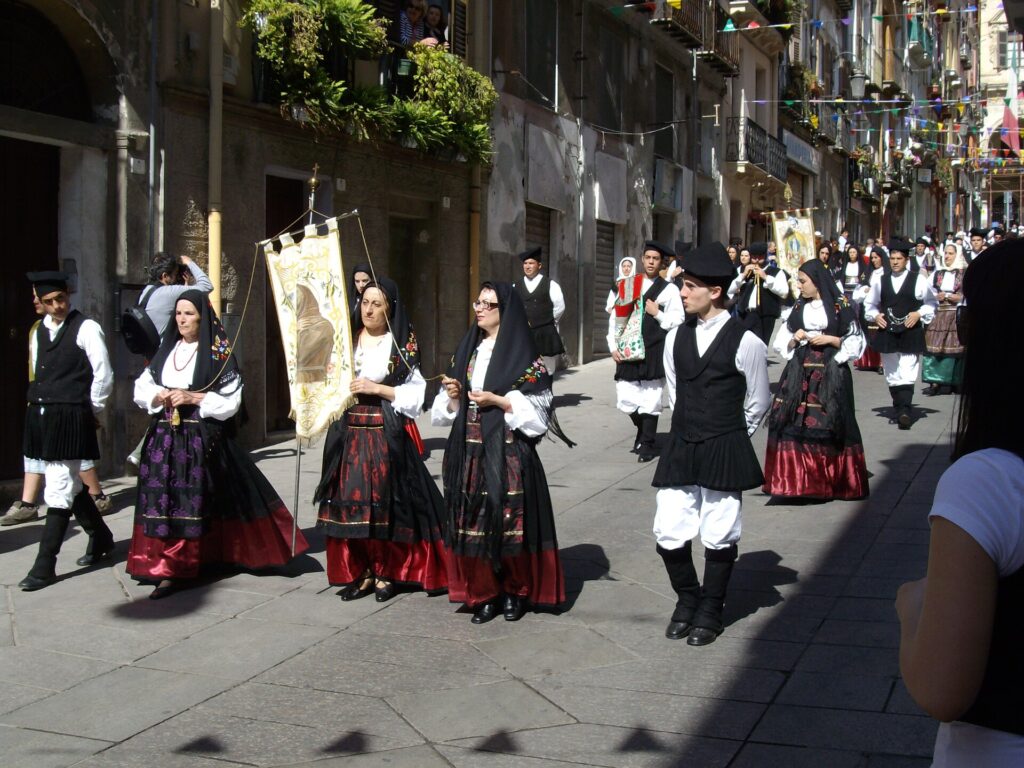
The Feast of Sant’Efisio is Cagliari’s oldest and most heartfelt vow: every year a huge procession escorts the martyr saint from the Stampace district of the Sardinian capital to Nora, on the coast near Pula, and back again. In 2027 the festival runs from 1 to 4 May, with the grand parade through the city on 1 May and the saint’s return to Cagliari on the evening of 4 May. It’s one of the largest religious and folk events in the Mediterranean.
Who was Sant’Efisio? The history of the 1652 vow
According to tradition, Efisio (Saint Ephysius) was a Roman officer from Asia Minor, sent to Sardinia under Emperor Diocletian. After converting to Christianity he refused to renounce his faith and was martyred at Nora in 303 AD. Before he died, he is said to have promised to protect Cagliari and its people.
In 1652 plague devastated the city. On 11 July that year the town council made a vow: if Cagliari was spared, it would carry the saint’s statue every year on a pilgrimage to the place of his martyrdom. The promise has been kept ever since without a break – even during the 1943 bombings and the pandemic years, when the saint travelled in a reduced form. This unbroken chain of more than three and a half centuries is why the people of Cagliari hold the festival so dear; it is now a candidate for UNESCO intangible heritage status.
A key figure is the Alter Nos, the city’s representative who walks beside the saint for all four days in tailcoat and top hat, on behalf of the mayor.
What to see at the Sant’Efisio procession 2027
The 1 May parade in Cagliari
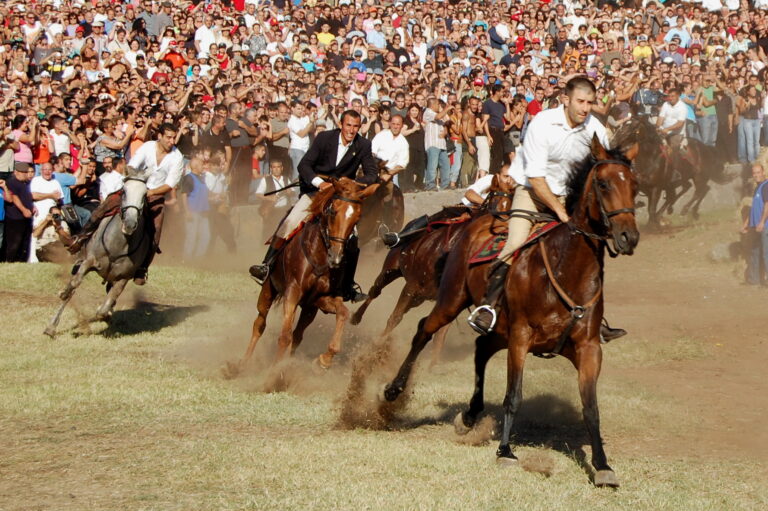
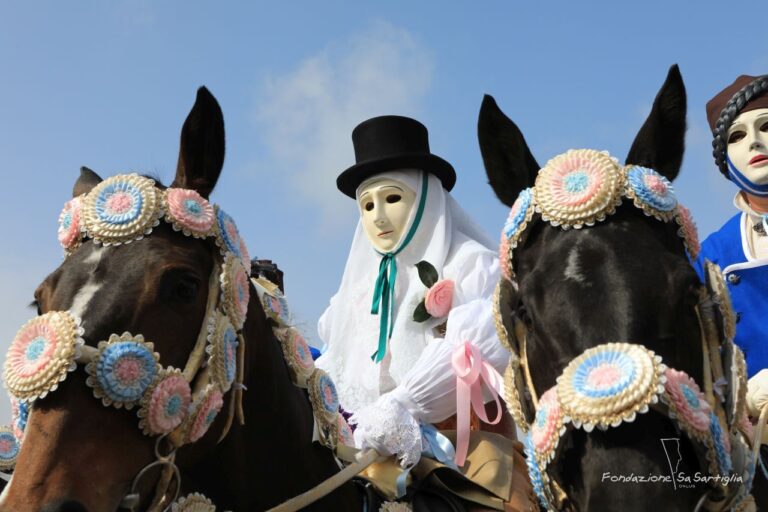
On the morning of 1 May Cagliari bursts into colour. The procession is led by the traccas, farm carts decorated with flowers, rugs and tools of rural life, pulled by oxen with ornamented horns. Then come thousands of people in traditional costume from all over Sardinia, each wearing the embroidery, jewellery and colours of their own village – the best chance you’ll ever have to see the island’s dress traditions side by side. Next come the riders, including the Campidanesi, the Miliziani (militia) and the Guardiania, escorting the saint.
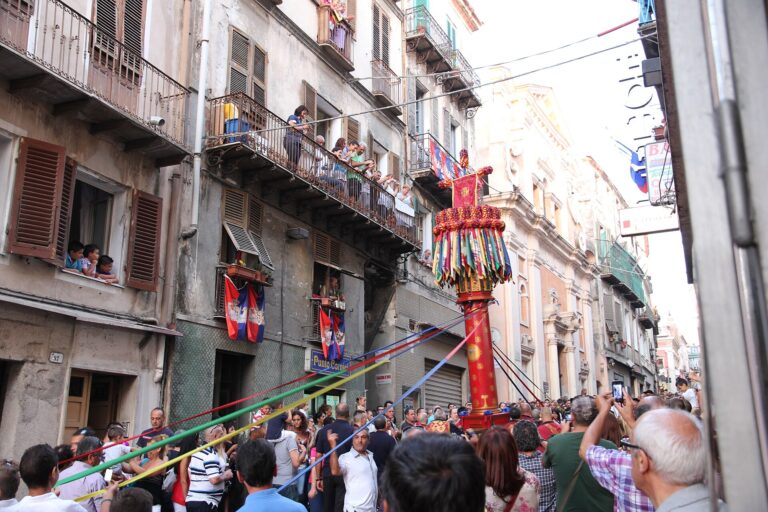
At noon the statue of Efisio leaves the church of Sant’Efisio in Stampace on a gilded carriage drawn by oxen, accompanied by the haunting sound of the launeddas – an ancient Sardinian triple reed pipe – and devotional songs. Flower petals are scattered on the road ahead: this is sa ramadura. The most moving moment comes on via Roma, in front of the city hall, when ships’ sirens in the harbour and church bells salute the saint.
The pilgrimage to Nora
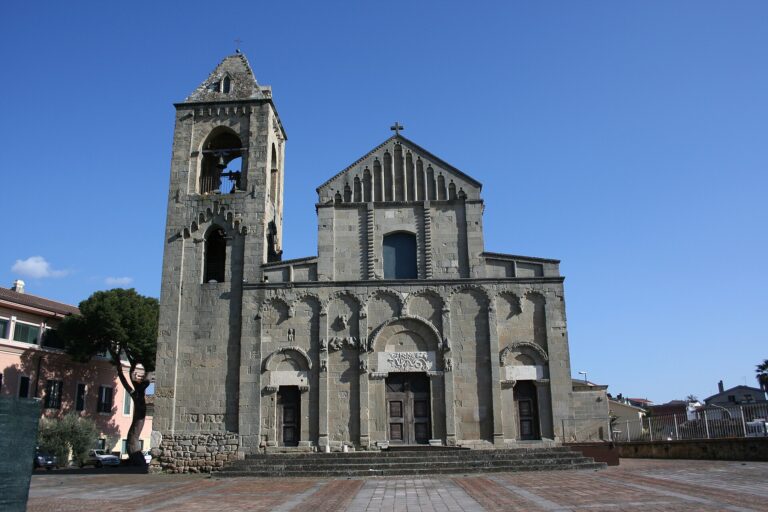
After leaving the city, Efisio continues south on foot and by cart, through Giorgino and the towns of Capoterra, Sarroch, Villa San Pietro and Pula, welcomed by locals at every stop. On 3 May he reaches Nora, where a small Romanesque church dedicated to him stands near the site of his martyrdom, and the procession goes down to the beach. On 4 May the return journey begins, and late that evening Cagliari welcomes the saint home with a candle-lit procession and the farewell a atrus annus – “to many more years”.
What to eat in Cagliari
Cagliari is a seaside city and its food shows it. Try fregola con arselle, small toasted semolina pasta cooked with local clams, and burrida, a marinated fish dish typical of the city. Across the island you’ll find culurgiones, pasta parcels filled with potato, pecorino and mint, and seadas, fried pastries filled with cheese and drizzled with honey. To take home: pecorino, bottarga (cured fish roe), nougat and a bottle of local Nuragus, Monica or Cannonau wine.
Things to do in Cagliari and nearby
Use the festival days to explore the city. The hilltop Castello district holds the cathedral, the Pisan towers of the Elephant and San Pancrazio and the Bastione di Saint Remy terrace, with views across the gulf. In the Cittadella dei Musei, the National Archaeological Museum displays Nuragic bronzes and some of the Giants of Mont’e Prama statues. In Stampace, beneath the church of Sant’Efisio, you can visit the crypt where tradition says the saint was imprisoned.
For nature, head to the long Poetto beach, the Sella del Diavolo headland and the Molentargius park, home to pink flamingos. South along the pilgrimage route, don’t miss the Nora archaeological site, a Phoenician, Punic and Roman town by the sea, with a theatre and mosaics.
How to get there and practical tips
Cagliari-Elmas airport is just a few kilometres from the centre and connected to the main station by train. From Alghero it’s about two and a half hours by car, and from Olbia about three hours. Cagliari’s port has ferry links with mainland Italy.
- Grandstands: seats along via Roma and in the other official areas for the 1 May parade are ticketed and should be booked ahead. Without a ticket you can watch from the pavements if you arrive very early.
- Timing: the saint leaves at noon, but costume groups parade from the morning. Check the City of Cagliari website for the detailed schedule of the pilgrimage.
- Accommodation: the city is packed on 1 May, so book well in advance.
- Respect: this is a religious procession; people fall silent as the saint passes, and you should never cut through the parade.
Sant’Efisio FAQ
When is the Feast of Sant’Efisio 2027?
From 1 to 4 May 2027. The big parade through Cagliari is on 1 May; the saint returns to the city on the evening of 4 May.
Where does the procession start?
From the church of Sant’Efisio in the Stampace district of Cagliari, which the saint leaves at noon on 1 May.
Why does the procession go to Nora?
Because tradition says the saint was martyred at Nora in 303 AD. The pilgrimage fulfils the vow the city made during the plague of 1652.