Autunno in Barbagia in Ollolai 2026: Cortes Apertas
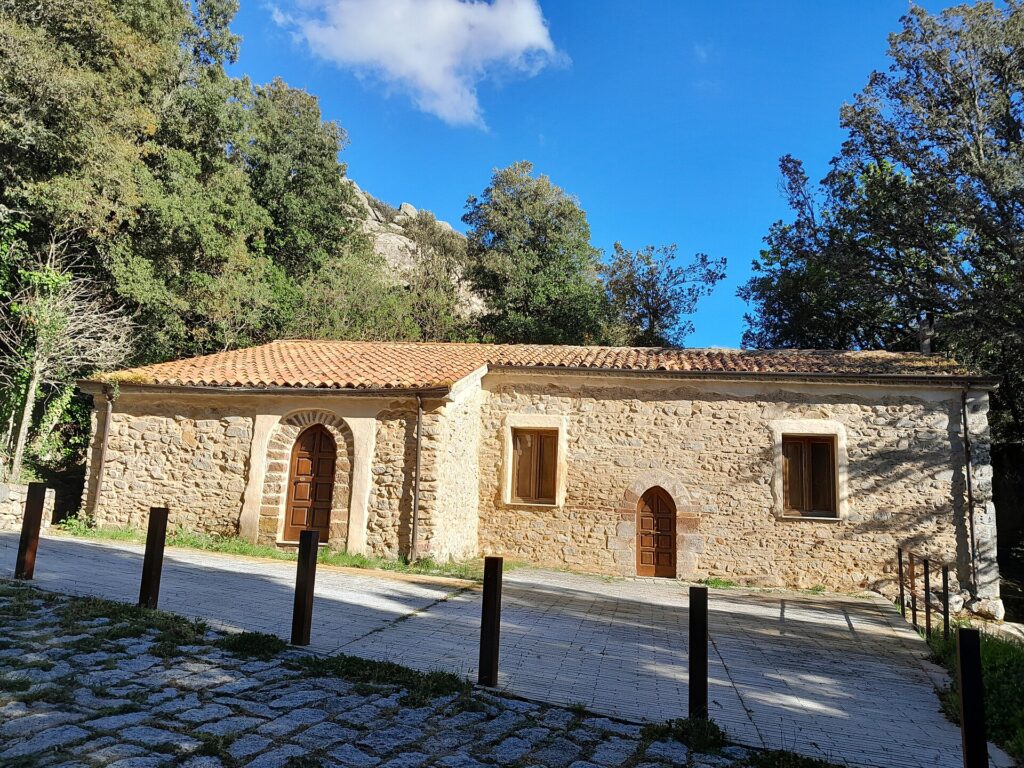
On 14 and 15 November 2026 the mountain village of Ollolai opens its cortes for its stop of Autunno in Barbagia – Cortes Apertas. Ollolai gave its name to a whole historic region, the Barbagia di Ollolai, and for one weekend it shows you its most genuine side: baskets woven from asphodel by local women, dark granite houses, sheep’s cheese, wine and old songs.
What Cortes Apertas is and why Ollolai matters
Autunno in Barbagia (“Autumn in Barbagia”) is a series of village festivals held every weekend from September to December, each time in a different village of inland Sardinia. Cortes are the courtyards of traditional houses, where families once worked, stored food and lived together. During Cortes Apertas (“open courtyards”) residents, associations and craftspeople open them to visitors. It feels less like a tourist fair and more like being invited into people’s homes.
Ollolai is a fitting host. Tradition links it to Hospito (Ospitone), leader of the Barbaricini, the unconquered mountain people to whom Pope Gregory the Great wrote in 594 urging him to help convert his people. In the Middle Ages, under the Sardinian giudicati (local kingdoms), Ollolai was the seat of an administrative district.
What to see during Cortes Apertas in Ollolai
The star of the weekend is s’iscraria, the craft of weaving baskets from the leaves of asphodel, a wild plant that grows in the pastures around the village. Women gather the leaves, dry them and weave baskets, trays and containers with geometric patterns. You can watch them at work in courtyards and demonstrations, and the exhibition space devoted to this craft usually opens too.
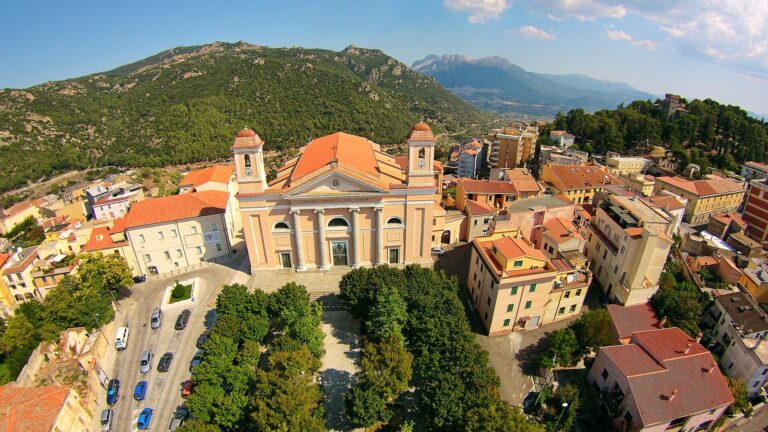
Wander the old centre to see granite houses with dark stone doorways clustered around the parish church of San Michele Arcangelo, originally Gothic-Aragonese and altered several times. Inside are paintings by Carmelo Floris, an artist who portrayed the women of Ollolai in traditional dress.
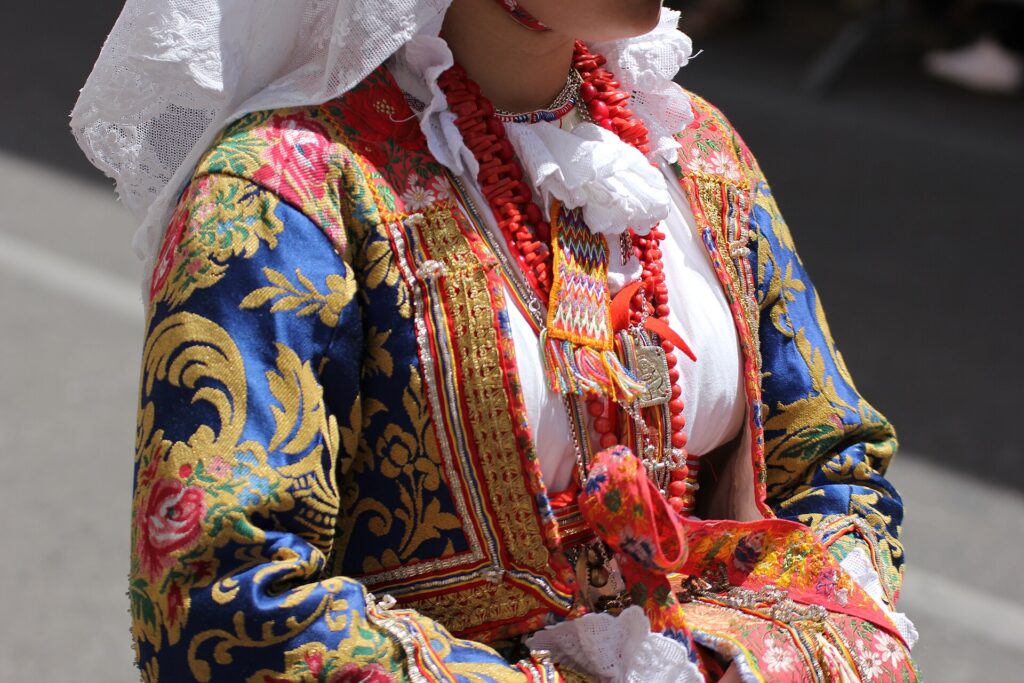
Past editions have featured the dressing of a bride in traditional costume and jewellery, displays of costumes, masks and church vestments, handmade pasta demonstrations, local choirs, bonfires in the squares and games of sa murra, a fast, loud Sardinian finger-guessing game. Ollolai is also a stronghold of s’istrumpa, traditional Sardinian wrestling. The 2026 programme is published by the town and organisers shortly before the event, so check it before you go.
Food to try and things to take home
This is shepherd country, and cheese is everywhere. Ollolai produces Fiore Sardo, the hard PDO sheep’s cheese typical of Barbagia, and some editions have included live cheesemaking. Also look out for macarrones de poddighe, pasta shaped by hand (“with the fingers”), mountain cured meats, traditional breads and robust local red wines.
For something sweet, try su pistiddu, a traditional cake tied to the January bonfires of Saint Anthony. The best souvenir, though, is an asphodel basket bought straight from the woman who wove it: hours of handwork that tell the story of the village better than any fridge magnet.
The village and the surrounding area
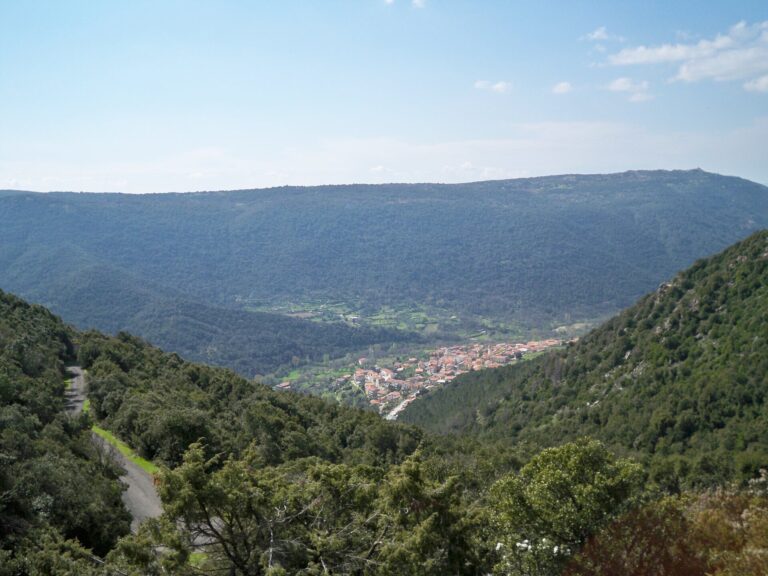
Ollolai sits at almost 1,000 metres on the slopes of Monte San Basilio (Santu Basili). On the summit stands the church of San Basilio Magno, Byzantine in origin and rebuilt in the 20th century, ringed by cumbessias, simple pilgrims’ lodgings. Nearby are the remains of a Nuragic village and the ruins of a Franciscan convent; the Santu Basili archaeological area is seen as the birthplace of Ollolai.
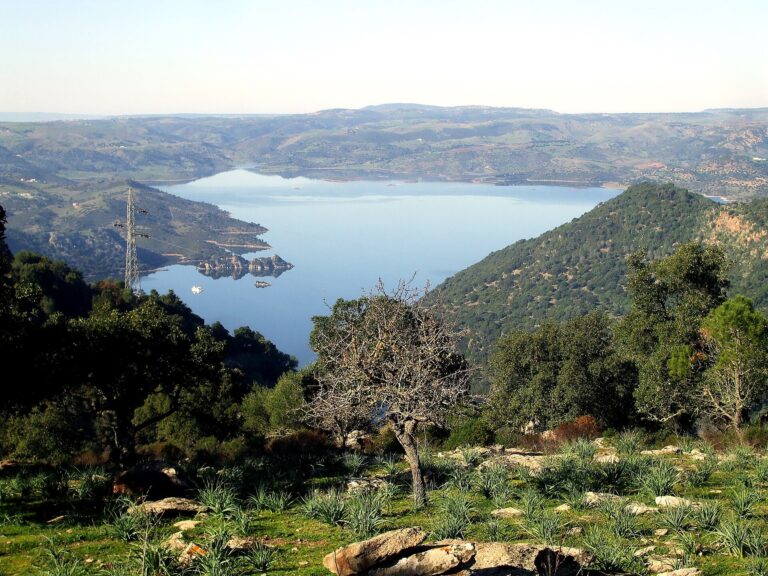
The countryside mixes Mediterranean scrub, ancient oaks, holm oaks, yews and springs. Granite outcrops hide tombs carved into natural rock hollows, used from the Neolithic to the Iron Age. A scenic road leads towards Lake Cucchinadorza, and on clear days the viewpoint of Su Nodu de s’Aschisorgiu looks all the way to the sea.
Combine your visit with Gavoi and Lake Gusana, Fonni (Sardinia’s highest village), Olzai and Mamoiada, home of the famous Mamuthones carnival masks. The town of Nuoro is about 30 km away.
How to get to Ollolai and practical tips
- From Olbia airport or port: drive towards Nuoro and then up into Barbagia, about 1 hour 30 minutes.
- From Cagliari airport: take the SS131 north, then the road to Nuoro, about 2 hours 30 minutes.
- From Alghero airport or Porto Torres: about 2 hours via the SS131 and Nuoro.
A car is by far the easiest option. The village gets busy, so arrive in the morning and park on the edge of town. In November, at nearly 1,000 metres, it is cold and can be rainy or foggy: wear layers, a waterproof jacket and comfortable shoes for steep stone streets. Bring cash, as many small producers and craftspeople don’t take cards. Beds in the village are limited, so book a B&B early in Ollolai or nearby, or stay in Nuoro.
Cortes Apertas Ollolai 2026: FAQ
When is Autunno in Barbagia in Ollolai in 2026?
Saturday 14 and Sunday 15 November 2026. Detailed times are announced by the town and organisers shortly before the event.
What is Ollolai famous for?
Its handwoven asphodel baskets, its historic role as the main village of the Barbagia di Ollolai, and Monte San Basilio with its church and archaeological area.
What is asphodel?
A wild plant common in Sardinian pastures. Once picked and dried, its leaves become tough and flexible and are woven into traditional baskets.
Can I visit Ollolai as a day trip?
Yes, easily from Nuoro or the east coast. From Cagliari or Alghero it’s worth staying a night and adding Gavoi, Fonni or Mamoiada.
Source: www.portalesardegna.com