Autunno in Barbagia in Gadoni 2026: Cortes Apertas
Price on request Discover
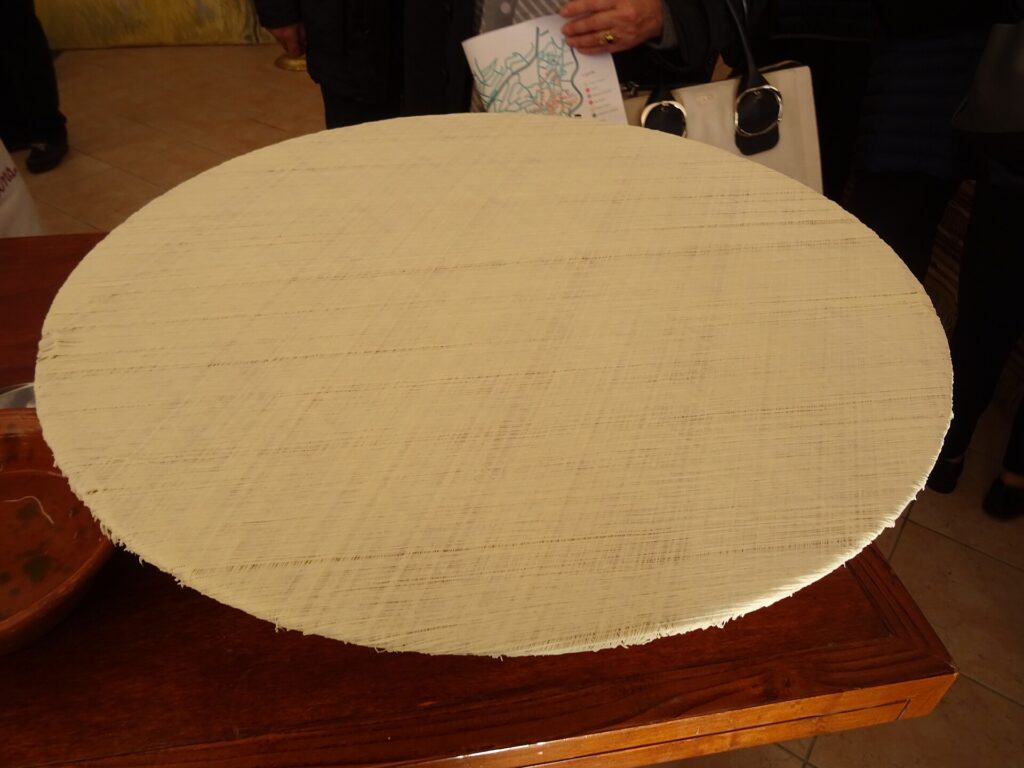
Su filindeu – “the threads of God” in the Nuorese dialect – is one of the rarest pastas in Italy. Made from nothing but durum wheat semolina, water and salt, it is pulled by hand into strands as fine as hair and laid out in three crossed layers that dry into something like lace. It belongs to Nuoro and to the pilgrimage to the sanctuary of San Francesco near Lula, and only a handful of people still know how to make it.
Filindeu was never an everyday dish: it is food of devotion and hospitality. Pilgrims set off at night from the church of the Solitudine in Nuoro and walk more than 30 kilometres to the country sanctuary of San Francesco, just under three kilometres from Lula at the foot of Monte Albo, arriving at dawn. The feast is held twice a year: in early May (the 1 May pilgrimage opens a novena that ends on the 10th) and on 4 October.
Pilgrims staying in the cumbessìas, the small lodgings around the church, are served filindeu in mutton broth – a hot, simple meal after a night on foot. The present church is a 1795 rebuilding of an older one, and the place appears in Grazia Deledda’s novel Elias Portolu.
Semolina, water, a pinch of salt. Everything else is in the hands. The dough is kneaded and moistened with salted water until it reaches just the right elasticity. A small piece is then stretched and folded again and again – Slow Food describes it being pulled eight times with the fingers – multiplying the strands until they are almost invisible. They are laid in three crossed layers on su fundu, a round wooden board (once woven from asphodel), and dried in the sun. The best-known keeper of this craft is Paola Abraini of Nuoro, whose knowledge has helped other women in the area take it up again.
Filindeu has no PDO or PGI status: it is a home-made, artisan product made in tiny quantities. The Slow Food Foundation has listed it in the Ark of Taste, its catalogue of traditional foods at risk of disappearing.
There is really only one way: broken into pieces and cooked for moments in piping-hot mutton broth, with pecorino melting into the strands. At Lula it is often followed by su zurrette, a savoury blood sausage of sheep or lamb. Pair it with a full-bodied local red such as Cannonau di Sardegna.
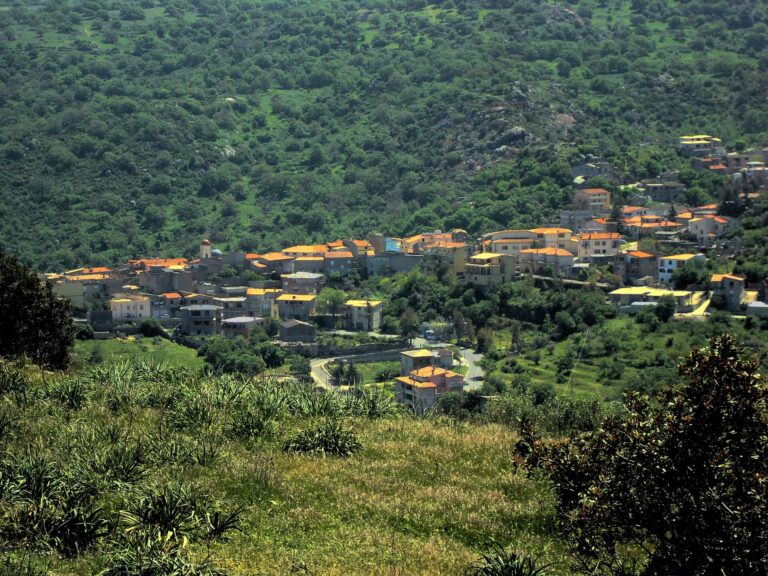
The real place is the sanctuary of San Francesco di Lula during the May and 4 October feasts. Lula also takes part in Autunno in Barbagia (in 2026 on 3–4 October, alongside the feast), with workshops on fresh pasta, cheese and sausage. Dates change each year, so check the official calendar. In Nuoro filindeu is rarely available; ask about traditional pasta workshops in the area to see it made.
“Threads of God”, for the extraordinary fineness of the strands and their link to the feast of San Francesco.
Rarely. Very few people make it by hand, in small amounts, mostly for the feast. Be wary of anything sold as an industrial product.
Traditionally during the feasts of San Francesco in early May and on 4 October, when it is served in mutton broth to the pilgrims.
Do you run activities in Sardinia?
Get your own page on Ajò Sardegna: free until 31 May 2027, no commissions, with customer requests coming straight to you. If you like, we prepare the page for you.
Hi!
Can I help you?
Lia is an AI-based virtual assistant and can make mistakes: always check with the operator. Please don't share personal data. Privacy