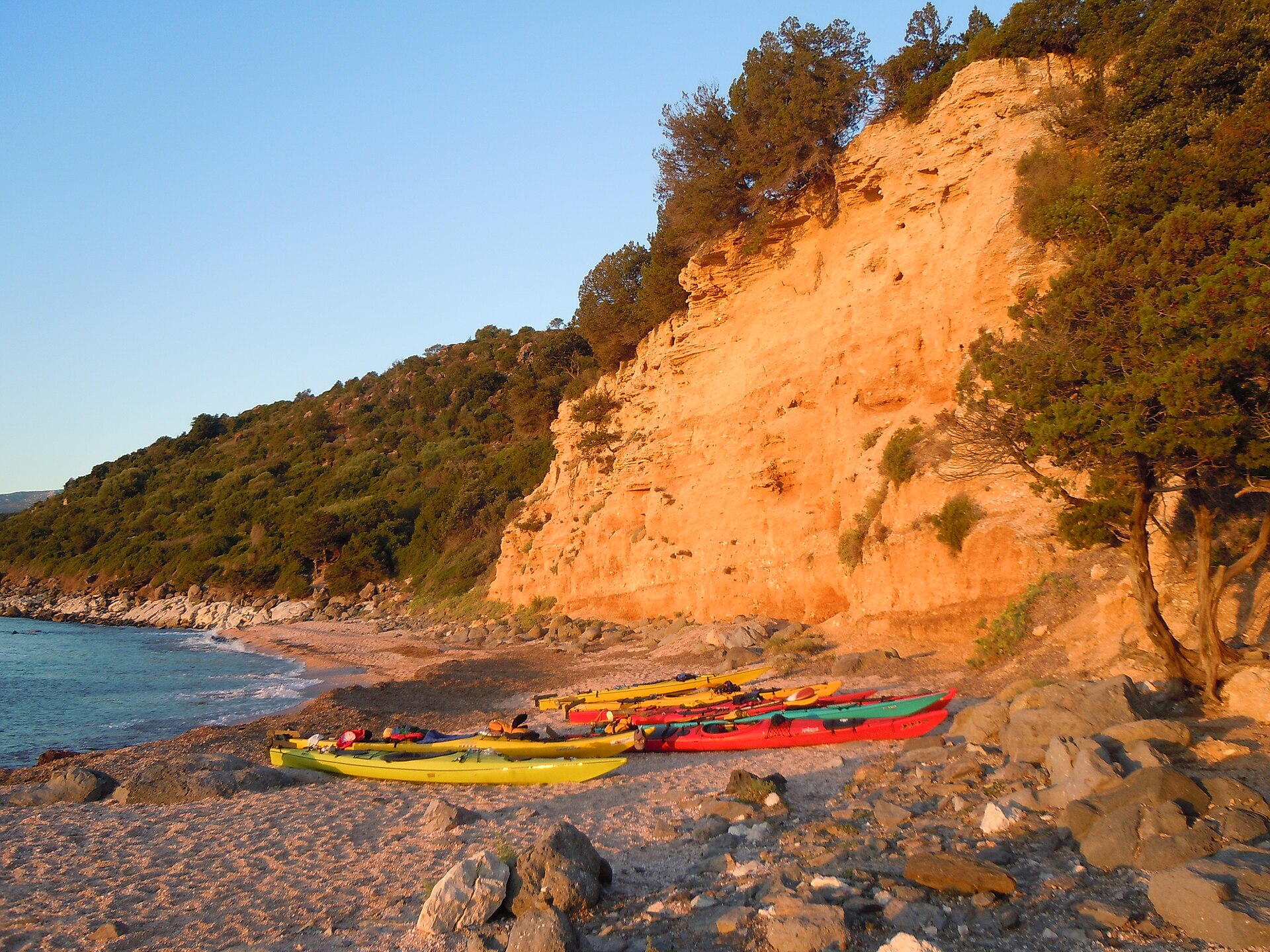
Little coves reachable only on foot or by boat, sea caves, deep canyons and Nuragic villages hidden in the mountains: if you are wondering about the best things to do in Dorgali, you are asking the right question. This is the way into the Gulf of Orosei and the Supramonte, two of the most spectacular landscapes in the Mediterranean, where turquoise sea meets white limestone and nature is still wild.
In this guide you’ll find the 14 unmissable stops around Dorgali and Cala Gonone, the loveliest coves and how to get to them, the experiences worth booking, a little history, typical dishes and wines, local festivals, and all the practical information: how to get here, where to park, when to go and how many days to stay.
Contents
Su mare a Gonone, su monte a Supramonte: in mesu, Durgali.
Popular Dorgali saying (“The sea at Gonone, the mountain at Supramonte: in between, Dorgali”)
Why visit Dorgali
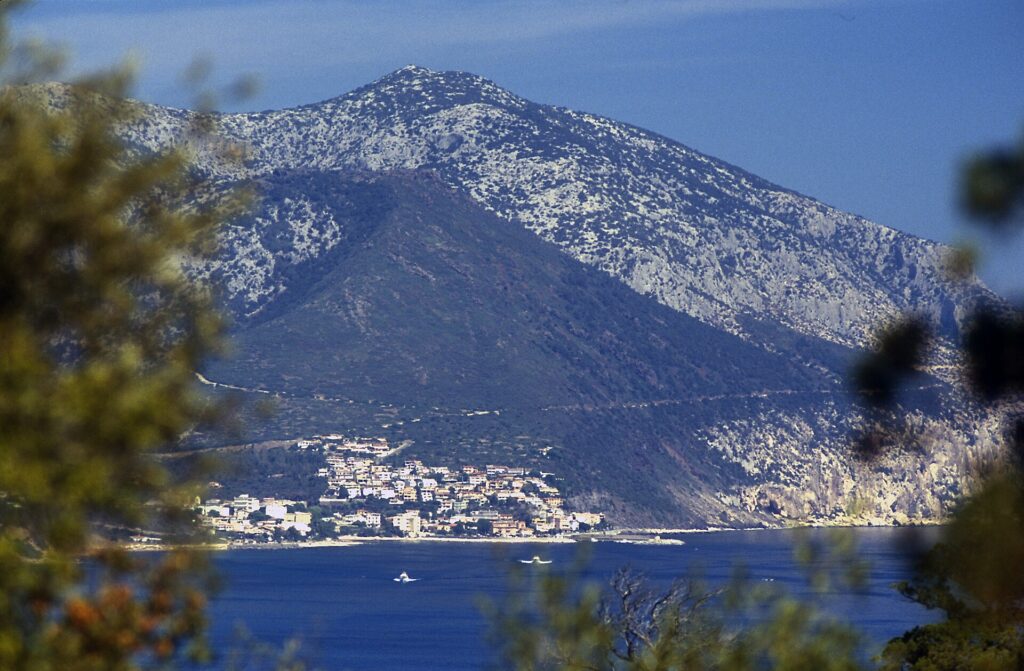
Dorgali lies in central-eastern Sardinia, in the province of Nuoro, at the foot of Monte Bardia. The town, home to around 8,500 people, sits a few kilometres from the sea, while its seaside hamlet, Cala Gonone, looks straight out over the Gulf of Orosei. In between rise limestone mountains, gorges and valleys that form part of the Supramonte.
The municipal territory is one of the largest in Sardinia and packs in a remarkable concentration of wonders: sea caves, some of the most beautiful beaches in Italy, unique Nuragic sites such as the village of Tiscali, and canyons like Gorropu. It is also wine country, home to Cannonau, with a living tradition of crafts such as ceramics, filigree jewellery and hand-woven rugs.
Dorgali suits anyone who loves trekking, climbing and boat trips, families drawn by the sea at Cala Gonone, and travellers looking for the most authentic side of the Barbagia. If you’re wondering what to see in Dorgali, be ready to split your days between sea and mountains.
What to see in Dorgali: the 14 unmissable stops
1. Cala Gonone
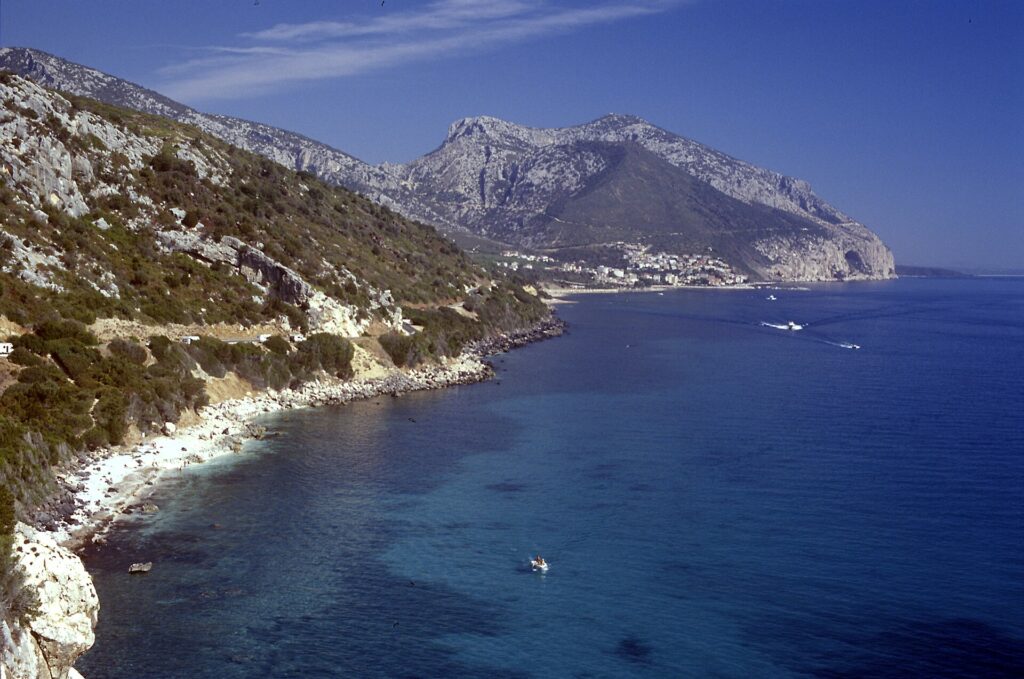
Dorgali’s fishing village is the starting point for exploring the gulf. It has a small harbour from which boats and inflatable dinghies set sail, a seafront lined with bars and restaurants, and little beaches just steps from the centre. The road from Dorgali is a scenic one, passing through a tunnel in the mountain before winding down in hairpin bends to the sea.
2. Cala Luna
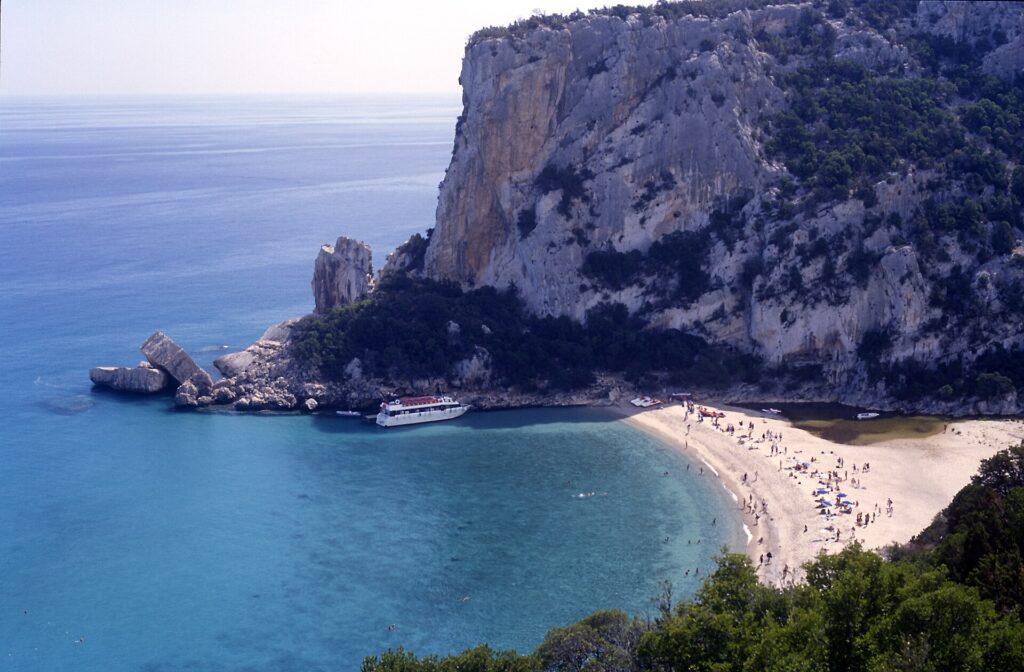
One of the most famous beaches in Sardinia: a crescent of sand enclosed by white cliffs, with caves carved into the rock and a small lagoon behind the beach, fed by the Codula di Luna. You can get there by boat from Cala Gonone, or on foot along a path of about 4 km from Cala Fuili.
3. The Grotta del Bue Marino
The cave takes its name from the Mediterranean monk seal, known in Sardinian as bue marino, which once sheltered here. You visit it on boats leaving from Cala Gonone: a route through stalactites, salt lakes and shimmering light, with ancient prehistoric carvings at the entrance.
4. Cala Fuili and Cala Cartoe
Both are accessible by car, which makes them ideal if you’d rather not take a boat. Cala Fuili lies at the end of a codula (a narrow valley) and is made up of pebbles and sand, with incredible water. Cala Cartoe, north of Cala Gonone, has pale sand backed by a pine wood.
5. Cala Mariolu and Cala Sisine by boat
Although they lie within the municipality of Baunei, they are classic stops on the boat trips that leave from Cala Gonone. Cala Mariolu is famous for its white and pink pebbles and dazzling blue water; Cala Sisine is surrounded by sheer rock walls.
6. The Nuragic village of Tiscali
Hidden inside a vast collapsed sinkhole at the top of Monte Tiscali, in the Supramonte, this is one of the most atmospheric archaeological sites in Europe: the remains of Nuragic huts sheltered by the mountain walls. It is reached by a demanding trek from the Lanaittu valley, best done with a guide.
7. The Gorropu Gorge
One of the deepest canyons in Europe, with walls up to 500 metres high and, in places, only a few metres apart. You enter on foot, either from the path that starts at the Genna Silana pass or from the Sa Barva bridge over the Flumineddu river. It’s an experience you won’t forget.
8. The Ispinigoli Cave
A few kilometres from Dorgali, this cave holds one of the tallest stalagmites in Europe, a column of about 38 metres joining floor to ceiling. Guided visits descend a staircase into an enormous chamber full of rock formations.
9. The Nuragic village of Serra Orrios
On a basalt plateau between Dorgali and Oliena, Serra Orrios preserves more than seventy huts and two small well temples. It is easy to visit and gives a good sense of how a Nuragic village was organised.
10. The Lanaittu valley
On the border with Oliena, this green valley is hemmed in by limestone mountains and dotted with caves and archaeological sites, such as the Nuragic village of Sa Sedda ‘e sos Carros with its sacred spring. It is the starting point for Tiscali and for many hikes in the Supramonte.
11. Dorgali’s old town
The town has a compact centre, with dark stone houses, narrow lanes and artisan workshops: ceramics, filigree jewellery, hand-woven rugs and knives. Along the main street you’ll find wine cellars, wine shops and workshops open to visitors.
12. The Archaeological Museum
In the centre of Dorgali, the museum displays finds from the local area, from the Neolithic to the Roman era: pottery, bronze figurines and everyday objects. It’s the ideal complement to a visit to the Nuragic sites.
13. The Cala Gonone Aquarium
A modern aquarium devoted to Mediterranean habitats, with tanks recreating the seabed of the gulf. It’s a good stop if you’re travelling with children or on windy days.
14. Lake Cedrino
North of the town, the Cedrino river forms an artificial lake surrounded by mountains. You can go kayaking or birdwatching, or simply stop for a picnic in the shade.
Dorgali’s beaches and coves
The sea is the most obvious answer for anyone asking what to see in Dorgali. Here are the main coves and how to reach them.
- Spiaggia Centrale and Palmasera: in Cala Gonone, convenient and well equipped, ideal if you don’t have a car.
- Cala Fuili: by car, plus a short walk down; pebbles and crystal-clear water.
- Cala Cartoe: by car, with pale sand and a pine wood.
- Cala Luna: by boat, or on a trek of about an hour and a half from Cala Fuili.
- Cala Mariolu, Cala Biriola, Cala Sisine, Cala Goloritzè: along the Baunei coast, reached on boat trips from Cala Gonone.
Many boats only let you swim at some of the coves, so check the stops and timings beforehand. To choose the right trip, read our guide to boat trips in Sardinia.
Tips for trekking in the Supramonte
The Supramonte is a beautiful but unforgiving limestone plateau: little water, paths that are sometimes poorly marked, strong sun in summer and mobile phones that often have no signal. Before setting off for Tiscali, Gorropu or the Codula di Luna, it pays to follow a few rules.
- Start early, especially from June to September: in the middle of the day, the heat in the gorges and on the scree can become unbearable.
- Carry at least two litres of water per person: springs are rare and not always safe to drink.
- Wear hiking boots with a sturdy sole: the limestone is sharp and slippery, especially after rain.
- Download GPS tracks and let someone know your route.
- Hire a guide for the longer routes: besides keeping you safe, they can tell you the story of the shepherds, the caves and the Nuragic villages.
Many routes start from areas that can only be reached by dirt tracks, so ask about conditions before venturing out in an ordinary car.
The nature of the Gulf of Orosei
The gulf is part of an area of great natural value. Peregrine falcons and Eleonora’s falcons nest on the cliffs, and golden eagles can be seen soaring above the mountains. Mouflon, wild boar and weasels live in the holm oak and juniper woods, while colonies of bats find refuge in the sea caves.
The monk seal, which gave the Grotta del Bue Marino its name, disappeared from the Sardinian coast decades ago, but in recent years a few sightings have been reported in the Mediterranean: a sign of hope for a sea that is being protected. Respecting the environment, taking your litter away and choosing operators who care about nature all help preserve this heritage.
Things to do in Dorgali: experiences to enjoy
Once you’ve decided what to see in Dorgali, pick the experiences that suit you: this is one of the best areas in Sardinia for outdoor activities.
- Boat and inflatable dinghy trips along the Gulf of Orosei, with stops at the coves and a visit to the Grotta del Bue Marino.
- Trekking: Tiscali, Gorropu and the Trek delle Cale between Dorgali and Cala Gonone; for more ideas, read our guide to trekking in Sardinia.
- Climbing: Cala Gonone is one of the best-known spots in Europe, with hundreds of routes on limestone.
- Kayaking and snorkelling along the coast between Cala Gonone and Cala Luna.
- Off-road in the Supramonte: with Off Road Sardinia Tour you can explore the tracks between Dorgali, Orgosolo and Arcu Suttaterra.
- Winery visits to taste Dorgali’s Cannonau.
All the experiences in the area, with direct contact and no commission, are on the things to do in Dorgali page.
A brief history of Dorgali
People have lived in this area for thousands of years: caves, domus de janas (prehistoric rock-cut tombs), nuraghi and villages such as Serra Orrios and Tiscali tell of continuous human presence from the Neolithic to the Nuragic age. In Roman and later medieval times the area was linked to the Barbagia and to the routes leading to the coast.
For centuries the town lived on sheep farming, agriculture and crafts, while the coast remained almost uninhabited. Cala Gonone began as a small landing place for fishermen, many of whom came from Ponza and Campania between the nineteenth and twentieth centuries. Since the 1960s tourism has transformed the fishing village, while Dorgali has kept its character as a Barbagia town.
What to eat and drink in Dorgali
Dorgali’s cuisine brings together sea and mountains. Don’t miss:
- pane carasau (thin crispy flatbread) and pane guttiau, the same bread seasoned with olive oil and salt;
- culurgiones (filled pasta parcels) and maccarrones de busa (hand-rolled pasta) with meat sauce;
- porceddu (roast suckling pig) and roast lamb, slowly cooked over the fire;
- sheep’s and goat’s cheeses, such as pecorino and ricotta;
- fish from the gulf at Cala Gonone;
- Cannonau, the red wine that symbolises the area, produced by local wineries.
Restaurants and farm stays are listed on the where to eat in Dorgali page. To find out more about the wine, read our guide to Cannonau, and the one on pane carasau.
Festivals and events in Dorgali
- Carnival: parades and traditional masks in the streets of the town.
- Holy Week: ancient rites with the confraternities and tenore singing.
- Country festivals: in spring and summer the rural churches come alive with processions, horsemen and communal lunches.
- Autunno in Barbagia: the town takes part with open houses, craftspeople and local produce; read our guide to Cortes Apertas.
- Summer in Cala Gonone: concerts, fish festivals and evenings on the seafront.
Dorgali in 1, 2 or 3 days
In one day: a morning boat trip along the gulf taking in the Grotta del Bue Marino and Cala Luna, an afternoon in Cala Gonone and dinner in the town.
In two days: add Ispinigoli, Serra Orrios and a stroll through the centre of Dorgali, among its wine cellars and workshops.
In three days: set aside a whole day for Tiscali or Gorropu, ideally with a guide. With a week you can explore Orosei, Oliena, Orgosolo and the Baunei coast.
Around Dorgali
- Orosei (about 20 minutes): the old town and the long beach of Cala Liberotto.
- Oliena and the Supramonte (about 25 minutes): the Su Gologone spring and Monte Corrasi.
- Orgosolo (about 40 minutes): the town of the murals.
- Nuoro (about 30 minutes): the Museo del Costume and Grazia Deledda’s house.
- Baunei and the Ogliastra (about 1 hour): the Golgo plateau and the Selvaggio Blu.
Practical information: getting here, parking, when to go
How to get to Dorgali
The most convenient airport is Olbia Costa Smeralda, about 100 km away: it takes a little over an hour by car along the SS 131 DCN and the SS 125. From Cagliari it takes around 2 hours 45 minutes. The port of Olbia is also just over an hour away. From Nuoro there are regular buses to Dorgali and Cala Gonone.
Getting around and parking
You’ll need a car to explore the area. In Cala Gonone in summer, the car parks near the harbour are paid and fill up quickly. For Cala Fuili and Cala Cartoe, arrive early in the morning. For Tiscali and Gorropu, check the condition of the dirt roads.
Where to stay
Cala Gonone is perfect if you’re after the sea and boat trips. The town of Dorgali is quieter and handier for excursions inland. Farm stays in the countryside offer peace and quiet, local cooking and starry skies.
When to go
The best time for the sea runs from May to October. Spring and autumn are perfect for trekking and climbing, when it’s cooler. In summer, plan your mountain outings for early morning and take plenty of water.
For official information, visit the website of the Comune di Dorgali.
Frequently asked questions about visiting Dorgali
What is the most beautiful beach in Dorgali?
Cala Luna is the most famous; Cala Fuili and Cala Cartoe are the easiest to reach by car. By boat you can also get to Cala Mariolu and Cala Sisine, on the Baunei coast.
Do I need a guide for Tiscali and Gorropu?
It isn’t compulsory, but it is strongly recommended: the paths are demanding, poorly marked in places, and it gets very hot in summer. A guide knows the routes and can tell you about the history and nature.
Is Dorgali suitable for families?
Yes: Cala Gonone has easy-access beaches, and the aquarium and boat trips are a big hit with children. For more ideas, see our guide to Sardinia with children.
How many days do you need to visit Dorgali?
At least three days for the sea, a cave and a trek. With a week you can explore the whole gulf and the Supramonte at a relaxed pace.
Dorgali: best enjoyed with the people who live it
Now you know what to see in Dorgali: Cala Gonone, Cala Luna, the caves, Tiscali, Gorropu, and a town of craftspeople and wine cellars. Sea and mountains are only minutes apart here: in the morning you can swim in a turquoise cove, and in the evening dine in a stone-built town amid the aromas of roast meat and Cannonau. This is a place best discovered with people who know it inside out: choose an experience from those offered by local operators and contact them directly, with no middlemen. Ajò, Sardinia is waiting for you.
