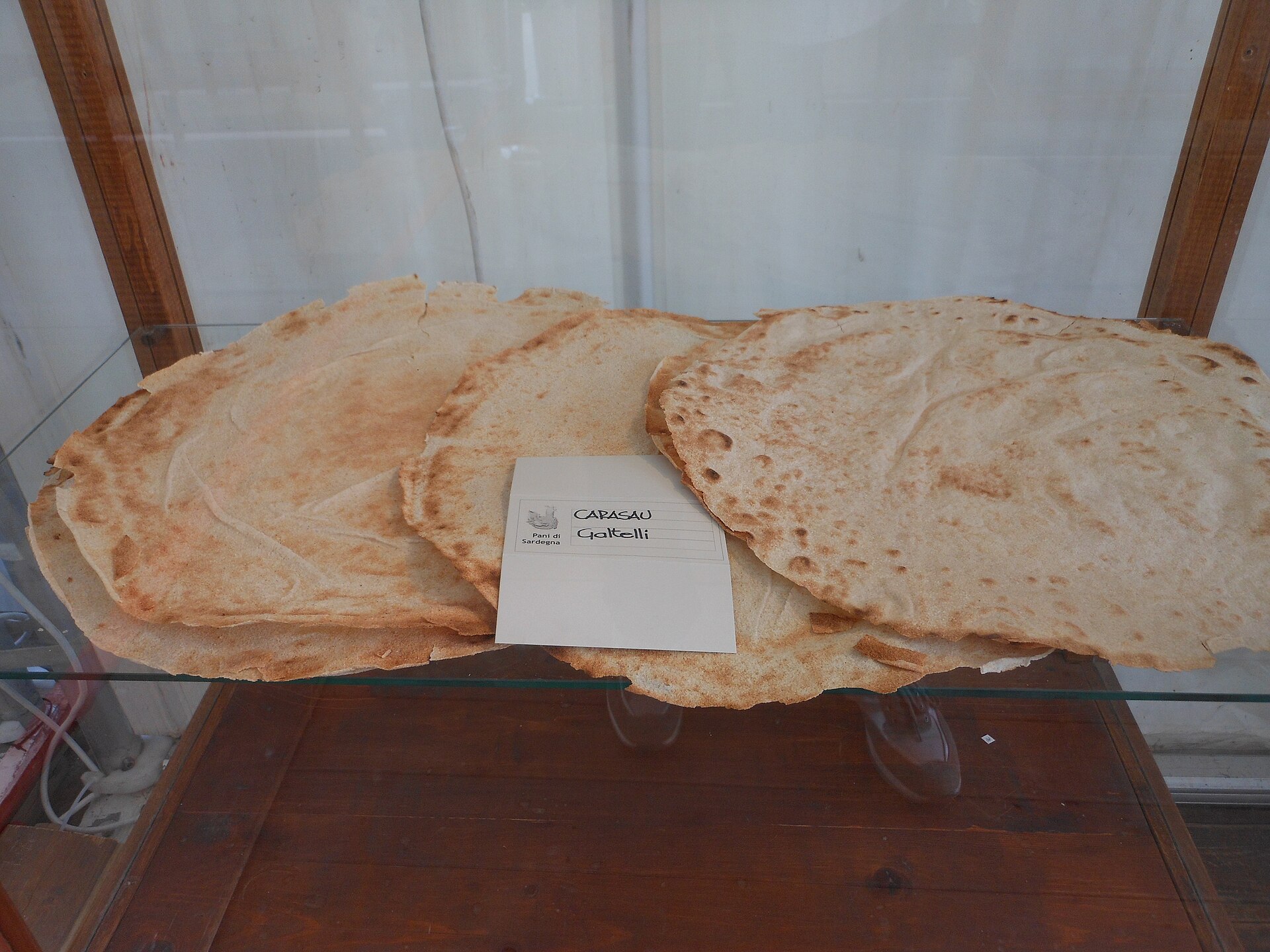
Thin, crisp and golden, pane carasau is the bread that symbolises Sardinia. It is also called carta da musica, “music paper”, because of the sound it makes when it breaks. It was born in Barbagia as shepherds’ bread, made to last for weeks in a saddlebag, and today it is on tables all over the island, from starters to dessert.
In this guide you will find the history of pane carasau, where the name comes from, how it is made step by step, a recipe to try at home and 10 ways to eat it, from pane guttiau to pane frattau. Plus where to watch it being made, at village festivals or on farms, and how to choose and store it.
Contents
What is pane carasau
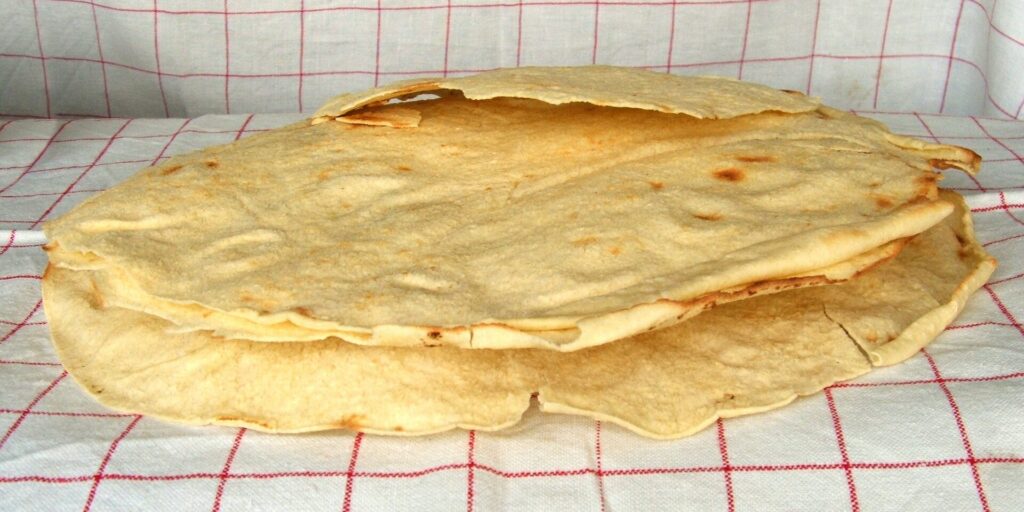
Pane carasau is a flatbread made from durum wheat semolina, water, salt and yeast. It comes in large, paper-thin discs, often stacked in packs of half a kilo or a kilo. It has no soft crumb: baked twice, it loses almost all its moisture and becomes dry and brittle.
This double baking is exactly what makes it special. Carasau bread keeps for a long time, does not easily go mouldy and can be softened with a little water, broth or sauce. That is why it is almost always found in Sardinian homes: it is eaten on its own, broken over cheese or used as the base for proper dishes.
The name: carasau and carta da musica
Carasau comes from Sardinian and refers to the final toasting, called carasadura: the second baking that makes the bread crisp. In many villages people also say pane carasadu, especially in the Barbagia di Ollolai and around Nuoro.
There are two possible explanations for the nickname carta da musica. Some link it to the dry crack of the bread as it breaks, others to its thinness, like the sheets of a musical score. Either way, today carta da musica and pane carasau mean the same thing, and you will find both names on the packs in the shops.
The history of the shepherds’ bread
Pane carasau was born in Barbagia, in the heart of Sardinia, and is tied to the life of the shepherds. During transhumance, when flocks moved for months between the mountains and the plains, they needed a light bread that would not spoil and could be carried in a saddlebag. Carasau was the perfect solution.
Its origins are shrouded in legend. Some trace it back to the Nuragic age, others to contact with the Arab world, but there is no firm evidence. What is certain is that it is one of the oldest breads in the Mediterranean still made in the same way. Families baked it in large quantities and kept it in wooden chests, where it lasted for weeks.
Give us this day our daily bread.
Gospel of Matthew 6:11 (King James Version)
In the past, making bread was women’s work and a community event. The women of the family and the neighbourhood gathered, often during the night, to knead, roll out and bake hundreds of sheets in the wood-fired oven. Even today, in the villages of Barbagia, you hear people say that good bread is made together.
How pane carasau is made: the steps
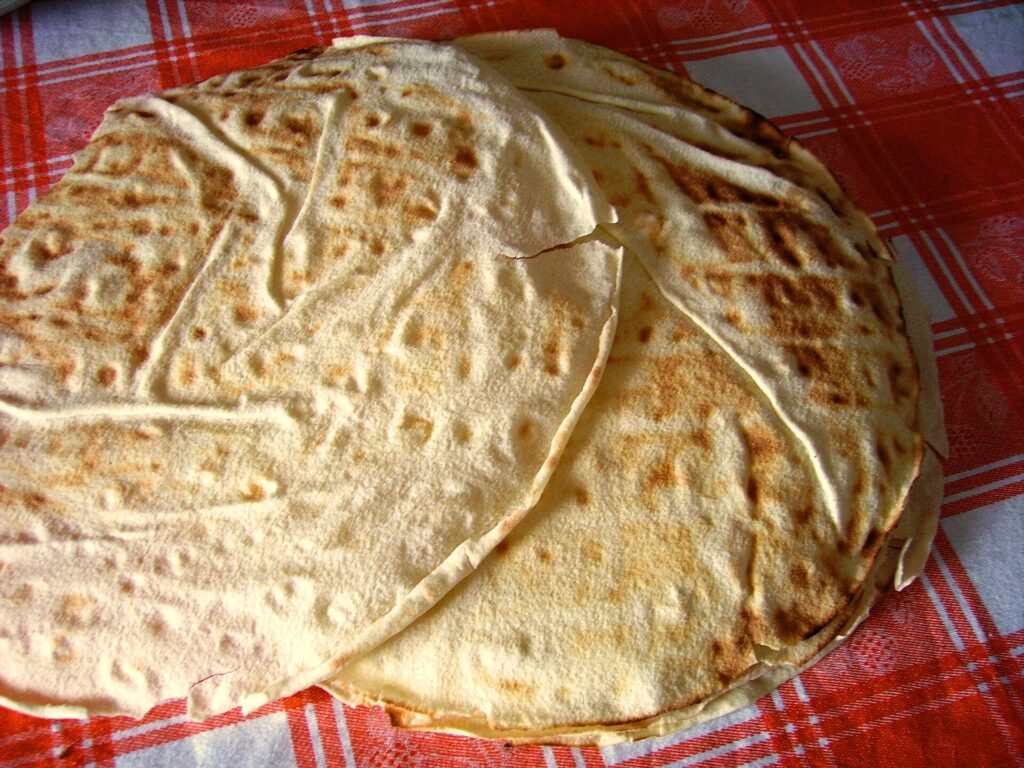
The recipe is simple, but the process takes time and experience. These are the traditional steps:
- Dough: finely milled durum wheat semolina, lukewarm water, salt and yeast. In the past a piece of dough kept back from the previous batch was used as a starter.
- Rising: the dough rests under a cloth, then it is divided into balls that rise again.
- Rolling: each ball is rolled into a very thin disc, as wide as 30–40 centimetres (12–16 inches).
- First bake: in a very hot wood-fired oven, the disc puffs up like a balloon in a few seconds.
- Splitting: while it is still hot, the disc is opened with a knife into two thin sheets.
- Carasadura: the sheets go back into the oven to be toasted, which makes them golden and crisp.
Today many bakeries use mixers and electric or gas ovens, but the steps have stayed the same. The most traditional producers still bake with wood, and you can taste the difference: wood-fired pane carasau has a slightly smoky aroma.
The trickiest moment is splitting the puffed-up disc. It has to be done straight away, while the sheet is still hot and soft, with a quick, precise movement: those who have done it for years work with bare hands, without getting burnt. The sheets are then stacked and pressed so that they stay flat before toasting. Watching an experienced baker at work is a sight worth the trip.
A pane carasau recipe to make at home
You can make pane carasau at home, even though a domestic oven does not reach the temperatures of a wood-fired one. Here is a rough recipe for 6–8 sheets:
- 500 g (about 4 cups) finely milled durum wheat semolina
- about 300 ml (1¼ cups) lukewarm water
- 10 g (2 teaspoons) salt
- 5 g fresh yeast, or one tablespoon of sourdough starter
Dissolve the yeast in the water, add the semolina and then the salt, and knead until the dough is smooth and elastic. Leave it to rise, covered, for a couple of hours, then divide it into balls and roll them out as thinly as you can with a rolling pin, on a surface dusted with semolina.
Turn the oven up to its highest setting, with a baking stone or an upturned tray already heated inside. Bake one disc at a time: within a few minutes it will puff up. Take it out, split it in two straight away with a sharp knife, taking care with the steam, and put the two sheets back in the oven until golden. Let them cool stacked under a weight so they stay flat.
How to eat carasau bread: 10 ideas
The beauty of carasau bread is that it goes with everything. Here are ten ways to eat it, from the most traditional to the most modern:
1. Plain, with cheese. The simplest way: broken by hand, next to a piece of Pecorino Sardo PDO or Fiore Sardo PDO. It is still the shepherds’ lunch today.
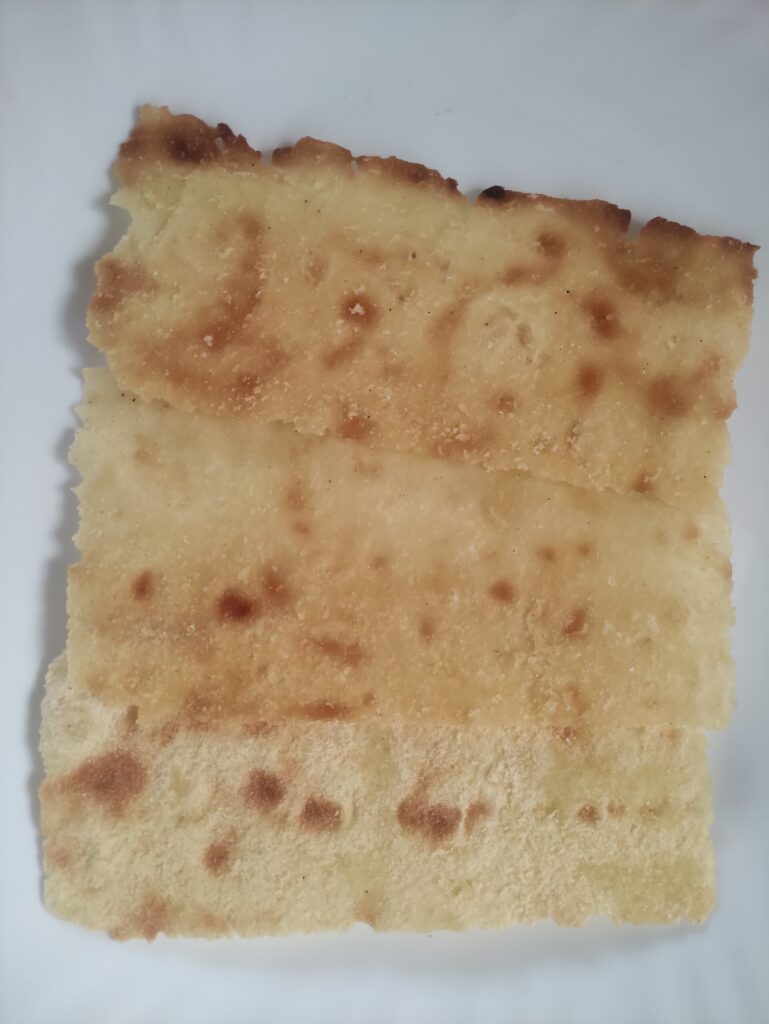
2. Pane guttiau. Guttiau means “drizzled”: the carasau is dressed with extra virgin olive oil and salt and put back in the oven. It is typical of Oliena and all of Barbagia, and is served as a starter or instead of bread at the table.
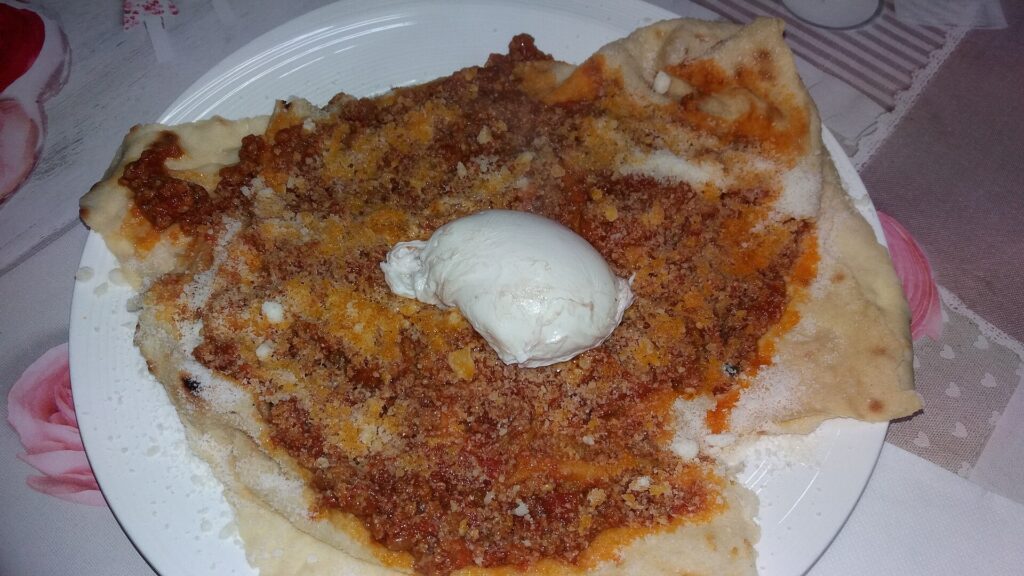
3. Pane frattau. The most famous carasau dish: the sheets are softened in hot broth, layered with tomato sauce and grated pecorino and topped with a poached egg. It is a typical dish of the Nuoro area, which you will find in the trattorias of Nuoro and the nearby villages.
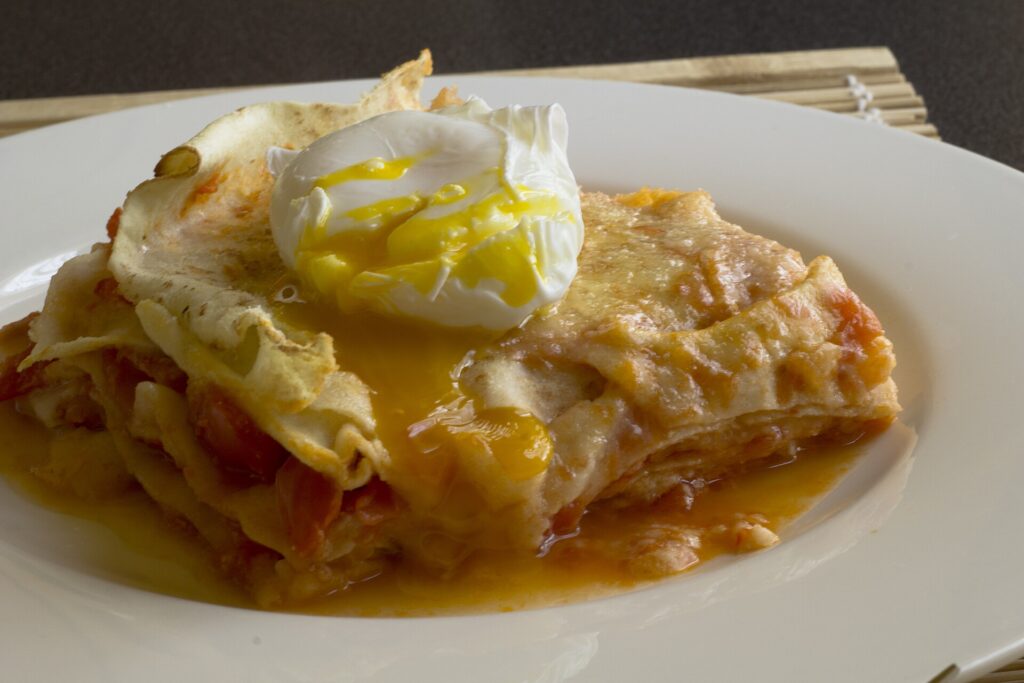
4. Carasau lasagne. Instead of pasta, use sheets of carasau that have just been dampened: with ragù, béchamel or vegetables they make a light, quick lasagne that does not need long cooking.
5. As an aperitif. Broken into pieces, it is the perfect cracker for cured meats, bottarga, cheeses and vegetable spreads. Pair it with a glass of Vermentino or Cannonau.
6. With roast meat. At festive lunches, carasau accompanies porceddu, the roast suckling pig, and roast lamb: some people use it as a plate, to soak up the meat juices.
7. In soups. Crumbled into bean soups or broth, it softens and makes the dish more filling. It is an old way of not wasting even the crumbs.
8. Like a pizza. Tomato, mozzarella and a few basil leaves on a sheet of carasau, a few minutes in the oven: a crisp, super-light pizza that children love.
9. As a sweet treat. With a drizzle of honey, perhaps strawberry tree honey, and a little fresh ricotta, it becomes a simple, tasty snack. For proper traditional desserts, try seadas, the fried cheese pastries served with honey.
10. On the road. Just as the shepherds did: a pack of carasau in your rucksack weighs nothing, does not break if you keep it flat and lasts the whole trip. It is the ideal snack for a hike, and the portal lists plenty of guided hikes to take it on.
Pistoccu, guttiau and other relatives of carasau
Pane carasau has several cousins around the island. In Ogliastra there is pistoccu, a thicker, more rustic twice-baked bread, perfect softened with tomato and cheese. In Dorgali, alongside carasau, they make moddizzosu, a round, puffy bread with little crumb, and there is also a softer version of carasau with potatoes in the dough.
All over Sardinia, different breads are made for every occasion: decorated breads for weddings and religious feasts, semolina loaves for everyday meals, focaccias and breads with pork crackling. Every village has its own, and bakeries are an excellent starting point for getting to know a community.
Where to watch pane carasau being made
The best way to get to know pane carasau is to watch it being made. During Autunno in Barbagia many villages open their courtyards, and there is almost always an oven burning, with women rolling out and baking the sheets. In the coming weeks there are Cortes Apertas in Ovodda (7–8 November), Ollolai and Tiana (14–15 November), Gadoni (28–29 November) and Fonni (6–8 December).
For the full calendar, browse the traditional festivals on Ajò Sardegna. In Gavoi, in early July, the literary festival L’isola delle storie also brings stalls of carasau and local meats into the square. Sardegna Turismo suggests a dedicated route, Carasau, il pane dei pastori (Carasau, the shepherds’ bread), from Dorgali to Gavoi via Oliena.
All year round you can try a lunch with shepherds, where carasau is always on the table, or a cooking class to learn how to knead it. With children, educational farms are perfect; for more ideas, see the activities for kids.
A bread itinerary through Barbagia
If you want to spend a day or two on the flavours of Barbagia, follow the road from Dorgali to Gavoi via Oliena: just over sixty kilometres (about 40 miles) of mountains, vineyards and pastures, with a bakery or a shop in every village. It is the same route suggested by the regional tourism board for discovering the shepherds’ bread.
- Dorgali: the starting point, between the sea at Cala Gonone and the Supramonte. Look out for the potato bread and moddizzosu.
- Oliena: the home of guttiau, at the foot of Mount Corrasi. Stop for lunch and taste the village’s cheeses and cured meats.
- Mamoiada: a detour for the Museo delle Maschere Mediterranee (Museum of Mediterranean Masks) and the Cannonau wineries.
- Gavoi: Lake Gusana, Fiore Sardo cheese and the stalls of meat and bread at festivals.
Make Nuoro, halfway along, your base and enjoy a trattoria dinner in the evening. If you like stone villages, add Orgosolo and its murals to the route, just a short drive from Oliena.
Bread in the life of Sardinian villages
In Sardinia bread is not just food. For centuries it set the rhythm of the family week: there was bread day, when the oven stayed lit for hours and the house filled with people. Girls learned to roll out the sheets by watching their mothers and grandmothers, and being able to make good bread was a source of pride.
Even today, at village festivals, bread has a place of honour. It is offered to guests, carried in processions and given to newlyweds. Anyone who travels through the inland villages notices it at once: when you walk into a home, even before the coffee, bread, cheese and a glass of wine appear on the table. It is the simplest, most sincere way of saying welcome. To experience it first-hand, look at the culture and traditions experiences on the portal.
How to choose and store pane carasau
- Read the label: there should be only a few ingredients, durum wheat semolina, water, salt and yeast. Be wary of added fats and preservatives.
- Look at the colour: good carasau is evenly golden, with a few dark bubbles, a sign of baking at high temperature.
- Buy from the bakery: in the villages of Barbagia many bakeries sell directly. Wood-fired carasau has an unmistakable aroma.
- Keep it dry: in its tightly closed bag, away from moisture. It lasts for weeks; if it loses its crunch, put it in the oven for a few minutes.
Pane carasau travels well and is one of the most practical food souvenirs from Sardinia. Pack it flat in your suitcase, perhaps between two books or in a box, and it will get home in one piece. You can also find it in supermarkets across Italy, but bread from small bakeries is something else entirely.
Pane carasau at the table: what to pair it with
In Sardinia pane carasau goes with almost everything. With culurgiones and malloreddus it is served instead of fresh bread; with cured meats and casu marzu, the island’s most controversial cheese, it is the traditional companion. To complete the cheese board, add a wedge of Pecorino Romano PDO, which is mostly made in Sardinia.
The right wine depends on the topping: a fresh Vermentino with guttiau and young cheeses, a Cannonau with frattau, meat and aged pecorino. At wineries and tastings across Sardinia, carasau is almost always on the table, next to the glasses. For more ideas, browse all the food and wine experiences.
FAQ about pane carasau
Why is pane carasau called carta da musica?
The nickname, “music paper”, comes from its thinness, like the sheets of a musical score, and from the dry crack it makes when it breaks. In Sardinia it is called carasau or carasadu, after the name of the final toasting.
How long does pane carasau keep?
Thanks to the double baking it keeps for weeks, if you store it in a dry place in its tightly closed pack. If it gets less crisp, just put it in a hot oven for a few minutes.
What is the difference between pane carasau and pane guttiau?
Guttiau is pane carasau dressed with extra virgin olive oil and salt and then put back in the oven. It is more flavoursome and is served as a starter or instead of bread.
What is pane frattau?
It is a Barbagia dish made with carasau: the sheets are softened in broth and layered with tomato sauce and pecorino, with a poached egg on top.
Taste pane carasau where it was born
You truly understand pane carasau in Barbagia, in front of a lit oven, with the sheets puffing up and the scent of wood smoke. Choose a Cortes Apertas village, book a lunch with shepherds or a cooking class and take a pack home with you. On Ajò Sardegna you will find experiences, dairies and farms and local operators you can contact directly, with no commission, and the villages of Barbagia and the Nuoro area. If you have questions, ask Lia, the portal’s virtual assistant. Bon appetitu, and ajò!
