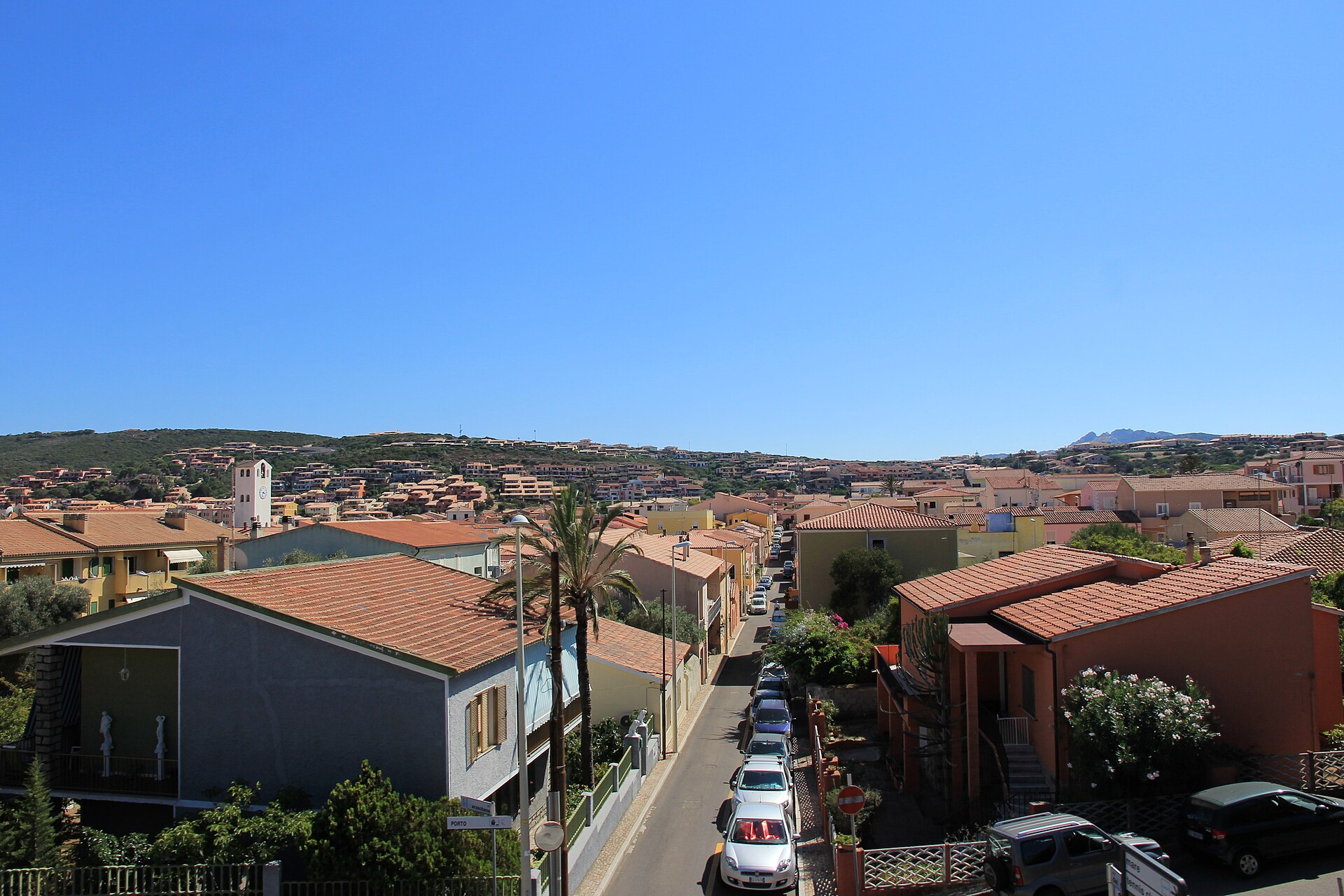
Wind-sculpted granite, water that changes colour with every hour and the outline of the La Maddalena islands just off the shore: what to see in Palau is a question that leads straight to the sea, because this Gallura town is the gateway to one of the loveliest archipelagos in the Mediterranean. But Palau is far more than a departure point. It has a bear-shaped rock that Ptolemy mentioned, a 19th-century fortress hidden among the boulders, giants’ tombs, beaches to suit every taste and one of Europe’s meccas for windsurfing.
In this guide you’ll find the 12 stops not to miss in Palau, a rundown of the beaches, boat trips around the archipelago, experiences to try, a little local history, traditional dishes, festivals and all the practical information: how to get here, where to park, which area to stay in, when to go and how many days to allow.
[[TOC]]
Furat chie benit dae su mare («Whoever comes from the sea steals»)
Traditional Sardinian saying, a reminder of the centuries when invaders arrived from the sea
Why visit Palau
Palau sits at the north-eastern tip of Sardinia, facing the Strait of Bonifacio, the stretch of sea that separates the island from Corsica. The town lies about 30 km north-west of Olbia and borders the municipalities of Santa Teresa Gallura and Arzachena, just a few kilometres from the Costa Smeralda.
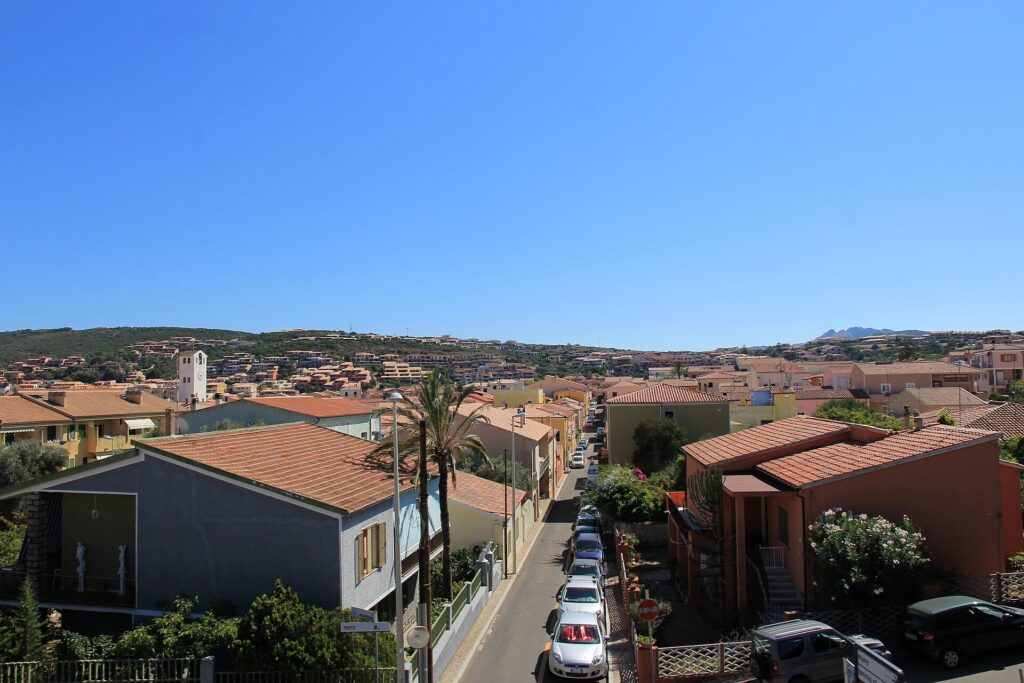
It’s a young town: around 4,000 people live here in winter, a figure that swells to tens of thousands in summer with holidaymakers, sailors and families. Palau has grown up among extraordinary granite rock formations, with a main street running down to the harbour, a lively seafront and little coves within walking distance of the centre.
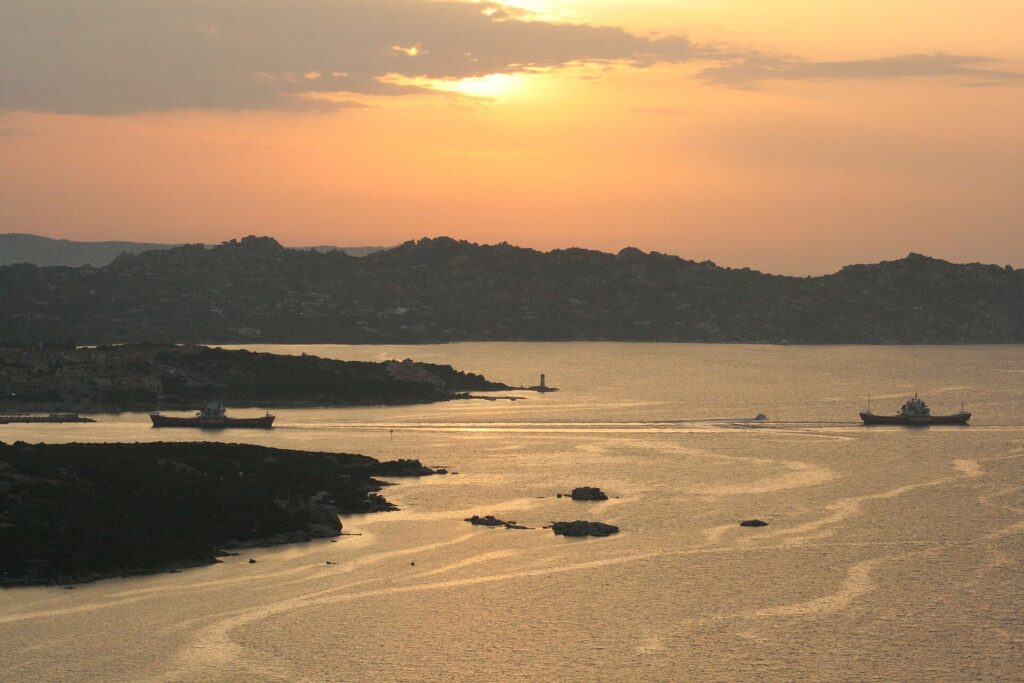
The main reason to come to Palau is its port: ferries leave from here for La Maddalena, which you reach in about twenty minutes, along with the boats heading out on excursions in the La Maddalena Archipelago National Park, taking in Budelli, Spargi, Santa Maria, Razzoli and Caprera. But Palau’s territory has two quite distinct souls: the seafaring one of the harbour and Porto Rafael, and the sporting one of Porto Pollo, where the steady wind draws windsurfers and kitesurfers from all over Europe.
It’s the right choice for families with children, couples, sailing fans and water-sports enthusiasts, but also for anyone looking for a comfortable base from which to explore northern Gallura without giving up an evening stroll past ice-cream parlours and shops.
What to see in Palau: the 12 stops not to miss
Here are the places that belong on any visit, from the town’s emblem to the beaches, archaeological sites and viewpoints.
1. The Roccia dell’Orso (Bear Rock)
This is the symbol of Palau, so much so that it appears on the town’s coat of arms. On the Capo d’Orso headland, a gigantic granite boulder shaped by erosion has taken on the form of a bear gazing out to sea. Sailors have always known it: the geographer Ptolemy, in the 2nd century AD, referred to this stretch of coast as Arcti Promontorium, the Bear’s Promontory.
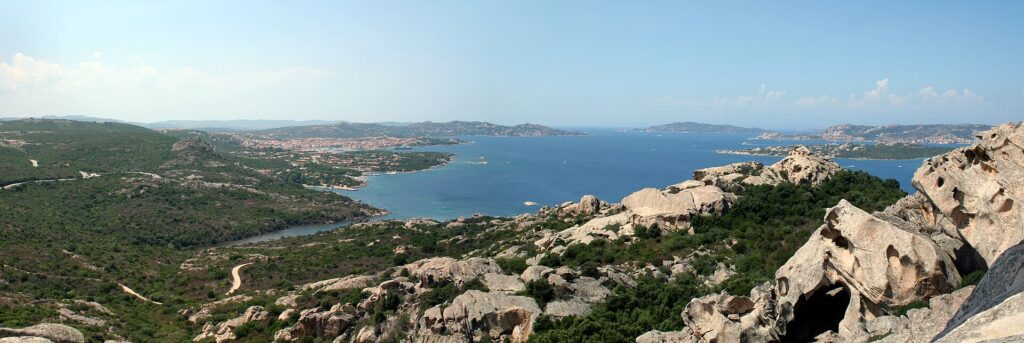
The rock stands about 122 metres above sea level and is reached by a short uphill path a few kilometres from the centre. The view from the top is spectacular: La Maddalena, Caprera, Santo Stefano, the Gallura coast and, on clear days, Corsica. The honeycomb-like hollows in the granite, known as tafoni, are a textbook example of how wind and salt sculpt rock. The best time to go is late afternoon, when the setting sun turns the granite orange.
2. The Fortezza di Monte Altura
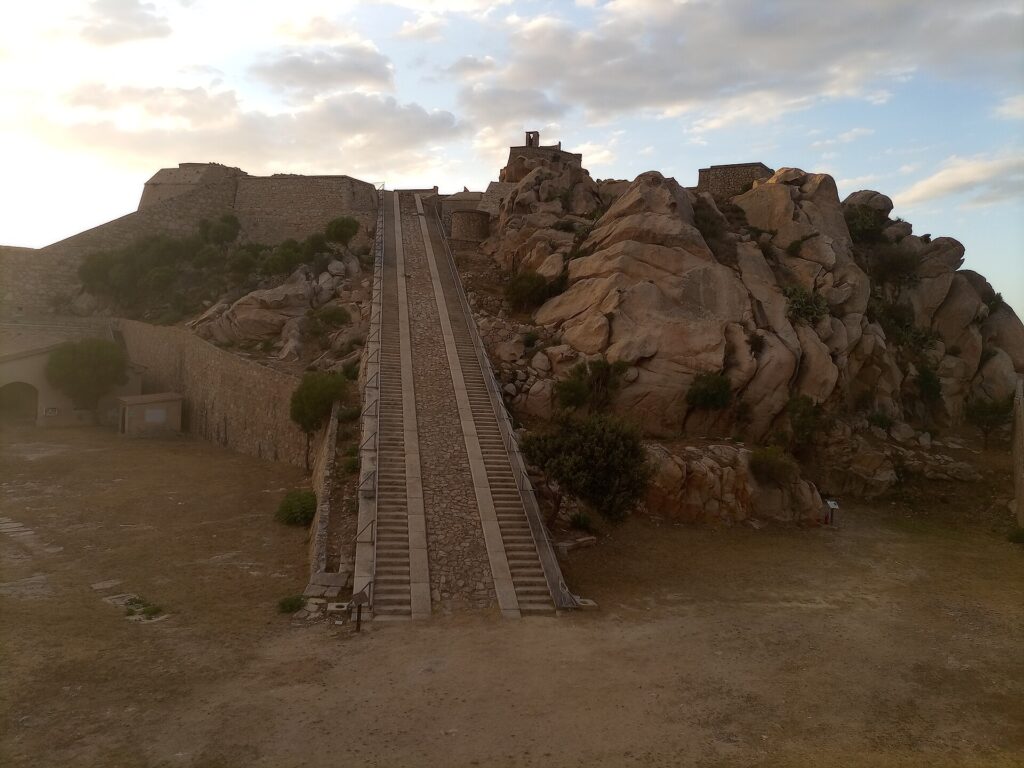
Built in just two years, between 1887 and 1889, the fortress was part of the military defence system of the La Maddalena archipelago, which was considered a strategic point for controlling the Strait of Bonifacio. It is camouflaged among the rocks of a hill behind the town, so well that from a distance it is almost indistinguishable from the granite.
Today it is open to the public with guided visits during the busiest months: you walk along passageways, gun emplacements and terraces that offer one of the widest views over the whole strait. It’s a perfect stop for anyone interested in military history, but also for those simply after an unforgettable view.
3. The harbour and the town centre
The heart of Palau is the main street that runs down to the sea, lined with shops, bars, restaurants and ice-cream parlours. It leads to the harbour, where the La Maddalena ferries, the fishing boats and the marina with its sailing yachts all share the water. In the evening it’s the place for the passeggio, the traditional stroll: you walk along the seafront, watch the boats coming and going and wait for the lights of the island opposite to come on.
In the square named after the Fresi family, among the founders of the town, stands Palazzo Fresi, which houses the town library.
4. The Trenino Verde station
Palau is the terminus of the historic Sassari–Tempio–Palau railway, now run as a tourist line by the Trenino Verde (the “Little Green Train”). The town has two stations, Palau and Palau Marina, the latter right by the harbour. In the summer months the train winds through cork oak woods, granite landscapes and Gallurese stazzi (traditional farmsteads) as far as the hinterland around Tempio Pausania: a slow, authentic journey that suits children too. Timetables and calendars change every year, so it’s best to check them before you set off.
5. Punta Sardegna and its lighthouse
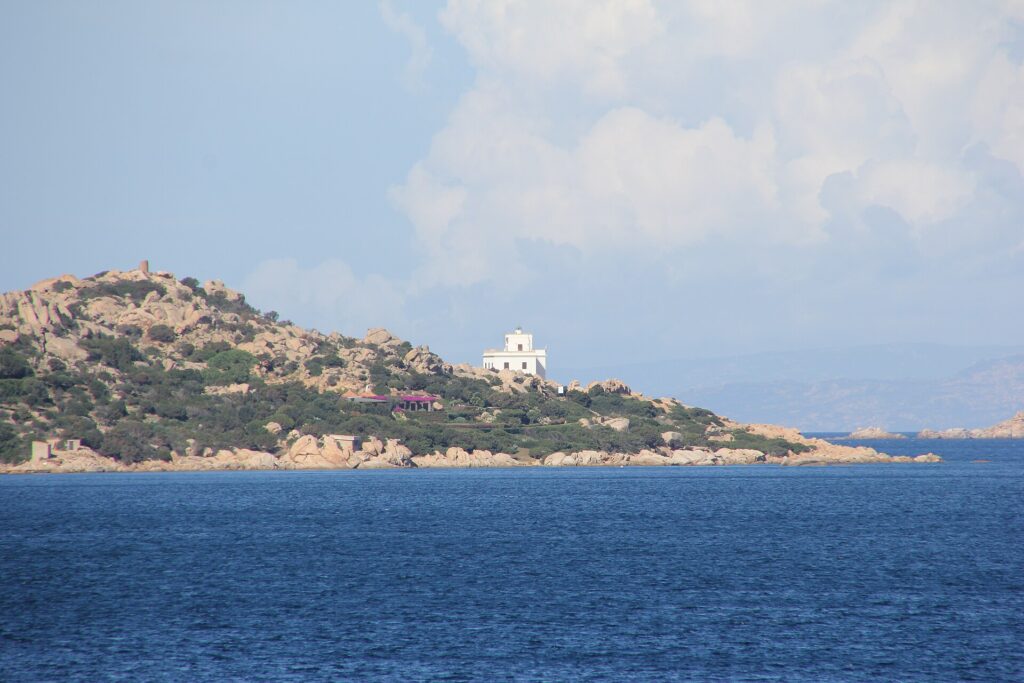
A few kilometres from the centre, the Punta Sardegna headland is one of the most beautiful viewpoints in the area. The little white lighthouse looks out over the sea between the archipelago’s islands and the coast: a classic spot for a sunset walk, with a view taking in Spargi, La Maddalena and Caprera.
6. Porto Rafael
Close to Punta Sardegna is Porto Rafael, a small village created in the 1960s, with villas set among the scrub, a little square overlooking the sea and a small marina. Sailing clubs here organise regattas such as the Formenton Trophy. It’s an elegant, peaceful corner with a small beach and calm water, ideal for an aperitivo with a sea view.
7. The Li Mizzani giants’ tomb
In Palau’s hinterland you’ll find this Bronze Age giants’ tomb, a collective burial place typical of the Nuragic civilisation. What stands out is the great central stele, about 2.8 metres high, which closes off the long funerary corridor. Set in the Mediterranean scrub, it’s an evocative stop for discovering the most ancient side of Gallura.
8. The Luchìa nuraghe
Not far from Li Mizzani, the Luchìa nuraghe (a Bronze Age stone tower) stands in a commanding position over the Strait of Bonifacio. It pairs well with a visit to the giants’ tomb, helping you understand how the Nuragic people controlled both the land and the sea.
9. The Sajacciu giants’ tomb and the church of San Giorgio
Close to the country church of San Giorgio lie the remains of the Sajacciu giants’ tomb. The monument is in a poor state of preservation, because in the 20th century its stones were reused as building material, but the place is still very atmospheric. The little church of San Giorgio is at the heart of a deeply felt country festival on 1 May.
10. The Batteria di Talmone
Near Punta don Diego, on the coast towards Porto Pollo, stand the remains of the Talmone military battery, another of the works that made up the Strait’s defensive system. The setting, between rocks and open sea, is wild and panoramic.
11. Porto Pollo and the Isola dei Gabbiani
About 7 km west of the centre, Porto Pollo is the capital of wind. The bay is split in two by the Isuledda peninsula, also called the Isola dei Gabbiani (Seagull Island), joined to the mainland by a thin sandy isthmus. On one side the water is calmer, on the other the wind is stronger, which is why it is one of Europe’s best-loved spots for windsurfing and kitesurfing, and hosts international competitions. Even if you don’t do water sports, you can enjoy the sight of the colourful sails and a long sandy beach.
12. Capo d’Orso and its seabed
The Capo d’Orso headland is about more than its famous rock: here you’ll find tombs carved into the tafoni, Neolithic remains and, on the seabed, wrecks that attract divers. The surrounding coast alternates coves with cliffs of pinkish granite.
The best beaches in Palau
Palau’s beaches are very varied: small coves near the centre, sheltered bays among the rocks and long stretches of sand exposed to the wind. Here are the main ones.
- Palau Vecchio: one of the beaches closest to the town, with pale sand and shallow water, handy for families.
- La Sciumara: in the Mezzo Schifo roadstead, a stone’s throw from the centre, this is the town beach for a quick dip.
- Spiaggia dell’Isolotto: split in two by a pine grove, it is sheltered and shady, perfect in the hottest hours.
- Porto Faro: next to the pine grove, with views of the archipelago’s islands.
- Spiaggia Nelson: a small cove among the rocks, named after the English admiral who sailed these waters.
- Cala Trana: between Palau and Porto Pollo, famous for its pinkish-tinged sand.
- Costa Serena: quiet, in the residential area of the same name.
- Porto Pollo and Isuledda: long sandy beaches, paradise for wind lovers, looking out towards Spargi, Budelli and the Cavalli islands.
- Porto Rafael and Punta Sardegna: small coves and calm water in an elegant setting.
A practical tip: in Palau the wind decides your day. When the maestrale (the north-westerly mistral) is blowing, choose the more sheltered beaches to the east, while with an easterly wind you’ll be better off on the Porto Pollo side. Pack water shoes for the coves among the rocks, and remember that taking sand, stones or shells away from Sardinian beaches is forbidden.
The La Maddalena archipelago from Palau
For a great many travellers, what to see in Palau means, first and foremost, setting off from here for the archipelago. The islands make up the La Maddalena Archipelago National Park, a protected area of sea and land with some of the most famous beaches in the Mediterranean.
There are two ways to visit. The first is to take the regular ferry to La Maddalena, with your car if you wish: the crossing takes about twenty minutes and services run frequently all year round. From the main island you can reach Caprera over a bridge and visit the Compendio Garibaldino, the house where Giuseppe Garibaldi spent his final years.
The second is the classic full-day boat trip, with swimming stops at the smaller islands: Budelli with its famous Spiaggia Rosa (Pink Beach, which can only be admired from the sea, as it is protected), Spargi with Cala Corsara, Santa Maria, Razzoli and the natural pools. You can choose between motor vessels, traditional gozzi boats, RIBs or sailing boats, with or without lunch on board. For more ideas, read our guide to boat trips in Sardinia.
Things to do in Palau: experiences to enjoy
- Boat trip around the archipelago: the star experience, to be booked well ahead in high season.
- Windsurfing and kitesurfing at Porto Pollo: schools and rentals for all levels, from beginners to experts.
- Sailing: courses and day outings among the islands, departing from the marina or from Porto Rafael.
- Snorkelling and diving: the granite seabed and the wrecks off Capo d’Orso are a small underwater paradise.
- Kayaking and SUP: for exploring the coves up close on days without wind.
- Scenic walks: from the Roccia dell’Orso to Punta Sardegna, short trails with magical views. For more ideas, read our guide to hiking in Sardinia.
- A trip on the Trenino Verde: towards the Gallura hinterland, through cork oak woods and stazzi.
- Day trip to Corsica: ferries for Bonifacio leave from Santa Teresa Gallura, just a few kilometres away.
For all the activities in the area, with excursions and experiences from local operators, visit our page on things to do in Palau.
A brief history of Palau
The name comes from the Catalan palau, meaning palace, a legacy of the Catalan-Aragonese rule that began in the 14th century. In Gallurese the town is called Lu Palau, in Sardinian Su Parau.
The area has been inhabited since prehistoric times, as the giants’ tombs and nuraghes show. Legend even links it to the Odyssey: some have wanted to recognise in these coasts the land of the Laestrygonians, the giants who attacked Odysseus’s ships.
The town proper, however, is very recent. In the first half of the 19th century, shepherds from Tempio Pausania came down to the sea in summer; the first house was built in 1875 by Gian Domenico Fresi-Zicchina, and the village grew towards the end of the century around the port, which was connected to La Maddalena. In 1793, on the nearby archipelago, the French fleet carrying a young Napoleon Bonaparte was repulsed by the sailors of La Maddalena, led by Domenico Millelire, along with Gallurese shepherds.
Between the 19th and 20th centuries the area was fortified with batteries and fortresses such as Monte Altura. On 10 April 1943 an air raid hit the Mezzo Schifo roadstead and sank the cruiser Trieste. Palau was a hamlet of Tempio Pausania until 1959, when it became an independent municipality. Since then, tourism has made it one of the best-known resorts in northern Sardinia.
What to eat in Palau
In Palau the cuisine blends the sea with the pastoral traditions of Gallura. On the table you’ll find fresh fish, seafood, lobster and fish soups, alongside inland dishes such as the Gallurese soup (suppa cuata, a baked layered dish of bread, cheese and meat broth), sheep’s cheeses and sweets made with almonds and honey.
The reference wine is Vermentino di Gallura, the island’s only DOCG, perfect with fish: we talk about it in our guide to Vermentino di Gallura. For a full picture of the island’s cuisine, read our piece on traditional Sardinian dishes.
To choose where to sit down for a meal, see our page on where to eat in Palau.
Festivals and events in Palau
- Palau Carnival: one of the best-known carnivals in northern Sardinia, with floats and parades that draw visitors from all over the island.
- Festa di San Giorgio (1 May): a country festival at the little church of San Giorgio, with outdoor lunches and accordion music.
- Festa di Santa Maria delle Grazie (first week of September): the patron saint’s festival, culminating in the striking procession of boats at sea.
- Regattas and windsurf and kite competitions: throughout the season, between Porto Rafael and Porto Pollo.
Exact dates change from year to year, so it’s best to check them before you leave on the town council’s channels.
Palau in 1, 2 or 3 days
One day: in the morning climb up to the Roccia dell’Orso, then swim at Palau Vecchio or the Isolotto. In the afternoon visit the Fortezza di Monte Altura and finish with sunset at Punta Sardegna and a stroll along the harbour.
Two days: spend the second day on a boat trip around the La Maddalena archipelago, with stops at Budelli, Spargi and Santa Maria.
Three days: on the third day, discover the most ancient side of Gallura with Li Mizzani and the Luchìa nuraghe, then spend the afternoon at Porto Pollo among sails and wind. Alternatively, take the ferry to La Maddalena and Caprera.
Around Palau
Palau is a perfect base for exploring north-east Sardinia. Just a few kilometres away are Santa Teresa Gallura with Capo Testa, Arzachena and its Nuragic sites, the Costa Smeralda with Porto Cervo, and the hinterland of Tempio Pausania and Monte Limbara.
Heading south you’ll find the beaches and lagoon of San Teodoro, about an hour’s drive away. Further afield, on the east coast, are Dorgali and the Gulf of Orosei; to the west, Alghero and Bosa.
Practical information: how to get there, parking, when to go
How to get to Palau
The nearest airport is Olbia Costa Smeralda, about 40 km away: by car it takes around 40 minutes along the road towards Arzachena. The port of Olbia, with ferries from the mainland, is also about 40 km away. Alghero airport and the port of Porto Torres are further off. There are bus connections from Olbia, but to get around the beaches a car remains the most convenient option.
Getting around and parking
The centre is easy to explore on foot. In summer the car parks near the harbour and the closest beaches fill up early and many are paid, so it’s best to arrive in the morning. If you’re going to La Maddalena for the day, consider leaving the car in Palau and taking the ferry as a foot passenger. Scooters and e-bikes are an excellent alternative.
Where to stay
The centre of Palau is ideal if you want everything close at hand: harbour, restaurants, ferries. Porto Rafael and Punta Sardegna are quieter and more upmarket. Windsurfers and kitesurfers choose Porto Pollo and Barrabisa, while Costa Serena and the residential areas offer holiday homes for families.
When to go
The best period runs from May to October. June and September are the most pleasant months: warm sea, fewer crowds and lower prices. July and August are lively but busy. For windsurfing and kitesurfing the shoulder seasons are excellent, while in winter the town is quiet and you can have the Roccia dell’Orso almost to yourself.
For official information, see the Palau page on Sardegna Turismo.
Frequently asked questions about what to see in Palau
What is the symbol of Palau?
The Roccia dell’Orso, a bear-shaped granite boulder on the Capo d’Orso headland, already mentioned by Ptolemy. It also appears on the town’s coat of arms.
How long is the ferry from Palau to La Maddalena?
About twenty minutes. Services run frequently all year round and you can take your car on board.
What is the most beautiful beach in Palau?
It depends on the wind and your tastes: Palau Vecchio and the Isolotto are handy for families, Cala Trana stands out for its pinkish sand, and Porto Pollo is paradise for windsurfing and kitesurfing.
Is Palau suitable for children?
Yes: many beaches have shallow water, and the Trenino Verde and boat trips are a big hit with little ones. You’ll find more ideas in our guide to Sardinia with children.
How many days do you need to visit Palau?
At least two days: one for the town and the Roccia dell’Orso, one for the boat trip around the archipelago. With three or four days you can add Porto Pollo, the archaeological sites and La Maddalena.
Palau, best enjoyed with those who know it
Now you know what to see in Palau: the Roccia dell’Orso, the Fortezza di Monte Altura, Punta Sardegna, the beaches, Porto Pollo and the open door to the La Maddalena archipelago. Whether you come for a week by the sea in August or a weekend of wind and sailing in spring, you’ll always find a cove, a trail or a sunset to remember. To make the most of it, rely on people who really know the place: choose an experience from those offered by local operators and contact them directly, with no middlemen. Ajò, Sardinia is waiting for you.
