Sartiglia of Oristano 2027
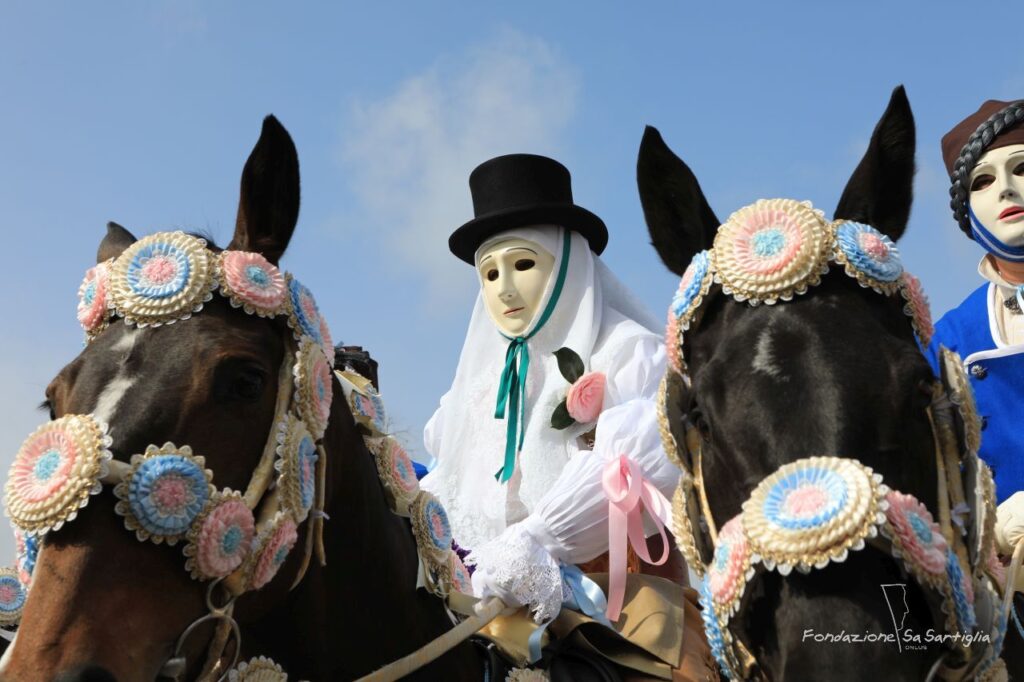
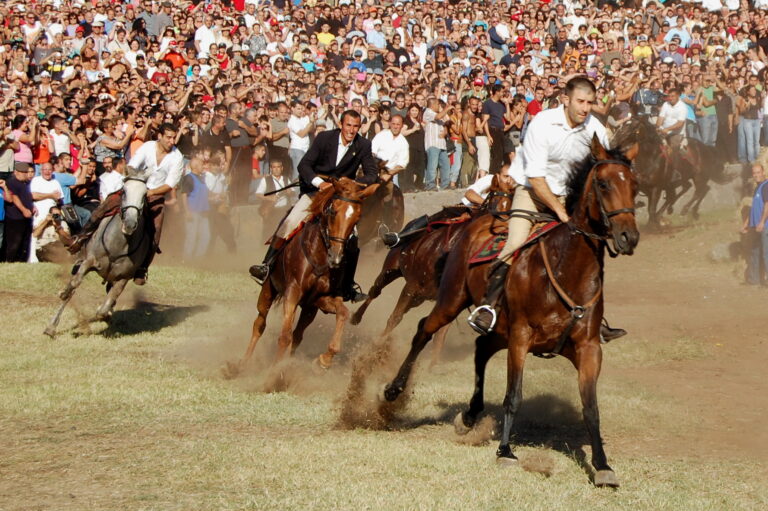
The Sartiglia of Oristano is the horseback joust that closes the town’s carnival every year, with masked riders at full gallop and breathtaking acrobatics. In 2027 it takes place on Carnival Sunday, 7 February, and Shrove Tuesday, 9 February, in the historic centre of Oristano, on the west coast of Sardinia. If you’re on the island in winter, this is the one event not to miss.
History and meaning of the Sartiglia
The Sartiglia grew out of the military training games that knights played across medieval Europe, spearing targets while riding at speed. In Oristano the oldest records in the town archive date back to the mid-16th century, when Sardinia was under Spanish rule, and the name itself comes from the Castilian sortija, meaning “ring”: the original target was a ring, later replaced by a star. The word also echoes the Latin sors, “luck”, because the joust is above all a ritual for a good year.
The festival is run by two ancient trade guilds, called gremi. The Farmers’ Guild (Gremio dei Contadini), linked to Saint John the Baptist, organises the Sunday race, and the Carpenters’ Guild (Gremio dei Falegnami), linked to Saint Joseph, organises Tuesday’s. Everything starts on 2 February, Candlemas, when each guild names its su Componidori – the leader of the race – and hands him a blessed candle.
The meaning is rooted in farming: the more stars the riders hit, the richer the harvest will be. That’s why the whole town follows each run with almost religious attention.
What to see at the Sartiglia 2027
The dressing of su Componidori
The day begins at the guild’s headquarters with the vestizione, or dressing ceremony. Su Componidori stands on a table, sa mesitta, and from then on he must not touch the ground until evening. Young women in traditional dress, the massaieddas, sew his shirt, veil and hat onto him and fit a wooden mask with a mysterious, androgynous face. The two days are easy to tell apart: the Farmers’ mask is darker with red bows, the Carpenters’ is pale like wax, with pink and blue bows. He is then given sa pipia de maiu, a sceptre of violets and periwinkles used to bless the crowd.
The race to the star
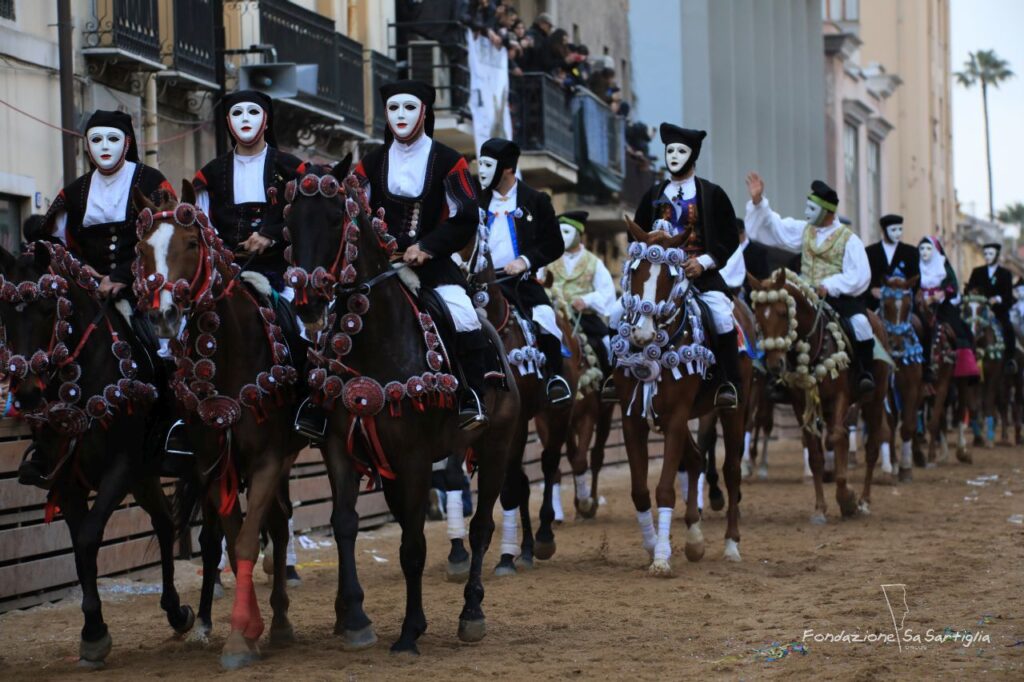
Escorted by drummers and trumpeters, the procession reaches the track on via Duomo, below the cathedral. A metal star hangs from a green ribbon above the middle of the course. Su Componidori gallops first, trying to pierce it with his sword, followed by the riders he chooses, starting with his two seconds, su segundu and su terzu componi. Then he tries once more with the stocco, a wooden lance. Every star taken is greeted with a roar.
Sa remada and the pariglie
The race ends with sa remada: su Componidori rides down the track lying flat on his back across the horse, blessing everyone. In the afternoon the action moves to via Mazzini for the pariglie, teams of three riders galloping side by side while standing up and performing stunts. At sunset the mask is finally removed at the guild hall and the “demigod” becomes a man again.
What to eat in Oristano at carnival time
Carnival in Oristano smells of frying: sugary zippulas (fritters) are sold everywhere during the Sartiglia. The town is also known for mustazzolus, glazed local biscuits, and for Vernaccia di Oristano, an amber, sherry-like wine from the Tirso valley. From the nearby Cabras lagoon come grey mullet and bottarga (cured mullet roe) – a great food souvenir, along with a Sardinian pecorino cheese or a bottle of Vernaccia.
Things to do in Oristano and the Sinis peninsula
The old town is easy to explore on foot: the Cathedral of Santa Maria Assunta with its onion-domed bell tower, the Tower of Mariano II, a surviving piece of the medieval walls, and Piazza Eleonora d’Arborea, named after the 14th-century ruler who issued the Carta de Logu law code. Just outside town stands the Romanesque basilica of Santa Giusta, beside its lagoon.
West of Oristano lies the Sinis peninsula: the Phoenician and Roman ruins of Tharros, the early Christian church of San Giovanni di Sinis, beaches made of tiny quartz grains such as Is Arutas, and the museum in Cabras that displays the Giants of Mont’e Prama, Nuragic stone statues among the oldest in the western Mediterranean. In February the Sinis is quiet and luminous – ideal for the Monday between the two races.
How to get to the Sartiglia and practical tips
Oristano lies on the SS131 highway that runs the length of Sardinia. From Cagliari airport it takes about an hour and a quarter by car; from Alghero or Olbia airports, about two hours. Oristano also has a railway station on the line linking Cagliari with the north. If you’re coming by ferry, the nearest ports are Cagliari, Porto Torres and Olbia.
- Grandstands: seats along via Duomo and via Mazzini are ticketed and sell out, so buy early through the official Sartiglia channels. Without a seat, viewing space is very limited.
- Timing: the dressing usually happens around midday and the race in the early afternoon, but always check the official programme for exact times.
- Clothing: February can be windy and damp – bring a warm jacket and comfortable shoes.
- Where to stay: rooms in town go fast; consider Cabras, Santa Giusta or the Sinis coast.
Sartiglia FAQ
When is the Sartiglia 2027?
On Sunday 7 February 2027 (Farmers’ Guild) and Shrove Tuesday 9 February 2027 (Carpenters’ Guild).
Who is su Componidori?
The masked leader of the Sartiglia, chosen by his guild on Candlemas. He leads the race to the star and blesses the crowd, and he never touches the ground between the dressing and the undressing.
Why do riders try to spear a star?
It’s a good-luck ritual: tradition says that the more stars are hit, the better the year’s harvest will be.
Source: www.sardegnaturismo.it