Descent of the Candelieri in Sassari 2027
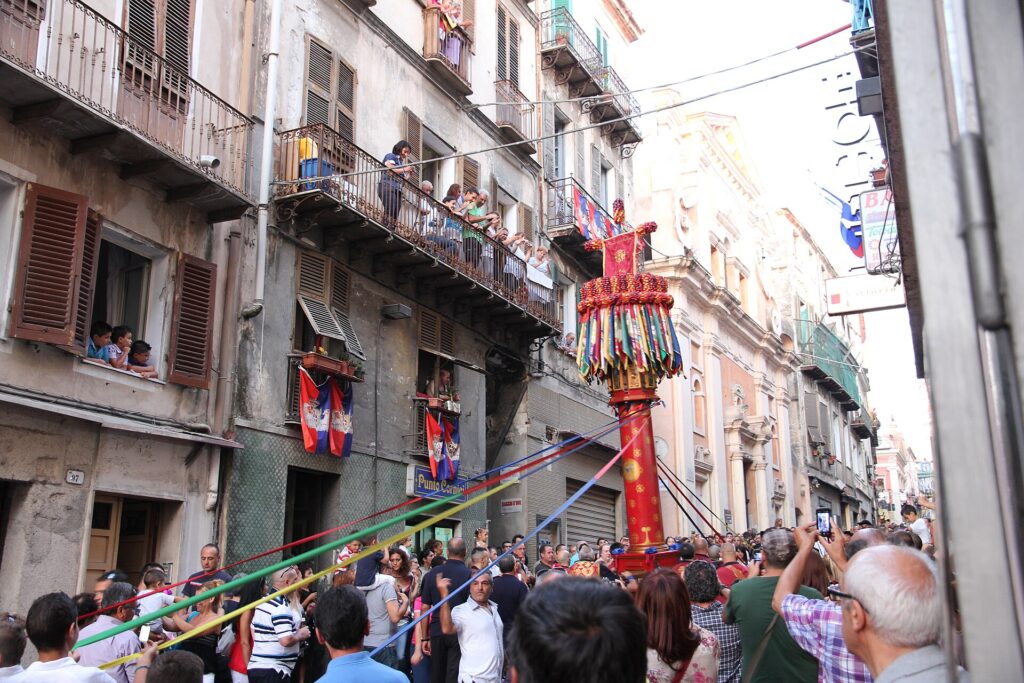
The Descent of the Candelieri – Faradda di li candareri in the local Sassarese dialect – is the best-loved festival in Sassari, Sardinia’s second city, and many locals simply call it la Festha Manna, “the big feast”. Every year, on the eve of the Assumption, the city’s guilds carry huge decorated wooden columns on their shoulders, making them dance through the streets of the old town. In 2027 it takes place on Saturday 14 August, from late afternoon until well into the evening.
History of the Candelieri and the vow to Our Lady
The festival is very old and, historians believe, probably of Pisan origin: in Pisa, a city closely tied to medieval Sassari, the faithful carried wax candles in procession as offerings to the Virgin. Over time the wax was replaced by large wooden columns, the candelieri (“candlesticks”), and the procession became a vow to Our Lady of the Assumption for protection from plague, which struck Sassari several times in the 16th and 17th centuries. As early as the 16th century an ordinance regulated the descent from Piazza Castello to the church of Santa Maria di Betlem.
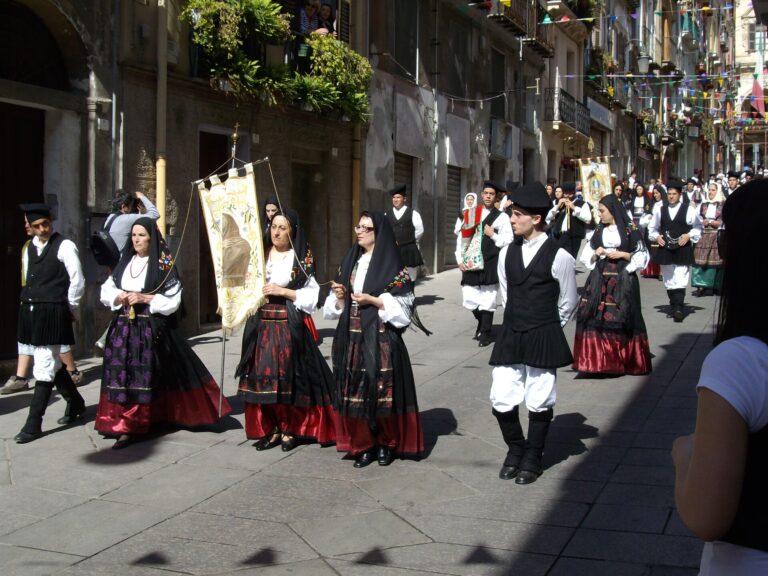
The heart of the festival are the Gremi, the city’s ancient trade guilds: landowners (massai), butchers, blacksmiths, travellers, stonecutters, carpenters, farmers, shoemakers, market gardeners, masons and tailors, joined in recent years by new guilds. Each has its own candeliere, colours, flag and an Obriere Maggiore who leads it. Since 2013 the Faradda has been on UNESCO’s list of Intangible Cultural Heritage, together with Italy’s other great shoulder-borne festivals: the Varia of Palmi, the Gigli of Nola and the Macchina di Santa Rosa in Viterbo.
What to see at the Faradda 2027: the dancing candlesticks
The candelieri and their bearers
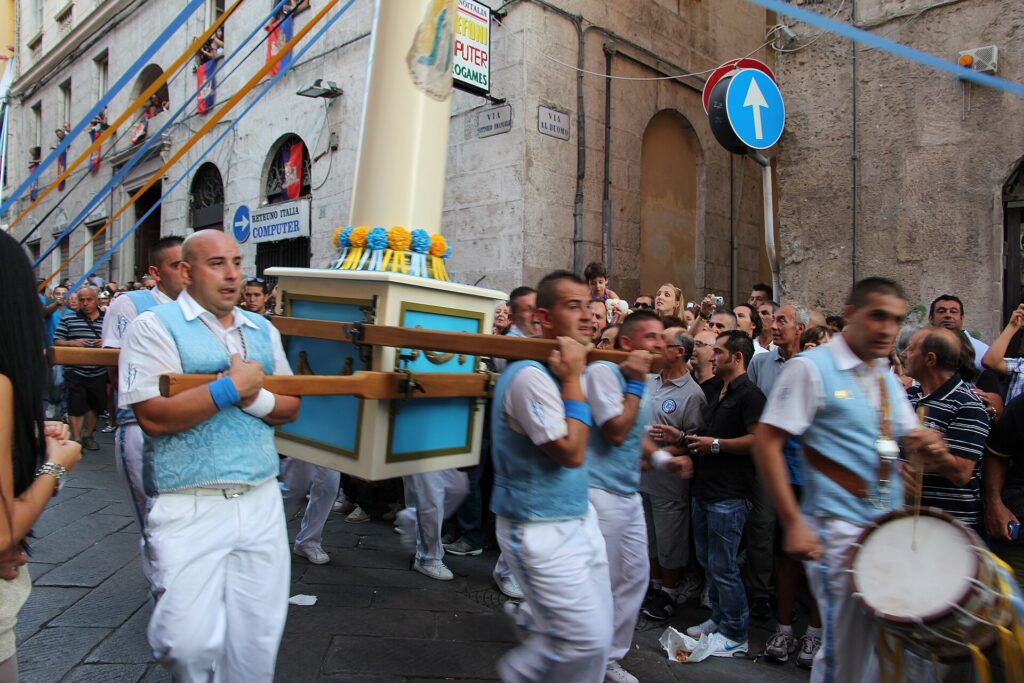
Each candeliere is a wooden column about three metres tall, topped with a capital and decorated with coloured ribbons, little flags and flowers, and it can weigh several hundred kilos. It’s carried by eight men from the guild, taking turns along the way, while the guild’s children hold the long ribbons hanging from the top. The real show is the dance: to the beat of drums and fifes, the bearers sway and spin the candeliere as the crowd urges them to make it dance again.
The day of 14 August
Things start in the morning, when the candelieri are dressed at the guild halls and the Massai guild pays a visit to the mayor. In the afternoon the candelieri gather in Piazza Castello, and from there the descent begins along Corso Vittorio Emanuele, the main street of the old town. On the corso, in front of the old city hall, the mayor and council welcome the procession and the Massai exchange their flag for the city’s banner. The masons’ guild makes a short detour for a symbolic dance against the plague.
Arrival at Santa Maria di Betlem
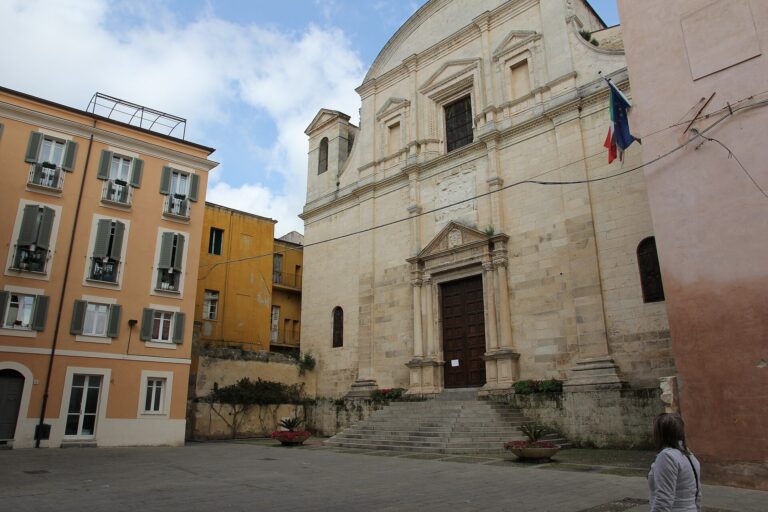
The descent ends in front of the church of Santa Maria di Betlem, which the candelieri enter one by one, in reverse order. In a ceremony with the friars and the archbishop the vow is fulfilled – to be renewed the following year. Watching the columns pass through the church door amid applause and tears is one of the most moving moments of a Sardinian summer.
What to eat in Sassari
Sassari has its own down-to-earth food culture. The most famous speciality is fainè, a thin chickpea-flour flatbread of Ligurian origin baked in a wood oven, often topped with onions or sausage. The adventurous can try zimino, grilled offal, and monzette, small snails stewed or baked. To take home: pecorino and other cheeses from the Logudoro area, traditional bread, almond sweets and a bottle of Moscato di Sorso-Sennori, a sweet wine made just outside the city – or a Cannonau or Vermentino.
Things to do in Sassari and nearby
In the old town, don’t miss the Cathedral of San Nicola with its Baroque façade, the Rosello Fountain, the city’s symbol, the elegant Piazza d’Italia and the Sanna National Museum, with finds from prehistory to Roman times.
Nearby you’ll find the prehistoric altar of Monte d’Accoddi, unique in the Mediterranean, the striped Romanesque basilica of Santissima Trinità di Saccargia at Codrongianos, the basilica of San Gavino in Porto Torres and the medieval hilltop village of Castelsardo. In August the sea is close: Platamona beach is a few kilometres away, and in under an hour you can reach Stintino and La Pelosa beach, or Alghero.
How to get to Sassari and practical tips
The nearest airport is Alghero-Fertilia, about half an hour by car. From Olbia airport it’s about an hour and a quarter, and from Cagliari about two and a half hours on the SS131 highway. If you arrive by ferry, Porto Torres is about 20 minutes from the city.
- Timing: the descent usually starts in the late afternoon and ends late in the evening; check the official programme on the City of Sassari website.
- Where to stand: the corso and Piazza Castello fill up early. Arrive well ahead and pick a spot along the route; the crowd is densest at the end, near Santa Maria di Betlem.
- Heat: mid-August is hot – bring water and a hat for the long wait.
- Traffic: the centre is closed to cars, so park further out and walk.
- Accommodation: 14 August is the eve of Ferragosto, Italy’s big summer holiday, so book early or stay in Alghero, Porto Torres or on the coast.
Candelieri of Sassari FAQ
When is the Descent of the Candelieri 2027?
On Saturday 14 August 2027, the eve of the Assumption, from late afternoon into the evening.
What is the route?
From Piazza Castello down Corso Vittorio Emanuele to the church of Santa Maria di Betlem – downhill all the way, which is why it’s called Faradda, “descent”.
Is the festival UNESCO-listed?
Yes, since 2013, as part of the network of Italy’s great shoulder-borne processions together with Palmi, Nola and Viterbo.