Rassegna de S’Antunna in Macomer 2026: the mushroom festival
Price on request Discover
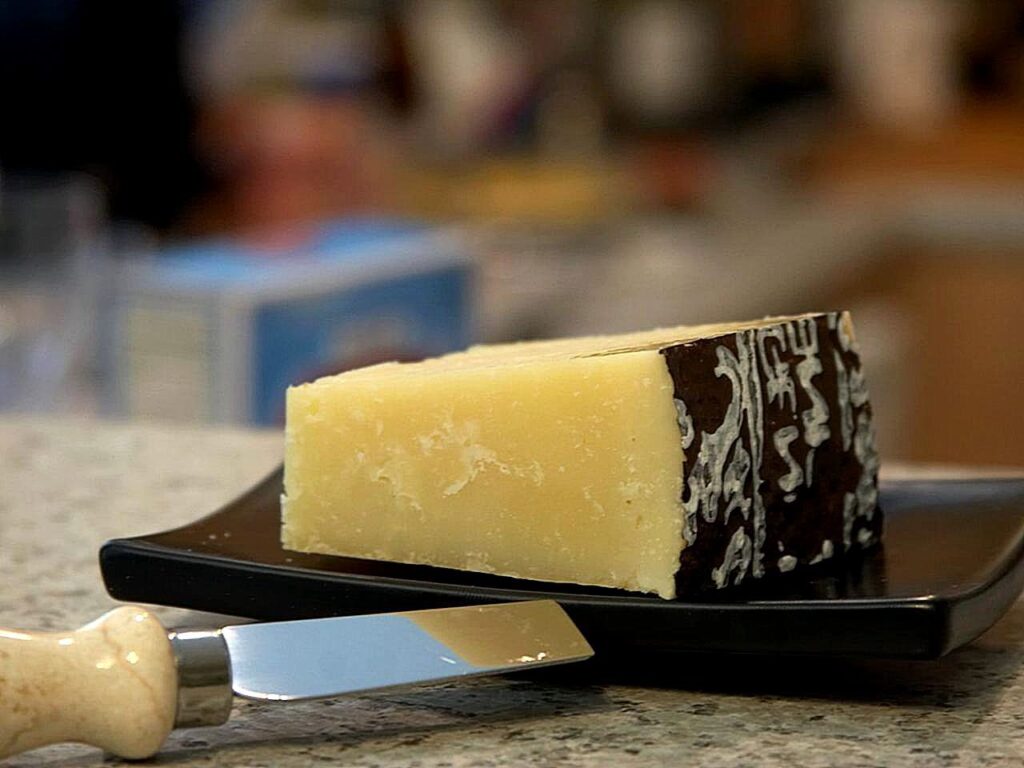
It’s called “Romano”, but these days it speaks mostly Sardinian. Pecorino Romano PDO is one of Italy’s oldest cheeses, and more than 90% of it is made in Sardinia, from the milk of the island’s sheep and the work of its shepherds and dairies. It’s the cheese grated over carbonara in New York and over malloreddus in a Sardinian kitchen.
Its roots go back to ancient Rome: Latin writers such as Varro and Pliny the Elder described sheep’s cheese making around Rome, and pecorino was part of the legionaries’ rations. For centuries production stayed in Lazio. In the late 19th century things changed. According to the most common account, in 1884 Rome banned the salting of cheese in city shops, while demand kept growing and Lazio’s flocks could no longer keep up. Several producers moved to Sardinia, with its abundant sheep’s milk and deep pastoral tradition, and within a few decades Pecorino Romano became the island’s most produced and exported cheese.
Early 20th-century emigrants carried it to the Americas, its heavy salting keeping it safe on the voyage, and the United States is still a key market. That’s why its price is closely tied to the price shepherds get for their milk: in February 2019 Sardinian shepherds famously poured their milk onto the roads in protest.
The wheels are big: 25-40 cm tall and weighing 20-35 kg, with a thin ivory rind or a black food-grade coating. The paste is compact, white to straw-coloured, hard and crumbly, with a savoury, aromatic and slightly sharp taste.
Pecorino Romano received its designation of origin in 1955 and became an EU PDO in 1996 (Regulation EC 1107/96). It may be made in all of Sardinia, in Lazio and in the province of Grosseto. The protection consortium, founded in 1979, is based in Macomer, in central Sardinia. When the whole process happens on the island, the rind may also carry the word “Sardegna”.
Pecorino Romano is made across the island wherever there are flocks and pastures. Macomer, home of the consortium, is a good reference point. You’ll find it in every Sardinian deli and market, often next to Pecorino Sardo and Fiore Sardo: tasting them side by side is the best way to learn the differences. Some dairies and farms welcome visitors for tastings; always check ahead.
The name recalls its origins in Lazio. Since the late 1800s production has largely moved to Sardinia, which now makes over 90% of it.
Pecorino Romano uses lamb rennet, comes in much larger wheels, is saltier and ages at least 5 months. Pecorino Sardo uses calf rennet and also comes in a young “dolce” version.
Do you run activities in Sardinia?
Get your own page on Ajò Sardegna: free until 31 May 2027, no commissions, with customer requests coming straight to you. If you like, we prepare the page for you.
Hi!
Can I help you?
Lia is an AI-based virtual assistant and can make mistakes: always check with the operator. Please don't share personal data. Privacy