New Year 4×4 Tour in Sardinia: Olbia to Porto Torres
Off Road Sardinia Tour - Frank Caprai
Price on request Discover
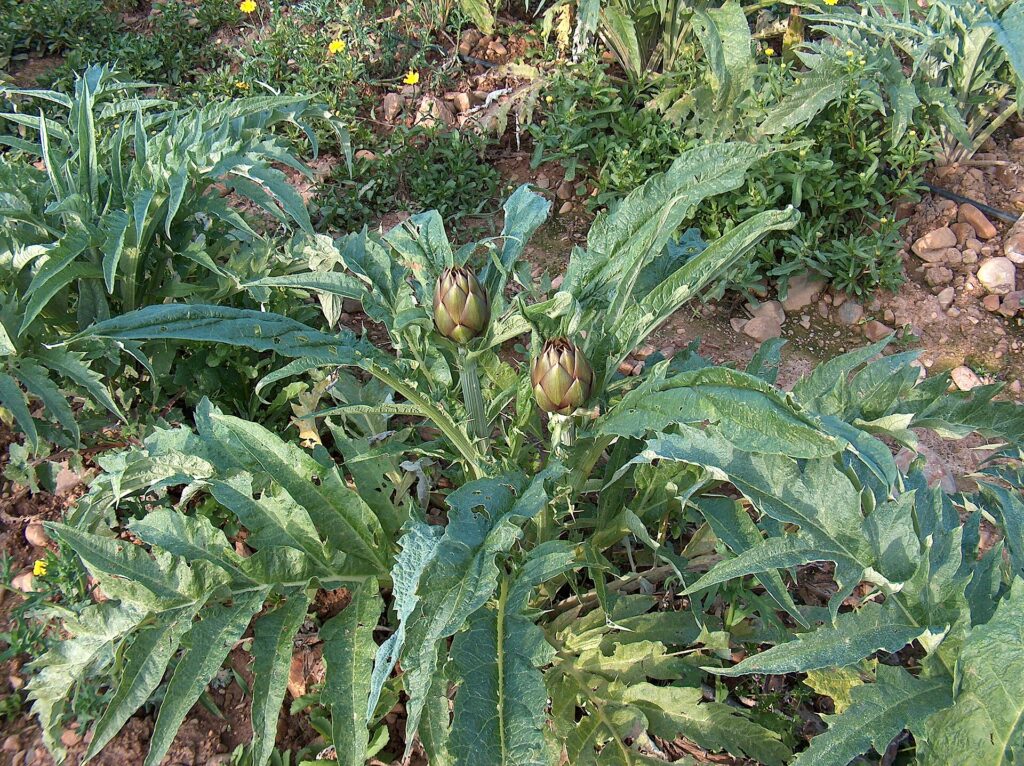
In Sardinia, the arrival of the first crates of spiny artichokes at the market means the good season has begun. The Carciofo spinoso di Sardegna PDO is one of the island’s most distinctive crops: an elongated, green head with purple tones, a bold, slightly bitter flavour and yellow thorns that prick your fingers. It is so tender that Sardinians happily eat it raw, from autumn right through to late spring.
The PDO specification traces artichoke growing on the island back to Phoenician times. Firmer evidence comes from the 18th century: in 1780 the agronomist Andrea Manca dell’Arca wrote about it in his «Agricoltura di Sardegna», and in 1921 the linguist Max Leopold Wagner recorded it in his studies of Sardinian rural life. In the 1800s it even appeared among the crops taxed by the barracelli, the old rural guards. Real specialisation came in the early 20th century, when the artichoke became an important part of the farming economy in several areas.
The PDO covers the local ecotype «Spinoso sardo» (Cynara scolymus). The head is elongated and conical, at least 6 cm tall and 6 to 13 cm across. The outer bracts are green with violet-brown shading and end in a yellow spine; the inner ones are straw-yellow with purple veins. It is sold with a long stem, which is edible too.
Artichokes are harvested by hand before the bracts open, from 1 September to 31 May, with a maximum of ten heads per plant. The production area includes more than a hundred municipalities. The best-known growing districts are the Campidano (Samassi, Serramanna, Villasor, Sanluri, San Gavino Monreale), the area around Sassari (Uri, Ittiri, Usini, Valledoria), Terralba near Oristano and Masainas in the Lower Sulcis.
«Carciofo Spinoso di Sardegna» was registered as a Protected Designation of Origin by Commission Regulation (EU) No 94/2011 of 3 February 2011; the specification was amended in 2016 (Implementing Regulation (EU) 2016/328). On the label look for the name, the EU PDO logo, the category (Extra or I) and the size grade.
The most Sardinian way is the simplest: raw, thinly sliced and dressed with extra virgin olive oil, salt and a little lemon, sometimes with shavings of bottarga or aged pecorino. Cooked, it is fried in batter, added to omelettes, braised, stuffed, or stirred into risotto and pasta sauces. A family classic is lamb with artichokes, a Sunday and holiday dish. A fresh, savoury Sardinian white such as Vermentino is a natural match.
From September to May you will find it at local markets, farms, restaurants and agriturismi in the growing areas. Two festivals have become traditions: the Sagra del Carciofo in Samassi, which reached its 36th edition in mid-March 2026 alongside a food and crafts fair and the long-running Artichoke Marathon walk, and the Sagra del Carciofo in Uri, run by the local Pro Loco, which held its 34th edition in early March 2026. Dates change every year, so check the official town and Pro Loco channels before you travel. Some farms also offer field visits and cooking workshops: ask locally.
The PDO rules allow harvesting from 1 September to 31 May; the first artichokes arrive in autumn, and they are usually most plentiful between winter and spring.
Not really: remove the tough outer bracts and cut off the spiny tip. The tender heart can even be eaten raw.
Look for «Carciofo Spinoso di Sardegna» PDO and the EU logo on the label, together with category and size.
Do you run activities in Sardinia?
Get your own page on Ajò Sardegna: free until 31 May 2027, no commissions, with customer requests coming straight to you. If you like, we prepare the page for you.
Hi!
Can I help you?
Lia is an AI-based virtual assistant and can make mistakes: always check with the operator. Please don't share personal data. Privacy