White coves at the foot of towering cliffs, a rock spire reflected in turquoise water, a plateau where donkeys and horses graze, and a chasm nearly 300 metres deep: what to see in Baunei is the question of anyone dreaming of the wildest side of Sardinia. This village in Ogliastra is home to some of the most photographed landscapes in the Mediterranean.
In this guide you’ll find the 12 stops not to miss in Baunei, the coves one by one with tips on how to reach them, the hikes, the experiences, the history, the traditional dishes, the festivals and all the practical information: how to get there, where to park, when to go and how many days to stay.
Contents
Su mare de Baunei no si contat, si mirat («The sea of Baunei is not to be told, it is to be looked at»).
Popular saying from Ogliastra
Why visit Baunei
Baunei lies on Sardinia’s east coast, in Ogliastra, clinging to a limestone wall at an altitude of about 480 metres. It has just over 3,500 inhabitants but a vast territory: from the Supramonte mountains it runs down to the sea along more than 40 kilometres of almost entirely uninhabited coastline, between the Gulf of Orosei and the seaside hamlet of Santa Maria Navarrese.
This is a coast you can’t reach by car: the coves open out at the end of deep gorges known as «codule», and you get to them by boat or on foot, along ancient paths once used by shepherds and charcoal burners. Behind them stretches the Golgo plateau, a world of holm oaks, stone and silence.
Baunei appeals to hikers, to those looking for a spectacular sea far from the beach clubs, to climbers, and to anyone who wants to get to know an authentic Ogliastra, a land of shepherds and longevity. If you’re wondering what to see in Baunei, be ready to choose every day between a cove reached by boat and a path among the rocks.
Things to see in Baunei: the 12 stops not to miss
1. Cala Goloritzè
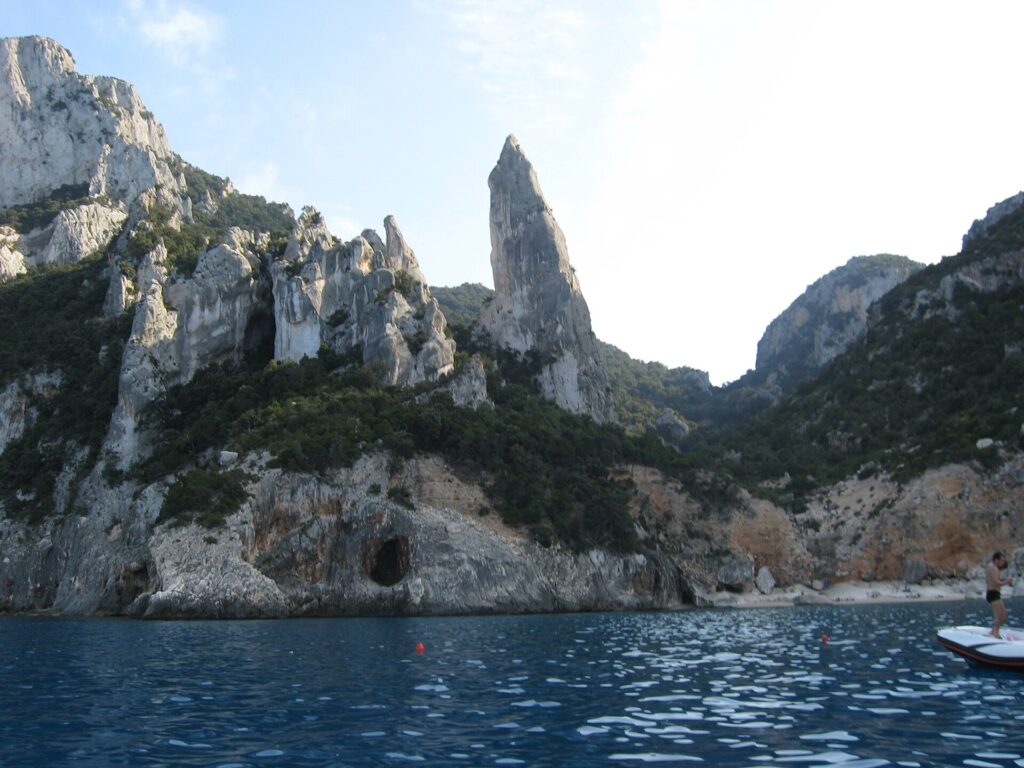
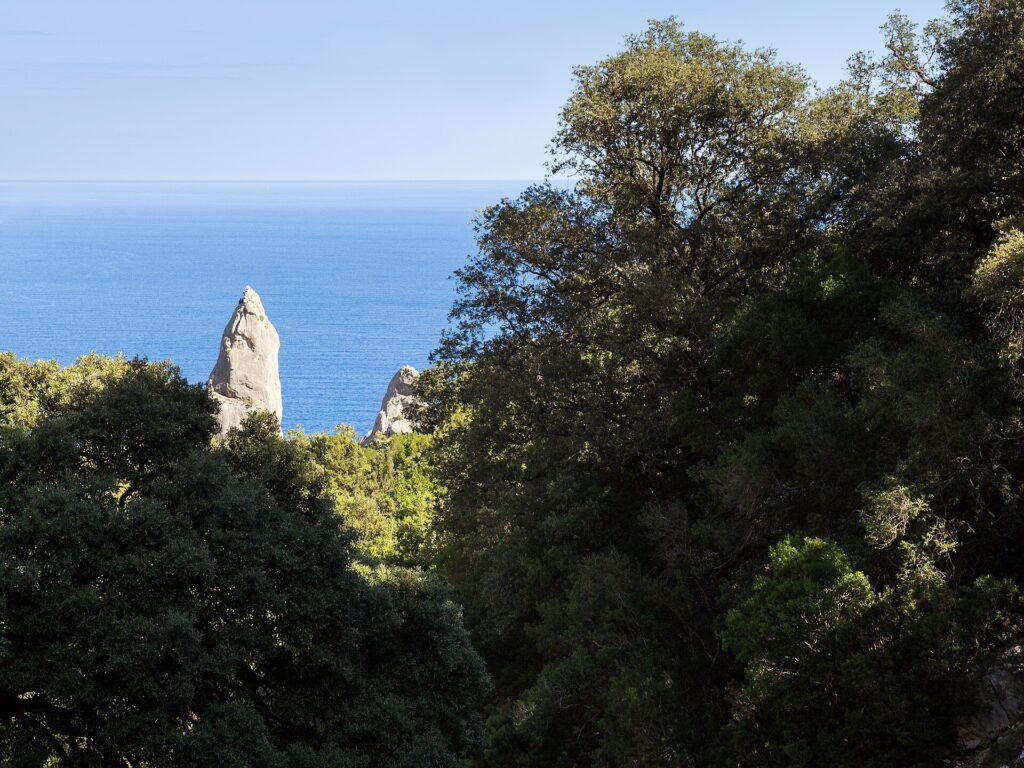
This is the emblem cove of Ogliastra and one of the most beautiful in Italy, officially declared a natural monument. A small beach of white pebbles enclosed by limestone walls, a rock arch over the sea and above all the Goloritzè spire, a pinnacle more than 140 metres high that rises above the emerald water.
Boats cannot approach the shore: you can only get there on foot, along a path of about an hour and a half that starts from the locality of Su Porteddu, on the Golgo plateau. In high season access is limited to a set number of visitors and requires a small fee: always check the latest rules before setting off.
2. Cala Mariolu
White and pink pebbles and a sea whose shades range from turquoise to cobalt blue: for many people, Cala Mariolu is the most beautiful beach in the gulf. You can reach it by boat from Santa Maria Navarrese or Cala Gonone, or on a demanding hike. The seabed is perfect for snorkelling.
3. Cala Biriola and Cala dei Gabbiani
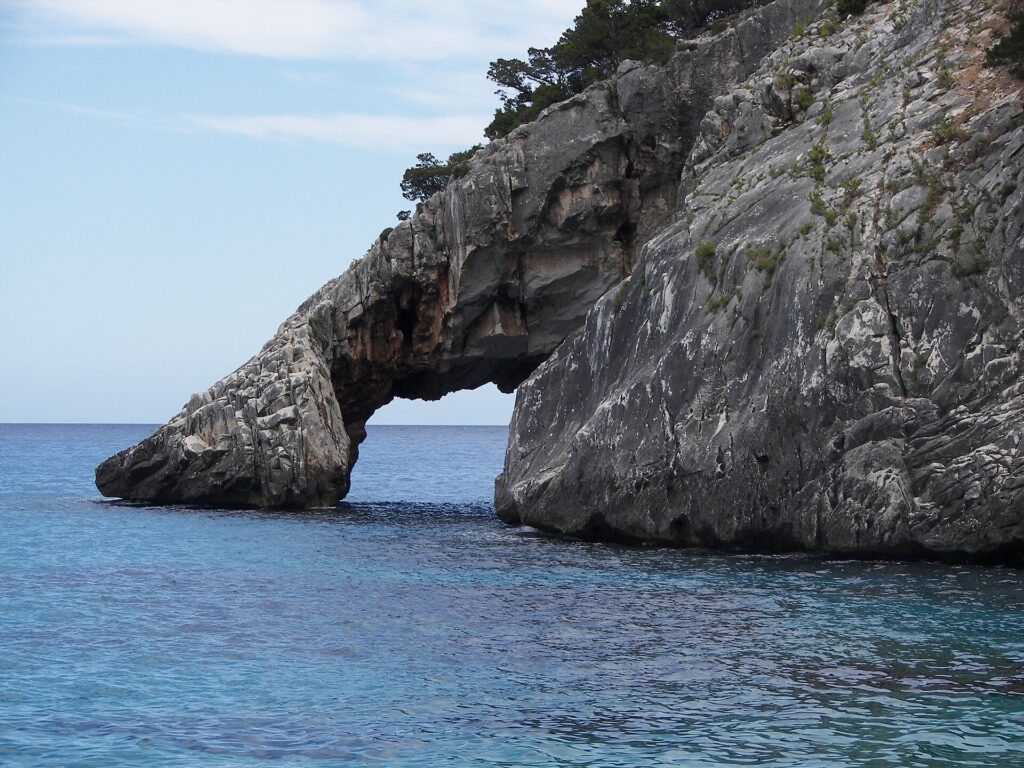
Two small coves close to Cala Mariolu, with rock arches, caves and crystal-clear water. Cala Biriola is dominated by a pale rock wall and a small holm oak wood, while Cala dei Gabbiani is more secluded. They are among the best-loved stops on boat trips along the coast.
4. Cala Sisine
At the end of the gorge of the same name, Cala Sisine is a beach of sand and pebbles surrounded by dense vegetation. You can reach it by boat or on foot, descending from the plateau along the gorge: an atmospheric route among centuries-old holm oaks and rock walls.
5. The Piscine di Venere
Between Cala Goloritzè and Santa Maria Navarrese, the sea forms natural «pools» along the coast, with very shallow, transparent water and a pale seabed that creates a Caribbean effect. They are a classic stop on boat and inflatable boat trips.
6. Pedra Longa
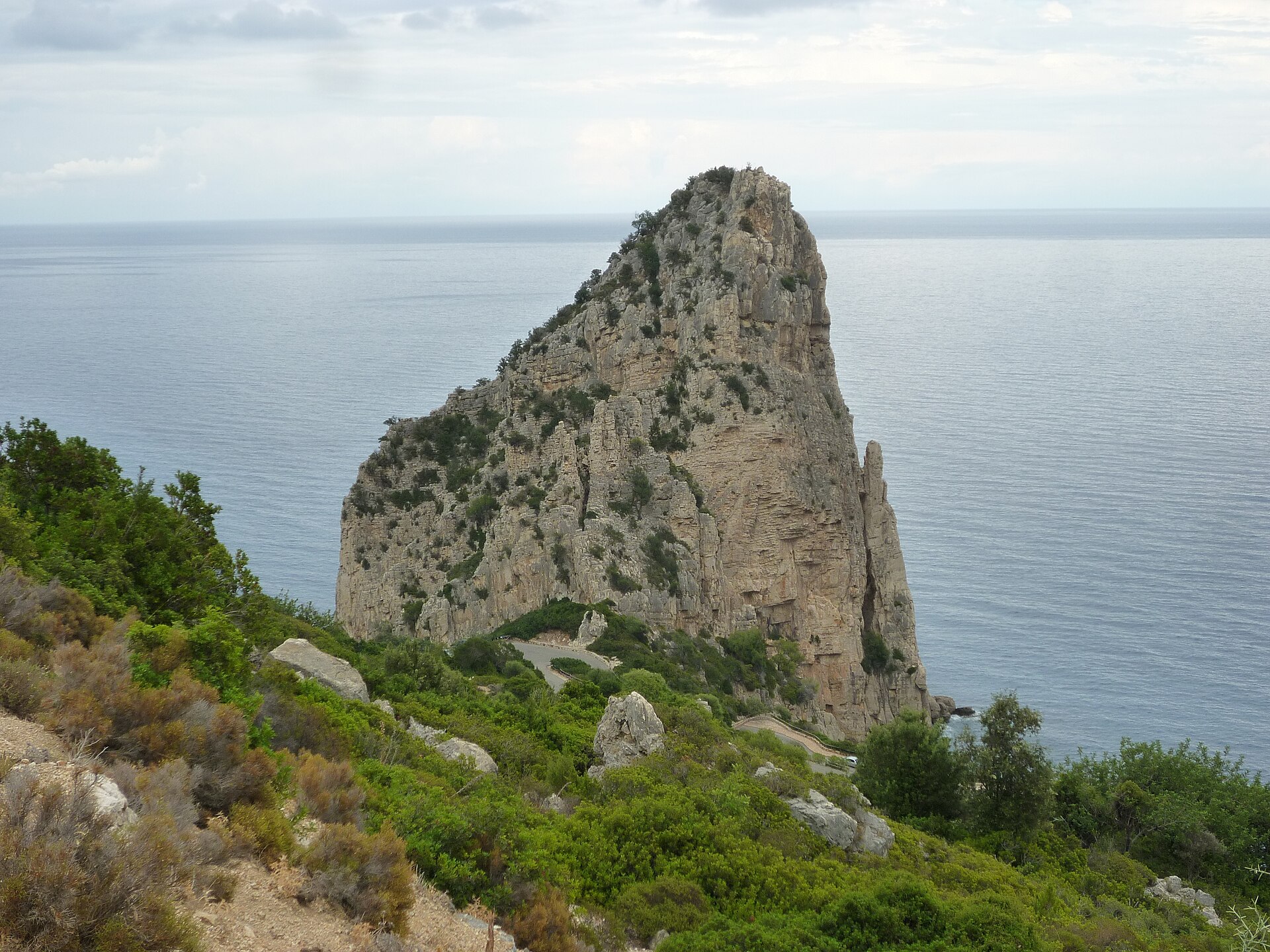
A limestone monolith about 128 metres high rising straight out of the sea, joined to the coast by a thin strip of rock. You can drive there along a scenic road from Santa Maria Navarrese, and it is the starting point for some of the area’s most famous climbing routes and for the celebrated Selvaggio Blu trek.
7. The Golgo plateau
Climbing up from the village, you reach a karst plateau at about 400 metres above sea level, covered in holm oaks, junipers and wild olives. It’s a magical place, where donkeys, horses and goats graze freely and where you can feel the most ancient Sardinia. The paths to Goloritzè, Cala Sisine and other coves start from the Golgo.
8. Su Sterru, the chasm of the Golgo
In the heart of the plateau opens one of the deepest chasms in Europe: Su Sterru drops vertically for about 270 metres, with an opening just a few metres across. A fence protects visitors and lets you look safely into this abyss, which has inspired legends and stories.
9. San Pietro al Golgo and the natural pools
Not far from the chasm stands the little country church of San Pietro al Golgo, built in the 17th century from limestone, with its cumbessias (simple shelters for pilgrims). Beside it is an ancient betyl, a sacred stone carved in the Nuragic age with a stylised face. In the surrounding area, the natural pools of Gorropeddu and other water holes are a refuge for animals.
10. Santa Maria Navarrese
Baunei’s seaside hamlet is a quiet village with a marina, a beach of sand and pebbles and a small church which, according to tradition, was founded in the Middle Ages by a princess who survived a shipwreck. In front of the churchyard stand centuries-old wild olive trees, among the oldest in Sardinia. Boats to the coves of the gulf leave from the harbour.
11. The tower and the islet of Ogliastra
On the headland of Santa Maria Navarrese rises a Spanish watchtower, reached by a short walk. From the top, the view takes in the coast as far as Arbatax and the little islet of Ogliastra, a rock of red porphyry that emerges opposite the beach of Lotzorai.
12. The village of Baunei
The centre, with its stone houses climbing up the mountainside, is well worth a stroll. From the viewpoint, the view stretches all the way to the sea, while in the streets you can feel the daily life of a shepherds’ village. Here you can taste cheeses, cured meats and sweets made by local families.
The coves of Baunei: how to reach them
Almost all the coves in the area can only be reached from the sea or on foot. Here’s how to get your bearings:
- By boat or inflatable boat: day trips leave from Santa Maria Navarrese or Arbatax, calling at Cala Goloritzè (seen from the sea), Cala Mariolu, Cala Biriola, Cala Sisine and the Piscine di Venere. You can also hire an inflatable boat, with or without a licence.
- On foot: Cala Goloritzè can only be reached on foot from the Golgo; Cala Sisine via the gorge of the same name; Cala Mariolu and Cala Biriola via longer, more demanding paths.
- By car: the beach at Santa Maria Navarrese and the Pedra Longa area can be reached by road.
To choose the right trip, read our guide to boat trips in Sardinia. Remember that there are no facilities on the beaches of the gulf: bring water and food, and take your rubbish back with you.
Hiking in Baunei: from the Golgo to the Selvaggio Blu
The area is a paradise for anyone who loves walking. The path to Cala Goloritzè is the busiest: about 3.5 km downhill on the way there, and an uphill return that shouldn’t be underestimated. The route through the Sisine gorge crosses a shaded canyon down to the sea, while other paths lead to viewpoints overlooking the gulf.
The most famous trek is the Selvaggio Blu, considered one of the toughest routes in Italy: from Pedra Longa to Cala Sisine, or on to Cala Luna, in four to six days, along exposed paths, with climbing sections and double-rope abseils. You need experience and, for most people, an authorised guide. For more ideas, read our guide to hiking in Sardinia.
Things to do in Baunei: experiences to enjoy
Once you’ve decided what to see in Baunei, choose the experiences that suit you:
- Boat and inflatable boat trips along the gulf, stopping at the most beautiful coves.
- Guided hikes to Goloritzè, Sisine and sections of the Selvaggio Blu.
- Climbing on the walls of Pedra Longa and the cliffs of the Golgo.
- Kayaking and snorkelling along the coast of Santa Maria Navarrese.
- Off-road excursions across the plateau and to the viewpoints.
- Lunches with shepherds in the sheepfolds on the plateau, with roast meat and cheeses.
The experiences offered by local operators, which you can book directly with them and without commission, are on our page things to do in Baunei.
A short history of Baunei
The plateau and the coast have been inhabited since prehistoric times: nuraghi, tombs and the betyl of San Pietro al Golgo speak of a very ancient presence. For centuries the area was a land of shepherds, who moved their flocks between the mountains and the sea, and of charcoal burners, who in the 19th century cut down the holm oaks and shipped the charcoal by sea from the small coves.
Until the middle of the 20th century the village was isolated, reachable only by mule tracks. The building of the Strada Orientale Sarda and the creation of the port of Santa Maria Navarrese opened the area up to tourism, but the coast has remained wild thanks to its terrain and environmental protection. Today Ogliastra is known around the world as one of the longevity Blue Zones.
What to eat and drink in Baunei
The cooking of Baunei is that of the shepherds of Ogliastra. Try:
- culurgionis from Ogliastra, ravioli filled with potato, cheese and mint and sealed in an ear-of-wheat pattern;
- goat and lamb, roasted or boiled;
- porceddu (roast suckling pig), cooked slowly over a wood fire;
- goat’s and sheep’s cheeses, fresh ricotta and casizolu;
- pane carasau (thin, crisp Sardinian flatbread) and homemade bread;
- Cannonau wine from Ogliastra and myrtle liqueur (mirto).
Restaurants and agriturismi (farm stays) are listed on our page where to eat in Baunei. To get to know the island’s cuisine, read our guide to traditional Sardinian dishes.
Festivals and events in Baunei
- Festa di San Pietro al Golgo: at the end of June, with a procession to the little church on the plateau, an open-air Mass and a communal lunch.
- Feste di Santa Maria Navarrese: in summer, with religious celebrations, music and evenings in the square.
- Carnival and the bonfires of Sant’Antonio: in winter, with the bonfires and traditions of the village.
- Summer in Santa Maria Navarrese: concerts, markets and food festivals along the harbour.
Dates change every year: always check the latest calendar before you go.
Baunei in 1, 2 or 3 days
In one day: a boat trip from Santa Maria Navarrese with stops at Cala Mariolu, Cala Biriola and the Piscine di Venere, then an aperitivo at the harbour.
In two days: add the hike to Cala Goloritzè early in the morning, and spend the afternoon on the Golgo plateau, with Su Sterru and San Pietro.
In three days: devote a day to Pedra Longa, the tower of Santa Maria Navarrese and the village, or head down to Cala Sisine along the gorge. With more time, consider the Selvaggio Blu with a guide.
Around Baunei
- Tortolì and Arbatax (about 20 minutes): the red rocks, the port and the beaches of Cea and Orrì.
- Lotzorai and Girasole (about 15 minutes): wide, peaceful beaches.
- Urzulei and the Codula di Luna (about 40 minutes): canyons and paths down to Cala Luna.
- Dorgali and Cala Gonone (about 1 hour): caves and coves of the gulf; read our guide what to see in Dorgali.
- The Trenino Verde (the little green train) from Arbatax into the interior, in summer, to discover the villages of Ogliastra.
Practical information: getting there, parking, when to go
How to get to Baunei
The most convenient airport is Olbia Costa Smeralda, about 2 hours by car along the SS 131 DCN and the SS 125. From Cagliari it takes about 2 hours 15 minutes on the new Strada Orientale. The port of Arbatax, about 20 minutes away, is linked to the mainland by seasonal ferries. Regular buses connect Baunei with Tortolì and Santa Maria Navarrese, but to explore the area you’ll need a car.
Getting around and parking
For the Goloritzè path, you park on the Golgo plateau, in the designated areas near the start of the trail, which are often paid in summer. In Santa Maria Navarrese there are car parks near the harbour and the beach, which fill up early around the time the boats depart. The road that climbs from Baunei to the Golgo is narrow and steep: drive carefully.
Where to stay
Santa Maria Navarrese is the ideal base if you’re here for the sea and boat trips. The village of Baunei is handy for hikes and the plateau. The agriturismi on the Golgo offer peace and quiet, shepherds’ cooking and starry skies, while Tortolì has more services.
When to go
The best time for the sea runs from May to October, with boats operating mainly from June to September. Spring and autumn are perfect for hiking, when the heat is bearable and the paths are less crowded. In summer, set off early and carry at least two litres of water per person.
For official information, see the website of the Comune di Baunei and the dedicated page on Sardegna Turismo.
Frequently asked questions about visiting Baunei
How do you get to Cala Goloritzè?
Only on foot, along a path of about an hour and a half from the Golgo plateau. You can admire it from the sea on a boat trip, but boats cannot approach the shore. In summer, access is limited.
What is the most beautiful cove in Baunei?
Cala Goloritzè is the most famous, while Cala Mariolu has the most intensely coloured water. Cala Sisine is perfect if you like shade and greenery.
Do you need a guide for the Selvaggio Blu?
For most people, yes: the route has exposed sections, climbing passages and very little water. Guides know the trail, organise supplies and ensure your safety.
Is Baunei suitable for families?
Yes, with a few precautions: boat trips and the beach at Santa Maria Navarrese are perfect for children, while the hikes to the coves are only suitable for fit teenagers. You’ll find more ideas in our guide to Sardinia with children.
How many days do you need to visit Baunei?
At least three days, to fit in a boat trip, a hike and the plateau. With a week, you can also explore Ogliastra and the Gulf of Orosei at a relaxed pace.
Baunei, best enjoyed with the people who live it
Now you know what to see in Baunei: Cala Goloritzè and its spire, Cala Mariolu, the Piscine di Venere, Pedra Longa, the Golgo plateau with Su Sterru, and a peaceful seaside village like Santa Maria Navarrese. It’s a land where the mountains plunge into the sea and every path leads to a different view: in the morning you can walk among holm oaks and stone, and in the afternoon swim in a cove that looks painted. To really experience it, choose one of the experiences offered by local operators and contact them directly, with no middlemen. Ajò, Sardinia is waiting for you.
