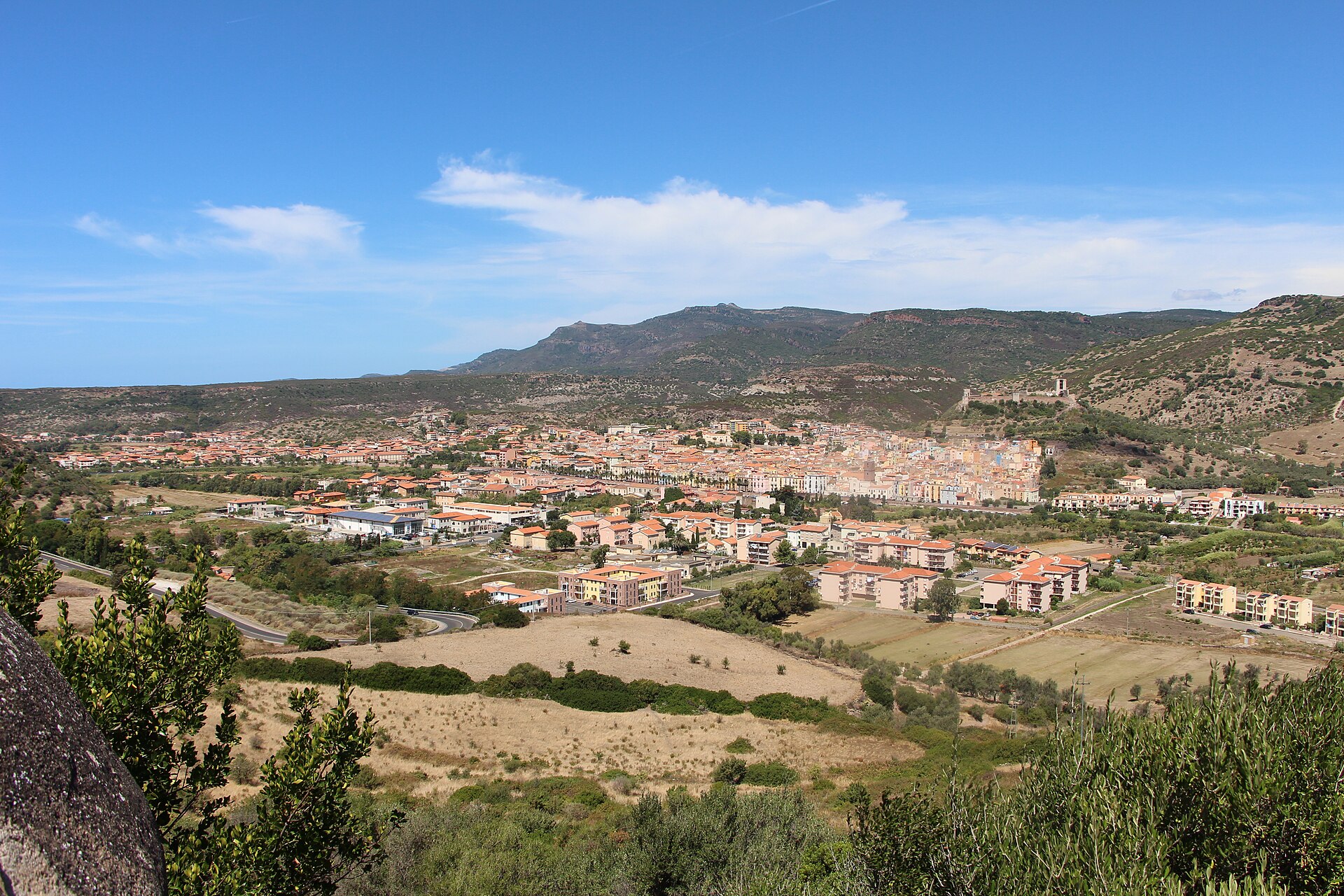
Pastel-coloured houses climbing a hillside, a medieval castle keeping watch from above and a river flowing lazily towards the sea: the things to see in Bosa are easy to list and hard to forget. It is one of the loveliest towns in Sardinia, set between the Temo valley, the Planargia coast and hills covered in Malvasia vineyards.
In this guide you’ll find the 12 unmissable stops in Bosa, from Malaspina Castle to the riverside tanneries, followed by the beaches, experiences, history, food and wine to try, the most heartfelt festivals and all the practical information you need: how to get here, where to park, when to go and how long to allow.
Contents
Bosa is a city of colours: once you’ve seen it from the bridge, you never forget it.
A story handed down by the fishermen of the Temo
Why visit Bosa
Bosa lies on the central-west coast of Sardinia, in the province of Oristano, about 45 km from Alghero. It has around 7,500 inhabitants and is crossed by the Temo, one of the few rivers on the island that is navigable along its final stretch. The old town, the Sa Costa district, climbs towards the castle through stone alleys and flights of steps.
Bosa is one of Italy’s Borghi più belli (the country’s most beautiful villages) and is famous for three treasures: Malvasia di Bosa, a sweet, fragrant wine; filet, a lace worked by hand by the women of Bosa; and its carnival, one of the most irreverent in Sardinia.
It appeals to anyone looking for an authentic village, to photographers, wine lovers and those who want to combine history with the seaside: within minutes you can go from the historic centre to the beach at Bosa Marina. If you’re wondering what to see in Bosa, be prepared to walk with your eyes turned upwards.
Things to see in Bosa: the 12 unmissable stops
1. The riverside and the Ponte Vecchio
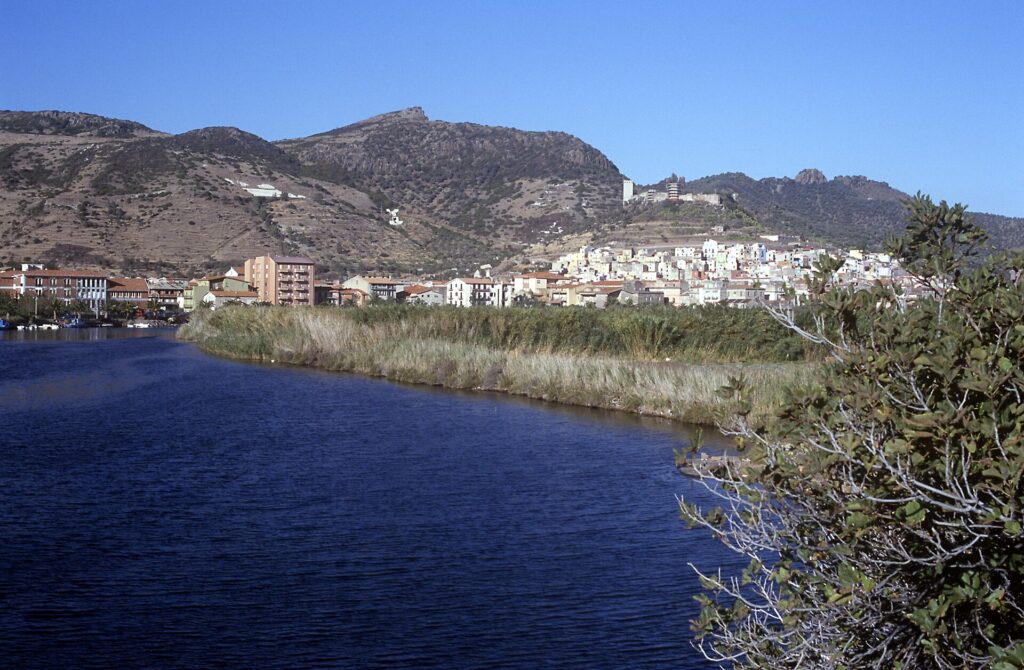
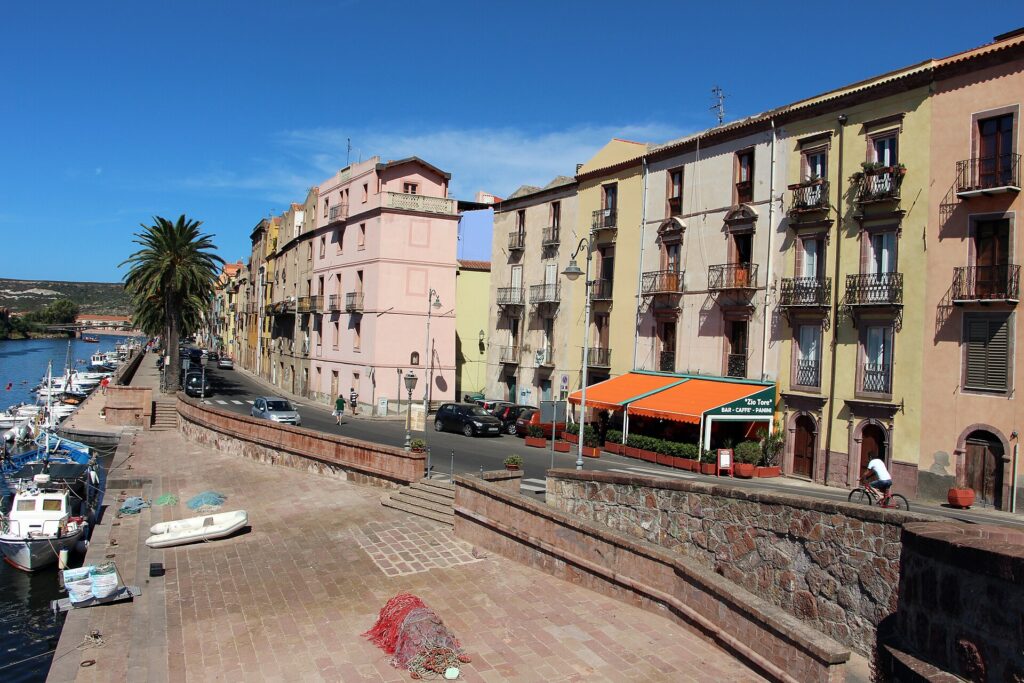
The most famous view is from the left bank of the Temo: the colourful houses reflected in the water, the moored boats and the castle high above. The Ponte Vecchio (Old Bridge), built in red trachyte with three arches, links the two banks and makes the perfect starting point for your visit.
2. The tanneries of Sas Conzas
On the bank opposite the centre stands a row of stone buildings with pitched roofs: these are the old tanneries, where until the twentieth century hides were processed using water from the river. Today they are a national monument, and one of them houses a small museum of tanning.
3. The Sa Costa district
The medieval heart of the town is a maze of cobbled alleys, arches, steps and tall, narrow houses painted pink, yellow, light blue and green. Getting lost here is part of the journey: around every corner there’s a glimpse of the river or the rooftops.
4. Malaspina Castle at Serravalle
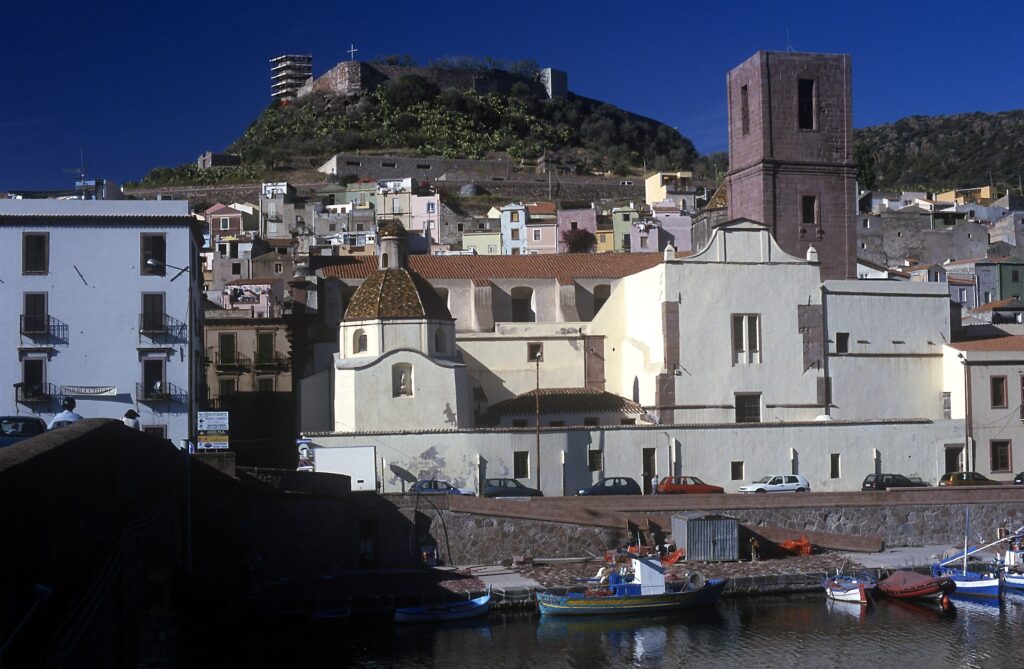
Built in 1112 by the Malaspina marquises, it towers over the town from Serravalle hill. You reach it on foot by climbing up through Sa Costa. From the walls and towers the view takes in the Temo, the hills and the sea. It’s a short but steep climb, so wear comfortable shoes.
5. Nostra Signora de sos Regnos Altos
Within the castle grounds stands a small church containing a cycle of fourteenth-century frescoes, only discovered in the twentieth century, with saints, sacred scenes and a rare depiction of saints in Catalan-Tuscan style. It is one of the least-known treasures in Sardinia.
6. Corso Vittorio Emanuele
The main street runs through the centre between nineteenth-century buildings with wrought-iron balconies, filet shops, wine bars and historic cafés. Paved with cobbles, it is Bosa’s living room, especially in the evening.
7. The Cathedral of the Immaculate Conception
Overlooking the river beside the Ponte Vecchio, the cathedral blends Baroque and Neoclassical styles, with an elegant façade and interiors rich in marble and painted decoration. It is the focal point of local religious life.
8. Casa Deriu and the Pinacoteca
On the Corso you’ll find Casa Deriu, a nineteenth-century noble residence furnished with period furniture and objects, which tells the story of middle-class life at the time. On the upper floors you can visit art exhibitions and works by Sardinian artists.
9. The church of San Pietro extra muros
About 2 km from the centre, along the bank of the Temo, stands one of the oldest Romanesque churches in Sardinia, built from the eleventh century in red trachyte. It was the town’s first cathedral, back when the town still lay along the river.
10. Bosa Marina and the Isola Rossa Tower
At the mouth of the Temo lies the beach of Bosa Marina, broad and sandy, with shallow water and facilities. It is closed off by a small island linked to the mainland and topped by an Aragonese tower, the Torre dell’Isola Rossa, the symbol of the harbour.
11. The coast towards Alghero and the griffon vultures
The scenic road towards Alghero is one of the most beautiful in Sardinia: sheer cliffs, little coves and no buildings for miles. It is also the last refuge of the griffon vultures, huge birds of prey that soar above the cliffs: spotting one is a thrill.
12. The Malvasia vineyards and Magomadas
Malvasia is grown on the hills around the town and in the villages of the Planargia, such as Magomadas, Tresnuraghes and Suni. Visiting a winery and tasting the wine beside vineyards overlooking the sea is one of the finest experiences in the area.
Filet lace and the craft workshops
As you stroll through the centre you’ll notice women sitting at their front doors with a square frame in their hands: they are working on filet, an embroidery on hand-knotted netting that has been passed down for generations. A single tablecloth can take months to make, and every family guards its own designs: flowers, birds, geometric patterns and religious scenes.
Many of the lacemakers happily welcome visitors and show how a piece comes to life, from the base netting to the final embroidery. Buying a piece of filet directly from the person who made it is the most authentic souvenir you can take home, and a practical way of keeping alive a tradition that risks disappearing.
Alongside filet, the shops on the Corso sell gold and silver filigree jewellery, ceramics, handmade knives from nearby Montiferru and local food such as honey, olive oil and cheese. Always ask where products come from: the best shops are delighted to tell you.
Tips for a stress-free visit
- Arrive early in summer: the car parks near the river fill up by mid-morning.
- Comfortable shoes: the alleys of Sa Costa are cobbled and uphill, and in summer the stone gets very hot.
- Bring water for the climb to the castle: there aren’t always refreshment points open at the top.
- Better photos: the left bank of the river in the morning, when the sun lights up the colourful houses; the castle at sunset.
- Book ahead for restaurants and tours on festival weekends, especially at carnival time and in September, when the town fills with visitors from all over the island.
- Respect the residents: Sa Costa is a living neighbourhood, not an open-air museum. Keep your voice down and don’t enter private courtyards.
The beaches of Bosa and the Planargia
The sea is part of the journey: the coast offers sandy beaches and coves set in volcanic rock.
- Bosa Marina: golden sand, shallow water, beach clubs and bars. The most convenient, just minutes from the centre.
- Cane Malu: natural pools carved into the trachyte, to the north. Spectacular, but with no facilities.
- Porto Managu: a small bay of sand and pebbles, rarely crowded.
- S’Abba Drucche: a long public beach to the north, loved by those seeking peace and quiet.
- Turas: a sheltered cove south of the harbour, popular with locals.
To discover more seaside villages, read our guide to the most beautiful villages in Sardinia.
Things to do in Bosa: experiences not to miss
Once you’ve discovered what to see in Bosa, pick a few experiences to really get under its skin. The area is ideal for cycling, sailing and tastings.
- By e-bike with Bosa Bike Experience: guided tours such as the Malvasia Wine Road with tasting, the sunset aperibike, the griffon vulture flight tour and the Path of the 100 Towers. You’ll find all the options on the Bosa Bike Experience page.
- By sailing boat: day trips to Capo Caccia and Alghero or the island of Mal di Ventre, snorkelling at Porto Managu and even a night on a boat at anchor.
- Kayaking on the Temo: paddling up the river is a different way of seeing the town.
- Coastal trekking towards Capo Marargiu and the griffon vulture cliffs.
All the experiences in the area, with direct contact and no commission, are gathered on our page of things to do in Bosa.
A brief history of Bosa
The area was inhabited in the Nuragic period and the Phoenicians founded a settlement at the mouth of the Temo; in Roman times the town was an important centre, mentioned in ancient inscriptions. In the Middle Ages the population moved from the river valley, exposed to raids, to Serravalle hill, where the Malaspina built the castle in 1112.
Later passing under the Judicate of Arborea and the Crown of Aragon, over the following centuries the town lived off river trade, agriculture and leather working. In the nineteenth century the tanneries and the port made it one of the liveliest towns on the west coast; today it is a tourist destination that has managed to preserve its character.
The twentieth century also brought hard times: the closure of the tanneries, the depopulation of the countryside and the emigration of many families to the mainland. In recent decades, however, the restoration of the old town, the promotion of Malvasia and filet, and a new care for the landscape have brought the town back to life. The houses of Sa Costa have been restored one by one, often by the children and grandchildren of those who left, and the colours of the façades have become the symbol of this rebirth.
What to eat and drink in Bosa
Local cooking brings together river, sea and countryside. Don’t miss:
- aragosta alla bosana (Bosa-style lobster), served cold with onion and tomato;
- the eels and mullet of the Temo;
- bottarga (cured mullet roe) and seafood from the coast;
- casizolu from nearby Montiferru, a stretched-curd cheese;
- Malvasia di Bosa DOC, to enjoy with almond-based desserts or on its own at the end of a meal.
Restaurants and trattorias are listed on our page on where to eat in Bosa; for a wider taste of the island, read our guide to Sardinian sweets and desserts.
Festivals and events in Bosa
- Bosa Carnival (Karrasegare osincu): on Shrove Tuesday the morning is given over to S’Attittidu, a tongue-in-cheek funeral lament for the dying carnival; in the evening the townspeople, dressed in white, search for Giolzi, the king of carnival, lanterns in hand.
- Holy Week: ancient rites with processions and confraternities.
- Feast of Nostra Signora de sos Regnos Altos (September): the most heartfelt festival, with the streets of the centre decorated with little altars, and a procession.
- Feast of Santa Maria del Mare (August): a procession of boats along the Temo to the river mouth.
Bosa in 1, 2 or 3 days
In one day: morning along the riverside and at the tanneries, climb to the castle through Sa Costa, lunch in the centre, afternoon at Bosa Marina and a Malvasia aperitif at sunset.
In two days: add San Pietro extra muros, Casa Deriu and an e-bike tour through the vineyards or a sailing trip along the coast.
In three days: drive the scenic road towards Alghero, stop at Cane Malu and look out for the griffon vultures. With a few more days, visit Montiferru, Santu Lussurgiu and the Sinis coast.
Around Bosa
- Alghero (about 50 minutes): the Catalan town, reached by the coast road.
- Tinnura and Flussio (10 minutes): the murals of Tinnura and the woven asphodel craft of Flussio, which you can also discover on the e-bike tour.
- Santu Lussurgiu and Montiferru (about 45 minutes): woodland, waterfalls and stone villages.
- Macomer and the nuraghi of the Planargia (about 40 minutes): the Santa Barbara nuraghe and dozens of Nuragic towers along the road.
- The Sinis and Tharros (about 1 hour): quartz-sand beaches and the Phoenician-Punic city.
Practical information: getting there, parking, when to go
How to get to Bosa
The nearest airport is Alghero-Fertilia, about 55 km away: by car it takes less than an hour along the coast road or the inland provincial road. From Cagliari it takes around 2 hours, taking the SS 131 as far as Macomer and then the main road to Bosa. The nearest port is Porto Torres, about an hour and a quarter away.
Getting around and parking
The historic centre is best explored on foot. There is parking along the river and near the new bridge; in summer some areas are pay-and-display. There is a shuttle service to Bosa Marina in the warmer months; otherwise it’s just a few minutes by car. For the coast and the beaches to the north you’ll need your own transport.
Where to stay
Staying in the historic centre means waking up among the colourful alleys with everything within walking distance. Bosa Marina is handy if you want the sea on your doorstep. If you’re after peace and quiet, choose an agriturismo (farm stay) among the Malvasia vineyards, with a sea view.
When to go
The town is lovely all year round. From May to October you can combine it with the seaside; in February the carnival makes it unique; in September the Regnos Altos festival fills the centre with little altars. Winter is quiet and perfect for visiting wineries.
For official information, visit the website of the Comune di Bosa.
Frequently asked questions about visiting Bosa
How long do you need to visit Bosa?
A full day for the centre, the castle and the riverside; two or three days if you want to add the sea, the wineries and the griffon vulture coast.
Is Bosa suitable for families?
Yes: the centre is ideal for strolling, Bosa Marina has shallow water and facilities, and children love kayaking on the river. You’ll find more ideas in our guide to Sardinia with children.
What should I buy in Bosa?
A bottle of Malvasia di Bosa and a piece of filet, the local lace. Choose shops that work by hand and ask to see how it’s made.
Can you go up to Malaspina Castle?
Yes, on foot through the Sa Costa district. Opening times change with the seasons, so check before your visit.
Bosa, best enjoyed with the people who live here
Now you know what to see in Bosa: the Temo and its tanneries, the alleys of Sa Costa, Malaspina Castle, Malvasia wine, the beaches and the griffon vulture coast. Whether you come for an afternoon or a week, the town will surprise you with a new colour, flavour or story each time. The best way to get to know it is to let someone who lives here every day show you around: choose an experience from those offered by Bosa’s local operators and contact them directly. Ajò, Sardinia is waiting for you.
