Which are the most beautiful villages in Sardinia? Not just the ones by the sea. Alongside Bosa, Castelsardo and Carloforte, which everyone has seen at least in photos, there are granite towns in Gallura, stone villages in Barbagia, wine villages in the Mandrolisai and small spa towns where people have been bathing in hot springs since Roman times.
We have picked 20 villages in Sardinia from north to south, with what to see, what to eat, when to go and the events and experiences you can book on Ajò Sardegna, directly with local operators and with no commission. At the end you will find a one-week itinerary and answers to the most frequently asked questions.
Contents
Which are the most beautiful villages in Sardinia
There is an official reference: the club of I Borghi più belli d’Italia (The Most Beautiful Villages in Italy), founded in 2001 on the initiative of ANCI, the association of Italian municipalities. Today it includes nine Sardinian villages: Atzara, Bosa, Carloforte, Castelsardo, La Maddalena, Lollove, Posada, Sadali and Tempio Pausania. The up-to-date list is on the association’s website, on the page Borghi più belli d’Italia in Sardegna.
Then there is the Bandiera Arancione (Orange Flag) of the Touring Club Italiano, a quality label for small inland towns: in Sardinia it has been awarded to Aggius, Galtellì, Gavoi, Laconi, Oliena, Sardara and Tempio Pausania. To these we have added a few Sardinian villages that carry no label but which, for anyone who loves real, lived-in places, are not to be missed: Orgosolo, Mamoiada, Santu Lussurgiu, Fordongianus and Ulassai.
1. Bosa, colourful houses on the River Temo
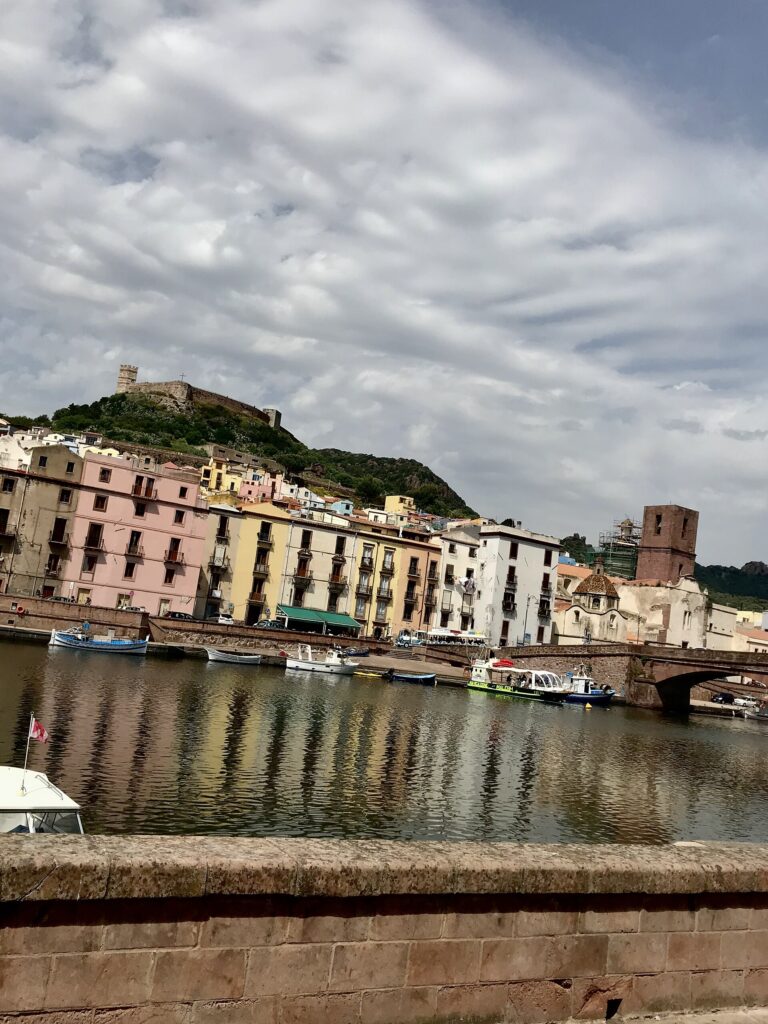
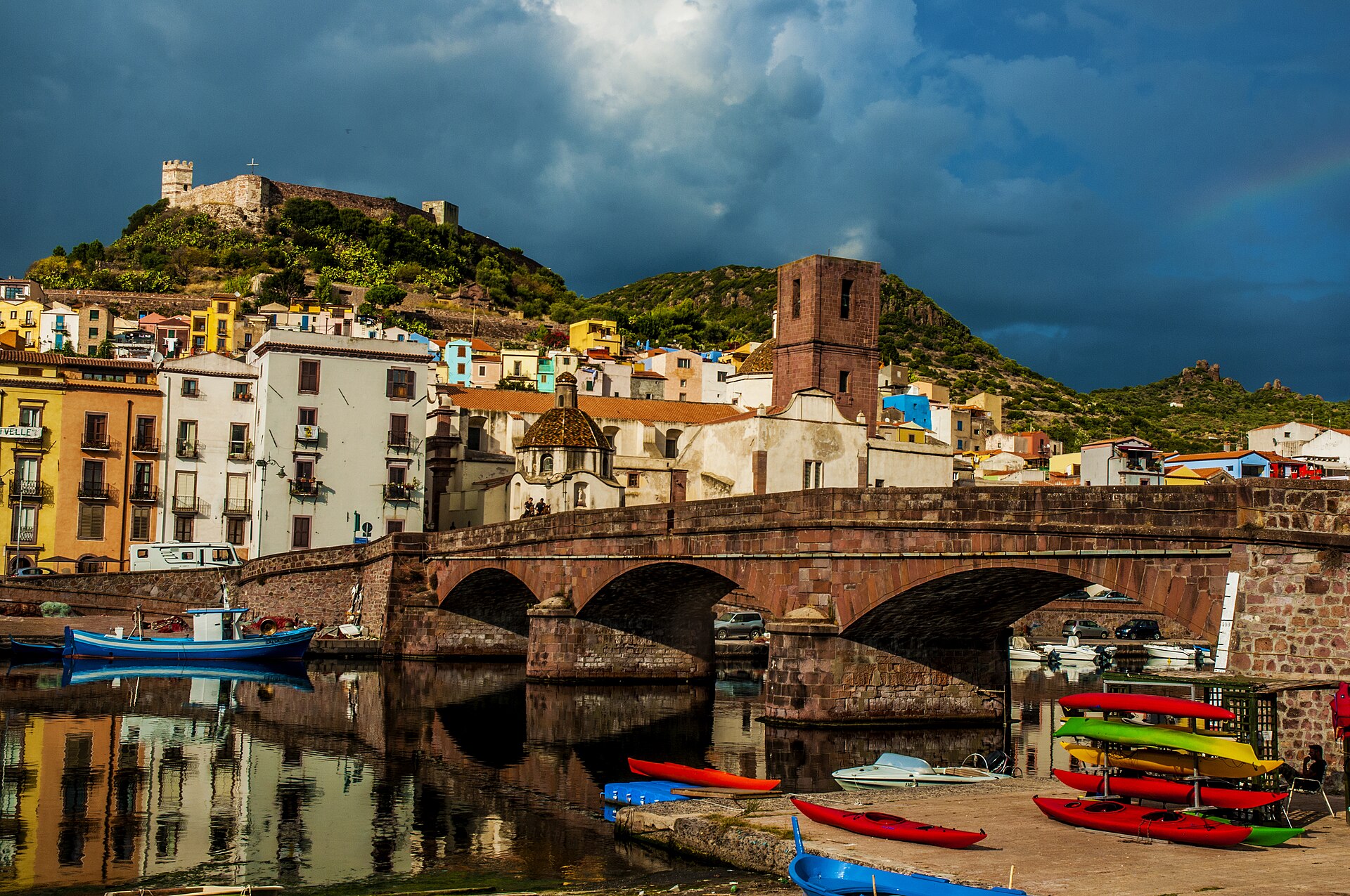
If you can only choose one of the most beautiful villages in Sardinia, choose Bosa. The pastel-coloured houses of the Sa Costa quarter climb from the River Temo up to the Castle of Serravalle, built by the Malaspina family from the 12th century onwards. On the opposite bank stand Sas Conzas, the old stone tanneries, now partly a museum. The Temo is the only river on the island that is navigable in its last stretch: at sunset it fills with boats and canoes.
Bosa is also an excellent base for the sea. Local skippers offer day trips under sail with lunch on board and outings to see the griffon vultures of Capo Marargiu; you can browse sailing trips and boat and RIB trips around the island on Ajò Sardegna. At the table, people toast with Malvasia di Bosa, a sweet or dry white wine with a scent of almonds.
2. Castelsardo, the Doria village above the sea
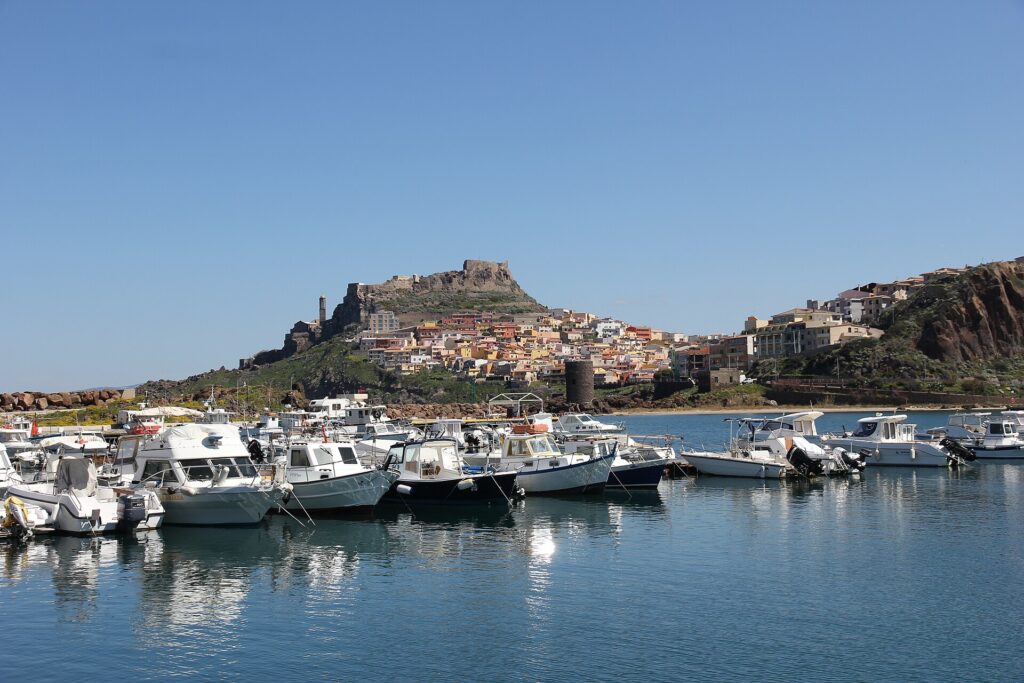
Of all the Sardinian villages overlooking the sea, Castelsardo is the most dramatic. Perched on a headland above the Gulf of Asinara, it was founded by the Doria family of Genoa at the beginning of the 12th century and changed its name three times: Castelgenovese, Castellaragonese and finally Castelsardo. The castle at the top of the village houses the Museo dell’Intreccio Mediterraneo (Museum of Mediterranean Weaving), dedicated to the baskets of dwarf palm and rush that local women still weave on their doorsteps.
Walking down towards the sea you reach the Cathedral of Sant’Antonio Abate, whose bell tower covered in majolica tiles can be seen from far away. If you are here during Holy Week, on Monday you can watch the Lunissanti, one of the most evocative processions on the island. A few kilometres towards Sedini is the Roccia dell’Elefante (Elephant Rock), a block of trachyte shaped by the wind. Nearby are Valledoria and Santa Maria Coghinas, with its hot springs.
3. Carloforte, a piece of Liguria on San Pietro Island
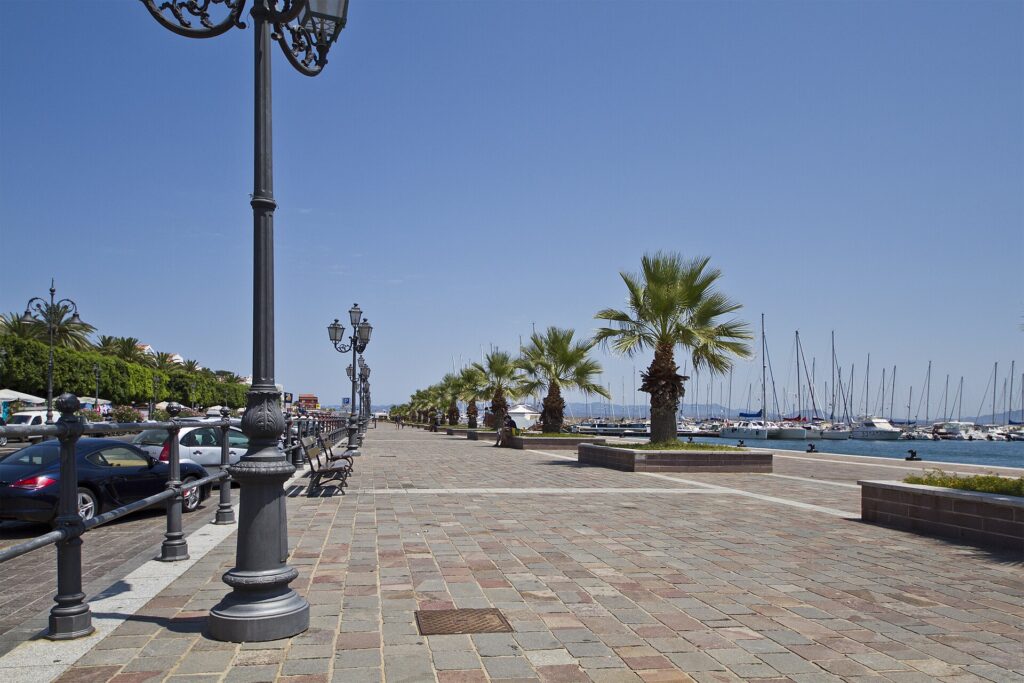
Carloforte is unique among the villages in Sardinia. It was founded in 1738 by Ligurian families who came from Tabarka, in Tunisia, and was named after King Charles Emmanuel III. People here still speak Tabarchino, a Genoese dialect, and the cooking blends Liguria, North Africa and Sardinia: tuna, cascà (similar to couscous) and farinata, a chickpea flatbread.
You get there by ferry from Portovesme, near Portoscuso, or from Calasetta, on the island of Sant’Antioco. On 15 November the village celebrates the feast of the Madonna dello Schiavo, linked to the people of Carloforte who were kidnapped by pirates in 1798. Between late May and June, the village fills up for the Girotonno, the festival dedicated to bluefin tuna.
4. Posada and the Castle of the Fava
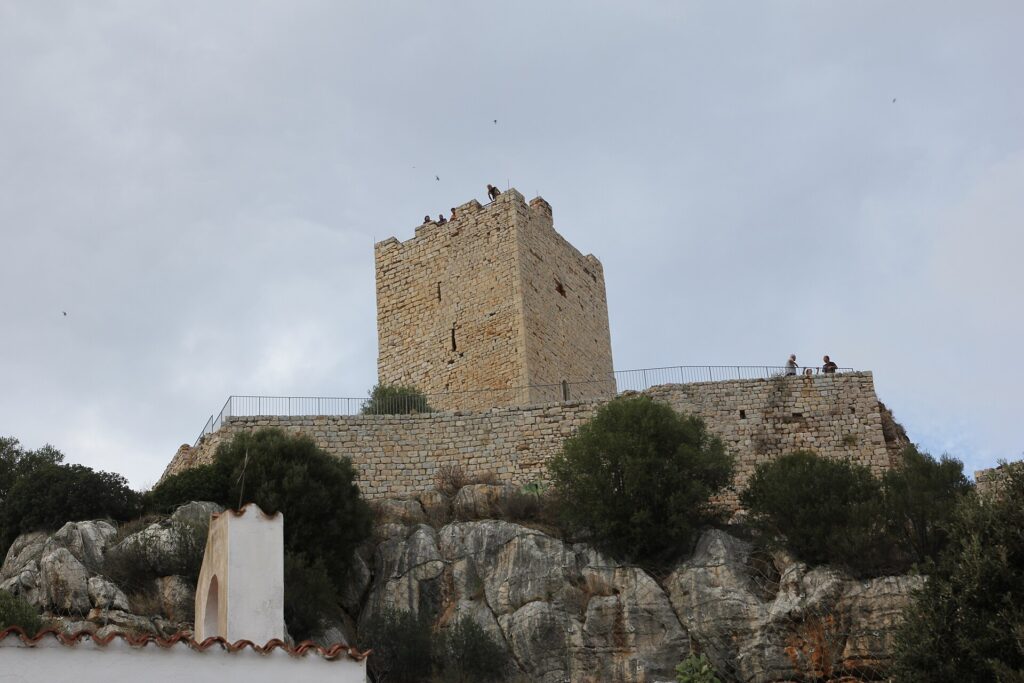
On the Baronia coast, Posada is one of the most beautiful villages in eastern Sardinia: a white village clinging to a hill, with stepped lanes and little squares. At the top stands the tower of the Castello della Fava (Castle of the Broad Bean), with views over the river mouth, the lagoons and the sea. The name comes from a legend: during a siege, the starving inhabitants released a pigeon fed on their last broad beans, and the enemy, seeing it so well fed, believed the village had food for months and gave up.
Behind the village lies the Tepilora park, with Mount Montalbo and the Rio Posada: it is a UNESCO biosphere reserve, perfect for walks and bike rides. In summer the beaches are close by, between Posada, Budoni and Siniscola.
5. Atzara, the village of wine and painters
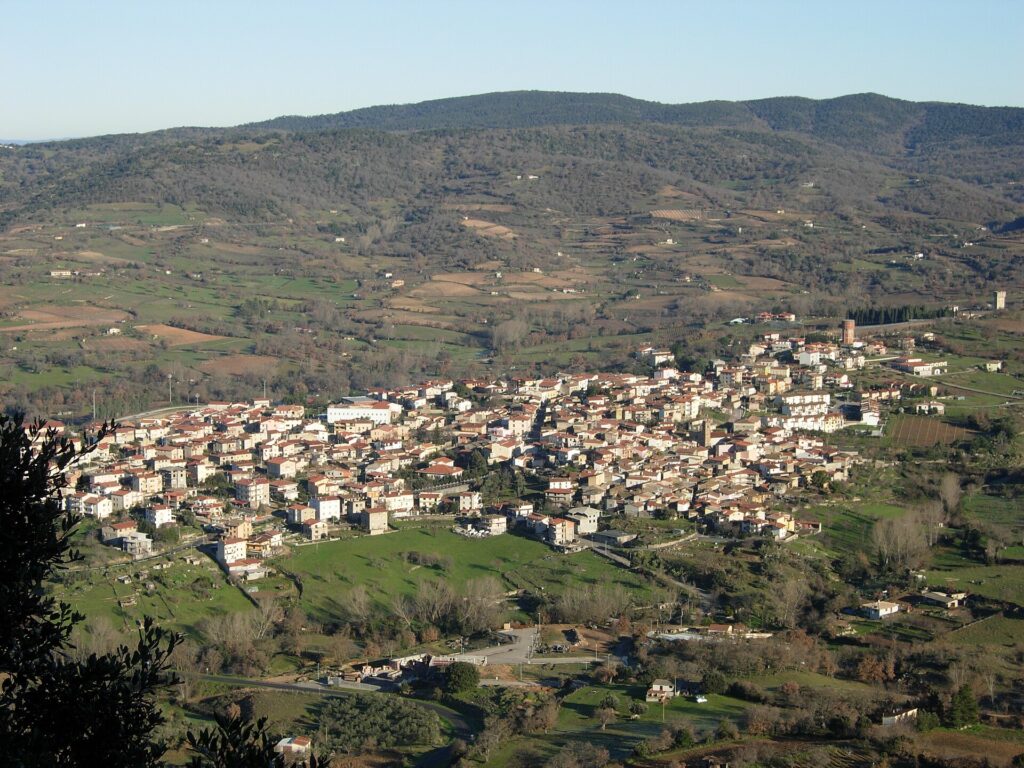
In the heart of the island, among the vineyards of the Mandrolisai, Atzara has a centre of stone houses with carved doorways and wrought-iron balconies. In the early 20th century Spanish painters such as Antonio Ortiz Echagüe stayed here and portrayed the village’s costumes, among the most colourful in Sardinia. The village’s modern art museum bears his name, and its streets are among the most photogenic of all the Sardinian villages of the interior.
Atzara is one of the most beautiful villages in Sardinia to visit in autumn: on 21 and 22 November 2026 it opens its courtyards for Autunno in Barbagia in Atzara. The local wine is Mandrolisai DOC, a red made from Bovale, Cannonau and Monica grapes. To get to know the producers, have a look at the wineries and tastings on the portal.
6. Sadali, the village of water
Sadali, in the Barbagia di Seulo, is one of the greenest Sardinian villages, and water is everywhere: in the middle of the village the San Valentino waterfall plunges into a sinkhole and disappears underground, next to the church dedicated to the same saint. All around are mills, fountains and holm oak woods. A few kilometres away is the Is Janas cave, one of the finest show caves in central Sardinia.
Combine your visit with neighbouring Seulo, which on 12 and 13 December 2026 hosts the last stop of Autunno in Barbagia, or with Lake Flumendosa. If you are curious about the underground world, the portal also lists caves and caving experiences.
7. Lollove, the village of the legend
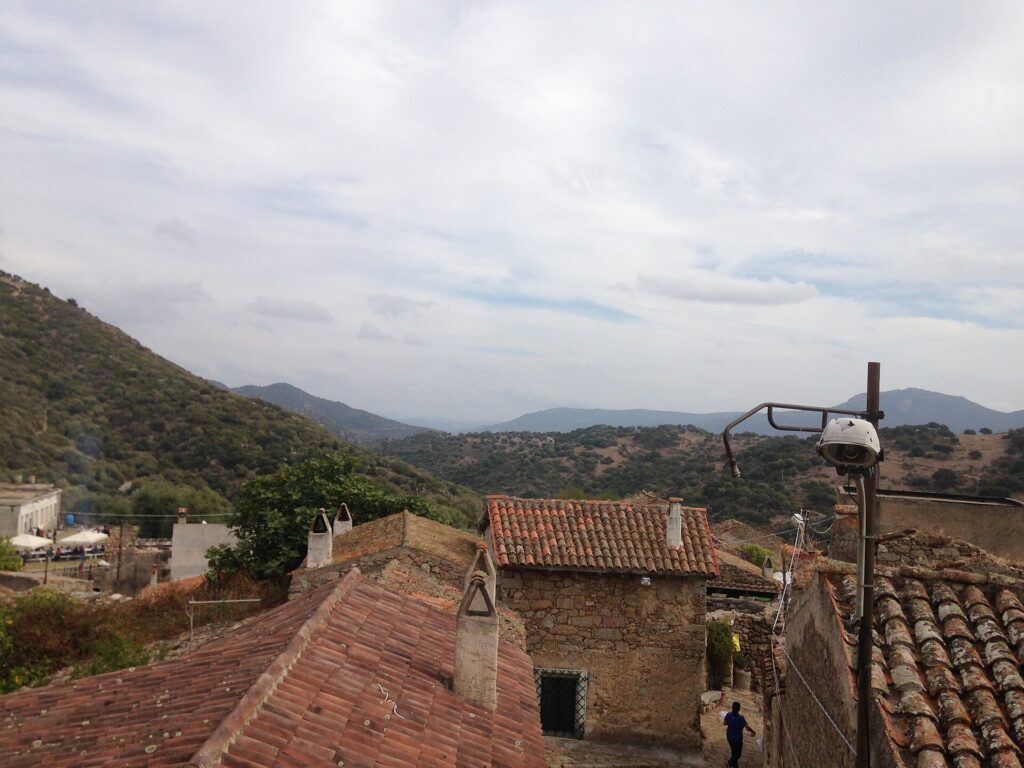
Ten minutes from Nuoro, Lollove is a handful of granite houses among the hills. Legend has it that some Franciscan nuns, driven out of the village after a scandal, cursed it: Lollove would never grow. And indeed it has stayed small, but it has never disappeared. Grazia Deledda set her novel La madre (The Mother, 1920) here, as the page on Sardegna Turismo explains.
There are no shops or bars, which makes it unlike most villages in Sardinia: you come here to wander the lanes, see the church of Santa Maria Maddalena and breathe in the silence. In autumn the village takes part in Autunno in Barbagia; around the same time, on 14 and 15 November 2026, the Cortes Apertas in Nuoro take place. For the full calendar of the season, browse the traditional festivals on Ajò Sardegna.
8. Tempio Pausania, the granite town
In Gallura, Tempio Pausania is the only one of the villages in Sardinia that is both one of Italy’s most beautiful villages and an Orange Flag town. The old centre is built entirely of grey granite: the Cathedral of San Pietro, the mansions, the squares, the fountains. The railway station holds the large paintings of Giuseppe Biasi, one of the most important Sardinian painters of the 20th century. Fabrizio De André, the great Italian songwriter, lived for many years at L’Agnata, in the countryside around Tempio.
Tempio’s Carnival, with its King Giorgio, is one of the liveliest on the island. From here you can climb Mount Limbara and visit the cork oak woods: Tempio and Calangianus are the heart of Sardinian cork making. Close by, among the smaller villages in Sardinia’s north, is Luras, with its dolmens.
9. La Maddalena, the village in the national park
The centre of La Maddalena is a village of colourful houses facing the harbour, with its market and Piazza Garibaldi. All around lies the La Maddalena Archipelago National Park, with crystal-clear water and islands of pink granite. On Caprera, linked by a bridge, you can visit the Compendio Garibaldino, the house where Giuseppe Garibaldi lived until his death in 1882.
The ferry from Palau takes about twenty minutes. Between May and October you can also reach the archipelago from Olbia on a RIB with a skipper: see the boat rental options on the portal. Out of season it is one of the quietest Sardinian villages on the coast and easy to explore on foot.
10. Aggius, granite and rugs
Aggius is one of the most beautiful villages in northern Sardinia, with granite houses at the foot of huge wind-sculpted rocks. It is famous for its rugs, hand-woven on wooden looms, which you can see in the ethnographic museum, for the Coro di Aggius choir and for the museum of banditry, which tells a hard chapter of Gallura’s history.
Just outside the village opens the Valle della Luna (Valley of the Moon), a plain of enormous boulders that turns orange at sunset: an easy walk, suitable for families too. Aggius holds the Orange Flag and, in winter, has the feel of a nativity scene.
We are reeds, and fate is the wind.
Grazia Deledda, Canne al vento (Reeds in the Wind, 1913), own translation
11. Galtellì, the village of Reeds in the Wind
Among the most literary Sardinian villages is Galtellì, in the Cedrino valley. This is where Grazia Deledda, winner of the 1926 Nobel Prize in Literature, set Canne al vento (Reeds in the Wind), the novel of the Pintor ladies and their servant Efix. In the well-kept, quiet old centre, a trail of the Grazia Deledda literary park leads to the places of the novel, as far as the Romanesque church of San Pietro, with its medieval frescoes.
Above the village rises Mount Tuttavista, with a large bronze statue of Christ and a view that stretches all the way to the Gulf of Orosei. In the Baronia, not far away, are Orosei and Dorgali, the gateway to the Supramonte.
12. Gavoi, the lake and Fiore Sardo cheese
Gavoi is one of the Sardinian villages most loved by book lovers: a village of dark stone with flower-filled balconies, overlooking Lake Gusana. This is shepherd country, and an excellent Fiore Sardo PDO is made here, a smoked sheep’s milk cheese. In early July the village hosts L’isola delle storie (The Island of Stories), a literary festival that fills its squares with writers and readers.
The Gavoi Carnival opens with sos tumbarinos, dozens of drums playing through the streets. Nearby are Ollolai and Ovodda, two stops of the Cortes Apertas. If you want to eat with the people who actually make the cheese, take a look at the lunch with shepherds experiences.
13. Oliena, at the foot of the Supramonte
Oliena is one of the villages in Sardinia most closely tied to the mountains, with white houses at the foot of Mount Corrasi, the highest peak of the Supramonte. Trails lead from here to the nuraghic village of Tiscali and to the Lanaitto valley, and a few minutes away is Su Gologone, a karst spring with turquoise water. The village is famous for its embroidered silk shawls and for Nepente, the Cannonau wine of Oliena.
At Easter there is s’Incontru, the meeting between the statues of the risen Christ and the Madonna, with blank shots fired into the air and traditional costumes. To climb Corrasi or reach Tiscali, a guide is a good idea: on Ajò Sardegna you will find guided hikes and other nature and hiking experiences.
14. Orgosolo, the village of murals
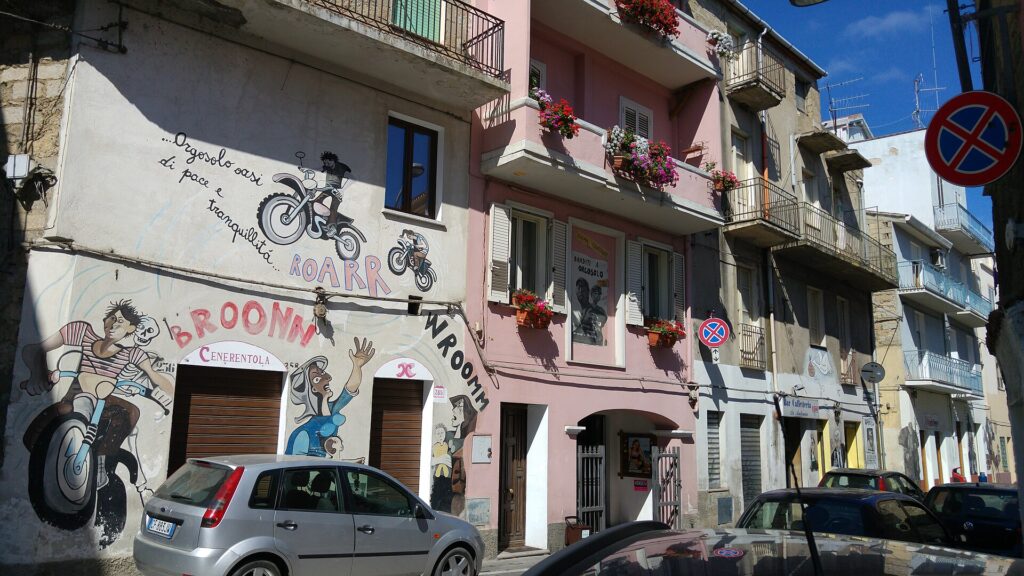
None of the other Sardinian villages looks like Orgosolo. The house fronts of Orgosolo are an open-air history book. The first murals date back to the late 1960s; from 1975 the teacher Francesco Del Casino and his students painted a great many of them, telling the story of the shepherds’ struggles, politics and village life. Today there are hundreds, and a stroll along Corso Repubblica is like leafing through a newspaper.
Orgosolo is also the gateway to the Supramonte and the Montes forest. Here, lunch with the shepherds is a genuine tradition: roast meat, cheeses, pane carasau and Cannonau under the oak trees. On 15 August, for the Feast of the Assumption, the village parades in traditional costume.
15. Mamoiada, masks and Cannonau
Mamoiada does not belong to any village club, but if you want to understand Barbagia it is a must. This is the village of the Mamuthones and Issohadores, the carnival masks that come out for the first time at the Sant’Antonio bonfires on 16 and 17 January: the date is on our page for the Sant’Antonio bonfires and Mamuthones in Mamoiada. All year round you can visit the Museo delle Maschere Mediterranee (Museum of Mediterranean Masks).
With children, ask the museum about its workshop on traditional masks, where you learn how a wooden mask is carved; the portal also lists other craft workshops. From 6 to 8 November 2026 the Cortes Apertas in Mamoiada take place. Then have lunch in the village, one of the friendliest Sardinian villages for food lovers, and taste the local Cannonau, the red wine that has made Mamoiada famous well beyond Sardinia.
16. Laconi, the village of Saint Ignatius
In the Sarcidano, Laconi is the birthplace of Saint Ignatius of Laconi, an 18th-century Capuchin friar much loved all over the island: his birthplace is a place of pilgrimage. The Aymerich park, with the ruins of the castle, centuries-old trees, streams and small waterfalls, is one of the loveliest walks in central Sardinia.
The village museum displays dozens of statue menhirs, prehistoric stone figures found in the area. On 21 and 22 November 2026 Ocraxus returns, a festival that brings the produce and crafts of the area into the square. Laconi holds the Orange Flag.
17. Sardara, hot springs and a sacred well
Sardara, in the Medio Campidano, is one of the most beautiful villages in Sardinia to enjoy at a slow pace. In the village is the sacred well of Sant’Anastasia, a nuraghic water temple next to a small church; outside the centre are the Santa Maria de is Acquas spa, used since ancient times, and the Castle of Monreale, which overlooks the plain.
Among the villages in Sardinia’s south, it is a handy base for visiting Barumini and the Su Nuraxi nuraghe, a UNESCO World Heritage Site, and the saffron villages such as San Gavino Monreale and Villanovafranca. For a relaxing weekend, have a look at the thermal spas.
18. Santu Lussurgiu, inside the Montiferru crater
Among the villages of central Sardinia, Santu Lussurgiu sits inside an ancient volcanic crater on the slopes of the Montiferru. Its old centre, with tall stone houses and wrought-iron balconies, is one of the best preserved on the island. Knives, bridles and saddles are still made here, and canto a cuncordu, a form of polyphonic singing, accompanies the Holy Week rites.
At Carnival there is Sa Carrela ‘e Nanti, a horse race in pairs along the main street. On 12 and 13 December 2026 the village hosts Artes e Sabores, with craftspeople and the flavours of the Montiferru. Just outside the village is San Leonardo de Siete Fuentes, with its springs and woods.
19. Fordongianus, red trachyte and Roman baths
On the banks of the Tirso, Fordongianus is one of the most beautiful villages in Sardinia for history lovers. It is built of red trachyte, a volcanic stone that glows at sunset. The Romans called it Forum Traiani and built baths here that you can still see by the river: the hot water gushes out at over 50 °C (122 °F), and in winter some people still come to soak their feet.
Like many Sardinian villages, it keeps its history in its stones: in the centre stands the Casa Aragonese, a 16th-century trachyte mansion. The village is half an hour from Oristano: you can combine it with a day in the Sinis peninsula or a sailing trip to the island of Mal di Ventre, departing from the Oristano coast.
20. Ulassai, Maria Lai and the Tacchi of Ogliastra
Ulassai is the most surprising of the Sardinian villages in Ogliastra, clinging to the limestone cliffs of the tacchi, the region’s table mountains. This is where the artist Maria Lai was born; in 1981 she tied every house in the village to the mountain with a blue ribbon, in the work Legarsi alla montagna (Tying Oneself to the Mountain). The Stazione dell’Arte, in the old railway station, holds many of her works.
Near the village are the Su Marmuri cave, with enormous chambers, and the Lequarci waterfall, which is spectacular after the rain. The crags of Ulassai and nearby Jerzu are loved by climbing enthusiasts. At the table, all over Ogliastra, you will find culurgiones, hand-sealed pasta parcels filled with potato, cheese and mint.
Itinerary: the villages in Sardinia in 7 days
With a week and a car you can see a good number of the most beautiful villages in Sardinia without rushing. Here is a loop that starts and ends in Olbia:
- Day 1: Olbia, Tempio Pausania and Aggius, with sunset in the Valle della Luna.
- Day 2: Castelsardo in the morning, then Bosa for an evening by the Temo.
- Day 3: Bosa by sailing boat, Santu Lussurgiu in the afternoon.
- Day 4: Fordongianus and its Roman baths, then Laconi and Atzara.
- Day 5: Sadali, then Ulassai and the Stazione dell’Arte.
- Day 6: Mamoiada, Orgosolo and its murals, overnight in Oliena.
- Day 7: Lollove, Galtellì and Posada, back to Olbia.
Carloforte, La Maddalena and Sardara are left out of the loop: add them if you have a few extra days or if you are arriving from Cagliari. If you start in the south, you can reverse the route and begin with Sardara and Carloforte.
Practical tips for visiting Sardinian villages
- Getting around: a car is essential. Inland roads are beautiful but winding: always allow more time than your satnav suggests.
- When to go: spring and autumn are the best seasons. In summer the seaside villages are crowded, while the inland ones stay cool in the evening.
- Opening hours: many museums and churches in small villages open only at certain times, especially out of season. Call ahead or ask at the town hall.
- Parking: old centres are narrow and often stepped. Leave the car at the edge of the village and walk.
- Where to stay: Sardinian villages offer B&Bs, alberghi diffusi (hotels spread across several village houses) and farm stays: they are the best way to experience village life after the day visitors have left.
To choose when to travel, check the festivals and events on the portal: visiting a village during its feast is a whole different experience. In autumn many villages in Sardinia open their homes and cellars to visitors: it is the most authentic time of year to see them.
What to eat in the most beautiful villages in Sardinia
Every one of the villages in Sardinia has its own dish. On the coast at Carloforte and Castelsardo, tuna, sea urchins and lobster reign; in Barbagia you will find porceddu, the roast suckling pig, cheeses such as Pecorino Sardo PDO and pane carasau, the crisp shepherd’s flatbread. In the Campidano, near Sardara, try malloreddus Campidano-style, small gnocchi with a sausage and tomato sauce.
To finish, seadas, fried cheese pastries drizzled with honey. If you would rather taste with a local expert, the portal also lists cooking classes and food and wine experiences around the island.
FAQ about the most beautiful villages in Sardinia
How many of Italy’s most beautiful villages are in Sardinia?
There are nine: Atzara, Bosa, Carloforte, Castelsardo, La Maddalena, Lollove, Posada, Sadali and Tempio Pausania. The list can change over time: the up-to-date one is on the association’s official website.
Which is the most beautiful village in Sardinia?
There is no official ranking. Bosa, with its colourful houses on the River Temo, and Castelsardo, above the sea, are the most photographed; those looking for silence and authenticity often prefer Lollove, Atzara or Sadali.
Which Sardinian villages are best to visit in winter?
The inland villages: Mamoiada and Orgosolo for the masks and murals, Santu Lussurgiu for Artes e Sabores, the Cortes Apertas villages in autumn and Fordongianus or Sardara for the hot springs.
Can you visit the villages in Sardinia without a car?
Only partly. Bosa, Castelsardo and Tempio can be reached by regional bus, and Carloforte and La Maddalena by ferry, but for the inland villages a car is almost essential.
Plan your trip to the Sardinian villages
The most beautiful villages in Sardinia reveal themselves slowly, when you stop to talk to the people who live there. On Ajò Sardegna you will find the towns grouped by area, such as Barbagia and the Nuoro area or Gallura and Costa Smeralda, and experiences in culture and traditions run by local operators you can contact directly, with no commission. If you have a question about a village or an event, ask Lia, the portal’s virtual assistant. Enjoy your trip, and ajò!
