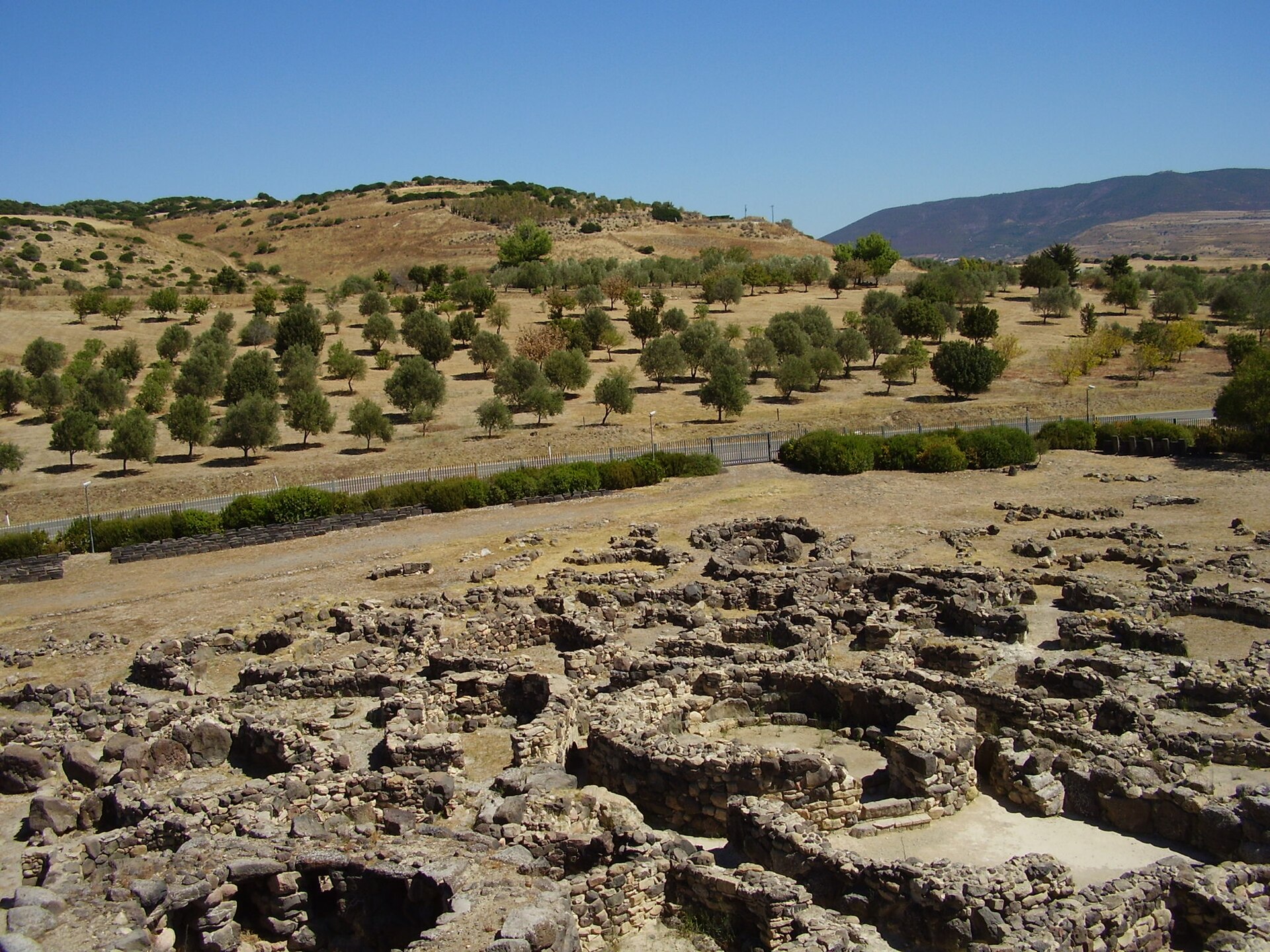
A stone fortress more than three thousand years old, a village of round huts, a noble palace built on top of another nuraghe, and the gentle hills of the Marmilla all around: things to do in Barumini is the question for anyone who wants to discover the oldest heart of Sardinia. This is home to Su Nuraxi, the only Nuragic site on the UNESCO World Heritage list.
In this guide you’ll find the 10 stops not to miss in Barumini, tips for visiting Su Nuraxi, experiences to enjoy, the history, local dishes, festivals and all the practical information: how to get here, where to park, when to go and what to see nearby, from the Giara to Las Plassas castle.
Contents
Sa perda contat su chi s’omini at scarèsciu (‘Stone tells what man has forgotten’).
Traditional saying from the Marmilla
Why visit Barumini
Barumini is a small village of around 1,200 inhabitants in south-central Sardinia, in the historic region of the Marmilla, about an hour from Cagliari. The landscape is one of rolling hills planted with wheat, almond and olive trees, overlooked by the basalt plateau of the Giara and the conical hill of Las Plassas.
The village is famous for Su Nuraxi, the best-known Nuragic complex in Sardinia, added to the UNESCO World Heritage list in 1997. But Barumini is more than its nuraghe: the old town has stone houses with grand doorways, ancient churches and the Casa Zapata museum complex, one of the most original museums on the island.
Barumini appeals to archaeology lovers, families with curious children, school groups and anyone looking for an authentic Sardinia, far from the sea and the crowds. If you’re wondering what to see in Barumini, get ready to travel back in time to the Bronze Age, and then discover the villages and landscapes of the Marmilla.
Things to do in Barumini: the 10 stops not to miss
1. The Nuragic complex of Su Nuraxi
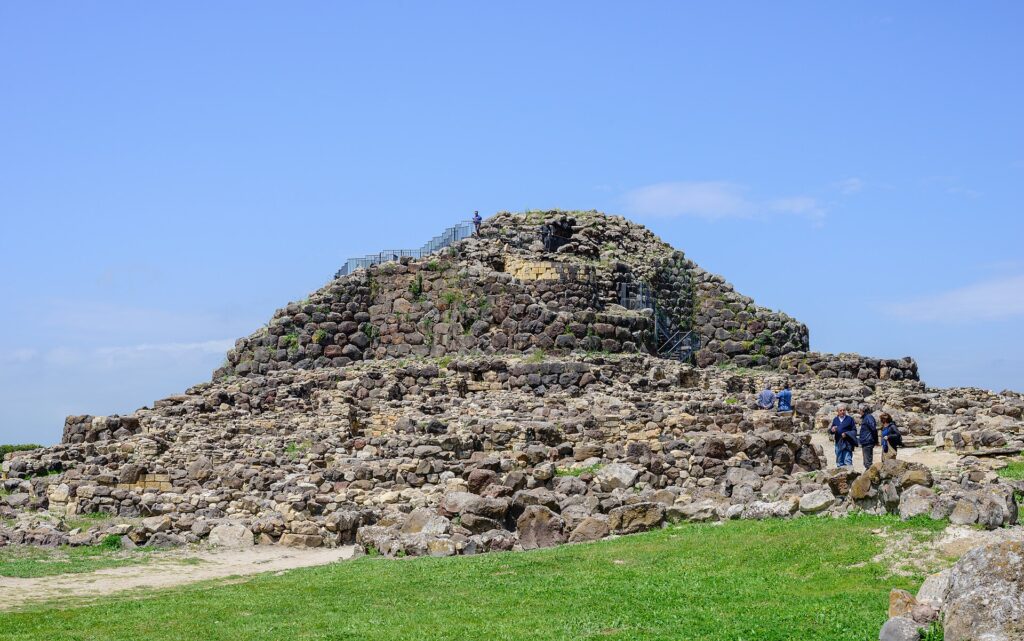
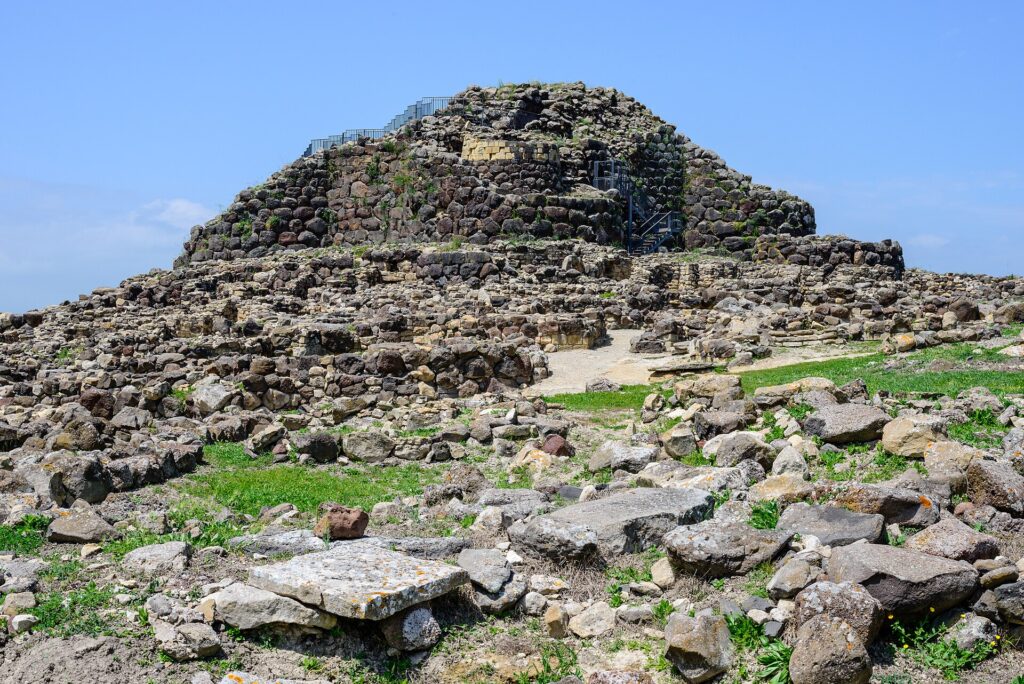
The heart of any visit is a fortress begun in the 16th century BC. At its centre rises the main tower, originally almost twenty metres high, to which four more towers were added, linked by mighty walls to form a four-lobed bastion. Later, an outer wall with further towers enclosed the whole structure, while the village grew up around it.
Walking among the basalt blocks, climbing the narrow stairways and looking out from the towers is a unique experience: you really grasp the skill of the Nuragic builders, who, using neither mortar nor binding material, raised structures that have stood for over three millennia.
2. The Nuragic village
At the foot of the bastion lies a village of about fifty round huts, with rooms, courtyards and little lanes. One of the most interesting structures is the meeting hut, with a stone bench running along its walls, where the community’s leaders may once have gathered. In some of the huts you can make out hearths, millstones and niches.
3. The guided tour of Su Nuraxi
The site can only be visited with a guide, in groups that set off at regular intervals throughout the day. The tour lasts about an hour and takes you inside the towers and corridors of the nuraghe. In high season and at weekends it’s best to arrive early or book ahead, as the groups fill up quickly.
Wear comfortable shoes with non-slip soles: the stairs inside are narrow and the stones worn smooth by time. In summer, bring a hat, as there is little shade in the village.
4. The Casa Zapata museum complex
In the centre of the village stands the residence of the Zapata family, nobles of Aragonese origin who were barons of Barumini from the sixteenth century. During restoration work, another nuraghe was discovered beneath the palace, known as Nuraxi ‘e Cresia. Today you can look down on it from above, thanks to suspended walkways and glass floors: an extraordinary meeting of prehistory and modern history.
5. The ethnographic museum and the launeddas
Casa Zapata also houses an archaeological section, with finds from the excavations, and an ethnographic section devoted to rural life in the Marmilla. Of particular interest is the collection dedicated to the launeddas, the ancient reed wind instrument typical of Sardinia, with examples, photographs and recordings.
6. The Centro Giovanni Lilliu
This cultural centre is dedicated to the archaeologist born in Barumini who led the excavations of Su Nuraxi in the 1950s. It hosts temporary exhibitions, photography displays and workshops. It’s a good starting point for understanding who the Nuragic people were and how the complex was brought to light.
7. The church of the Immacolata
The parish church, dedicated to the Blessed Virgin Immaculate, is a sixteenth-century building in Gothic-Aragonese style, with a handsome doorway and side chapels. Inside you’ll find furnishings, wooden statues and works of sacred art linked to the history of the community.
8. The old town and its courtyard houses
Strolling through the streets of Barumini means discovering the typical courtyard houses of the Marmilla, with stone walls, large arched wooden doorways and inner courtyards where family life once unfolded. Some have been restored and now house shops, B&Bs and small workshops.
9. The country churches
In the countryside around the village there are small rural churches, such as those of San Giovanni and Santa Lucia, tied to religious festivals and pilgrimages. They make peaceful destinations for a walk among wheat fields and dry-stone walls.
10. The view over the Marmilla
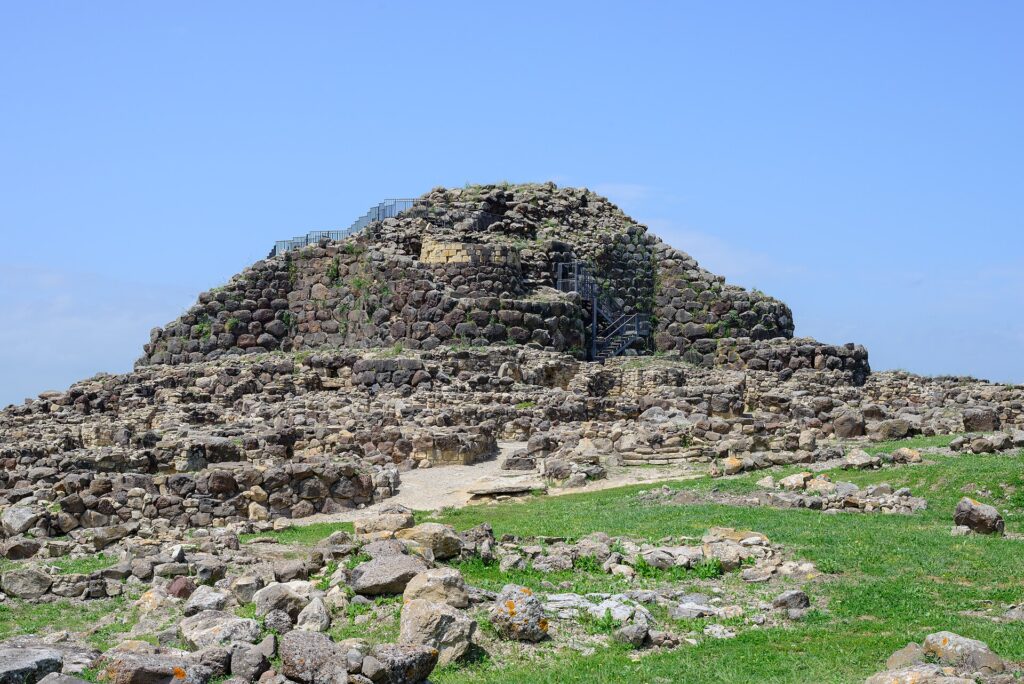
From the towers of Su Nuraxi and the nearby hills, the view sweeps across the Giara di Gesturi, Las Plassas castle and the villages of the Marmilla. At sunset, when the basalt turns pink and the hills glow golden, the landscape is truly magical.
How to plan your visit to Su Nuraxi
Here are a few practical tips to help you make the most of the UNESCO site:
- Opening hours: the complex is open all year round, with longer hours in summer and shorter ones in winter. Always check the latest times on the Fondazione Barumini website.
- Tickets: there is a combined ticket covering Su Nuraxi, Casa Zapata and the Centro Lilliu. It’s worth buying if you want to see everything in one day.
- Duration: about an hour for the nuraghe and another hour for Casa Zapata.
- With children: younger visitors love it, but the internal stairs are not suitable for pushchairs.
- Accessibility: the village can be partly explored on foot, but the inside of the towers involves climbing high, narrow steps.
To discover more Nuragic sites on the island, read our guide to the most beautiful nuraghi in Sardinia.
Who were the Nuragic people? The civilisation behind Su Nuraxi
To get the most from your visit, it helps to know something about the people who built these towers. The Nuragic civilisation developed in Sardinia between the Bronze Age and the early Iron Age, roughly from 1700 to 700 BC. Its symbol is the nuraghe, a stone tower shaped like a truncated cone: around seven thousand still survive on the island, a number unmatched anywhere in the Mediterranean.
The Nuragic people were shepherds, farmers, metalworkers and seafarers. They worked bronze, traded with peoples of the eastern Mediterranean and built sacred wells, giants’ tombs and sanctuaries. Their bronze figurines, the bronzetti, depict warriors, tribal chiefs, women and animals, and are on display in the island’s main museums.
We don’t know for certain what the nuraghi were used for: fortresses, chiefs’ residences, places to store resources or symbols of a community’s power. They probably served several purposes at once, changing over the centuries. Su Nuraxi is the best place to form an idea, because it preserves both the fortress and the village that grew up around it.
The Giara di Gesturi and its little horses
Just a few minutes from Barumini rises the Giara di Gesturi, a basalt plateau about a dozen kilometres long, covered in cork oak and holm oak woods and Mediterranean scrub. In winter and spring the «paulis», shallow pools where water crowfoot blooms, form here, and the famous Giara horses, small wild horses that have lived free for centuries, come to drink.
You can explore it on foot or by bike along flat trails, with the help of local guides who know the best spots for seeing the horses without disturbing them. Bring binoculars, keep your distance and don’t leave any food behind: this is a fragile and precious ecosystem.
Things to do in Barumini: experiences to enjoy
Once you’ve decided what to see in Barumini, choose the experiences that suit you:
- Themed guided tours of Su Nuraxi and Casa Zapata, also available in foreign languages.
- Educational workshops for children and schools, focused on Nuragic life.
- Excursions on the Giara di Gesturi, on foot, by bike or on horseback, in search of the wild horses.
- Trekking and cycling along the country roads of the Marmilla.
- Tastings of cheese, olive oil, wine and sweets at local farms and producers.
- Launeddas concerts and evenings of traditional music during festivals.
Experiences from local operators, whom you can contact directly with no commission, are on the page things to do in Barumini.
A brief history of Barumini
The area’s history begins with the Nuragic people: the fortress of Su Nuraxi was built in the Bronze Age and enlarged several times over the following centuries. The village was inhabited for a long time, even after the end of the Nuragic civilisation, in Punic and Roman times. Over time the ruins were buried under earth and the hill became a simple cultivated rise.
In the Middle Ages the Marmilla belonged to the Judicate of Arborea, then passed to the Aragonese, who entrusted the barony of Barumini to the Zapata family. It was only in the twentieth century, after heavy rain exposed some stones, that the archaeologist Giovanni Lilliu, born right here, began the excavations that between 1950 and 1957 brought the complex to light. Since then Barumini has become the symbol of Nuragic civilisation around the world.
What to eat and drink in Barumini
The cuisine of the Marmilla is simple and rooted in the land. Try:
- malloreddus (small Sardinian gnocchi-style pasta) alla campidanese, with sausage sauce and pecorino;
- pecora in cappotto (literally ‘sheep in a coat’), boiled with potatoes, onions and vegetables;
- bread baked in a wood-fired oven, and pane fresa;
- local sheep’s cheeses, ricotta and honey;
- almond sweets such as amaretti, gueffus and papassinos;
- local wines, such as Nuragus and Monica, and saffron from the neighbouring villages.
Restaurants and agriturismi (farm stays) are on the page where to eat in Barumini. To get to know the island’s cuisine, read our guides to traditional Sardinian dishes and Sardinian sweets.
Festivals and events in Barumini
- Holy Week: rites and processions through the village streets.
- Country festivals: in spring and summer, with processions to the rural churches, horsemen and communal lunches.
- Patron saint’s festival: with religious celebrations, traditional music and dancing in the square.
- Cultural events at Su Nuraxi: evening openings, torchlit tours and performances at certain times of the year.
Dates change every year: always check the latest calendar before you travel.
Barumini in 1 or 2 days
In half a day: a guided tour of Su Nuraxi and a stroll through the old town.
In one day: morning at Su Nuraxi, lunch at an agriturismo, afternoon at Casa Zapata and the Centro Lilliu, then sunset at Las Plassas castle.
In two days: spend the second day on the Giara di Gesturi and its little horses, with a stop at the Sardegna in Miniatura park in Tuili or the museum in Villanovaforru.
Around Barumini
- Las Plassas castle (about 5 minutes): the remains of a medieval castle on a conical hill, with views over the Marmilla.
- The Giara di Gesturi (about 15 minutes): a basalt plateau with cork oak woods, seasonal pools and wild horses.
- Tuili (about 5 minutes): the altarpiece in the church of San Pietro and the Sardegna in Miniatura park.
- Villanovaforru (about 20 minutes): the archaeological museum and the Genna Maria nuraghe.
- Santa Vittoria di Serri (about 30 minutes): one of the most important Nuragic sanctuaries on the island.
- Sanluri (about 25 minutes): the castle of Eleonora d’Arborea.
To discover more villages worth visiting, read our guide to the most beautiful villages in Sardinia.
Practical information: getting here, parking, when to go
How to get to Barumini
The most convenient airport is Cagliari Elmas, about 60 km away: it takes roughly an hour by car along the SS 131 and then the SS 197. From Oristano it’s about 50 minutes, and from Olbia and Alghero around two and a half hours. The village is linked to Cagliari by regular bus services, but to explore the Marmilla a car is the best option.
Getting around and parking
Su Nuraxi has a large free car park opposite the entrance. The village centre is easy to explore on foot, and Casa Zapata is only a few minutes from the site. For the Giara and the neighbouring villages, follow the tourist signs: the roads are quiet and scenic.
Where to stay
The village of Barumini has B&Bs and holiday homes in the old courtyard houses. The agriturismi of the Marmilla offer peace and quiet, traditional cooking and starry skies. If you’re travelling across the island, you can stop here for a night between Cagliari and Oristano.
When to go
The best time is spring, when the hills are green and in bloom and the Giara fills with water, and autumn, with its mild temperatures. In summer, visit the nuraghe in the early morning or late afternoon, as it gets very hot in the middle of the day.
For opening times, tickets and bookings, see the official website of the Fondazione Barumini.
Frequently asked questions about visiting Barumini
How long does the visit to Su Nuraxi take?
The guided tour lasts about an hour. If you add Casa Zapata and the Centro Lilliu, allow half a day.
Can you visit Su Nuraxi without a guide?
No, entry inside the nuraghe is only allowed on guided tours, which depart at regular intervals during opening hours.
Is Barumini suitable for families?
Yes: children are fascinated by the towers and huts, and the educational workshops make the visit even more engaging. You’ll find more ideas in our guide to Sardinia with children.
What is there to see near Barumini?
The Giara di Gesturi with its little horses, Las Plassas castle, the Sardegna in Miniatura park in Tuili and the museum in Villanovaforru, all just a few minutes away by car.
How many days do you need to visit Barumini?
One day is enough for Su Nuraxi and the village. With two days you can also explore the Giara and the villages of the Marmilla.
Barumini, best enjoyed with those who live it
Now you know what to see in Barumini: Su Nuraxi with its towers and village, Casa Zapata with the nuraghe hidden beneath the palace, the old town with its courtyard houses, and a Marmilla of hills, castles and wild horses. It’s a place where Sardinia’s history is something you can touch, stone by stone: in the morning you can step inside a fortress built three thousand years ago, and in the afternoon walk across the Giara among cork oaks and pools. To truly experience it, pick an experience from those offered by local operators and contact them directly, with no intermediaries. Ajò, Sardinia awaits.
