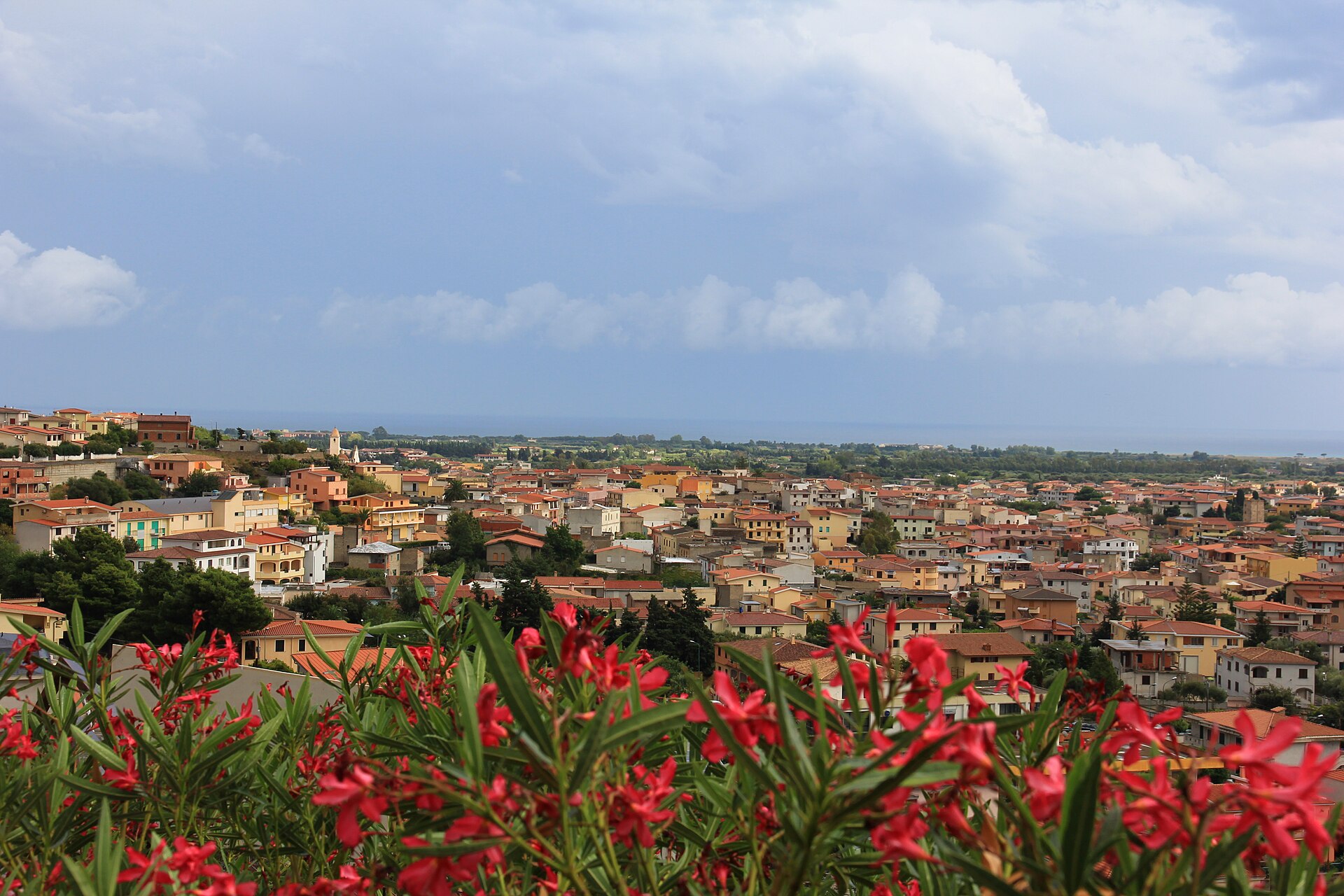
A stone-built old town of paved squares and a church on every corner, the green plain of the River Cedrino and, just minutes away, more than twenty kilometres of coastline with pale beaches, pine woods and coves of volcanic rock: the question of what to see and do in Orosei has plenty of answers. The town that gives its name to the most famous gulf on the east coast combines sea, art, archaeology and tradition as few other places in Sardinia can.
In this guide you’ll find the 12 unmissable stops in Orosei, the beaches one by one, the nature of the Bidderosa Oasis and Monte Tuttavista, the experiences to enjoy, the history, the food, the festivals and all the practical information: how to get here, where to park, which area to stay in and when to go.
[[TOC]]
Abba passada no macinat mola (‘Water that has passed no longer turns the mill’)
Sardinian proverb
Why visit Orosei
Orosei lies on the central-eastern coast of Sardinia, in the province of Nuoro, in the historic region of the Baronia. The town sits on the alluvial plain of the Cedrino, about two and a half kilometres from the sea, at the foot of Monte Tuttavista. It has around 6,800 inhabitants and covers an area of 91 square kilometres.
Its name is linked to the Gulf of Orosei, the wide bay that stretches south as far as the cliffs of Cala Gonone and Baunei. But the municipal territory has a character all of its own: north of the town the coast is made up of long sandy beaches, pine woods, lagoons and little coves between dark rocks, with the protected area of Bidderosa as its jewel.
The old town is one of the loveliest in the Baronia, with noble palaces, stone doorways and a surprising number of churches. It’s an ideal destination for families, for anyone who loves calm seas, for those who want to combine beach and culture, and for anyone looking for a comfortable base from which to explore the Nuoro hinterland.
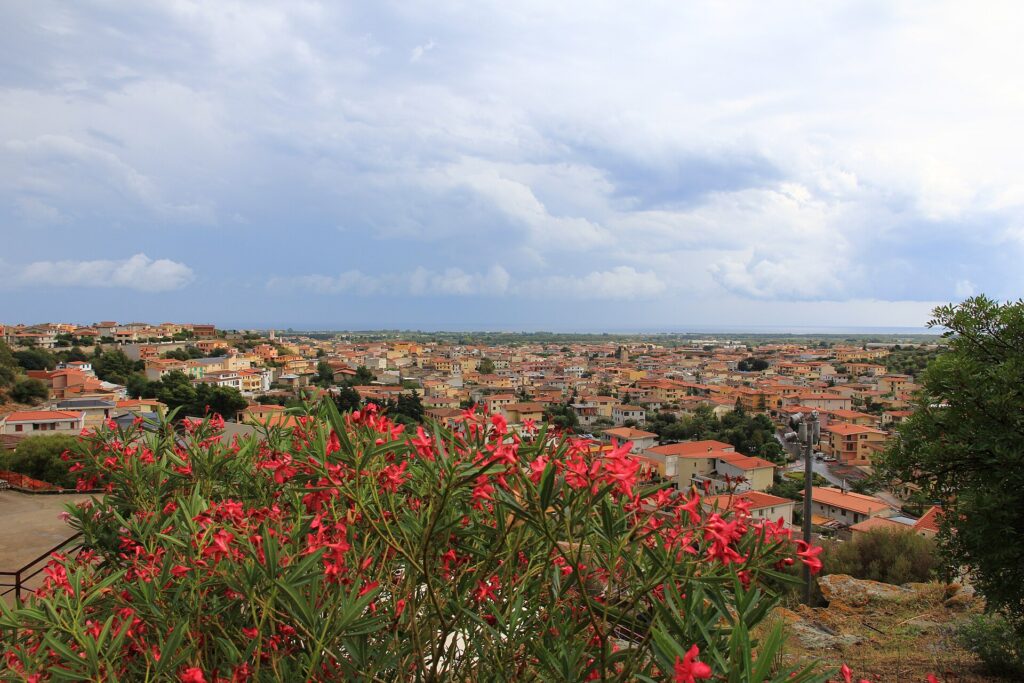
Things to do in Orosei: the 12 unmissable stops
Here are the places you shouldn’t miss, from the old town to the beaches, and from the archaeological sites to the views from Tuttavista.
1. The old town and its squares
The heart of the town revolves around two squares, piazza del Popolo and piazza Asproni, surrounded by stone houses, courtyards, wrought-iron balconies and noble residences built mostly between the fifteenth and eighteenth centuries. Strolling unhurriedly through the narrow lanes is the best way to get to know Orosei: around every corner there’s a church, a carved doorway or a small open space.
2. The church of San Giacomo
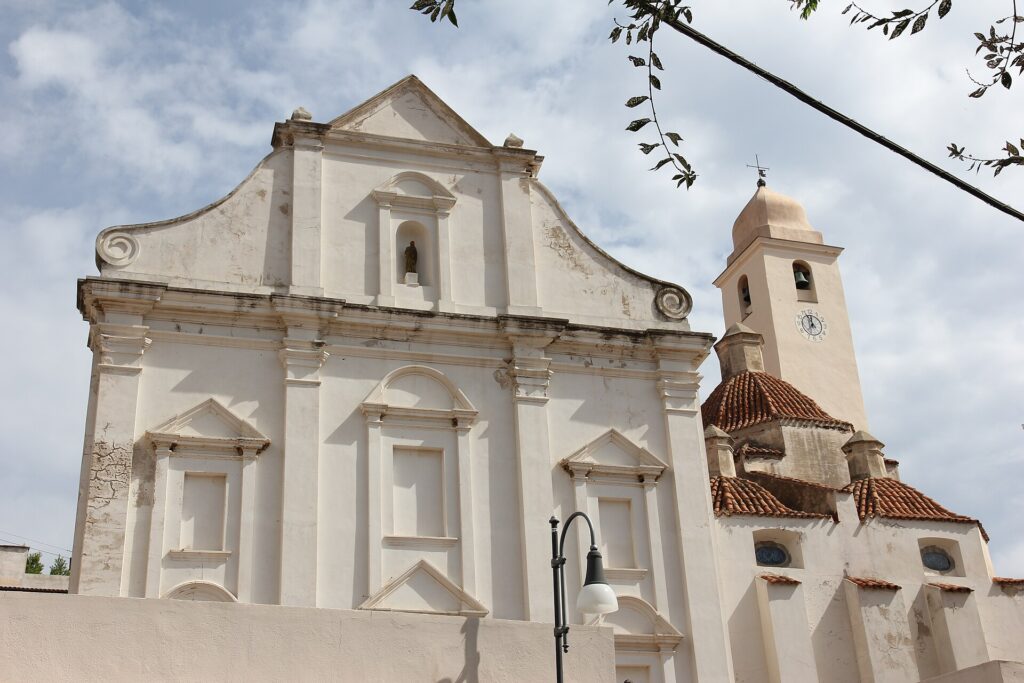
The parish church dedicated to San Giacomo (Saint James), the town’s patron saint, overlooks the main square with its dramatic flight of steps and domes that stand out above the rooftops. It is Orosei’s most recognisable landmark and the ideal starting point for a visit. Nearby are other historic churches, such as those of the Rosario and of the Anime.
3. Sa Prejone Vetza
The ‘old prison’ is what remains of an ancient medieval castle, later used for many years as a jail. Its squat, square bulk still dominates the centre and is one of the town’s emblems, a witness to the centuries when Orosei was an important centre of the Giudicato of Gallura.
4. The Sant’Antonio Abate complex
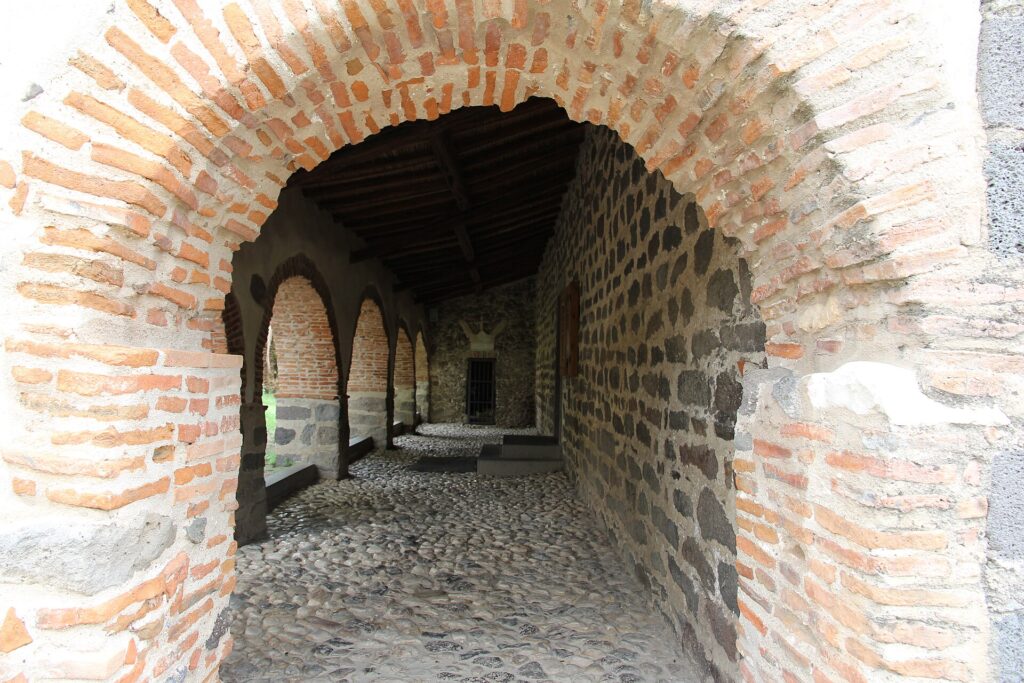
Just outside the centre, the church of Sant’Antonio Abate dates from the fourteenth and fifteenth centuries and preserves a cycle of fourteenth-century paintings and an ancient wooden statue of the saint. It is surrounded by a large enclosure with the cumbessias, the little dwellings where pilgrims once stayed during festivals, and by a medieval tower, the only survivor of the town’s fortifications. It’s one of the most atmospheric places in the whole of the Baronia.
5. The sanctuary of the Madonna del Rimedio
The sanctuary of Nostra Signora del Rimedio, rebuilt in the nineteenth century on the site of a smaller church, is also enclosed by a ring of cumbessias. For most of the year it’s a quiet, peaceful spot, which comes alive in September with the novenas, one of the town’s most heartfelt festivals.
6. The Museo Don Nanni Guiso
In the old town, the museum named after the collector Nanni Guiso displays an original collection of miniature theatres from all over Europe, along with costumes and stage props. It’s a curiosity that surprises young and old alike, and ideal for a windy or rainy day.
7. Santa Maria ‘e Mare
Near the mouth of the Cedrino stands the little church of Santa Maria del Mare, built where the ancient Pisan-era port once lay. Every year, on the last Sunday in May, it is the destination of a striking procession of boats along the river.
8. The nuragic village of Sa Linnarta
Orosei’s territory is extremely rich in ancient remains. The nuragic village of Sa Linnarta, with its sacred well, is one of the most interesting sites, set in the countryside among olive trees and Mediterranean scrub.
9. Nuraghi and domus de janas
Anyone with a passion for archaeology will find nuraghi such as Rampinu, Osala and Gabriele, the villages of Pirastrettu and Sos Muros, the dolmen on the hill of Santa Lucia and the domus de janas (‘fairy houses’, tombs carved into the rock) of Canale Longu, Conca Ruia and Murjé. Before setting out, it’s worth checking which sites are equipped for visitors. To discover the finest ones on the island, read our guide to the most beautiful nuraghi in Sardinia.
10. Monte Tuttavista and Orosei marble
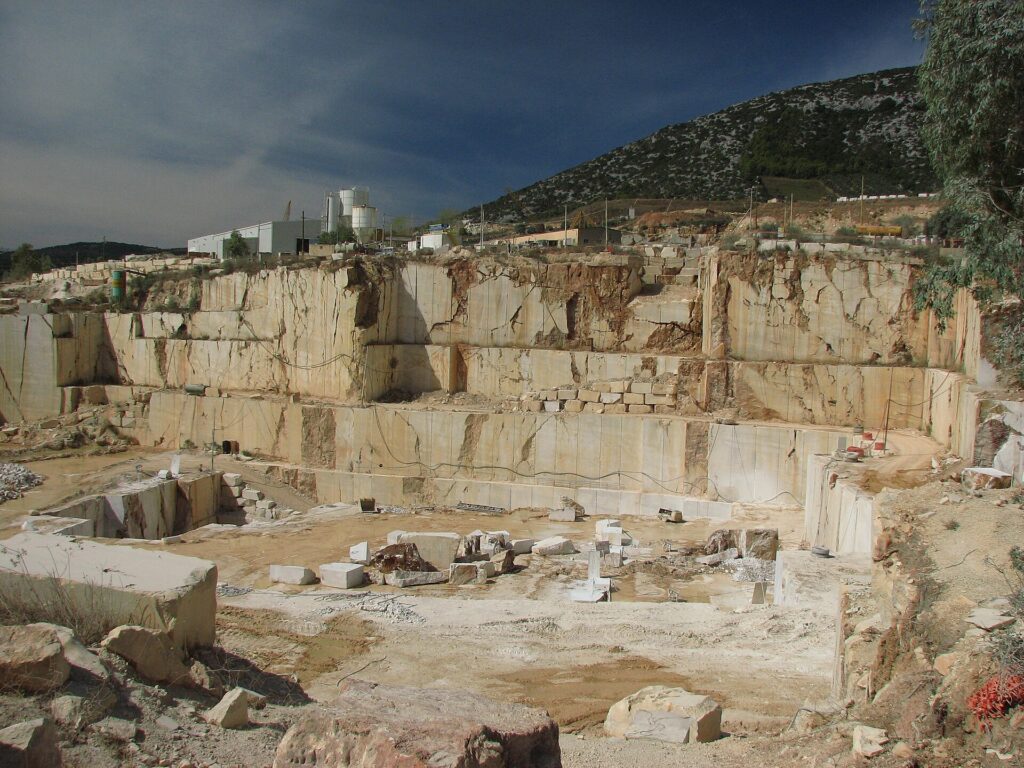
Behind the town rises Monte Tuttavista, around 800 metres of limestone that, as its name suggests, offers views across the whole gulf and the Cedrino plain. The celebrated Orosei marble, a pale stone prized all over the world, is quarried from its slopes: the vast quarries make for an unusual sight in the landscape.
11. The Bidderosa Oasis
North of the town, the Bidderosa Oasis is a protected natural area of pine woods, Mediterranean scrub, lagoons and white-sand beaches lapped by crystal-clear water. It is one of the best-preserved stretches of coastline in eastern Sardinia. To protect it, access is regulated in summer and limited in numbers, so it’s best to check and book before you set off.
12. Cala Liberotto and the north coast
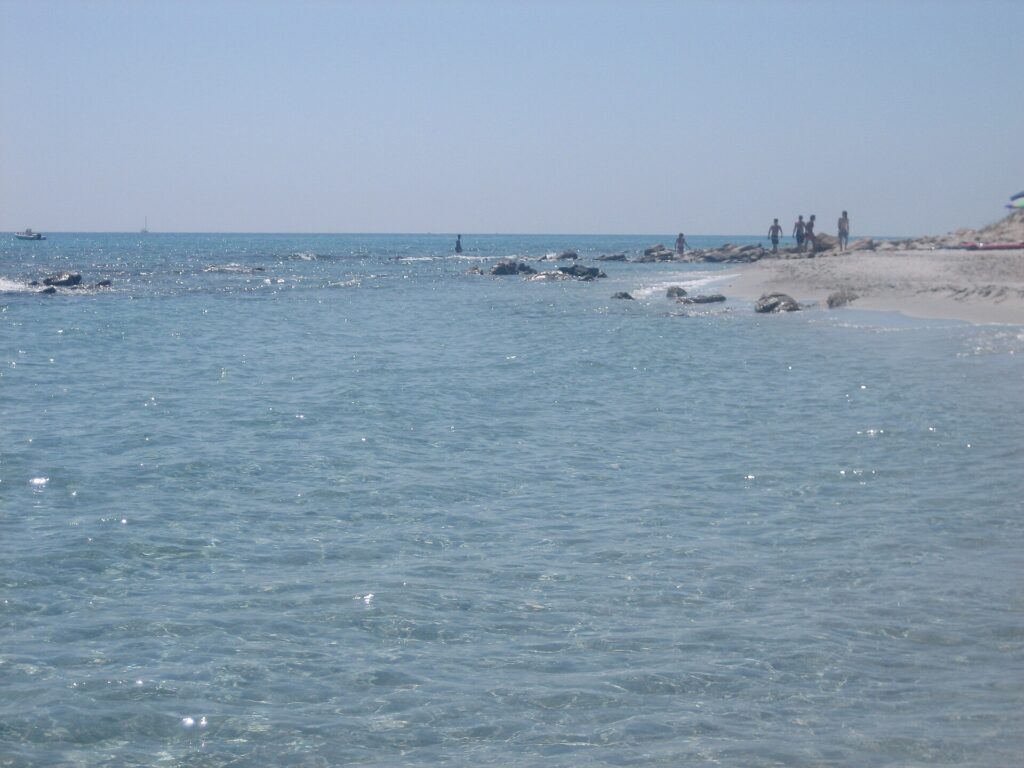
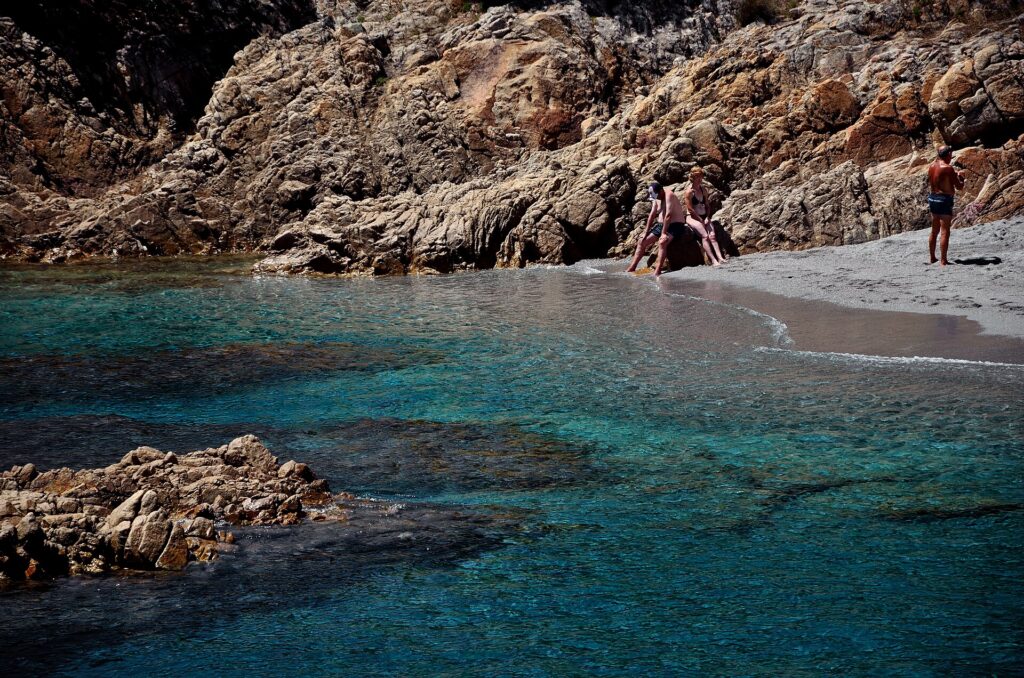
The seaside hamlets of Cala Liberotto and Sos Alinos, about 12 km from the town, are the realm of little coves between dark rocks and pale sand. Cala Liberotto, which until the eighteenth century was known as Cala Curlo, is perfect for snorkelling and for families.
The best beaches in Orosei
Orosei’s coast has beaches to suit everyone: long stretches of sand for families, rocky coves for snorkelling and wild corners tucked into the pine woods.
- Marina di Orosei: the beach closest to the town, very long, with pale sand and pine woods behind, near the mouth of the Cedrino.
- Su Barone: a continuation of the Marina heading north, with a lagoon behind it.
- Osala: a broad beach with the lagoon of the same name and the nuraghe a short distance away.
- Cala Ginepro: a bay of fine sand among the rocks, with pine woods and facilities, much loved by families.
- Cala Liberotto and Sas Linnas Siccas: little coves between volcanic rocks, ideal for snorkelling.
- Fuile ‘e Mare and the coves of Sos Alinos: small and secluded, among rocks and transparent water.
- Bidderosa: five coves of white sand in the protected oasis, with regulated access in summer.
- Sa Curcurica: a wild beach with the lagoon of the same name, on the northern edge of the territory.
A tip: on days when the maestrale (north-westerly wind) blows, the northern coves are often more sheltered, while with the scirocco (south-easterly wind) the sea can be choppy along the whole coast. Remember that taking sand, pebbles or shells away from Sardinian beaches is forbidden.
Nature in Orosei: lagoons, pine woods and the River Cedrino
Orosei is also a wonderful destination for nature lovers. Along the coast you’ll find a string of wetlands, including the lagoons of Bidderosa, Sa Curcurica, Sa Mattanosa and Osala, and the Avalè – Su Pedrosu area, a site of Community importance for birdlife. Here you can spot herons, little egrets, flamingos and plenty of migratory species, especially in spring and autumn.
The Cedrino flows through a plain planted with olive trees, citrus groves and vineyards before reaching the sea: paddling up it by kayak or cycling along its banks is a different way to experience the area. The climate is mild, with rain concentrated between October and April and hot, dry summers.
Things to do in Orosei: experiences to enjoy
- Boat trip in the Gulf of Orosei: heading south you can reach the cliffs, caves and most famous coves of the gulf. You’ll find plenty of ideas in our guide to boat trips in Sardinia.
- Excursions with people who know the area: among the local operators is Ziru Tour, whom you can contact directly to find out about their offers.
- Snorkelling and diving: the rocky coves of the north and the wreck off the coast attract enthusiasts.
- Kayaking and SUP: on the calm morning sea or along the Cedrino.
- Hiking and cycling: on the slopes of Tuttavista, through the coastal pine woods and out in the countryside. For more ideas, read our guide to hiking in Sardinia.
- Birdwatching: in the coastal lagoons, especially in spring and autumn.
- Archaeological tour: among nuraghi, domus de janas and the sacred well of Sa Linnarta.
For all the activities on offer in the area, visit our page on things to do in Orosei.
A brief history of Orosei
The area has been inhabited since prehistoric times, as the domus de janas, dolmens, nuraghi and villages testify. In Roman times, sources mention the place name Fanum Carisi.
In the Middle Ages Orosei was a leading centre: a port official is already documented in 1173, and in the twelfth century the town was the seat of the court of the Giudicato of Gallura. After the Pisan period, with its port at the mouth of the Cedrino, it passed to the Crown of Aragon in 1323 and was granted as a fief the following year. In the centuries that followed it became the main centre of the Baronia, and the noble palaces and many churches of the old town are the mark of that important past.
Today Orosei lives on agriculture, marble quarrying and above all tourism: every summer it welcomes hundreds of thousands of visitors, yet it has kept the character of an authentic Sardinian town.
What to eat in Orosei
The cooking of Orosei brings together the flavours of the sea and those of the Baronia countryside. Alongside fresh fish you’ll find the traditional dishes of the Nuoro area: porceddu (roast suckling pig), sheep’s and goat’s cheeses, pane carasau (thin, crisp Sardinian flatbread) and sweets made with almonds and honey. The Cedrino plain produces extra virgin olive oil, citrus fruit and wine.
Local specialities include handcrafted citrus soft drinks and the pompia, a citrus fruit typical of the Baronia used for candied sweets. To learn more about the island’s most famous bread, read our guide to pane carasau, and for the red wines of the Nuoro area, the one on Cannonau.
To choose where to sit down for a meal, see our page on where to eat in Orosei.
Festivals and events in Orosei
- Sant’Antonio Abate (16–17 January): the great bonfire, su ocu de Sant’Antoni, in the enclosure of the saint’s church.
- Holy Week: ancient and deeply felt rites, with processions and the Via Crucis.
- Sant’Isidoro (mid-May): the farmers’ festival.
- Santa Maria ‘e Mare (last Sunday in May): the boat procession along the Cedrino.
- San Giacomo (25 July): the patron saint’s festival.
- Madonna del Rimedio (September): the novenas at the sanctuary surrounded by cumbessias.
- San Gavino (November): a festival at the church on the plateau.
Dates may vary: check them before you travel on the council’s official channels.
Orosei in 1, 2 or 3 days
One day: a morning stroll through the old town, taking in San Giacomo, Sa Prejone Vetza and the Museo Guiso. Lunch in town and an afternoon at the seaside at Marina di Orosei, then sunset in the Sant’Antonio Abate enclosure.
Two days: spend the second day on the north coast, between Cala Ginepro, Cala Liberotto and the Bidderosa Oasis.
Three days: on the third day choose between a boat trip in the Gulf of Orosei or an archaeological tour around Sa Linnarta and the nuraghi, finishing with a scenic drive up towards Tuttavista.
Around Orosei
Orosei is a perfect base for exploring central-eastern Sardinia. To the south, less than half an hour away, is Dorgali, with Cala Gonone, the Grotta del Bue Marino and the Lanaitò valley. Further south still lie Baunei and the coves of the Ogliastra.
Inland you’ll find Galtellì, one of the most beautiful villages in Sardinia, Nuoro and the murals of Orgosolo. Heading north up the coast you reach Siniscola and Posada, and then San Teodoro.
Practical information: getting there, parking, when to go
Getting to Orosei
The most convenient airport and port are those at Olbia: from there you head south along the strada statale 131 DCN, a fast dual carriageway, in about an hour and a quarter. From Nuoro it takes about half an hour. Cagliari airport is further away, around three hours by car. A car is essential for getting between the beaches and the archaeological sites.
Getting around and parking
The old town is best explored on foot: it’s worth leaving your car in the car parks on the edge of town. In summer the beach car parks, often paid, fill up early, especially at Cala Ginepro and Cala Liberotto. For Bidderosa, find out about access arrangements beforehand.
Where to stay
The town is ideal if you want to soak up the atmosphere of the old centre and have restaurants and services close at hand. The hamlets of Cala Liberotto, Sos Alinos and Cala Ginepro are perfect if you want the sea on your doorstep, with holiday villages, campsites and holiday homes in the pine woods.
When to go
The best period runs from May to October. June and September are the most pleasant months, with warm seas and fewer crowds. In spring and autumn the mild climate is perfect for hiking, birdwatching and archaeology, while January brings the charm of the Sant’Antonio bonfires.
For official information, see the Sardegna Turismo page on the Bidderosa Oasis.
Frequently asked questions about visiting Orosei
What is the most beautiful beach in Orosei?
Bidderosa is the most spectacular for its natural setting and the colours of the sea; Cala Ginepro and Marina di Orosei are the most convenient for families; Cala Liberotto is perfect for snorkelling.
Do I need to book to visit Bidderosa?
In summer, access to the oasis is regulated and limited in numbers. It’s best to check the arrangements and up-to-date costs beforehand.
Is Orosei suitable for children?
Yes: many beaches have sand and shallow water, the Museo Guiso appeals to little ones and the countryside is perfect for family bike rides. You’ll find more ideas in our guide to Sardinia with kids.
How many days do you need to visit Orosei?
At least two days: one for the old town and the Marina, one for the north coast and Bidderosa. With three or four days you can add the boat trip in the gulf and some archaeology.
Can you visit Cala Gonone from Orosei?
Yes: Cala Gonone is about half an hour away by car via Dorgali, and it’s the departure point for boats to the gulf’s most famous coves.
Orosei, best enjoyed with those who live it
Now you know what to see in Orosei: the old town with San Giacomo and Sa Prejone Vetza, the Sant’Antonio Abate complex, the beaches of the Marina and Cala Liberotto, the Bidderosa Oasis and the archaeological treasures of the Baronia. Whether you come for a week by the sea in summer or a cultural weekend in spring, you’ll always find a square, a cove or a sunset to remember. To make the most of it, rely on those who really know the place: choose an experience from those offered by local operators and contact them directly, with no intermediaries. Ajò, Sardinia is waiting for you.
