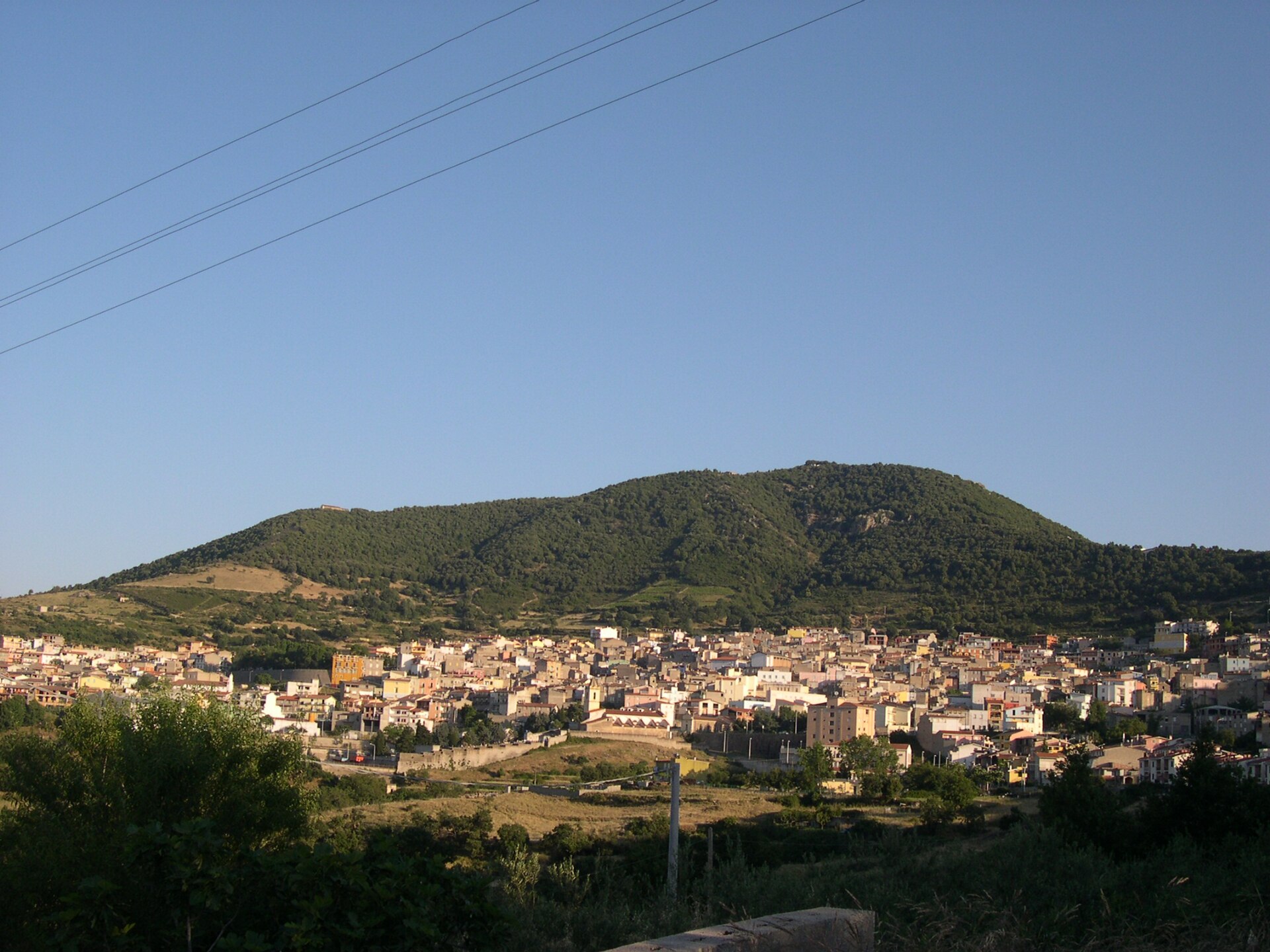
Walls that tell stories of struggle and hope, a proud and welcoming shepherds’ village, a primeval holm oak forest and the Supramonte mountains all around: things to do in Orgosolo is the question every traveller asks who wants to see the real Barbagia. This village in the Nuoro area is famous worldwide for its murals, but it has much more to offer.
In this guide you’ll find the 10 stops not to miss in Orgosolo, tips for exploring the murals, hikes in the Supramonte, experiences to enjoy, the village’s history, its traditional dishes, its festivals and all the practical information you need: how to get here, where to park, when to go and what to see nearby.
Contents
Sos muros de Orgosolo faeddant prus de sos omines (“The walls of Orgosolo speak louder than the men”).
Traditional saying from the Barbagia
Why visit Orgosolo
Orgosolo lies in the heart of Sardinia, in the province of Nuoro, at around 600 metres above sea level on the slopes of the Supramonte. It has about 4,000 inhabitants and a vast territory of limestone mountains, plateaux, woodland and pastures. For centuries it was a village of shepherds, isolated and fiercely proud of its traditions.
Today it is best known for its murals: hundreds of paintings on the house fronts that tell the story of the village, its social struggles, and events from Italian and international news. Wandering its streets is like leafing through an open book written in colour.
Orgosolo appeals to lovers of street art, to anyone looking for an authentic Sardinia far from mass tourism, to hikers, and to those who want to experience Barbagia hospitality, perhaps with a lunch with the shepherds. If you’re wondering what to see in Orgosolo, get ready to discover a village you won’t forget.
Things to do in Orgosolo: the 10 stops not to miss
1. The murals of Corso Repubblica
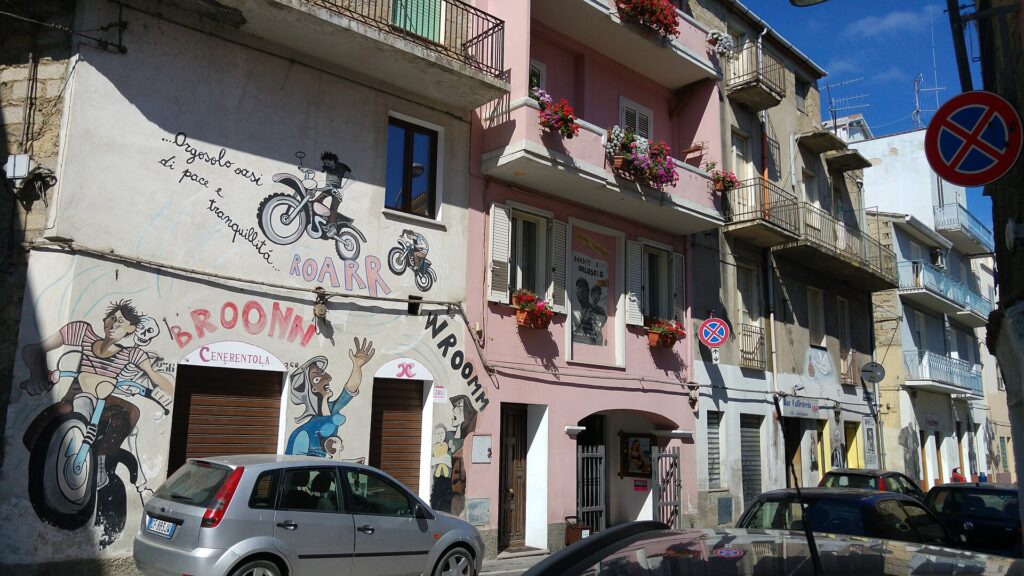
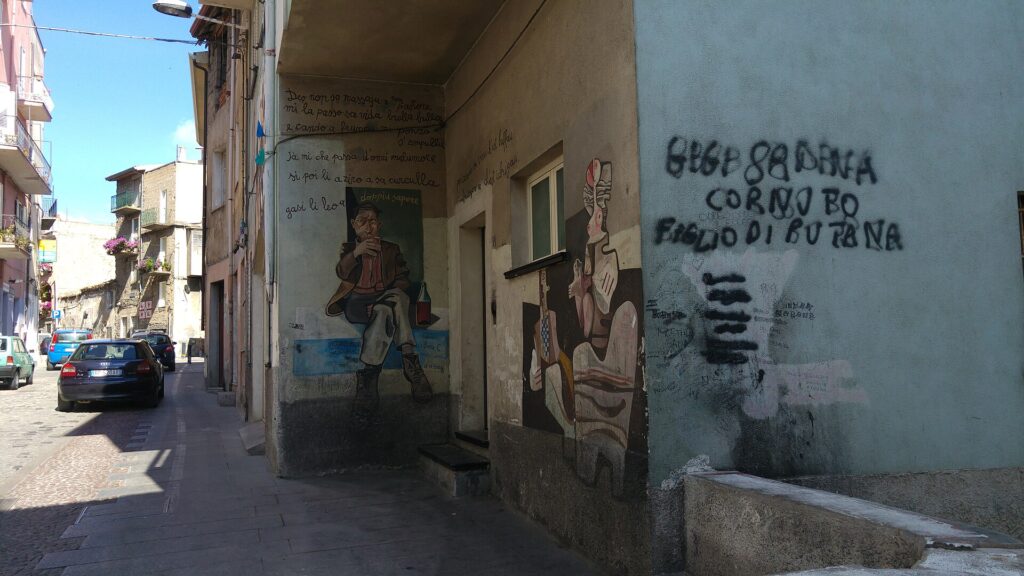
The village’s main street is Sardinia’s most famous open-air museum. Along Corso Repubblica the murals follow one after another, on house fronts, shop doors and even on the rocks. Some depict the life of the shepherds, others the battles over land, others still historic events such as the Vietnam War, Italian massacres or 9/11.
Set aside at least a couple of hours and stroll slowly, looking up as you go: many details only reveal themselves up close, such as the inscriptions in Sardinian and Italian that accompany the pictures.
2. The story of the murals
The first mural was painted in 1969 by a theatre group from Milan. A few years later, in 1975, Francesco Del Casino, a teacher from Siena who taught at the village school, created a series of works with his students to mark the thirtieth anniversary of the Liberation. Since then local artists and visitors passing through have kept on painting, and there are now more than 150 murals.
The style is often inspired by Cubism and Mexican muralism: angular figures, bold colours and direct messages. It is an art that grew from the ground up, giving a voice to a community and its struggles.
3. The Pratobello mural
Among the most significant works are those dedicated to the Pratobello revolt of 1969, when the villagers peacefully occupied the local pastures to stop a military training range from being built. It was a collective protest, with women, men and children taking part, and it was successful. It remains a symbol of the village’s identity to this day.
4. The old town and its churches
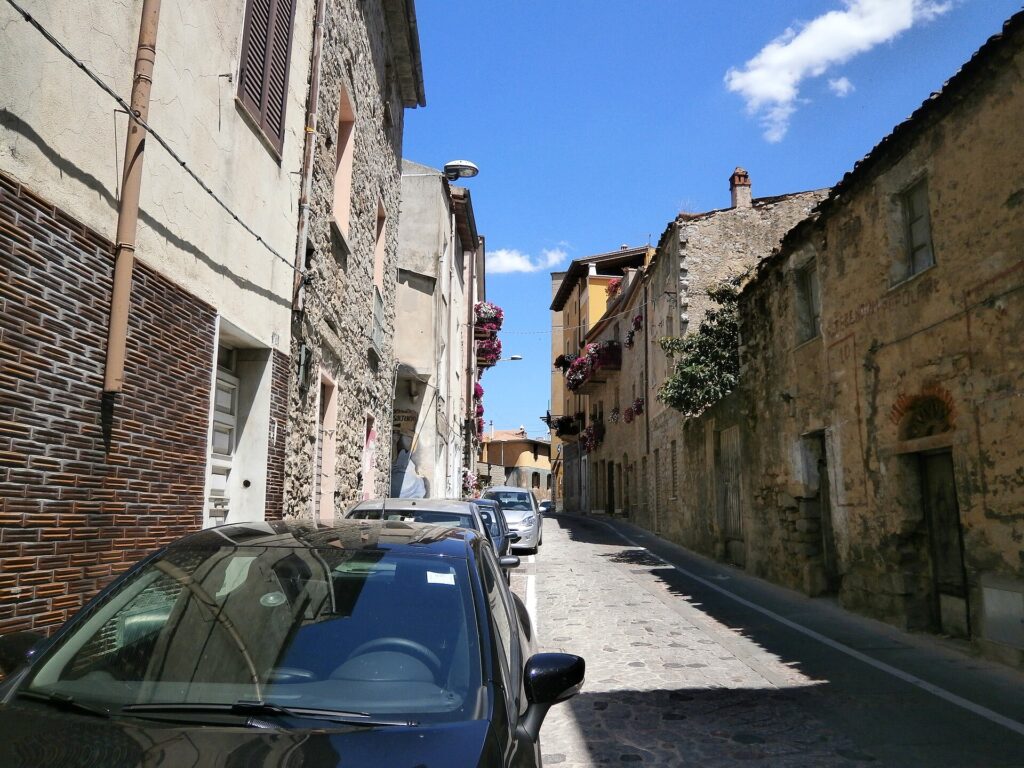
Beyond the murals, the old town has granite houses, narrow lanes and small squares. Worth a visit are the church of San Pietro, one of the oldest in the village, the parish church of San Salvatore and the little church of Sant’Anania, linked to one of the most heartfelt local festivals. Pop into one of the shops to taste local produce.
5. The Sas Baddes forest
In the Supramonte of Orgosolo lies one of Europe’s last primary holm oak forests: Sas Baddes, a wood never felled by man, with ancient trees, yews, hollies and a rich understorey. Walking among these giants, in a silence broken only by birdsong, is an unforgettable experience.
6. Monte Novo San Giovanni
A tower of limestone rising to over 1,300 metres in the heart of the Supramonte. A flight of steps and a path lead to the summit, where the view takes in the Gennargentu, the Gulf of Orosei and the mountains of the Barbagia. It was once used as a lookout post for spotting wildfires.
7. Funtana Bona, the source of the Cedrino
In the Montes forest, a short distance from Monte Novo, you’ll find the spring of Funtana Bona, where the River Cedrino rises. It is a cool, shady spot, perfect for a break during summer hikes, surrounded by holm oaks and meadows where horses and cows graze freely.
8. The Pratobello plateau
On the road towards Fonni the Pratobello plateau opens out, a wide stretch of pasture and cork oak woods. It is where the 1969 revolt took place and is now a peaceful spot for walks, birdwatching and photography, especially in spring, when the meadows fill with flowers.
9. The Supramonte and its canyons
The village’s territory takes in part of the Supramonte, a limestone world of gorges, sinkholes, caves and stone-and-juniper sheepfolds. Some routes to the Gorropu gorge start here, as do the paths linking Orgosolo with Oliena, Dorgali and Urzulei. These are routes to tackle with a guide or plenty of trekking experience.
10. The shepherds’ sheepfolds
In the countryside you can still find the pinnettos, circular stone huts with roofs of juniper logs, used for centuries by shepherds as shelter. Some sheepfolds welcome visitors to show them how cheese is made and to share a traditional lunch in the open air.
How to see the murals: practical tips
Here are a few tips to make the most of your visit to the painted village:
- Start from Corso Repubblica: it is the street with the greatest concentration of works; then explore the side streets and small squares.
- Pick the right light: morning and late afternoon are the best times to photograph the colours.
- Take a guide: a guided tour explains the meaning of each mural and its historical background.
- Respect the village: the murals are on the houses where families live, so take photos discreetly.
- Take your time: you’ll need at least two hours to see the main works at a leisurely pace.
Lunch with the shepherds: an experience not to be missed
If one experience captures the soul of the Barbagia, it’s the lunch with the shepherds. You usually head to a sheepfold or a clearing in the Supramonte, often by off-road vehicle, and sit down at long tables in the shade of the holm oaks. The shepherds cook meat over a wood fire, skewered on long spits, while you sample cheeses, cured meats, pane carasau (traditional thin, crisp flatbread) and red wine.
The lunch is also a time for storytelling: the shepherds talk about transhumance, life in the sheepfolds, and the traditions and legends of the village. The meal often ends with tenore singing, the four-part polyphonic singing recognised by UNESCO as Intangible Cultural Heritage of Humanity, and a glass of filu ‘e ferru, Sardinian firewater.
To do it properly, choose local operators who genuinely work with livestock and know the area. Always ask what is included, how long the excursion lasts and how you get to the lunch spot: some Supramonte tracks can only be driven with suitable vehicles.
Tenore singing and local traditions
Orgosolo is one of the villages where tenore singing is still very much alive: four men in a circle, each with his own part (sa boghe, sa mesu ‘oghe, sa contra and su bassu), weave together deep voices that recall the sounds of nature and animals. You can hear it at festivals, at lunches with the shepherds and at evenings organised in the village.
Traditional dress is also a strong element of local identity: the women’s costume, with its colourful headscarf and embroidered bodice, is still worn on important occasions such as the feast of the Assumption. Many families keep outfits handed down through generations.
Things to do in Orgosolo: experiences to enjoy
Once you’ve decided what to see in Orgosolo, choose the experiences that suit you:
- Lunch with the shepherds in the sheepfolds of the Supramonte, with roast meat, cheeses, pane carasau and tenore singing.
- Guided tours of the murals, to learn the story behind each work.
- Trekking in the Sas Baddes forest, at Monte Novo San Giovanni and towards Gorropu; for more ideas read our guide to trekking in Sardinia.
- Off-road trips in the Supramonte: with Off Road Sardinia Tour you can explore the tracks between Orgosolo, Dorgali and the plateau.
- Tastings of Cannonau, cheeses and cured meats in the village’s wineries and farms.
- Horse riding on the Pratobello and Montes plateaux.
Experiences run by local operators, whom you can contact directly with no commission, are on the page things to do in Orgosolo.
A brief history of Orgosolo
The area has been inhabited since the Nuragic age: nuraghi, giants’ tombs and domus de janas are scattered across the countryside. For centuries the community lived from sheep farming, in a harsh, isolated environment, with its own rules and a strong sense of honour and hospitality. In the nineteenth and twentieth centuries the village was marked by banditry and feuds, which also feature in the celebrated 1961 film “Banditi a Orgosolo” by Vittorio De Seta.
In the 1960s and 1970s the community found new forms of expression: the Pratobello revolt, the birth of the murals and the cultural commitment of the schools. Today Orgosolo is a lively village that has turned its own history into a source of pride and a reason to welcome visitors.
What to eat and drink in Orgosolo
The cooking of Orgosolo is that of the Barbagia shepherds. Try:
- porceddu (roast suckling pig) and mutton and lamb, roasted over a wood fire;
- culurgiones (stuffed pasta parcels) and maccarrones (hand-rolled pasta) with meat sauce;
- pane carasau and pane guttiau, seasoned with oil and salt;
- sheep’s and goat’s cheeses, ricotta and fiore sardo;
- pork cured meats and dry sausage;
- Cannonau made from the village’s own vineyards.
Restaurants and farm stays are listed on the page where to eat in Orgosolo. To find out more, read our guides to Cannonau and Sardinian cheeses.
Festivals and events in Orgosolo
- Festa dell’Assunta: on 15 August, with a procession and traditional costumes, one of the finest festivals in the Barbagia.
- Autunno in Barbagia: the village opens its houses and courtyards with craftspeople, local produce and music; read our guide to Cortes Apertas.
- Barbagia Carnival: parades and traditional masks; in nearby Mamoiada the Mamuthones take to the streets.
- Country festivals: in spring and summer the rural churches come alive with processions and communal lunches.
Dates change every year, so always check the latest calendar before you travel.
Orgosolo in 1 or 2 days
In half a day: a walk among the murals of Corso Repubblica and the old town, with a guided tour.
In one day: morning among the murals, lunch with the shepherds in the Supramonte, afternoon at Monte Novo San Giovanni and Funtana Bona.
In two days: spend the second day in the Sas Baddes forest with a guide, or on an off-road trip towards Gorropu. If you have more time, explore Mamoiada, Oliena and Nuoro.
Around Orgosolo
- Mamoiada (about 15 minutes): the Museo delle Maschere Mediterranee (Museum of Mediterranean Masks) and Cannonau wineries.
- Oliena (about 20 minutes): Monte Corrasi and the Su Gologone spring.
- Nuoro (about 25 minutes): the Museo del Costume, the MAN art museum and the house of Grazia Deledda.
- Fonni (about 30 minutes): the highest village in Sardinia, gateway to the Gennargentu.
- Dorgali and Cala Gonone (about 45 minutes): caves and coves on the gulf; read our guide what to see in Dorgali.
Practical information: getting here, parking, when to go
How to get to Orgosolo
The most convenient airport is Olbia Costa Smeralda, about 1 hour 30 minutes by car along the SS 131 DCN to Nuoro. From Cagliari it takes about 2 hours 30 minutes along the SS 131. Nuoro is linked to the village by local bus, but you’ll need a car to explore the Supramonte.
Getting around and parking
There are car parks at the entrance to the village and along the roads skirting the centre: leaving the car and exploring on foot is the best way to see the murals. For Monte Novo San Giovanni and the Montes forest you follow a paved road and then a dirt track, which should be driven with care. For Sas Baddes and Gorropu an off-road vehicle or a guide is recommended.
Where to stay
The village of Orgosolo has B&Bs, holiday homes and a few hotels. Farm stays in the countryside offer peace and quiet, shepherds’ cooking and starry skies. If you want more services, you can stay in Nuoro or Oliena, a few minutes away by car.
When to go
The village can be visited all year round. Spring and autumn are perfect for trekking and for the colours of the countryside. Summer is ideal for the festivals and the cool mountain air, while winter can bring snow and cold, with a charm all of its own.
For more information, see the dedicated page on Sardegna Turismo.
Frequently asked questions about visiting Orgosolo
How many murals are there in Orgosolo?
There are over 150, mostly along Corso Repubblica and in the streets of the centre. New ones appear every year and some are restored.
How long does it take to see the murals?
At least two hours for a leisurely stroll past the main works. With a guide the visit is richer and lasts about an hour and a half.
What is a lunch with the shepherds?
It is a traditional open-air lunch at a sheepfold in the Supramonte, with roast meat, cheeses, pane carasau, wine and often tenore singing. It’s one of the most authentic ways to get to know the local culture.
Is Orgosolo suitable for families?
Yes: children are fascinated by the murals, and the walks in the forest and at Monte Novo are suitable for little ones too. You’ll find more ideas in our guide to Sardinia with children.
How many days do you need to visit Orgosolo?
One day is enough for the murals and a lunch with the shepherds. With two days you can also explore the Supramonte and the Sas Baddes forest.
Orgosolo: best enjoyed with the people who live it
Now you know what to see in Orgosolo: the murals of Corso Repubblica, the story of Pratobello, the old town, the Sas Baddes forest, Monte Novo San Giovanni and the shepherds’ sheepfolds. It is a village that surprises, where art tells the story of a community and hospitality is an ancient rule: in the morning you can read the painted walls and at lunchtime sit down at the shepherds’ table, amid the aroma of roasting meat and Cannonau. To really experience it, choose one of the experiences offered by local operators and contact them directly, with no middlemen. Ajò, Sardinia is waiting for you.
