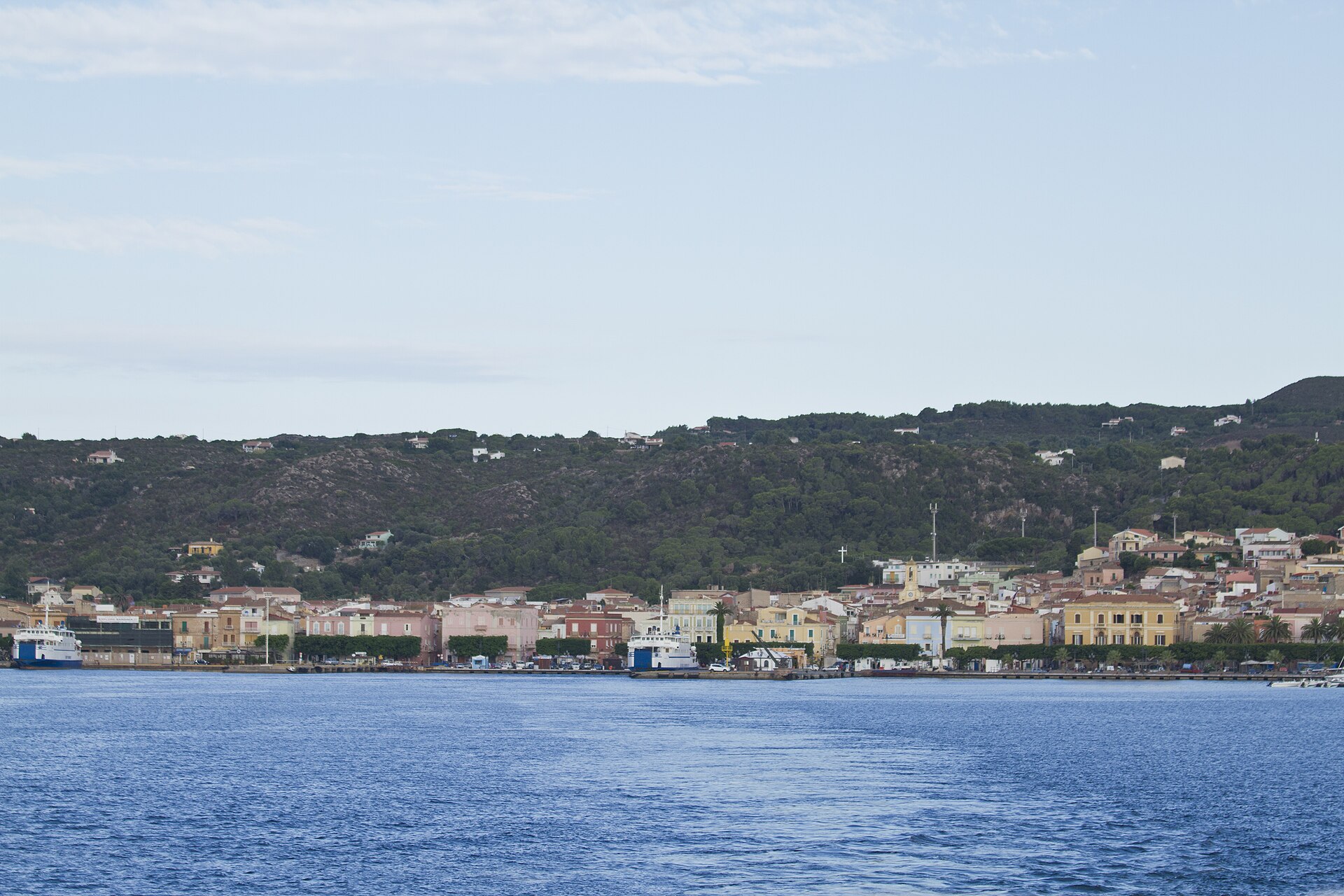
Pastel-coloured houses facing the harbour, steep lanes that look as though they were lifted from the Ligurian Riviera, a Genoese dialect spoken for almost three centuries in the middle of the Sardinian sea, volcanic cliffs and a red tuna that is close to a religion: things to do in Carloforte add up to the discovery of an island within an island, unlike anywhere else in Sardinia.
In this guide you’ll find the 12 unmissable stops in Carloforte, from the seafront to Torre San Vittorio and from Capo Sandalo to Le Colonne. You’ll also find the beaches, the tonnara (tuna fishery) and Tabarchino cuisine, plus experiences, history, festivals and all the practical information: ferries, parking, where to stay and when to go.
[[TOC]]
Ogni pilu tenet s’umbra sua (“Even a single hair has its shadow”).
Sardinian proverb: even the smallest of islands has a soul all of its own
Why visit Carloforte
Carloforte is the only town on San Pietro island, in south-west Sardinia, about 7 km off the coast of the Sulcis. It has just under six thousand inhabitants and is a member of I Borghi più belli d’Italia, the association of Italy’s most beautiful villages.
Its history is unique. The town was founded in 1738 by families of Ligurian origin who had left Pegli, near Genoa, centuries earlier to fish for coral on the island of Tabarka, in Tunisia. That is why the people of Carloforte are called Tabarchini and still speak Tabarchino today, a variety of Genoese that locals simply call u pàize, “the town”.
Carloforte suits anyone looking for an island on a human scale: you explore on foot, the food is superb, the sea is crystal clear and the countryside is protected. It’s ideal for couples, families, birdwatchers and anyone who truly wants to switch off, because the ferry crossing already marks a threshold. If you’re wondering what to see in Carloforte, get ready for a trip that tastes of Liguria, North Africa and Sardinia all at once.
Things to do in Carloforte: the 12 unmissable stops
1. The seafront and the monument to Carlo Emanuele III
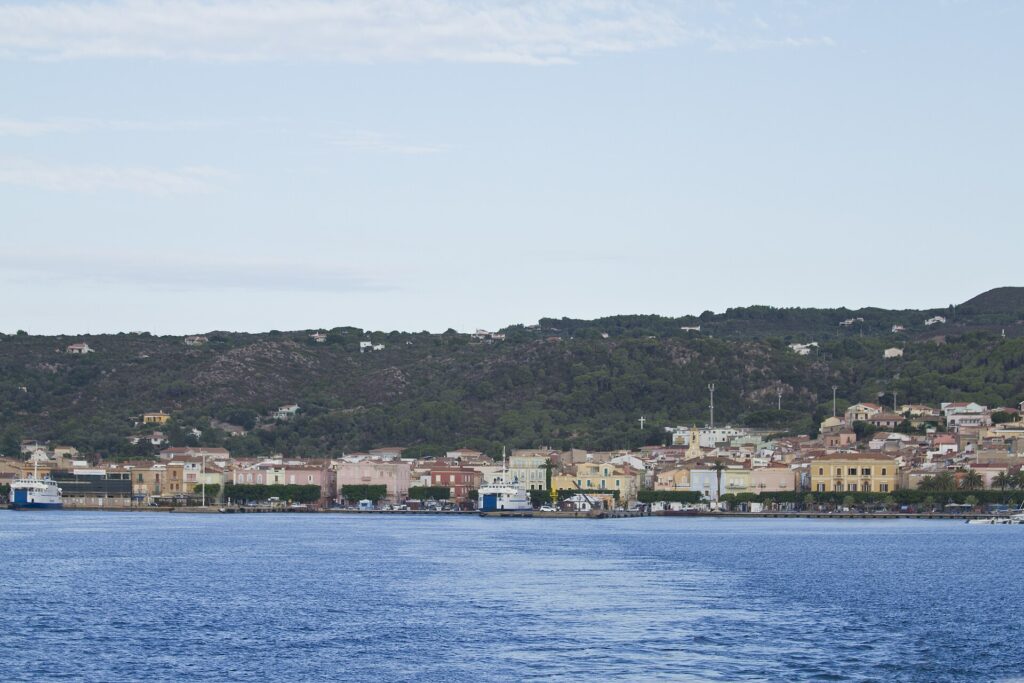
Your first encounter with Carloforte is the seafront, where the ferries dock. The colourful façades, the palm trees and the fishing boats make up a postcard that stays with you. On the seafront stands the monument to Carlo Emanuele III, a marble group of three statues dating from 1786, dedicated to the Savoy king who granted the island to the Tabarchini and gave the town its name.
In the evening the seafront fills up: it’s time for the passeggiata, an aperitivo and a chat in Tabarchino. Sunset over the harbour, with the light setting the colours of the houses aglow, is one of the loveliest moments of the day.
2. The old town and the carruggi
Behind the harbour the carruggi, the narrow, steep lanes of Ligurian tradition, climb the hill. You wander past flights of steps, tiny squares, washing hung out to dry and painted doorways, with sudden glimpses of the sea. It’s a town centre to explore aimlessly, on foot and without hurrying.
The town has kept the eighteenth-century layout designed by the Savoy military engineers, with streets rising from the harbour towards the upper part, once enclosed by walls.
3. The walls and the Porta del Leone
Of the defensive circuit built after the town’s foundation, there remain watchtowers, stretches of wall and the Porta del Leone (Lion Gate), one of the historic entrances to the town. The plan called for several bastions, named after San Carlo, San Vittorio and other saints and princes of the House of Savoy. Climbing up to the walls rewards you with a fine view over the rooftops and the channel.
4. The church of San Carlo Borromeo
The parish church, dedicated to the patron saint, San Carlo Borromeo, is the heart of the town’s layout. It has a Baroque façade and hosts the town’s main religious celebrations. The patron saint’s feast day is held on 4 November.
5. The church of the Madonna dello Schiavo
This is the place dearest to the people of Carloforte. It houses a small wooden statue with a dark face, the Madonna dello Schiavo, tied to the most dramatic chapter in the island’s history: the abduction of hundreds of inhabitants by Tunisian corsairs in 1798 and their release in 1803. According to tradition, the statue was found in Tunisia by a prisoner from Carloforte and brought back to the island after the ransom.
Every year in mid-November the community celebrates it with a deeply felt procession: in 2026 the Festa della Madonna dello Schiavo takes place on Sunday 15 November.
6. The church of the Novelli Innocenti
In the old town stands a small church that opens for worship only once a year. A legend links it to the Children’s Crusade of 1212, but this is a popular tale with no historical confirmation. It’s still worth a stop for its intimate atmosphere.
7. The Museo Civico Casa del Duca
The town museum occupies the Savoy fort, Carloforte’s first masonry building, dating from 1738, which later served as a guardhouse and a place of detention. Its six rooms tell the story of the island simply and clearly:
- documents on the colonisation;
- fishing and tuna processing, with a model of a tonnara and a scale model of the nineteenth-century plant at Portopaglia;
- a collection of Mediterranean shells;
- the room of the galanzieri, the boatmen who carried ore from the Sulcis mines, such as Porto Flavia, in their lateen-rigged sailing boats;
- tools used for work in the fields;
- works by the painter Mario Emanuelli.
It’s the right stop for understanding everything else, so visit it at the start of your trip.
8. Torre San Vittorio
The first stone of the tower was blessed on 12 March 1768: the fortress, built of trachyte blocks, guarded the entrance to the harbour and was dedicated to Vittorio Amedeo III. In 1898 it was turned into an astronomical observatory, used to study variations in latitude, and it is still linked today to the astronomy department of the University of Cagliari.
Since 2016 it has housed a multimedia museum on the history of Carloforte. From the terrace you can see the town, the channel and the Sardinian coast, as far as the towers of Portoscuso and Calasetta.
9. The salt pans
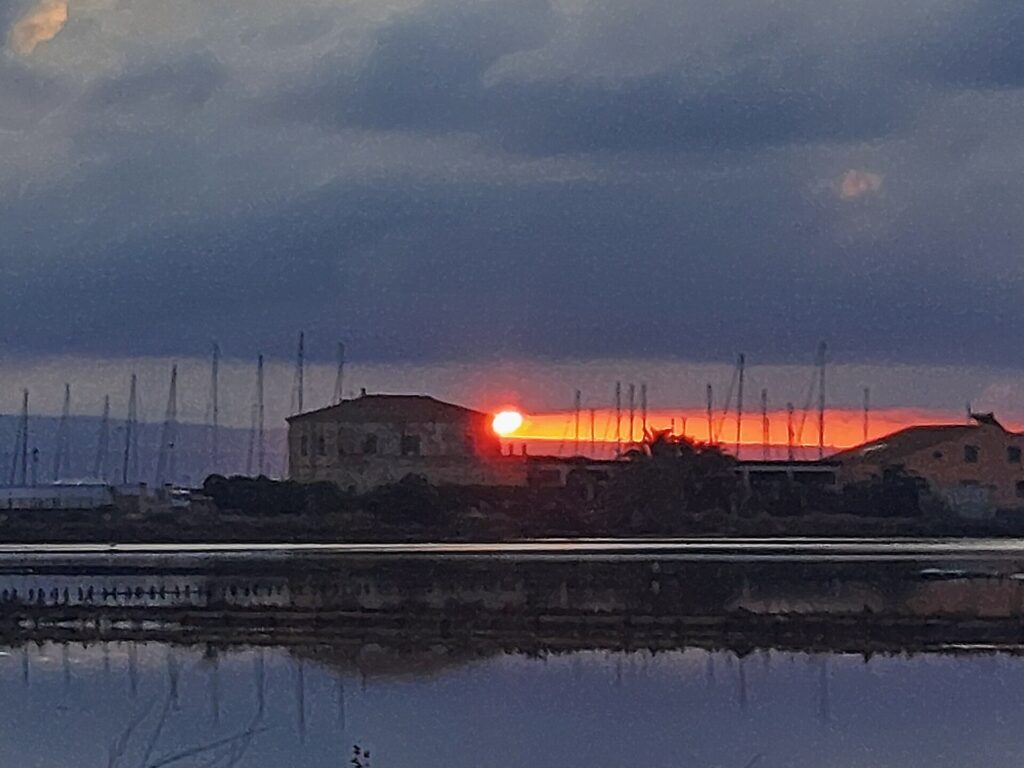
Just south of the town lie the Carloforte salt pans, a wetland where flamingos, herons and other water birds stop to rest. Early in the morning or at sunset, when the water turns pink, they offer a quiet spectacle a few minutes from the centre.
10. Capo Sandalo and the LIPU oasis
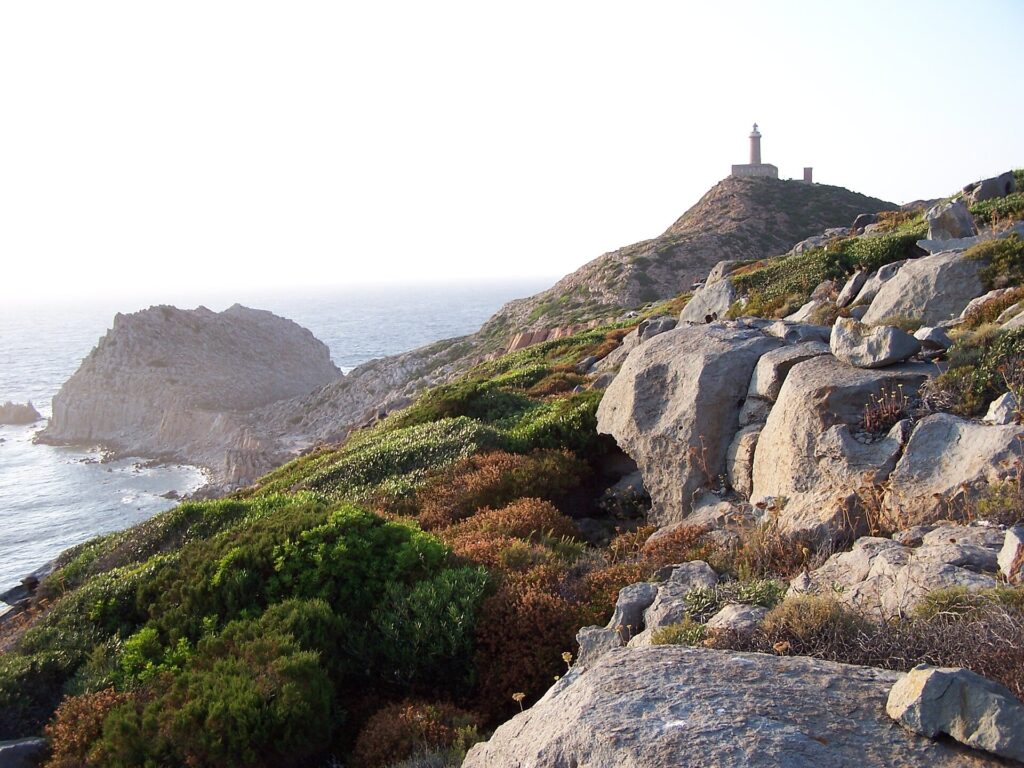
At the western tip of the island, Capo Sandalo is a headland of cliffs plunging into the sea, with a nineteenth-century lighthouse regarded as the westernmost in Italy. The road there crosses Mediterranean scrub and opens up ever wider views.
This is also home to the LIPU oasis of Capo Sandalo, which protects one of the most important colonies of Eleonora’s falcon (known locally as falco della regina), a bird of prey that arrives in spring, nests on the cliffs and leaves again in autumn. Sunset from the lighthouse is one of the most spectacular in Sardinia.
11. Cala Fico and Cala Vinagra
On the north-west coast, Cala Fico is a narrow fjord between walls of volcanic rock that ends in a small cove. It is one of the most photographed landscapes on the island. Further north, Cala Vinagra is a romantic, wild corner, perfect for anyone seeking silence.
12. Le Colonne and La Bobba
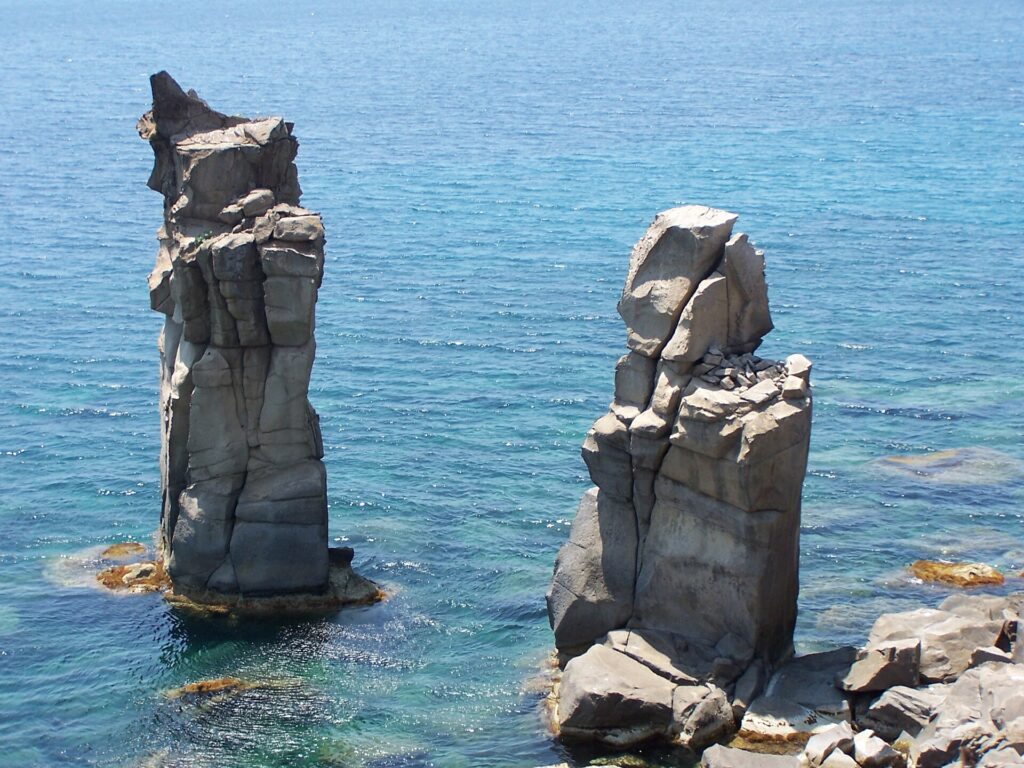
In the south of the island, two trachyte sea stacks rise from the water just metres from the shore: these are Le Colonne, the symbol of Carloforte. Next to them lies the beach of La Bobba, scenic and secluded. A little further on, towards La Conca, the cliffs grow tall and sheer.
The beaches and coves of San Pietro island
The island alternates sandy beaches with rocky coves, almost all within a few minutes’ drive of the town. The sea changes with the wind: when the maestrale is blowing, it’s best to choose the more sheltered east coast.
- La Caletta: on the west coast, the biggest sandy beach on the island, with clear water and a gently shelving seabed, ideal for families.
- Girin: a small beach south of the town, quiet and convenient.
- La Bobba: near Le Colonne, with one of the finest views on the island.
- Cala Fico and Cala Vinagra: rocky coves, for those who love snorkelling and wild scenery.
- La Conca: high cliffs and deep water, for confident swimmers.
Many coves are best reached from the sea: a boat trip around San Pietro is the finest way to see caves, sea stacks and cliffs. If you’re looking for more ideas for the sea, read our guide to the most beautiful beaches in Sardinia.
Red tuna and the Carloforte tonnara
In Carloforte tuna is not just a dish: it’s history, work and identity. For centuries fishing with the fixed tonnara, a labyrinth of nets lowered into the sea in spring, set the rhythm of life in the town. The mattanza, the final phase of the catch, was a collective ritual led by the rais, the head of the tuna fishermen (tonnarotti).
The old municipal tonnara stands north of the town, at La Punta: some of the buildings have been restored, while others lie in ruins but retain great charm. The red tuna caught at Carloforte is considered among the best in the Mediterranean and is prepared in many different ways.
San Pietro, patron saint of coral fishermen and tuna fishermen, is celebrated on 29 June. Every year, between late May and early June, the Girotonno brings chefs from several countries to the island for an international tuna cooking competition, with tastings, live cooking and entertainment.
Tabarchino, a language in the middle of the sea
One of the most surprising things about Carloforte is its language. Tabarchino is a variety of Ligurian that arrived with the settlers from Tabarka and was preserved for centuries, cut off from the mother country. Old and young alike speak it, in the café, at the harbour and at home; the same dialect is also spoken in Calasetta, on the island of Sant’Antioco.
Listening to it is like hopping over to Genoa without leaving Sardinia. Even the names of places, boats and dishes reflect this double soul, Ligurian and Mediterranean.
Things to do in Carloforte: experiences not to miss
Once you’ve decided what to see in Carloforte, choose the experiences that let you get close to the island.
- Boat trip around the island: caves, sea stacks, Cala Fico and Capo Sandalo seen from the water; you’ll find more ideas in our guide to boat trips in Sardinia.
- Fishing tourism (pescaturismo): a trip out with local fishermen to discover their trade; read our guide to fishing tourism in Sardinia.
- Snorkelling and diving along the volcanic cliffs of the west coast.
- Birdwatching at Capo Sandalo, with Eleonora’s falcon from spring to summer, and at the salt pans with the flamingos.
- Trekking and cycling on the roads and paths of the interior, through scrub and panoramic views; for more ideas, read our guide to trekking in Sardinia.
- Sailing and windsurfing: the steady wind in the channel makes the island a favourite with seafarers.
- Festivals and traditions: the Girotonno in early summer and the festa of the Madonna dello Schiavo in November.
All the experiences in the area, with direct contact and no commission, are on our page things to do in Carloforte.
A short history of Carloforte
In the sixteenth century a number of coral-fishing families left Pegli, near Genoa, and settled on the island of Tabarka, off the coast of present-day Tunisia. For two centuries they lived from coral and trade, until hardship drove their descendants to look for a new home.
In 1738 King Carlo Emanuele III of Savoy granted them the island of San Pietro, then uninhabited. Thus Carloforte was born, with an urban layout designed by the Savoy military engineers, the fort, the walls and the bastions. In 1768 work began on Torre San Vittorio.
On 2 and 3 September 1798 Tunisian corsairs stormed the town and carried hundreds of inhabitants off to Tunis. The captivity lasted years: only in 1803 were the people of Carloforte able to return home. The memory of those days lives on in the devotion to the Madonna dello Schiavo.
In the nineteenth century the port of Carloforte became important for the ore from the mines of the Sulcis-Iglesiente: the galanzieri carried it in their boats out to the ships waiting in the roads. Alongside them were the tonnara and the salt pans. Today the island lives on fishing, tourism and culture, and proudly guards its Tabarchino identity.
What to eat in Carloforte
Carloforte’s cuisine blends Liguria, North Africa and Sardinia. Be sure to try:
- red tuna in all its forms: fresh, grilled, stewed, preserved in oil, and its derivatives such as tuna bottarga and musciame;
- cascà, the Tabarchino couscous with vegetables, a legacy of the years in Tunisia, celebrated with a festival on 25 April;
- pasta alla carlofortina, dressed with tuna, tomato and pesto, the emblem of the Girotonno;
- the catch of the day and the shellfish caught around the island.
You’ll find restaurants and trattorias on our page where to eat in Carloforte; for a wider picture of the island’s cuisine, read our guide to traditional Sardinian dishes.
Festivals and events in Carloforte
- Sagra del cus cus tabarchino (Tabarchino couscous festival, 25 April): the signature dish of the Tunisian heritage, cooked and served in the square.
- Girotonno (late May – early June): an international red tuna festival, with a competition between chefs from different countries, tastings, live cooking and concerts. In 2026 it ran from 29 May to 2 June.
- Festa di San Pietro (29 June): the patron saint of fishermen and tuna fishermen.
- Crêuza de mä (summer): a festival dedicated to film music.
- Festa di San Carlo Borromeo (4 November): the town’s patron saint.
- Festa della Madonna dello Schiavo (mid-November): the most heartfelt celebration, commemorating the liberation of 1803.
Carloforte in 1, 2 or 3 days
In one day: arrive by ferry in the morning, stroll along the seafront and through the carruggi, visit the Museo Civico, enjoy a tuna-based lunch, then in the afternoon see Le Colonne and have a swim at La Bobba, finishing with sunset at Capo Sandalo.
In two days: add a boat trip around the island, Torre San Vittorio and a beach day at La Caletta, with a stop at the salt pans at sunset.
In three days: spend the third day at Cala Fico and Cala Vinagra, on a fishing-tourism outing or a dive, or head back to Sardinia via Calasetta and Sant’Antioco.
If you’re travelling between late May and early June, plan your visit to coincide with the Girotonno, but book your ferry and accommodation in good time.
Around Carloforte
- Sant’Antioco and Calasetta (ferry from Carloforte to Calasetta, about 30 minutes): the ancient Sulky, the catacombs and another Tabarchino village. Read our guide to what to see in Sant’Antioco.
- Portoscuso (ferry to Portovesme, about 40 minutes): a fishing village with a Spanish tower by the sea.
- Carbonia and the Grande Miniera di Serbariu: to learn about the history of the Sulcis miners.
- Porto Flavia and the Iglesiente: the mining port carved into the rock opposite the Pan di Zucchero sea stack.
- Barumini: with an extra day, head inland to the Su Nuraxi nuraghe. Read our guide to what to see in Barumini.
If you love towns like Carloforte, discover the other most beautiful villages in Sardinia too.
Practical information: getting there, parking, when to go
How to get to Carloforte
Carloforte can only be reached by sea. Passenger and car ferries leave every day from two ports:
- Portovesme, near Portoscuso: about 40 minutes’ crossing;
- Calasetta, on the island of Sant’Antioco: about 30 minutes.
The nearest airport is Cagliari-Elmas: it’s about 80 km from Cagliari to Portovesme, a little over an hour by car. Cagliari’s port is also about an hour from the embarkation points. In high season and at weekends it’s best to arrive at the ferry terminal at least an hour early or to buy your ticket online.
Getting around and parking
The centre of Carloforte is best explored on foot. For the beaches, Capo Sandalo and the coves you’ll need a car, scooter or bike. In August traffic on the seafront can be heavy: leave your car in the car parks on the edge of the centre. If you’re staying only for the day, you can also board as a foot passenger and hire a vehicle on the island.
Where to stay
The old town is the best choice for those who want restaurants, strolls and evening life without using the car. The countryside areas towards La Caletta and the west coast are ideal for anyone seeking peace and quiet with the sea a few steps away.
When to go
The best time for the sea runs from June to September. May and June are perfect for the Girotonno and for seeing Eleonora’s falcon; September and October offer still-warm seas and fewer crowds. In winter Carloforte is wonderfully quiet and authentic, with the festa of the Madonna dello Schiavo in November.
For official information, see the Sardegna Turismo page on Carloforte.
Frequently asked questions about things to do in Carloforte
How do you get to Carloforte?
Only by ferry, from Portovesme (about 40 minutes) or from Calasetta (about 30 minutes). You can travel on foot or take your car with you.
How many days do you need to visit Carloforte?
One day is enough for the town, Le Colonne and Capo Sandalo. For the boat trip, the beaches and a bit of relaxation, you’ll need at least two or three.
Is Carloforte suitable for families?
Yes: the town centre is quiet and safe, La Caletta has a gently shelving seabed and children love the boat trip. You’ll find more ideas in our guide to Sardinia with children.
Why do they speak Genoese in Carloforte?
Because the town was founded by families of Ligurian origin who came from Tabarka, in Tunisia. Their dialect, Tabarchino, has survived for almost three centuries.
When is the best time for the Girotonno?
The festival takes place every year between late May and early June; the exact dates are announced by the organisers each year.
Carloforte, best enjoyed with those who live it
Now you know what to see in Carloforte: the seafront and the carruggi, the Madonna dello Schiavo, the Museo Civico and Torre San Vittorio, the salt pans, Capo Sandalo with Eleonora’s falcon, Cala Fico and Le Colonne, and then the red tuna, the cascà and a language that came from Genoa by way of Tunisia. It’s a small island with a great story, best discovered slowly, listening to the people who live here and tell it with passion. Choose an experience from those offered by local operators and contact them directly, with no middlemen. Ajò, Sardinia awaits.
