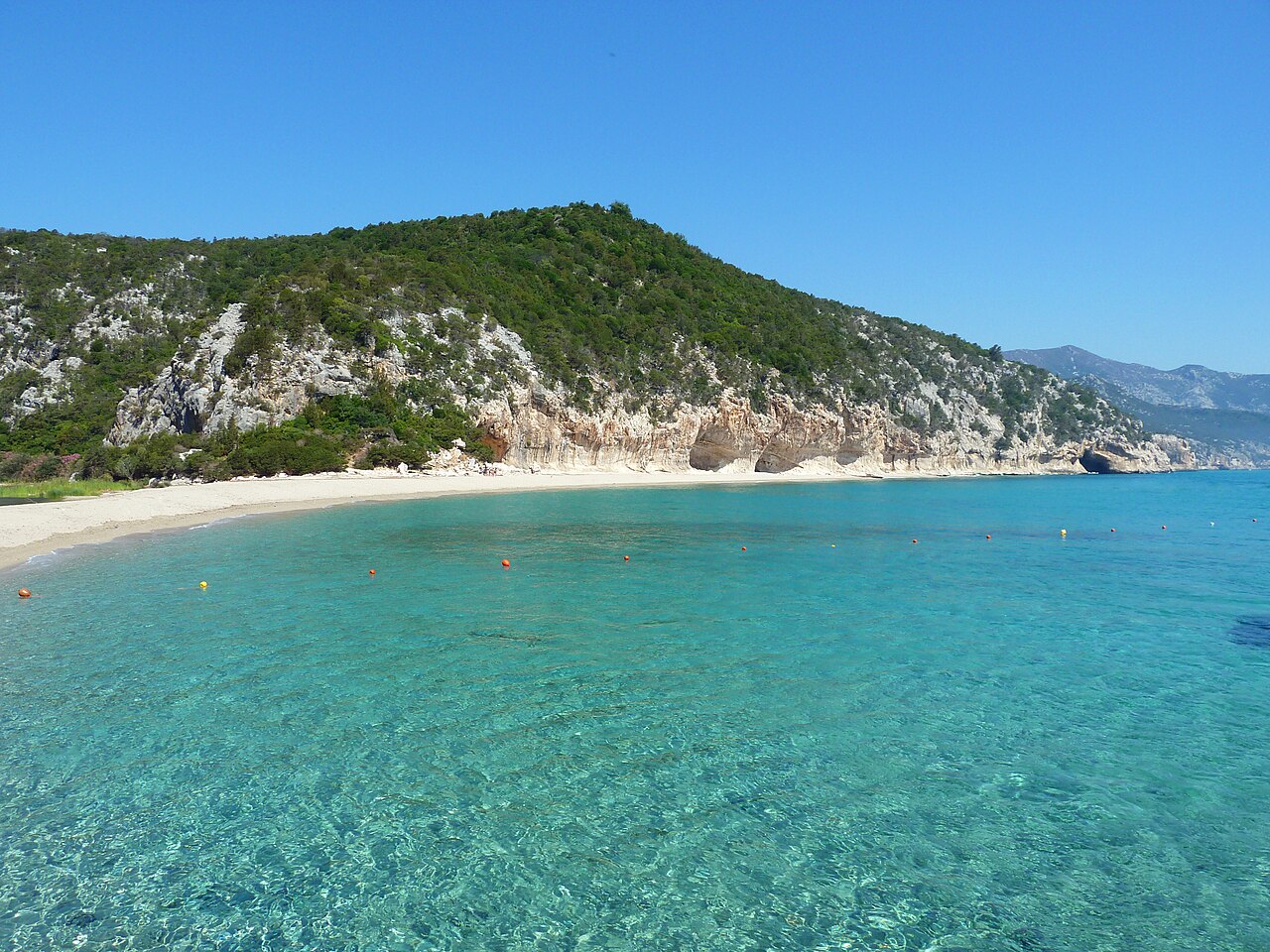
Turquoise water, sand as white as flour, pink granite boulders and dunes as tall as hills: the best beaches in Sardinia are famous all over the world, and rightly so. But the island has more than 1,800 kilometres of coastline, and choosing where to go is not easy. Every stretch of coast has its own character, and among the many beaches in Sardinia the right one depends on what you are looking for.
That is why we have picked 30 beaches, grouped area by area, from the north-west to Gallura. For each one you will find what makes it special, the access rules where they apply and the Ajò Sardegna operators who can take you out by boat nearby, to contact directly and with no commission.
Contents
Over the wine-dark sea.
Homer, Odyssey (c. 8th century BC), own translation
How to choose among the best beaches in Sardinia
Before you set off, ask yourself three questions, because Sardinian beaches are very different from one another. Do you want an easy beach with parking and facilities, or a wild cove you reach on foot or by boat? Are you travelling with small children who love shallow water, or with friends looking for snorkelling and rocks? And above all: which way is the wind blowing?
In Sardinia the wind decides everything. With the mistral, which blows from the north-west, the beaches in Sardinia on the west and north coasts get rough, while those on the east and south coasts often stay calm. With the sirocco, the opposite happens. Sardinians choose their beach in the morning, after checking the wind forecast: do the same and you will rarely be disappointed.
A practical tip: many Sardinian beaches have no shade at all, and the sun is strong even in June. On Sardinian beaches, bring a beach umbrella, plenty of water and reef-safe sun cream, and remember that on the wildest stretches of coast there are no kiosks or bins. Whatever you bring, you take back with you.
North-West: Stintino, Asinara and Alghero
The north-west, in the North-West area of the portal, is home to the clearest water on the island. Here you will find some of the best beaches in Sardinia, including what may be the most photographed of all, along with the coves of Asinara National Park and the bays of the Coral Riviera.
1. La Pelosa, Stintino. Brilliant white sand, shallow crystal-clear water and, just offshore, the Pelosa Tower and the islet of Isola Piana. To protect it, in summer access is limited and must be booked, and a mat under your towel is compulsory. Arrive early, or choose May, June or September.
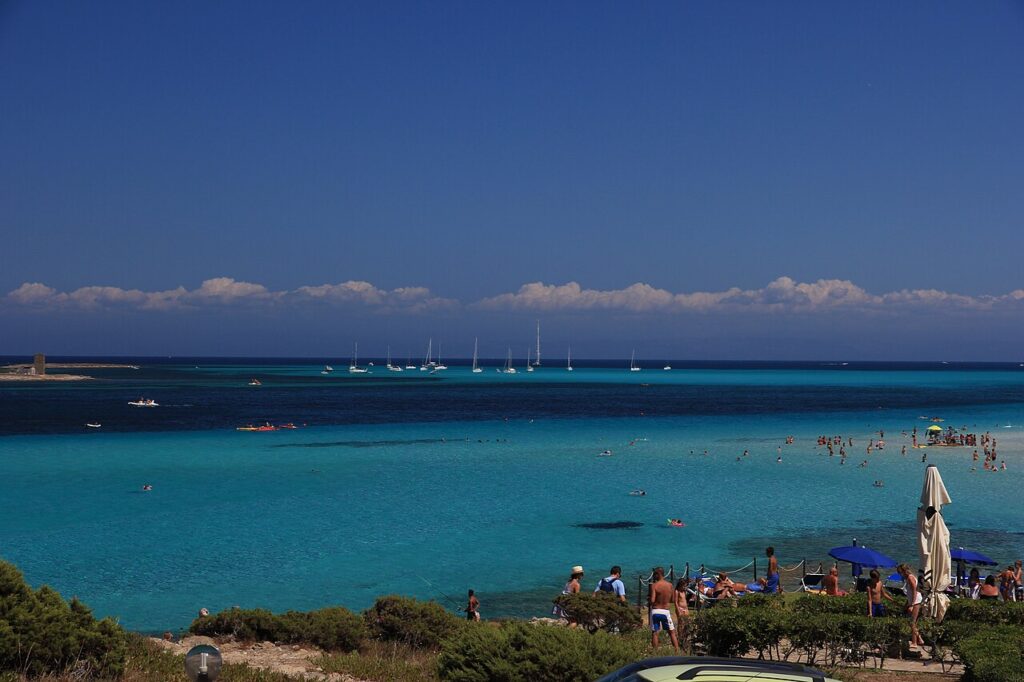
From Stintino you can also see La Pelosa from the sea on the lateen sailing boat trip with Asinara’s Latin Sails, which sails from the Pelosa coast to Capo Falcone, from June to October.
2. The coves of Asinara, Asinara National Park. Cala del Granito, Cala degli Inglesi, Cala delle Barche Napoletane, Porto del Bianco: the island protected by the Asinara National Park hides coves that are almost untouched. You can get there on the fishing tourism trip with Davide & Silvia of Pescaturismo Stintino, which stops right in these little coves.
3. Porto Ferro, Sassari. A long beach of golden sand, framed by headlands and coastal towers and open to the mistral. It is one of the favourite spots for surfers in northern Sardinia, and if you want to try, have a look at the surf, kite and windsurf experiences. The sunsets are wonderful. When the sea is rough, watch out for currents.
4. Le Bombarde, Alghero. Between the pine forest and the sea, a few kilometres from town, this is a beach of pale sand with turquoise water. It is popular with families and with anyone who wants facilities, but on windy days the waves roll in.
5. Mugoni, Porto Conte, Alghero. In the sheltered bay of Porto Conte, with the headland of Capo Caccia in the background, its water is calm and shallow, ideal for children and for kayak and SUP.
To discover the Alghero coast from the sea, Sea Stories offers a half-day trip and a full day with lunch, taking in Le Bombarde, Lazzaretto, Porto Conte and Neptune’s Grotto.
Planargia and Sinis: rock arches and quartz beaches
6. The coves between Bosa and Capo Marargiu, Bosa. North of Bosa the coast is high and wild, with small coves that are mostly reached from the sea. Here you can go snorkelling at Porto Managu or sail along the cliffs of Capo Marargiu, where griffon vultures nest: browse the sailing and diving and snorkelling experiences to plan your day.
7. S’Archittu, Cuglieri. The name means “little arch”: it is a huge limestone arch opening onto the sea, next to a small sandy beach. Local youngsters dive from the top, but it is dangerous: enjoy it from dry land.
The west coast is where Sardinian beaches are at their wildest.
8. Is Arutas, Cabras. Instead of sand there are tiny grains of quartz, white, pink and green, that look like grains of rice. The water is an intense blue. It is unlike any other beach in Sardinia. Taking away even a handful of quartz is forbidden and punished with heavy fines.
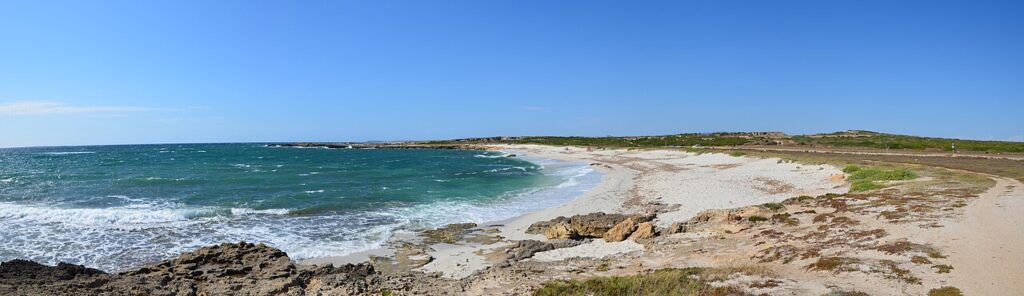
9. Mari Ermi, Cabras. A little north of Is Arutas, it is longer and wilder, with the same quartz and a sea that is often rough. Behind it lie the lagoons, home to flamingos and herons: a paradise for birdwatching.
10. San Giovanni di Sinis, Cabras. A golden beach next to the ruins of Tharros, the Phoenician and Roman city. From the sea you can admire it on a sailing aperitif or on a trip to the island of Mal di Ventre: you will find the options in the Oristano and Sinis area and among the boat and RIB trips.
Costa Verde and Sulcis: dunes, mines and sea stacks
11. Piscinas, Arbus. A desert of golden sand by the sea: the Piscinas dunes are among the highest in Europe, and the wind shapes them constantly. You get there on a dirt road that runs through the old mining villages.
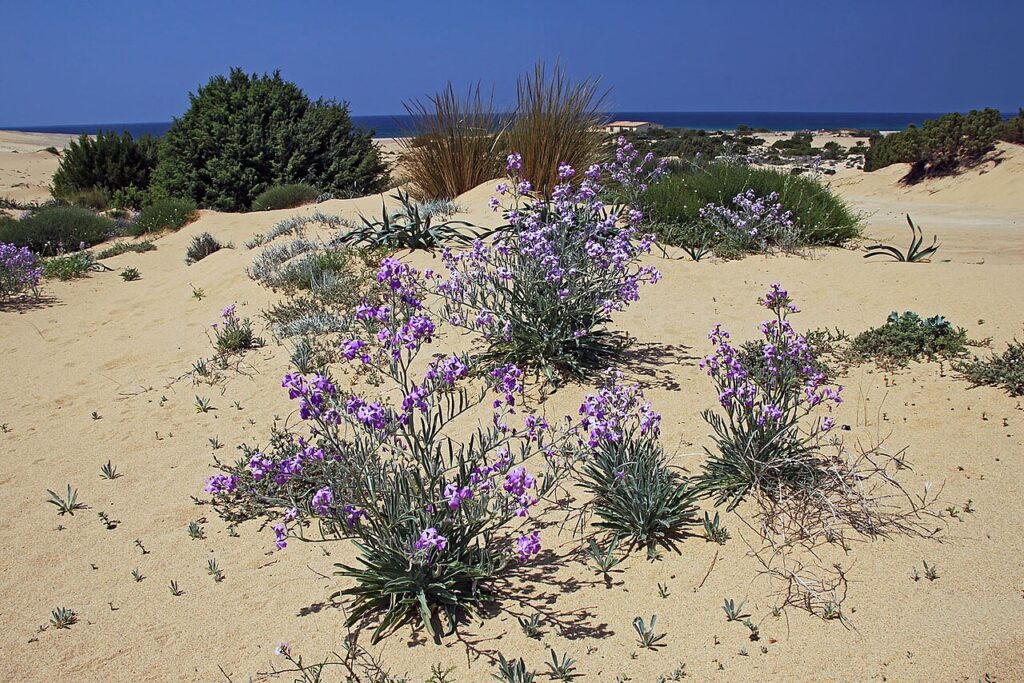
12. Scivu, Arbus. South of Piscinas, a long and almost deserted beach, closed in by dunes and Mediterranean scrub. The sea is open and often rough: this is one of the wildest beaches in Sardinia, a place for lovers of untouched nature. The whole coast of the South-West is also beautiful seen from a sailing boat.
13. Cala Domestica, Buggerru. A deep inlet between two rock walls, with a Spanish tower and a mining tunnel that leads to a second little cove. Buggerru Surf School takes you there on the “Miniere nel Blu” RIB tour.
14. Masua and Pan di Zucchero, Iglesias. Off the beach of Masua rises the sea stack of Pan di Zucchero, and not far away is Porto Flavia, the mining port carved into the rock. The RIB tour to Pan di Zucchero and Masua leaves from Buggerru.
15. Porto Pino, Sant’Anna Arresi. Very shallow water, a pine forest behind and white dunes that look like snow. It is one of the Sardinian beaches most loved by families and perfect for children. Part of the dunes lies in a military zone, open only at certain times of year.
The south: Chia, Cagliari and Villasimius
16. Tuerredda, Teulada. A crescent of white sand with an islet just offshore that you can swim to. It is one of the best beaches in Sardinia’s south: in summer access is regulated, so check how to book beforehand.
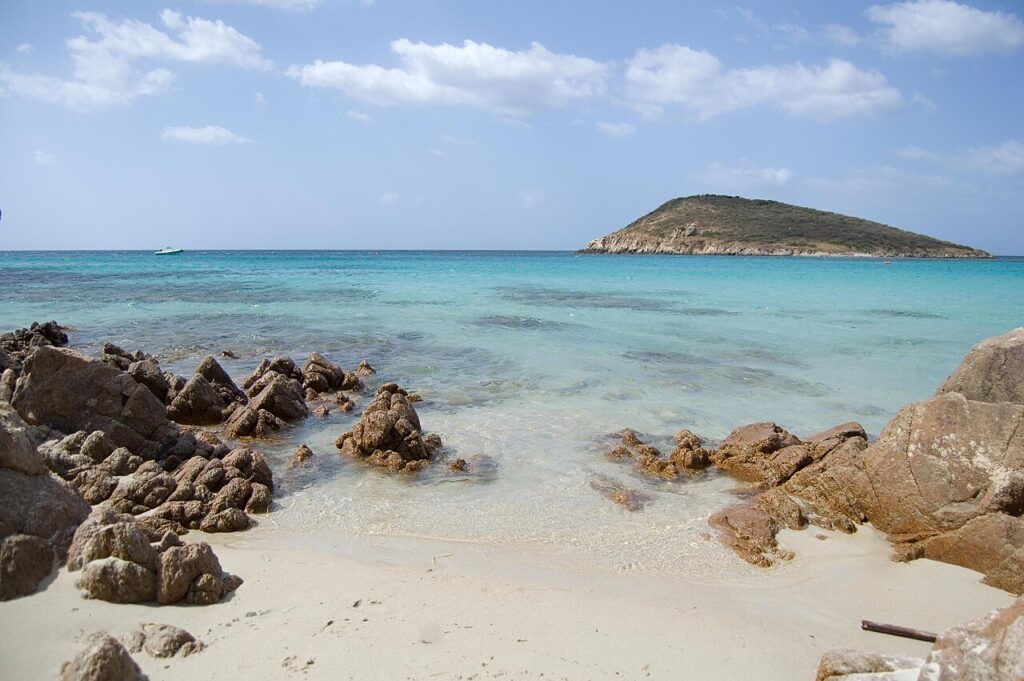
17. Su Giudeu, Chia, Domus de Maria. Pale sand and an islet you can reach by wading through the shallows. Behind it there is a lagoon where flamingos are often seen. Chia has several beaches side by side, each sheltered from a different wind.
18. Poetto, Cagliari. The city beach: about eight kilometres of sand between the Sella del Diavolo and Quartu Sant’Elena, with kiosks, cycle paths and shallow water. At sunset the people of Cagliari come here for a stroll, and in the Molentargius lagoons behind it live the flamingos.
19. Punta Molentis, Villasimius. A tongue of sand between two seas, with granite rocks and clear water. It is small and in high demand, which is why summer access is limited and tied to booking a parking space.
20. Porto Giunco, Villasimius. White and pinkish sand, the Spanish tower on the headland and, behind it, the Notteri lagoon with its flamingos. It is part of the Capo Carbonara Marine Protected Area, one of the finest seabeds for snorkelling.
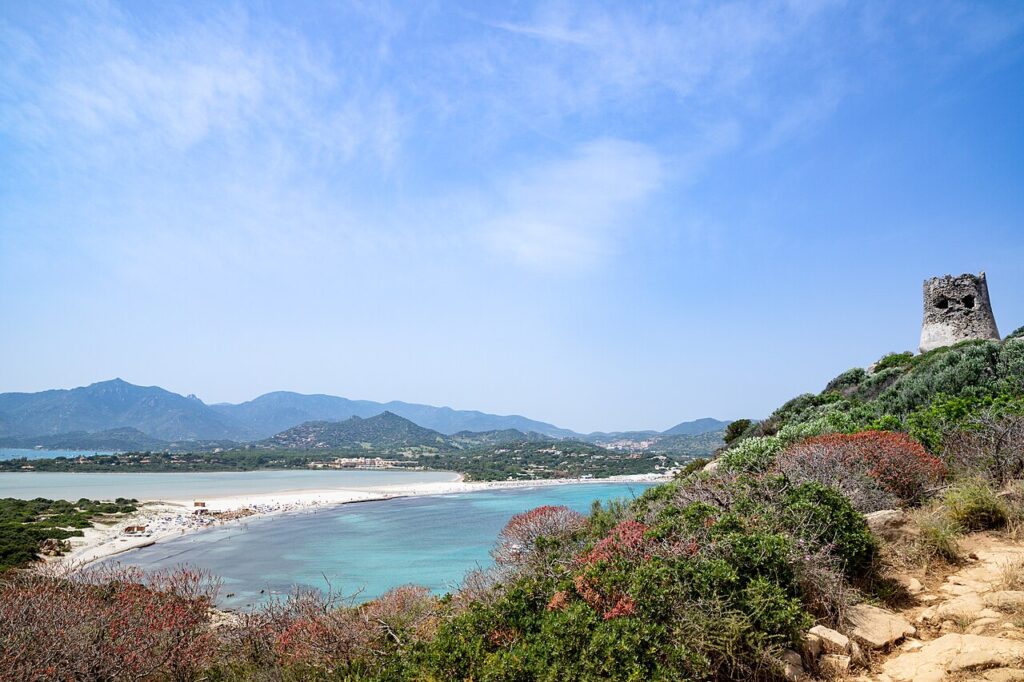
21. Costa Rei, Muravera and Castiadas. Kilometres of pale sand and shallow water, with the Scoglio di Peppino rock at one end. Among the beaches in Sardinia’s south-east, it is one of the easiest for families, with plenty of access points and facilities.
Gulf of Orosei and Ogliastra: the coves of the Supramonte
Between Baronia and the Gulf of Orosei and Ogliastra, the Supramonte mountains drop straight into the sea and form some of the best beaches in Sardinia, many of them reachable only by boat or on a hike.
22. Cala Goloritzé, Baunei. White pebbles, water that shifts from green to blue and the rock pinnacle soaring above the cove. It is a natural monument and can only be reached on foot, on a trail from the Golgo plateau; boats are not allowed near the shore. Access is paid and limited in number. If you prefer to walk with an expert, have a look at the guided hikes.
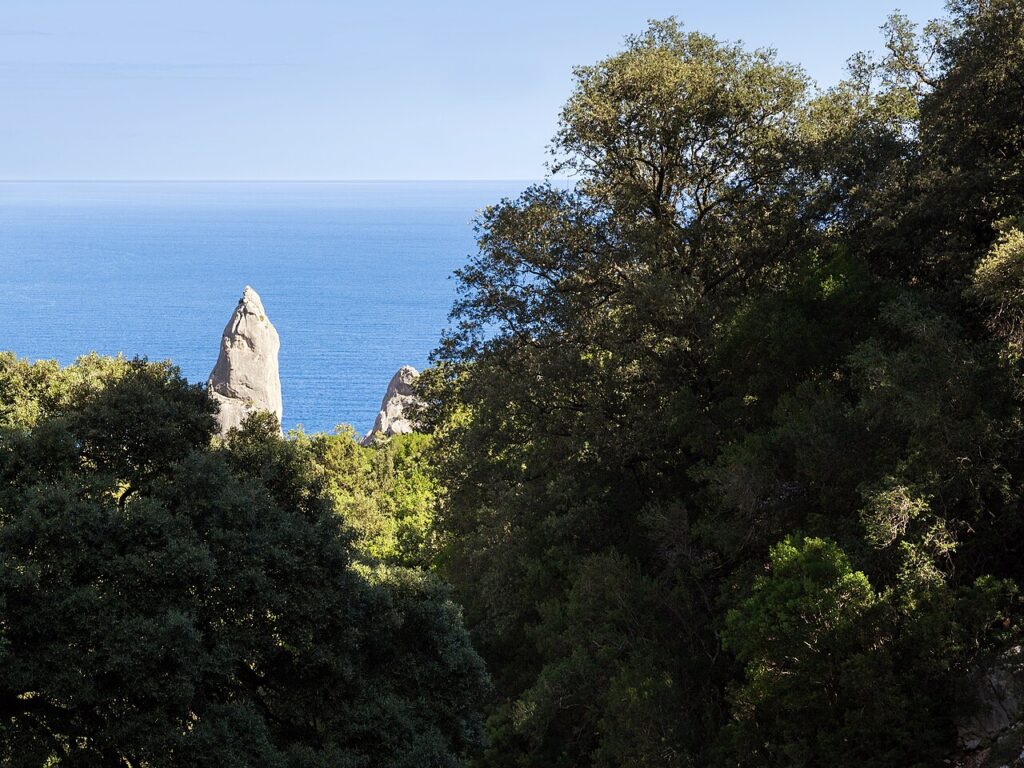
23. Cala Mariolu, Baunei. Famous for its white and pink pebbles and for a sea of an almost unreal blue. It is mostly reached by boat, with rules on landing and length of stay that have become stricter in recent years.
This stretch of coast holds some of the most spectacular Sardinian beaches, best seen early in the morning before the boats arrive.
24. Cala Luna, Dorgali. A crescent of sand closed in by caves and a small grove of oleanders, where a stream meets the sea. Boats come here from Cala Gonone, or you can walk the coastal path from Cala Fuili. It is one of the most beautiful even out of season.
25. Bidderosa, Orosei. Five small beaches inside an oasis of pines and junipers, protected as a nature area. In summer the number of visitors is limited and there is an entry fee, so it is best to book in advance.
26. Berchida, Siniscola. A long, wild beach with white sand, juniper dunes and a lagoon behind it. There are no buildings or big beach clubs: it is the right place if you are looking for space.
Gallura and La Maddalena: granite and Caribbean water
In the Gallura and Costa Smeralda area, granite shapes rocks into incredible forms and the sea has the colours of the Caribbean. Here you will find the Sardinian beaches most loved by the jet set, but also quiet coves where all you hear is the wind.
27. Cala Brandinchi, San Teodoro. They call it “little Tahiti” for its shallow turquoise water and fine sand. In summer, like nearby Lu Impostu, access is regulated. From Olbia and Golfo Aranci you can reach the natural pools of Molara and Cala Girgolu by RIB, or explore Tavolara and Molara with a rented boat.
28. Liscia Ruja, Arzachena. One of the largest beaches in Sardinia’s Costa Smeralda, with pale sand and clear water. Not far away are Capriccioli and the Spiaggia del Principe, small coves between granite and scrub.
29. Rena Bianca and Capo Testa, Santa Teresa Gallura. Rena Bianca is the town beach, with a view of Corsica; in summer you need to book. A few minutes away, the headland of Capo Testa hides little coves among wind-sculpted granite rocks, such as Cala Spinosa.
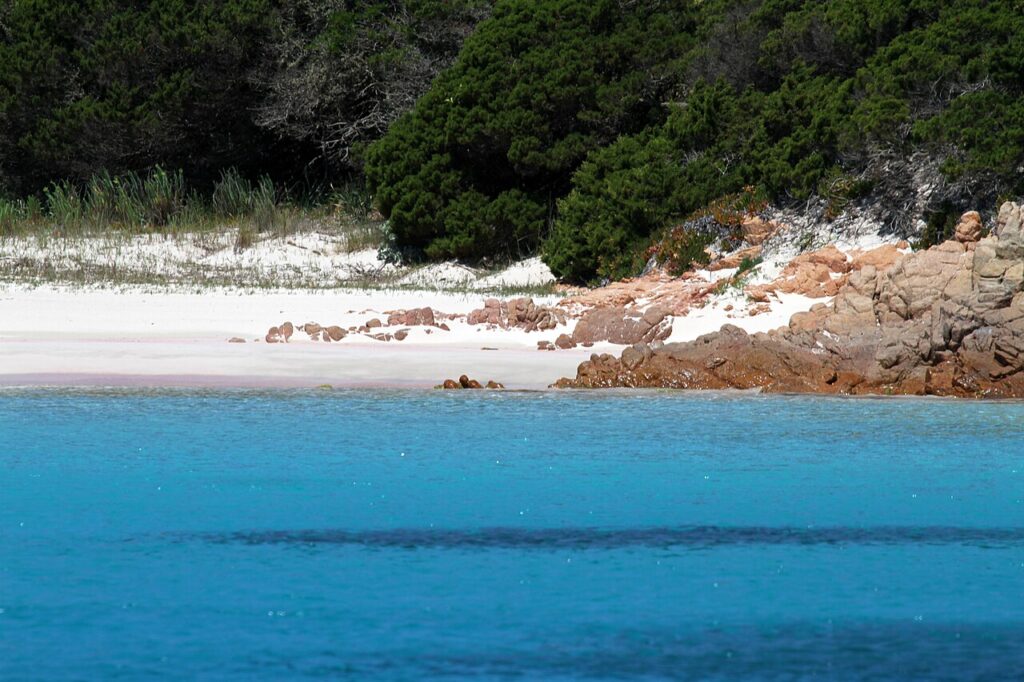
30. The Pink Beach and Cala Coticcio, La Maddalena. The Pink Beach on Budelli owes its colour to fragments of a marine organism: landing has been forbidden since 1994, and you can only admire it from a boat. On Caprera, Cala Coticcio can only be reached with the Park’s authorised guides and in limited numbers.
Limited-access beaches and rules to know
In recent years several beaches in Sardinia have introduced limited access in the summer months, often with an environmental fee. The arrangements change every year, so always check the website of the town council or the park authority before you set off. Among the best known:
- La Pelosa in Stintino, with compulsory booking and a mat under your towel.
- Cala Goloritzé in Baunei, with a ticket and a cap on visitor numbers.
- Cala Brandinchi and Lu Impostu in San Teodoro.
- Punta Molentis in Villasimius and Tuerredda in Teulada.
- The Bidderosa oasis in Orosei and Rena Bianca in Santa Teresa Gallura.
- Cala Coticcio and Cala Brigantina on Caprera, only with an authorised guide.
Some rules apply on all beaches in Sardinia: do not take away sand, stones or shells, do not leave litter, do not smoke where it is forbidden, and respect the dunes by not walking on them. Anyone who breaks the rules risks fines that can be very high.
These measures may seem strict, but they work. Where numbers have been capped, the sand is cleaner, the seagrass is recovering and the water stays as clear as in the photos. Seen this way, a booking system is the price of keeping Sardinian beaches as beautiful for the next generation as they are today.
When to go to the beach in Sardinia
The bathing season runs from June to September, but the best months are often June and September: the sea is warm, the beaches are less crowded and prices are lower. In July and August even the most remote beaches in Sardinia fill up, and limited-access beaches need to be booked well in advance.
May and October bring glorious days, with the water still cool in May and pleasantly mild in October. Even in winter, walking along empty Sardinian beaches is a special experience, perhaps combined with one of the nature and hiking experiences along the coast.
The time of day matters too. On the most popular beaches in Sardinia, arriving before ten in the morning means finding a parking space and a quiet spot on the sand; in the late afternoon the crowds thin out again and the light turns golden. The middle of the day, when the sun is at its strongest, is the moment for a long lunch in the shade.
The best beaches in Sardinia seen from the sea
Many coves can only be reached by boat, and even the best beaches in Sardinia look completely different from the water. On Ajò Sardegna you will find boat and RIB trips, sailing outings, boat rental and diving and snorkelling experiences. A boat lets you follow the calm water: if the mistral is blowing, the skipper simply heads for the sheltered side of the coast.
If you are travelling with children, choose Sardinian beaches with shallow water and facilities, such as La Pelosa, Porto Pino, Poetto or Costa Rei, and take a look at the experiences for families and kids. For anyone who loves fishing and seafaring traditions, there are also fishing trips with local fishermen.
FAQ about beaches in Sardinia
What is the most beautiful beach in Sardinia?
There is no single answer: La Pelosa, Cala Goloritzé, Cala Luna, Tuerredda and Cala Brandinchi are among the most loved. The best one depends on the wind that day and on what you are after, whether that is comfort, wild nature or snorkelling.
Which Sardinian beaches have limited access?
The best known include La Pelosa, Cala Goloritzé, Cala Brandinchi, Lu Impostu, Punta Molentis, Tuerredda, Bidderosa, Rena Bianca and Cala Coticcio. The rules change every year: check the website of the town council or the park.
Can you take sand from Sardinian beaches?
No. In Sardinia it is forbidden to remove sand, pebbles, quartz and shells from beaches, and fines can be very high. This also applies to small souvenirs put in a little bottle.
When is the best time for beaches in Sardinia?
June and September are often the best months: warm sea, fewer crowds and lower prices. July and August are the busiest, while May and October offer beautiful days with less heat.
Pick your beach and enjoy it with people who know the sea
Now you know 30 of the best beaches in Sardinia: choose your area, check the wind and get ready to be left speechless. On Ajò Sardegna you will find all the local operators’ sea experiences, from boat trips to outdoor activities, and the traditional festivals to round off your trip. Whichever of these beaches in Sardinia you choose, contact the operators directly, with no commission, and if you have any questions write to Lia, the portal’s virtual assistant. Enjoy the sea, and ajò!
