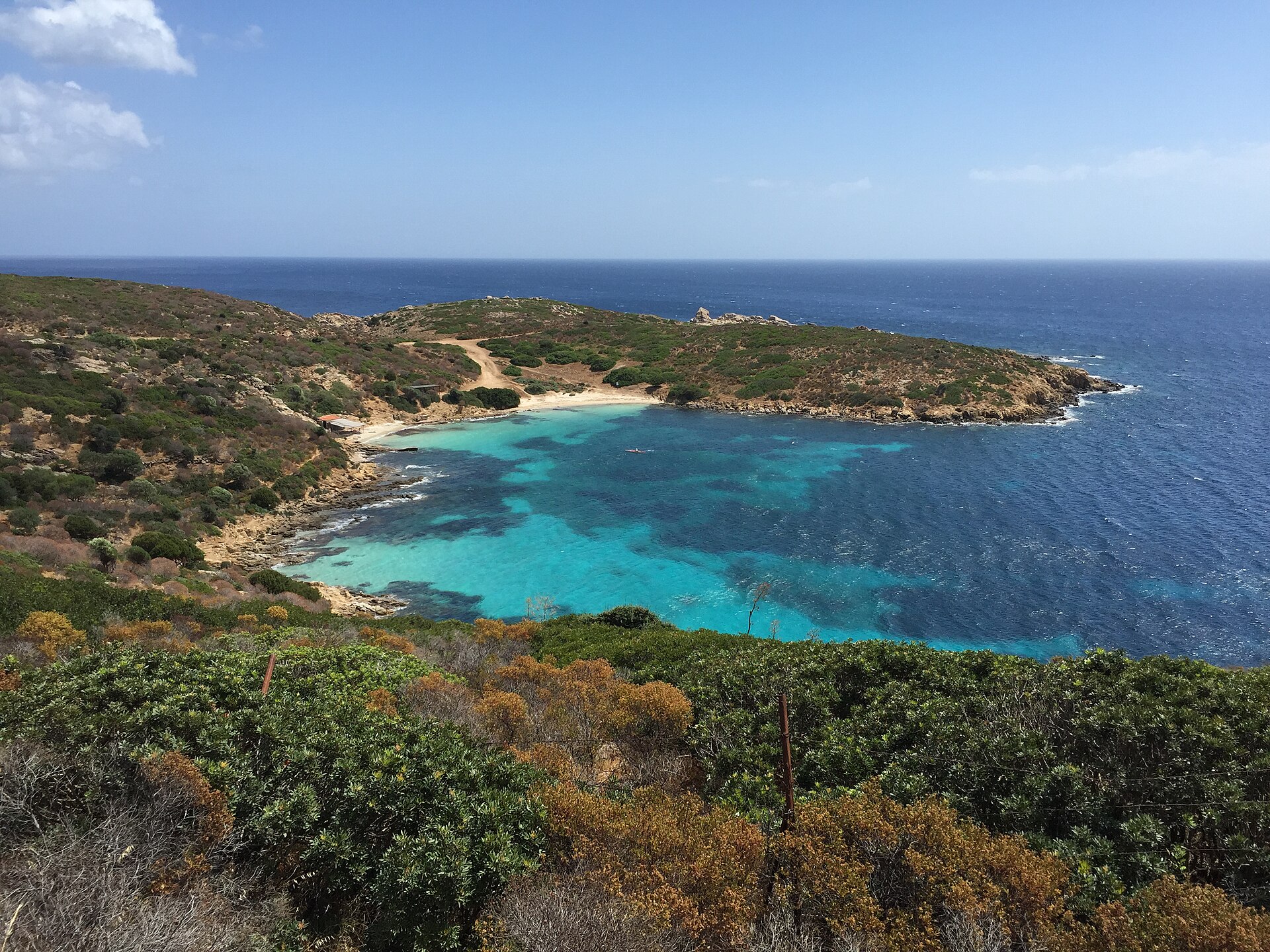
Looking for information on how to get to Asinara, what to see and where to swim? The island off Stintino is one of the most surprising places in Sardinia: it was closed to the public for over a century, first as a quarantine station and penal colony, then as a maximum-security prison. Today it is a National Park with no private cars, with white donkeys, trails, empty villages and coves of crystal-clear water.
In this guide you will find the two gateways to Asinara Island, the ways to get around once you land, the places not to miss, the beaches where swimming is allowed and those that are protected, plus a one-day itinerary. At the end you will find the Ajò Sardegna operators who sail from Stintino and the Gulf of Asinara, whom you can contact directly, with no commission.
Contents
Asinara Island at a glance
Asinara lies at the north-western tip of Sardinia, separated from Capo Falcone and Isola Piana by a narrow strait, the Fornelli passage. Administratively it belongs to the municipality of Porto Torres, but the closest departure point is Stintino, the fishing village founded by the very families who left Asinara Island at the end of the 19th century.
- Area: about 51 km² (20 square miles), with about 110 km (68 miles) of coastline.
- Highest point: Punta della Scomunica, 408 metres, in the north.
- Protection: National Park and Marine Protected Area, with the founding decrees published in the Official Gazette in December 2002.
- Inhabitants: no permanent residents; Asinara Island lives on research, Park services and tourism.
The long closure protected the landscape: no holiday homes, no busy roads, just Mediterranean scrub, granite and schist, historic buildings and one of the clearest seas in the Mediterranean. According to the Park Authority, Asinara Island now welcomes over one hundred thousand visitors a year, yet silence remains the rule.
How to get to Asinara: the two gateways
The first thing to know about how to get to Asinara is that the island can only be reached by sea, and private cars are not allowed. There are two gateways, in the south and the east, and they shape very different kinds of day out.
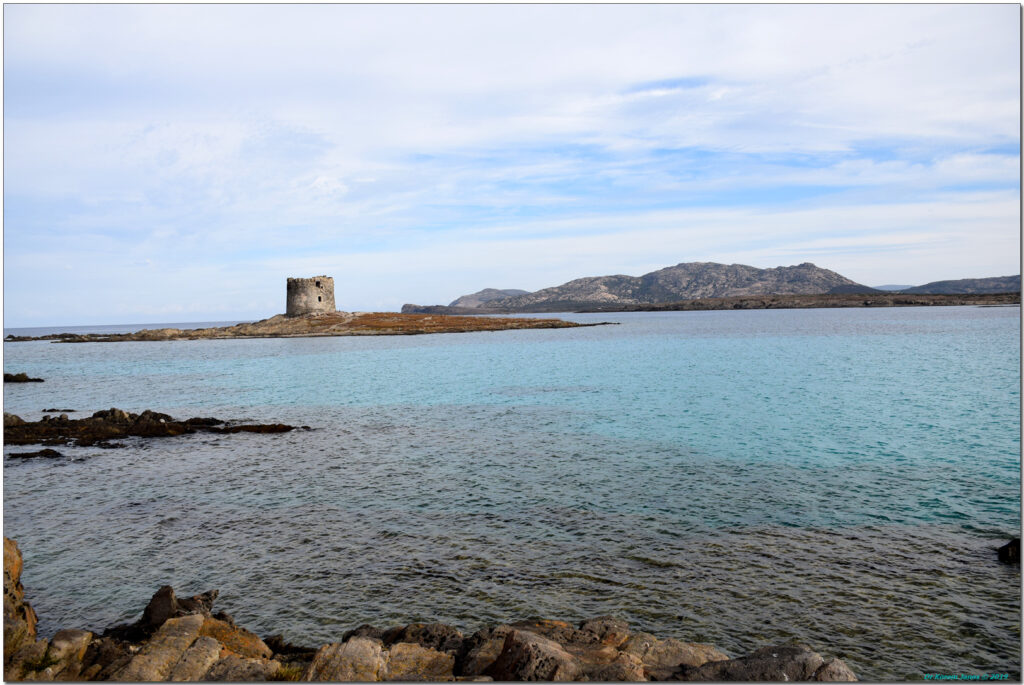
From Stintino to Fornelli. If you are wondering how to get to Asinara as quickly as possible, this is the answer: boats run by Park-authorised operators leave from Stintino harbour and land at Fornelli, in the south of the island. The crossing is short, usually under half an hour. Many operators sell packages combining the boat with a tour on land by 4×4, little road train or bike, or full days at sea along the coast with swimming stops.
From Porto Torres to Cala Reale. This is the only scheduled service to Asinara Island: the Delcomar passenger ferry leaves from the Dogana-Segni pier in Porto Torres and arrives at Cala Reale, on the east coast. The crossing takes about an hour and a quarter and the timetable changes with the seasons: always check the latest times on the Delcomar website or at the ticket office in the Maritime Station. At Cala Reale you will find the guides from the Park’s visitor centres.
With your own boat. If you are sailing, you can enter the Marine Protected Area and moor at the buoy fields along the coast, from Fornelli in the south to Cala d’Oliva in the east, following the Park’s regulations. All the current rules are on the official How to get there page of Asinara National Park.
Getting around Asinara Island
Once you know how to get to Asinara, the next question is how to get around on land. The island is long, and the distances between Fornelli, Cala Reale and Cala d’Oliva are not an afternoon stroll. There are several options:
- Guided tours by 4×4 or minibus run by authorised operators: the easiest way to see a lot in a short time.
- Road train and shuttle bus, mostly running in the warmer months, between Cala Reale and Cala d’Oliva.
- Bike and e-bike hire: the main road is suitable, but there are climbs and little shade.
- Electric car hire, according to the Park’s guidelines.
- On foot, along the themed trails: wonderful in spring and autumn, not advisable in the heat of July and August.
If you love cycling, Asinara is a little paradise: no traffic, donkeys crossing the road, sea views on both sides. On Ajò Sardegna you will also find mountain bike and e-bike experiences all over the island, handy for getting in shape before your trip.
What to see on Asinara: 7 places not to miss
The history of Asinara Island is written in its buildings. Here are the places worth putting on your list, from south to north.
1. Fornelli and the maximum-security prison. As soon as you land in the south you come to the Fornelli prison wing, one of the harshest prisons in Italy, brought back into use as a maximum-security jail in the 1970s and again in 1992. Walking through the empty cells and yards leaves a mark.
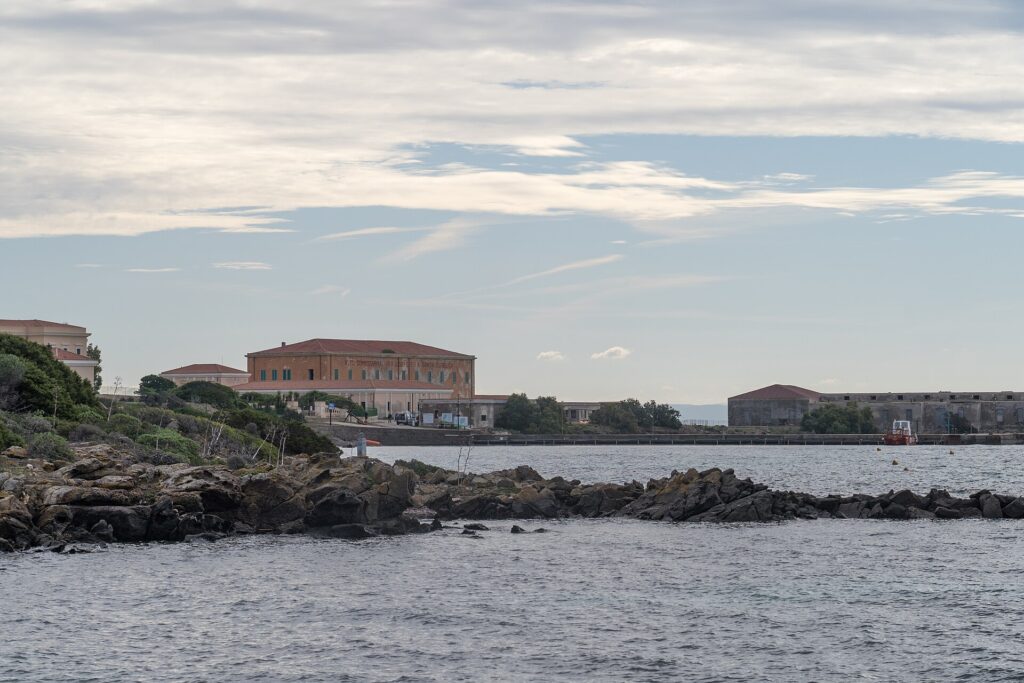
2. Cala Reale. This is the landing village for the Porto Torres ferry: here you will find the former quarantine station, the Palazzina Reale, now linked to the Park Authority, and CRAMA, the sea turtle rescue centre. Many of the island’s trails start from Cala Reale.
3. The Austro-Hungarian Ossuary. During the First World War about 24,000 prisoners, mostly Austro-Hungarian, were brought to Asinara. Thousands died of cholera and hardship. The Ossuary, built in 1936 at Campu Perdu, holds the remains of 7,048 soldiers: it is a simple and moving place.

4. The domus de janas of Campu Perdu. Not far away is a tomb carved into the rock in pre-Nuragic times, a reminder that Asinara Island was inhabited thousands of years ago. If you are fascinated by Sardinian prehistory, take a look at the archaeological sites and nuraghi on the portal.
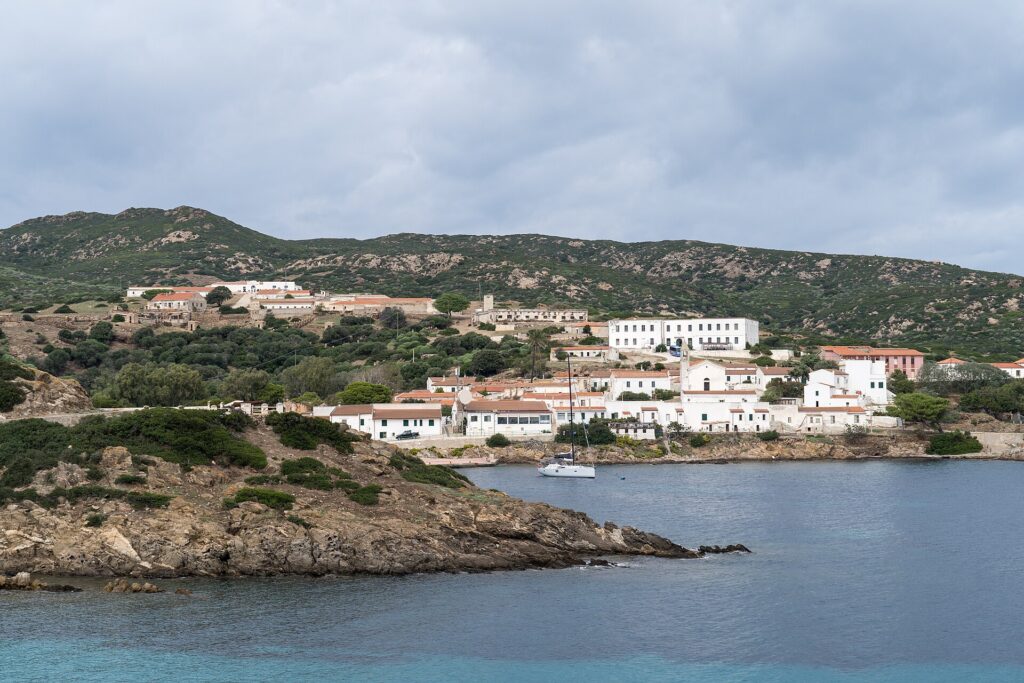
5. Cala d’Oliva. The white village overlooking the sea was the centre of the penal colony. Here, in the summer of 1985, the anti-Mafia judges Giovanni Falcone and Paolo Borsellino stayed in secret with their families to prepare the papers for the Maxi Trial in safety. Today Cala d’Oliva has the Locanda del Parco guesthouse and the start of the trails heading north.
6. Elighe Mannu and Punta della Scomunica. In the heart of Asinara Island a small holm oak wood survives, Elighe Mannu, with a botanical observatory. From here you can climb to Punta della Scomunica, the highest point, with a view over the whole of Asinara and the surrounding sea.
7. The Punta dello Scorno lighthouse. At the far north, the lighthouse is the goal of the island’s longest trail. It is an easy but long walk, to be done only with water and plenty of time, never in the hottest hours.
The white donkeys and the nature of Asinara
The island’s symbol is the white donkey, a small albino population living in the wild, with a pale coat and blue eyes. You often meet them near the villages and along the road: watch them from a distance, without touching or feeding them.
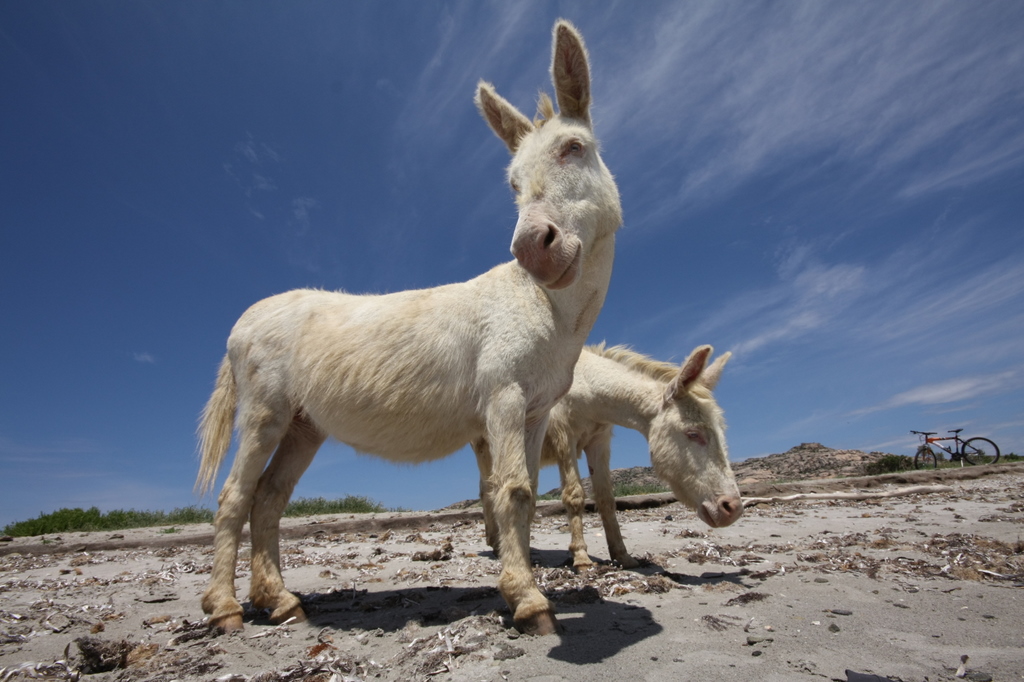
But Asinara is not just donkeys. Asinara Island is home to mouflon, wild boar, horses, Audouin’s gull and the European shag, while dolphins are often spotted at sea. For birdwatching fans, spring and autumn are the best seasons. The flora counts almost 700 species, with the Mediterranean scrub bursting into flower in spring.
- Bring binoculars: mouflon keep to the high ground and are best seen from afar.
- Do not feed wild animals: it is forbidden by the Park’s regulations.
- Do not pick plants or take shells, stones or artefacts: this is forbidden too.
Where to swim on Asinara: the beaches
The sea around Asinara Island is protected by a Marine Area divided into zones. In zone A swimming is forbidden; in zone B swimming, snorkeling, sailing and kayaking are allowed. Here are the beaches to know.
- Cala Sabina: the most famous beach, on the north-east coast, with pale sand and turquoise water. You can reach it by sea or on a short, easy trail from Cala d’Oliva, about 1.3 km according to the Park map.
- Cala d’Oliva: near the village there are two small beaches, handy for a swim between visits.
- Cala Trabuccato: further south, one of the favourites for snorkeling, with seabeds full of life.
- Cala Sant’Andrea and Cala d’Arena: beautiful, but they are in zone A, a fully protected reserve. Free access and swimming are not allowed.
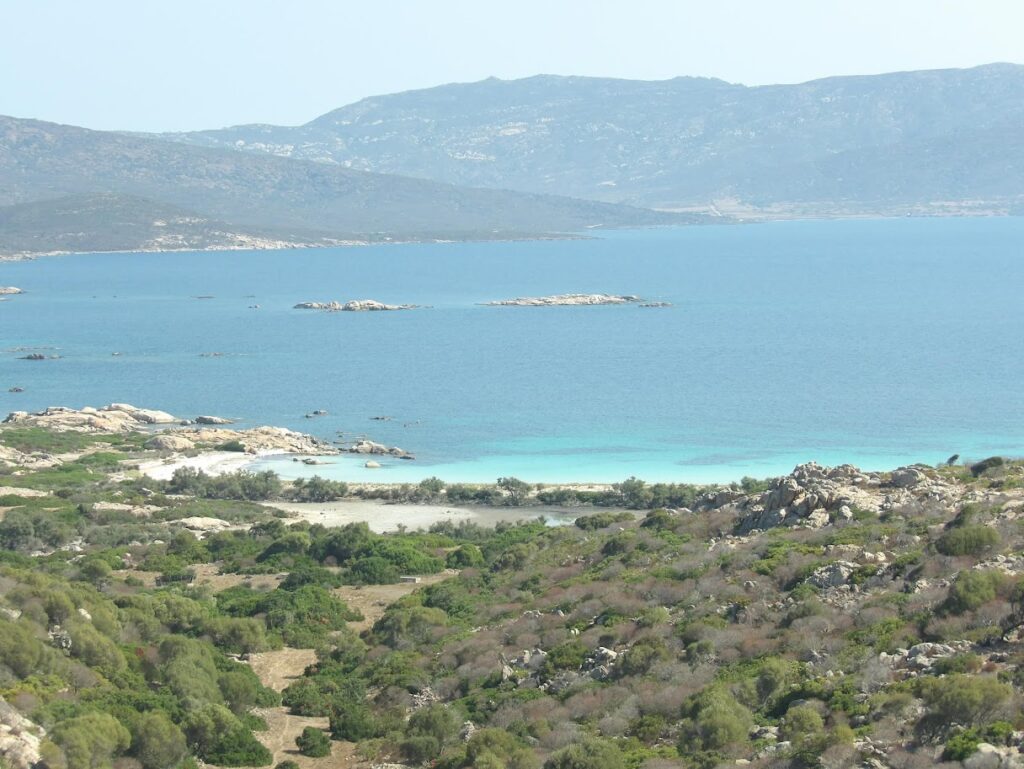
A description of Cala Sabina and its trail is also on the regional tourism portal, Sardegna Turismo. Before you set off, always ask your operator or the visitor centres which beaches can be reached that day: wind and sea can change the plan.
Boat trips from Stintino and in the Gulf of Asinara
The best way to experience Asinara Island is from the sea. On Ajò Sardegna you will find two operators from Stintino who have always known these waters.
With Pescaturismo Stintino, run by Davide and Silvia, you spend a day as a fisherman: the fishing tourism trip to Asinara with lunch on board leaves from Porto Mannu and includes hauling in the pots, swims in the coves of the Gulf, a guided visit to Cala Reale and lunch with the catch of the day. There are at most twelve people on board and you do not need to know how to fish.
If you prefer sailing, Asinara’s Latin Sails offers the lateen sailing boat trip in the Gulf of Asinara on an eight-metre wooden gozzo, with swimming and snorkeling stops between La Pelosa and Capo Falcone and a snack with Vermentino. It does not land on the island, but it lets you see Asinara from the sea at the slow pace of lateen sailing, from June to about mid-October.
You will find many more ideas in the fishing trips, boat and RIB trips, sailing and diving and snorkeling categories. And to compare trips elsewhere in the North-West, look at the boat trips from Alghero below.
When to visit Asinara Island
For Asinara Island the best periods are April to June and September to October. In spring the scrub is in bloom and walking is pleasant; in September the sea is still warm and the boats are less crowded. July and August are perfect for swimming, but it is very hot and there is little shade: choose tours with transport and save the long trails for another season.
In autumn and winter services are less frequent and many tourist facilities slow down, but Asinara Island is magnificent for walkers. If you are thinking of an off-season trip, browse the guided hikes and the traditional festivals on the portal.
A day on Asinara: suggested itinerary
Here is how to plan a full day starting from Stintino, the most convenient option if you are working out how to get to Asinara and see as much as possible.
- Morning: board in Stintino, land at Fornelli and visit the maximum-security prison.
- Late morning: transfer towards Cala Reale, stopping at the Ossuary and the domus de janas of Campu Perdu.
- Lunch: a packed lunch, or the bar at Cala Reale or the Locanda at Cala d’Oliva, booking ahead.
- Afternoon: a stroll through Cala d’Oliva and a swim at Cala Sabina.
- Return: crossing back to Stintino in the late afternoon, with the loveliest light on the Gulf.
With two days you can sleep on Asinara Island and devote the second day to the northern trails, as far as the Punta dello Scorno lighthouse or Punta della Scomunica. In the hot months, set off at dawn.
Practical tips for your visit
- Water and food: there are few places to eat (a kiosk at Fornelli, a bar at Cala Reale, the Locanda at Cala d’Oliva). Bring at least two litres of water per person.
- Sun and wind: a hat, sunscreen and a windproof top even in summer, especially for the crossing.
- Drones: forbidden, except with Park authorisation for scientific purposes.
- Pets: allowed only in zones D at Cala Reale and Cala d’Oliva, under the conditions in the regulations.
- Weather: when the mistral is strong, boats may not sail. Keep a spare day in your plans.
How to get to Asinara in high season? Book ahead, especially in August: places on the authorised boats and land tours sell out fast. Always ask what is included: just the crossing, or transport on the island and a guide as well.
What to do nearby: Stintino, Porto Torres and the North-West
After Asinara Island, stay a few days in the North-West. Stintino has La Pelosa beach, with limited access in summer. In Porto Torres the Romanesque basilica of San Gavino is worth a visit. Sassari is half an hour’s drive away, with its old town and, in August, the Descent of the Candelieri.
Further south, Alghero is the ideal base for the sea at Capo Caccia: with Sea Stories you can take a half-day boat trip or a full day at sea. To the east, Castelsardo and Sorso complete the tour. At the table, try fregula with clams and finish with seadas.
FAQ about Asinara
How do you get to Asinara?
Only by sea. Boats run by authorised operators leave from Stintino and land at Fornelli after a short crossing. From Porto Torres there is the scheduled Delcomar ferry to Cala Reale, which takes about an hour and a quarter. Private cars are not allowed on the island.
Can you swim on Asinara?
Yes, in the parts of the Marine Protected Area where it is allowed, such as Cala Sabina, Cala d’Oliva and Cala Trabuccato. Swimming is forbidden in the zone A fully protected reserves, such as Cala Sant’Andrea and Cala d’Arena.
How much time do you need to visit Asinara?
A full day is enough to see Fornelli, Cala Reale, the Ossuary and Cala d’Oliva with a swim. With two days, sleeping on the island, you can also walk the northern trails to the Punta dello Scorno lighthouse.
Can you visit Asinara with children?
Yes: the white donkeys, the road train and the sea turtle centre are big hits with younger visitors. In summer choose tours with transport, bring plenty of water and a hat, and avoid walking in the hottest hours.
Book Asinara with local operators
Now you know how to get to Asinara, what to see and where to swim: choose your gateway, your season and the way of travelling that suits you. On Ajò Sardegna you will find experiences and operators all over the island, the year’s festivals and events and ideas for nature and hiking and the sea. Contact the operators directly, with no commission, or write to Lia, the portal’s virtual assistant: she will help you choose based on your dates, area and travel companions. Ajò!
