Things to do in Castelsardo
Things to do in Castelsardo, Sardinia: medieval old town, Doria castle and weaving museum, Elephant Rock, Lunissanti Holy Week, beaches and tips.
We are gathering the first experiences for this area. Check back soon, or tell us about an operator you know.
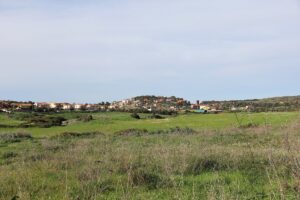
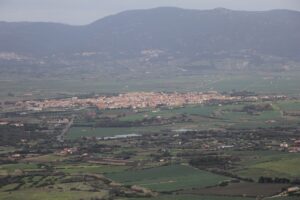
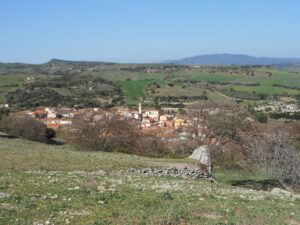
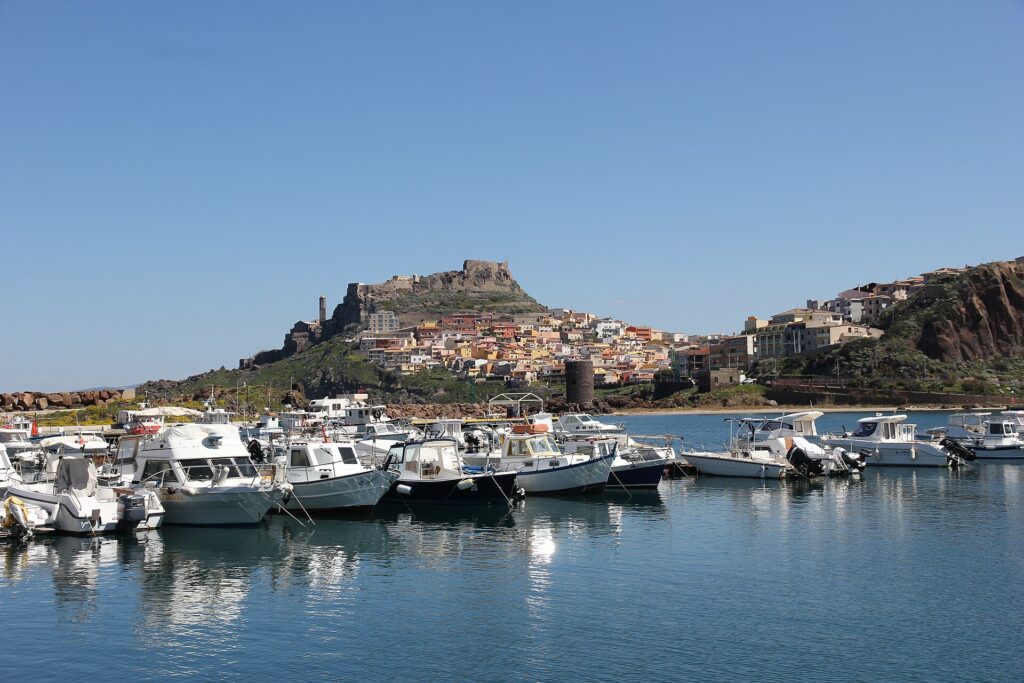
Castelsardo is a medieval town perched on a trachyte headland overlooking the Gulf of Asinara in northern Sardinia, about half an hour from Sassari. Its colourful houses climb up to the Doria castle, and from the old town's lanes the view sweeps across the sea all the way to Corsica on clear days. It's famous for its woven baskets and for Holy Week rituals that are among the most moving in Sardinia. It suits anyone who loves historic villages, crafts, sweeping views and a coastline of cliffs and coves.
What to see in Castelsardo
The old town
The old quarter, partly enclosed by walls, is explored on foot along narrow lanes and stairways. Shops display baskets and woven objects, and you'll often see women weaving at their doorsteps. Every corner opens onto the sea: it's one of Italy's most beautiful villages, best enjoyed slowly, ideally at sunset.
Doria Castle and the Mediterranean Weaving Museum
At the top of the headland stands the castle founded by the Doria, the Genoese family that gave the town its first name, Castelgenovese. Today it houses the Museo dell'Intreccio Mediterraneo (MIM), one of Sardinia's most visited museums, devoted to the art of weaving plant fibres in Sardinia and around the Mediterranean. The ramparts offer the best view of the gulf.
Cathedral of Sant'Antonio Abate
Built on the cliff edge from the late 16th century, it has a bell tower topped by a dome of colourful majolica tiles, visible from afar. Inside is an altarpiece by the Master of Castelsardo, an anonymous painter among the most important in 15th–16th-century Sardinia; the crypts below host a small museum.
Church of Santa Maria delle Grazie
In the heart of the old town, it keeps the Cristo Nero ("Black Christ"), an ancient and much-venerated wooden crucifix, and is home to the Santa Croce brotherhood that leads the Holy Week rites.
Elephant Rock
On the road to Sedini, at Multeddu, a wind-sculpted trachyte boulder looks remarkably like an elephant with its trunk. Carved inside are two domus de janas ("fairy houses", pre-Nuragic tombs): one has a bull's head carved in relief, dated to the 3rd millennium BC.
Tergu
A few kilometres away is the Romanesque basilica of Nostra Signora di Tergu, with its two-tone stone façade, linked to an ancient Benedictine monastery. It's the destination of the Lunissanti pilgrimage.
Things to do in Castelsardo
Castelsardo blends culture and sea. Boat trips leave the marina along the rocky coast of the Gulf of Asinara, stopping at coves you can only reach from the water. Other experiences worth trying:
- Weaving workshops: learn the basics of working dwarf palm, rush and raffia from local craftswomen.
- Snorkelling and diving among trachyte reefs and seagrass meadows.
- Surfing and sailing sports on the beaches of Lu Bagnu and Ampurias, towards Valledoria, when the mistral blows.
- Kayak and SUP along the coast on calm days.
- Hiking and e-biking in the Anglona hinterland, among hills, nuraghi and small villages, or along the scenic road towards Santa Teresa Gallura.
- Guided tours of the town, castle and nearby archaeological sites.
- Fishing tourism with local fishermen.
Below you'll find the activities offered by operators in and around Castelsardo: choose the one that suits you and book your experience.
Beaches in Castelsardo
Castelsardo's coast is mostly rocky, with cliffs and small pebbly coves; sandy beaches are few but pleasant.
- Lu Bagnu: in the hamlet of the same name, a few minutes from the centre, it's the main sandy beach; easy, with facilities and good for families.
- Ampurias: a long sandy beach popular with surfers on windy days.
- Coastal coves: small inlets among the rocks to the west, ideal for snorkelling and deep, clear water.
For long sandy beaches, those of Valledoria and the coast towards Badesi are about 15 minutes away by car.
History
The area was inhabited in pre-Nuragic times, as shown by the domus de janas of Elephant Rock, and has several nuraghi. The town grew up in the Middle Ages around the castle built by the Doria, who called it Castelgenovese: for centuries it was an almost impregnable stronghold. It was the last place in Sardinia to fall to the Aragonese, in 1448, after which it became Castillo Aragonés and a royal city. In 1767, under the House of Savoy, it took its current name, Castelsardo. Today it lives from tourism, fishing and crafts.
What to eat and buy
The food is seafood-based: lobster, sea urchins, octopus, fish soups and pasta with shellfish, alongside Anglona produce such as sheep's cheeses, olive oil and rustic bread. The most authentic souvenir is a hand-woven basket made with dwarf palm, rush, raffia and asphodel, a craft passed down from mother to daughter: look for shops where you can watch the work. The area also produces good wines such as Vermentino.
Festivals and traditions
- Sant'Antonio Abate, 17 January, the patron saint's feast.
- Holy Week and Lunissanti: on Holy Monday the hooded brothers of Santa Croce set out at dawn in procession to Tergu and return in the evening to the town, lit only by torches, singing ancient polyphonic chants in Latin. It's one of Sardinia's most evocative rituals.
- Madonna dei Pescatori, in mid-August, with a procession at sea.
- New Year's Eve: for years the square has hosted a big end-of-year concert.
Nearby
- Valledoria and the Coghinas river mouth (about 15 minutes): long beaches, dunes and a lagoon.
- Sedini (about 15 minutes): a village with a large domus de janas carved into the rock in its centre.
- Basilica of Santissima Trinità di Saccargia (about 40 minutes): one of the island's most famous Romanesque churches.
- Sassari (about 30 minutes): old town, Sanna museum and Rosello fountain.
- Stintino and Asinara (about 1 hour): La Pelosa beach and the national park.
Getting there and when to go
The nearest airports are Alghero-Fertilia (about 50 minutes by car) and Olbia (about 1 hour 20 minutes). The port of Porto Torres, with ferries to Genoa and Spain, is about 30 minutes away. From Sassari take the SS 200; from the east the coast road comes in from Gallura. Castelsardo is worth visiting all year: May to September for the sea, spring and autumn for exploring the town calmly, and Holy Week to experience Lunissanti.
Frequently asked questions
How many days do you need in Castelsardo?
Half a day covers the old town, castle and cathedral. With two or three days you can add Elephant Rock, Tergu, a boat trip and the nearby beaches.
Is Castelsardo good for families?
Yes: children love the castle and Elephant Rock, and Lu Bagnu beach has sand and facilities. The old town has many steps, so pushchairs are awkward.
What is Lunissanti?
It's the Monday of Holy Week: a procession of hooded brothers singing ancient polyphonic chants, from Castelsardo to the basilica of Tergu and back, ending at night by torchlight.
Does Castelsardo have sandy beaches?
A few: the main one is Lu Bagnu, then Ampurias. For long sandy beaches head towards Valledoria, about 15 minutes away.