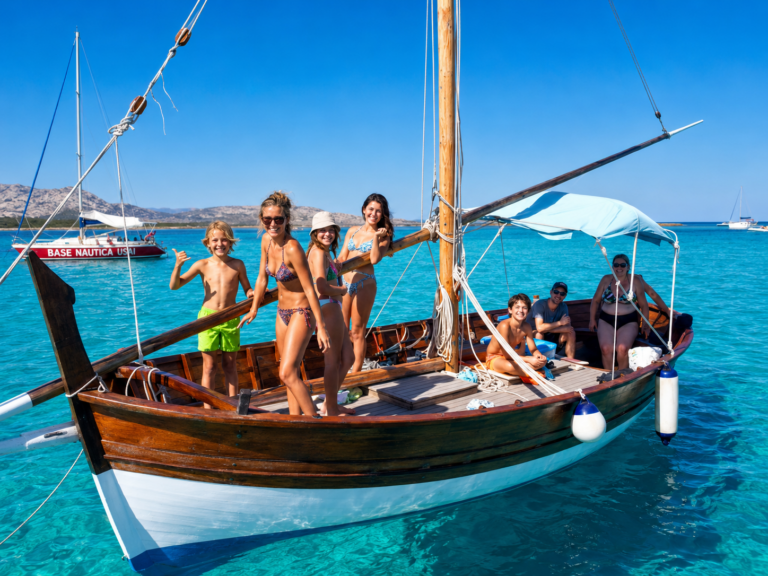
Lateen sailing boat trip in Stintino and the Gulf of Asinara
Asinara's Latin Sails
from €75 per person Discover
Things to do in Stintino, Sardinia: La Pelosa and other beaches, Asinara trips, Capo Falcone, the tuna museum, lateen sailing, seafood and travel tips.
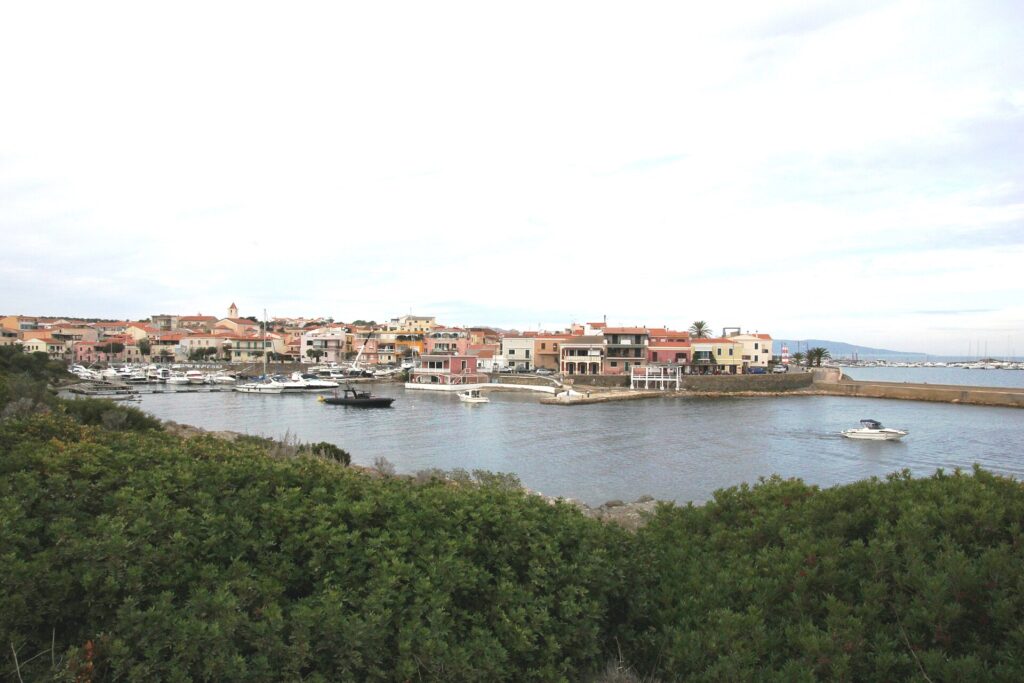
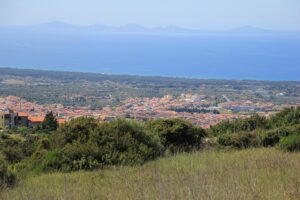
Stintino is a small fishing village at the far north-western tip of Sardinia, on a narrow strip of land between two seas that stretches towards the island of Asinara. It's famous for La Pelosa, one of the most photographed beaches in Italy, but it's also worth visiting for its colourful harbour, its tuna-fishing heritage and days spent sailing between islands and coves. It's a perfect choice for families with young children, lovers of clear water, sailors and anyone drawn to protected nature.
The village sits around two inlets: the old harbour, with the fishermen's boats, and the new one, known as Porto Mannu ("the big harbour"), where boats for Asinara and sailing yachts moor. Low, colourful houses, tidy lanes and the seafront are easy to explore on foot, and sunset is the best time to do it.
On the harbour quay, the Museo della Tonnara (MUT), opened in 2016, tells the story of tuna fishing with fixed nets, the rituals of the mattanza, the tools and the lives of the tuna fishermen, with a look at other fisheries around the Mediterranean. It's the key to understanding Stintino.
On the islet in front of La Pelosa beach stands the Torre della Pelosa, an Aragonese coastal watchtower from the late 16th century and the area's symbol. Just above, the headland of Capo Falcone offers one of Sardinia's finest views: Isola Piana, Asinara and, on clear days, the whole Gulf of Asinara.
About 3 km from the village, the Casaraccio lagoon is a protected wetland where you can watch water birds, often including pink flamingos. It's a peaceful stop away from the beach crowds.
Stintino is all about the sea. The most popular experience is a trip to Asinara, a national park since 1997: you get there by boat from the harbour and explore by 4x4, little tourist train, e-bike or on foot, among empty coves, the former maximum-security prison and the white donkeys that gave the island its name. Many visitors also take a boat or RIB tour around Isola Piana and the Asinara coast, with swimming stops in crystal-clear water.
You'll find the experiences offered by Stintino's local operators right below, from Asinara trips to boat tours: pick yours and book your day at sea.
Fine white sand, shallow turquoise water and the Aragonese tower in the background: La Pelosa is ideal for children, who can wade for ages in a few inches of water. To protect it, in high season access is limited and must be booked online, and you must lay a mat under your towel; check the current rules before you go. Next to it is little Pelosetta, with the same sea.
Facing the Gulf of Asinara is a string of quieter, often less crowded beaches: long sandy Le Saline and Ezzi Mannu, Il Gabbiano, L'Ancora, Pazzona and Punta Negra. They're a good option on mistral days, when this side is more sheltered, and suit anyone looking for space and calm.
A day trip takes you to Asinara's coves, such as Cala Sabina and Cala d'Oliva, where access is managed by the park: crystal water and very few people.
The area has been visited since prehistoric times, but the village itself is young. In 1885 the Italian state turned Asinara into a penal colony and quarantine station: the roughly 45 families of fishermen and shepherds living on the island, many of Ligurian and Sardinian origin, had to leave and founded a new village on the peninsula opposite. The name comes from the Sassarese word isthintìni, "gut" or "narrow passage", after the peninsula's shape. Life revolved around fishing and the tuna fishery for decades. Part of Sassari for over a century, Stintino became an independent municipality in 1988 and now lives mainly from tourism and the sea.
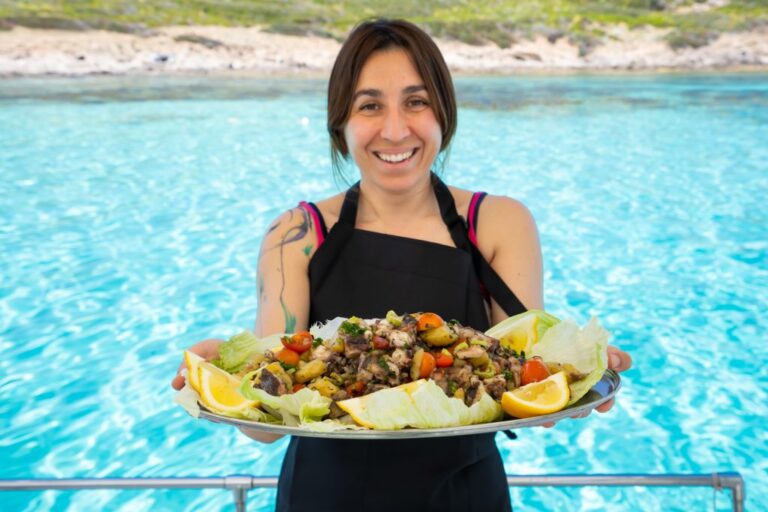
Stintino's cooking is seafood cooking. Try the lobster soup with potatoes, octopus Stintino-style and octopus in agliata (with a garlic and tomato sauce), sea urchins in winter and tuna bottarga, a legacy of the tuna fishery. For something sweet, look for tumbarella. To take home: bottarga, tuna in oil and sea- or sailing-themed crafts.
The nearest airport is Alghero-Fertilia, about 50 minutes by car; Olbia is about 2 hours away. The port of Porto Torres, with ferries to mainland Italy and Spain, is about half an hour away. From Sassari and Porto Torres, a provincial road runs up the peninsula. The best time is May to early October: June and September bring warm sea, fewer crowds and easier access to La Pelosa, while July and August are liveliest but busiest.
Two or three days are enough for La Pelosa, a beach on the eastern shore, the village and museum, and a full day on Asinara. With a week you can mix beach, boat trips and excursions nearby.
Yes, it's one of the most child-friendly places in Sardinia: La Pelosa and many nearby beaches have shallow sandy water, and the village is small and quiet.
In high season, yes: entries are limited and booked online. Always check the current year's rules on the municipality's website.
Ferries and excursion boats leave from the harbour; on the island you get around with park transport, bikes or guided tours. Booking ahead is wise in summer.