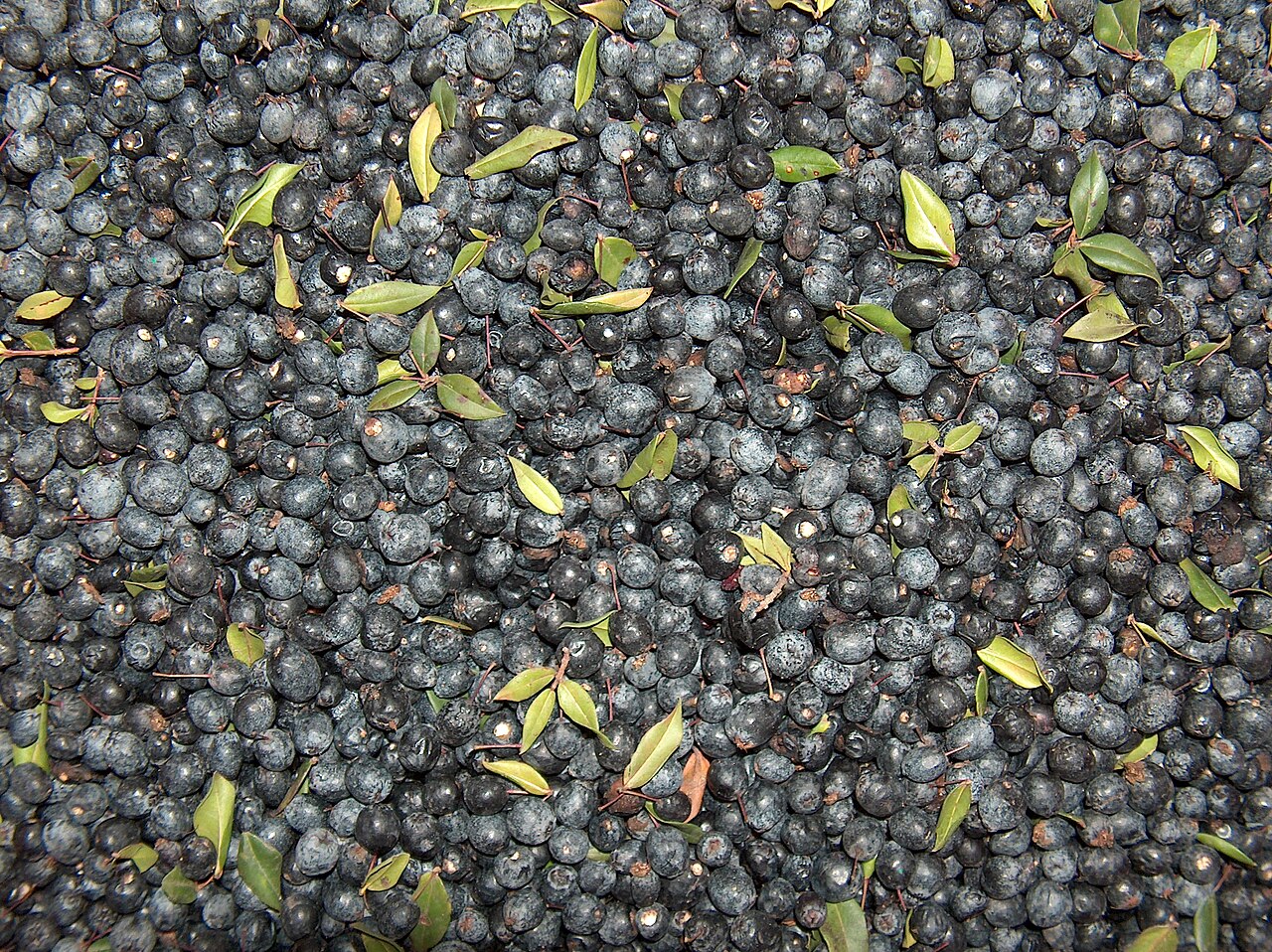
There is a moment, at the end of every Sardinian meal, when someone opens the freezer and takes out a dark bottle. It is mirto, the liqueur that closes celebrations, family dinners and country lunches in Sardinia. It is made from the berries of a plant, myrtle, that grows everywhere in the island’s Mediterranean scrub, from the coast to the hills.
In this guide we tell you about the plant, its history and legends, the difference between red and white mirto, how it is made under the rules of Mirto di Sardegna and how to make it at home. Then we give you 7 tips for choosing a good bottle and tell you where to taste it, among wineries, farms and village festivals.
Contents
Litora myrtetis laetissima (“shores most joyful with myrtle groves”).
Virgil, Georgics, Book II (29 BC), own translation
The myrtle plant, queen of the scrub
Its scientific name is Myrtus communis: an evergreen shrub of the Mediterranean scrub. It has small, glossy, highly fragrant leaves that release their aroma as soon as you rub them between your fingers. In Sardinia it grows wild along the coasts and in the hills, alongside mastic, strawberry tree and rockrose, and in Sardinian it is called murta.
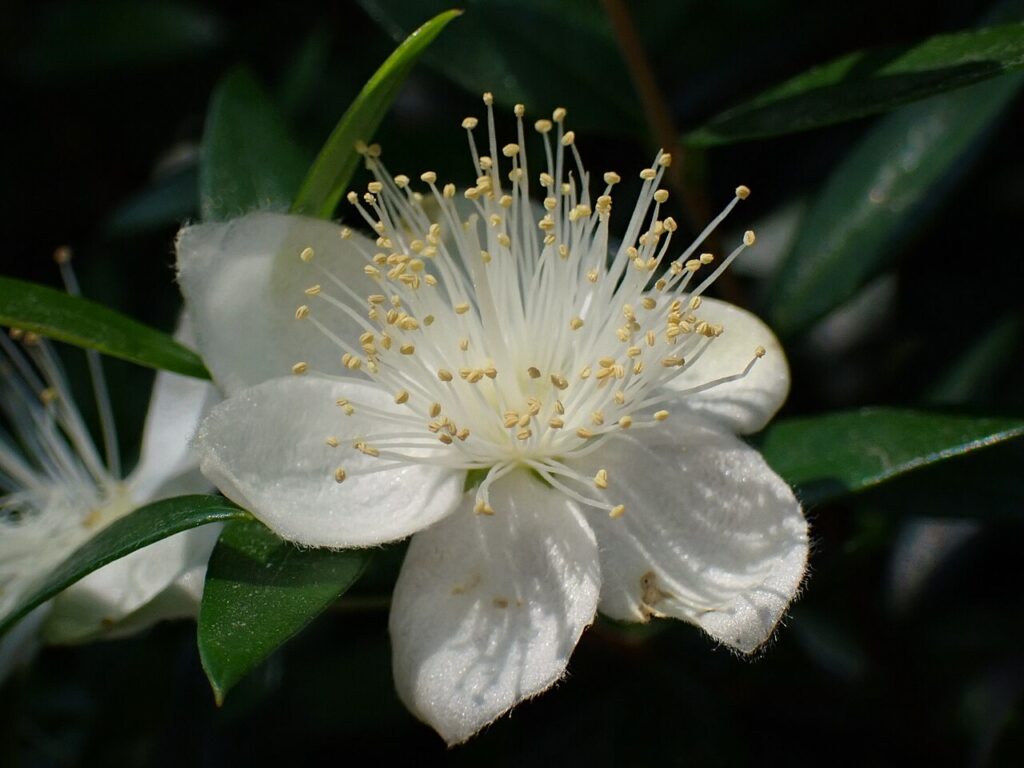
Between late spring and summer the plant is covered in small white flowers, with a tuft of long, thin stamens. In autumn come the berries, green at first and then dark blue, almost black, covered with a light, pale bloom. Plants with white berries are rarer, and in some parts of the island people seek them out on purpose.
The Mirto di Sardegna technical file notes that the plant is found from the coast up to about 600–800 metres above sea level, mainly on acid or neutral soils. It is a hardy species that withstands wind and summer drought: that is why you often see it in the wildest landscapes, from the hills of the Sulcis to the coasts of Gallura.
History and legends of mirto
This plant has accompanied people around the Mediterranean for thousands of years. In the Greek and Roman world it was sacred to Aphrodite, the Latins’ Venus, and its woven branches became wreaths for brides and grooms and for victors. Pliny the Elder also writes about it at length in his Natural History, listing its uses in cooking and medicine.
In Sardinia the bond with this plant is very old. Italy’s official tourism portal, Italia.it, notes that the plant has been part of Sardinian life since Nuragic times, with ritual, medicinal and household uses. For centuries its leaves were used to flavour meat, its branches to make brooms and fences, its berries to prepare infusions and remedies.
The liqueur as we know it today is a household tradition: every family had its own recipe and its bottle for guests. Commercial production is documented from the mid-1970s, when the first Sardinian producers took their bottles to trade fairs. Since then mirto has become the island’s signature digestif, known throughout Italy and abroad.
Red and white mirto: the differences
When people in Sardinia talk about this liqueur, they almost always mean red mirto: a dark ruby liqueur made from ripe berries. But there is also white mirto, rarer and harder to find, with a completely different character.
- Red mirto: made from dark, ripe berries. It has an intense ruby colour, aromas of ripe fruit and Mediterranean scrub, and a smooth taste with a slightly bitter note.
- White mirto: made from pale berries, sometimes young, together with leaves and shoots. It has a soft, almost amber colour and a more herbal, floral profile, less sweet.
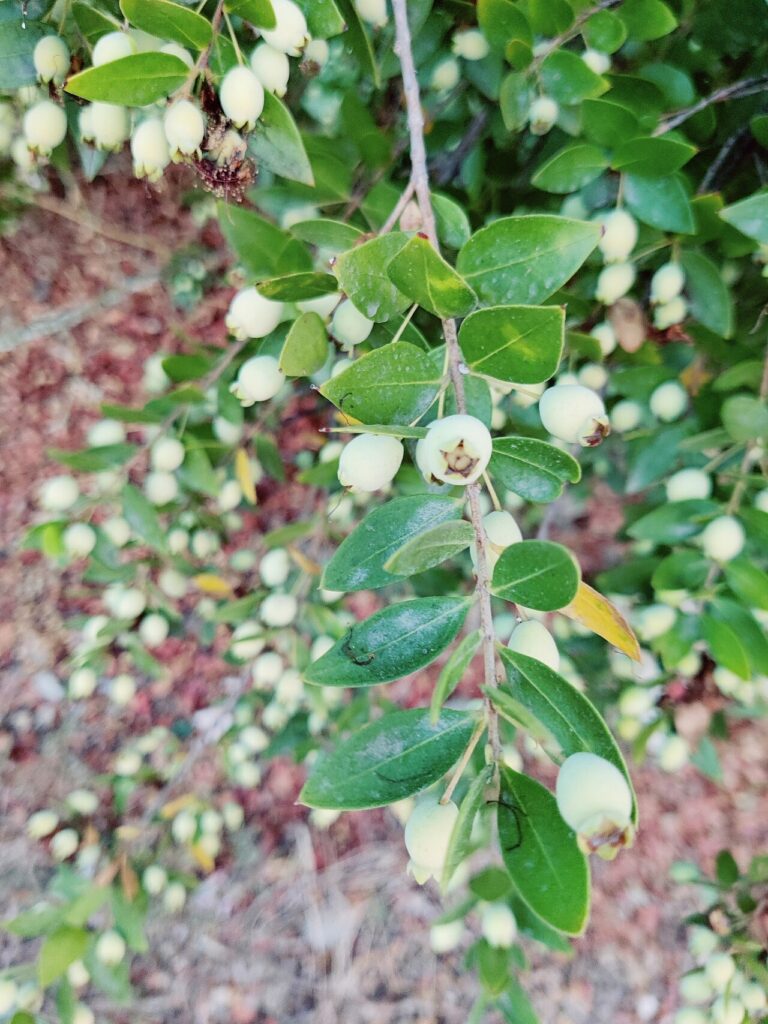
The white version appeals to those looking for a less sugary, more aromatic digestif. Red remains the favourite, because it is rounder and more recognisable. If you can, taste them one after the other: it is the best way to understand how much the character of the same plant can change.
How Mirto di Sardegna is made
Mirto di Sardegna is a geographical indication with a technical file approved by the Italian Ministry of Agriculture in 2013 and updated in 2016. The file, also available on the European register eAmbrosia, sets precise rules: harvesting, processing and bottling must all take place in Sardinia.
- Raw material: fully ripe berries, picked by hand, from wild plants or plants grown in near-natural conditions. Leaves are allowed only in minimal amounts and freezing the berries is forbidden.
- Quantity: at least 150 grams of berries per litre of liqueur.
- Infusion: in neutral ethyl alcohol, from a minimum of 15 days up to 8 months.
- Sweetness: a syrup of water and sugar, to which a little honey may be added.
- Strength: between 28% and 36% alcohol.
- Bans: no preservatives, colourings or added flavourings.
The result is a ruby liqueur with violet hints, which tends towards warmer tones with time. The aroma should recall the berry and the scrub, the taste should balance sweet and bitter. Before bottling, each batch is assessed by a tasting panel.
A homemade mirto liqueur recipe
In many Sardinian homes mirto liqueur is still made the old way, with berries picked in the countryside. Every family has its own quantities, but the base is always the same: berries, alcohol, water and sugar. This is a traditional version, to adapt to your taste.
- Ingredients: 1 kg ripe berries, 1 litre of 95–96% spirit for liqueurs, about 1.5 litres of water and 600 grams of sugar.
- Infusion: clean the berries, remove leaves and stems, put them in a glass jar with the alcohol and leave them in the dark for about 40 days, shaking now and then.
- Straining: separate the flavoured alcohol and lightly press the berries to recover more juice, without crushing them too much.
- Syrup: heat the water with the sugar until it dissolves and let it cool completely.
- Mixing: add the cold syrup to the infusion, stir, strain and bottle.
- Resting: let the bottles rest for a few weeks before opening them: the flavour becomes rounder.
If you prefer a less sweet liqueur, reduce the sugar; if you want it smoother, replace some of the sugar with honey, as some producers do. Homemade mirto keeps for a long time in tightly closed bottles, away from light.
When and how to pick the berries
The berries ripen in mid-autumn and are usually picked between late November and January, depending on the area and the year. They are ready when they are dark blue, firm and covered with the typical pale bloom. People who have picked them for generations say those near the sea are the most fragrant.
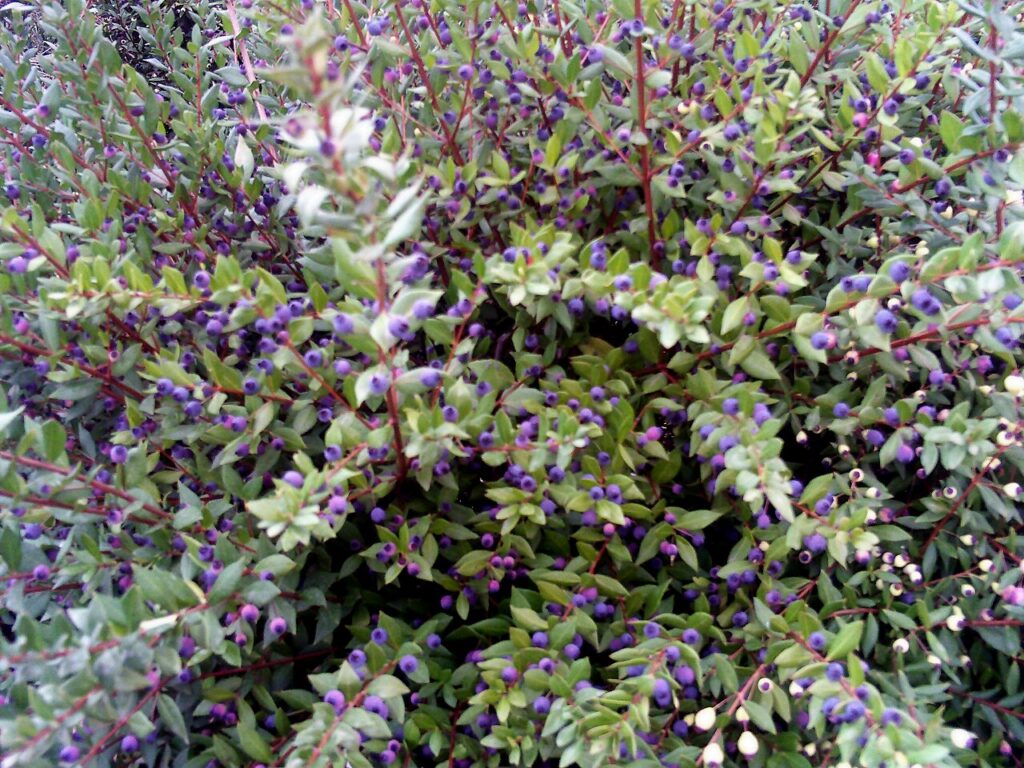
If you want to pick them, do so with respect. Pull the berries off by hand without breaking the branches, always leave some fruit on the plant for the birds, and ask permission if the land is private. In parks and protected areas, check the rules first: in some zones picking is restricted.
It is a lovely activity to do as a family on a sunny autumn day, perhaps during a trip to Sardinia in November, with a stop in Villacidro or in the hills of Ogliastra, the month of village festivals and autumn flavours. Combine it with a walk among the nature and hiking experiences on the portal.
How to choose a good Sardinian myrtle liqueur: 7 tips
On the shelves of shops and airports you will find dozens of different bottles. Here is how to recognise a good Sardinian myrtle liqueur and avoid taking home a simple alcoholic syrup.
- 1. Read the name: “Mirto di Sardegna” indicates a liqueur made entirely on the island according to the technical file.
- 2. Check the ingredients: there should only be berries, alcohol, water and sugar, sometimes honey.
- 3. Be wary of flavourings and colourings: they are not allowed in Mirto di Sardegna.
- 4. Look at the strength: for Mirto di Sardegna it is between 28% and 36%; much lower is often a different product.
- 5. Look at the colour: dark ruby with violet hints; an overly bright colour can be suspicious.
- 6. Smell and taste: it should taste of berry and scrub, not just of sugar.
- 7. Buy from the producer: on farms and at small distilleries you can taste before choosing.
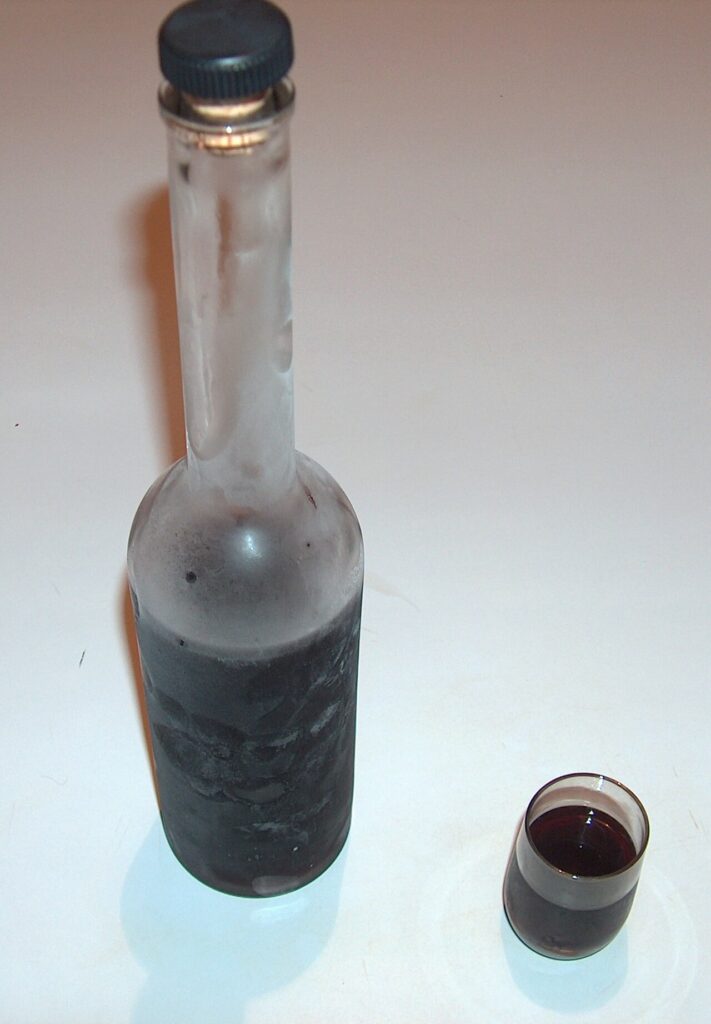
One last thing: the homemade liqueur you are offered at a farm stay or at friends’ houses is often the best of all. If someone gives you a bottle, accept it: it is a sign of friendship.
How to drink mirto: temperature and pairings
Mirto is first and foremost a digestif, to be drunk at the end of a meal in a small glass. In summer it is served ice-cold, with the bottle kept in the freezer: the alcohol stops it from freezing. In winter many Sardinians prefer it chilled but not frozen, because too much cold masks the aromas.
- With desserts: it goes well with seadas and almond sweets.
- With cheese: try it with an aged Pecorino Sardo or with Fiore Sardo.
- In cocktails: many bars on the island now use it in aperitifs, with tonic water or prosecco.
- On ice cream: a drizzle of liqueur on vanilla ice cream makes a simple, fragrant dessert.
Myrtle in the kitchen: porceddu, meat and marinades
Myrtle leaves and sprigs are a key aroma in Sardinian inland cooking. Porceddu, the roast suckling pig, is often laid on a bed of green sprigs after spit-roasting, which perfume it as it rests. Other roast or boiled meats are wrapped in the leaves in the same way.
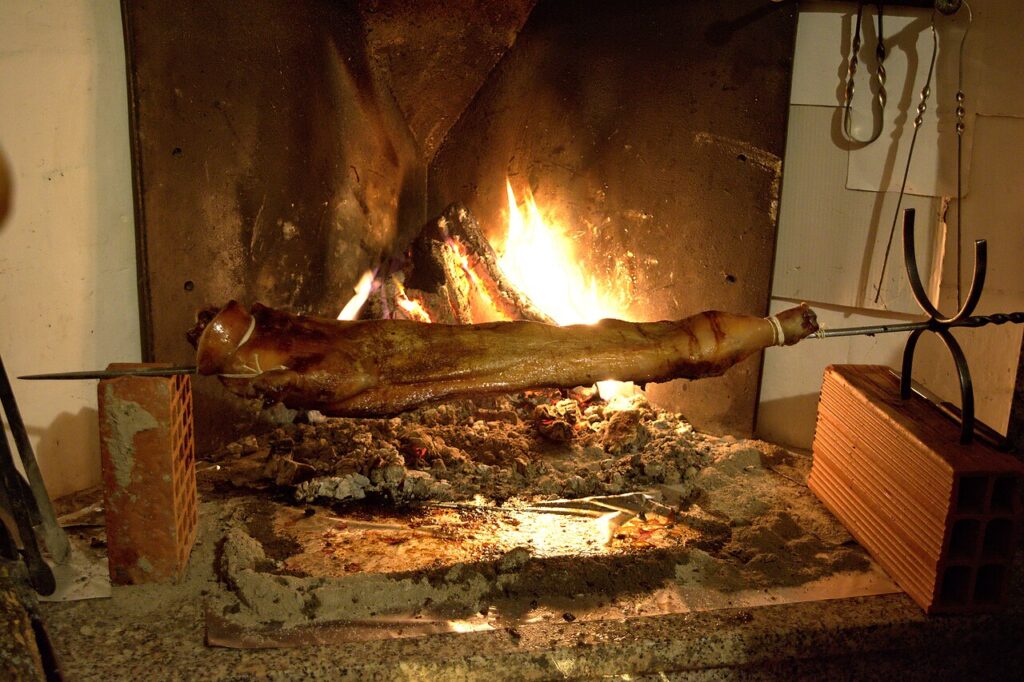
In inland towns such as Macomer and Oliena, roast meat and myrtle are inseparable. Crushed berries go into marinades for game and pork, while the liqueur is used to deglaze roasts or soak cakes. To discover other flavours of the island, start with the pages on culurgiones, malloreddus and pane carasau.
Where to taste and buy mirto in Sardinia
Bottles are on sale everywhere, but the best way to get to know mirto is to taste it at the producer’s. Many farms and small distilleries open their doors to visitors: on Ajò Sardegna you will find them among the farms and the wineries and tastings, where liqueurs and spirits often sit alongside wine.
Another opportunity is a lunch with shepherds: at the end, the homemade bottle almost always appears. And if you love cooking, in a cooking class you can learn to use the aromatic leaves in roasts. All the food experiences are in the food and wine section.
Winter festivals are also a good place to taste different mirtos, made by local families and producers:
- Cortes Apertas in Fonni, 6 to 8 December 2026.
- Sartizza Sausage Festival in Siligo, 5 and 6 December 2026.
- Artes e Sabores in Santu Lussurgiu, 12 and 13 December 2026.
- The last stops of Autunno in Barbagia in Orune, Seulo and Ortueri, 12 and 13 December 2026.
For more festivals in the inland villages, browse the traditional festivals. In coastal areas, from the South-West to Gallura, the plant grows wild everywhere: ask in village shops, which often sell locally made mirto.
Other Sardinian liqueurs and spirits
Alongside the ruby red of the berries, Sardinian tradition knows other liqueurs and spirits worth discovering. Many, like mirto, come from the Mediterranean scrub or from village crops, and tell a piece of the island’s history.
- Filu ‘e ferru: the Sardinian grappa, distilled from grape pomace. The name, “iron wire”, recalls the days when secretly made bottles were buried in the countryside and the spot was marked with a piece of iron wire sticking out of the ground.
- Liquore di Villacidro: a yellow liqueur flavoured with herbs and saffron, linked to the Medio Campidano town of Villacidro, after which it is named.
- Strawberry-tree liqueur: made with the red fruits of the strawberry tree, the same plant that gives the bitter autumn honey.
- Herbal liqueurs: many homes make liqueurs with wild fennel, bay leaves or citrus peel, each with its own family recipe.
If you like spirits, always ask the producers and farms you visit: they often have a small production of their own that you will not find in shops. And remember that in Sardinia offering a small glass at the end of a meal is a gesture of welcome, never to be refused lightly.
Taking mirto home
Mirto is one of the most popular souvenirs from Sardinia. If you are flying with hand luggage only, remember that liquids are restricted: buy the bottle in the shops after security, or pack it in your checked baggage, well wrapped in clothing.
If you are going home by ferry or car, you can stock up directly from the producers. And to complete your shopping, add a good Cannonau or Vermentino and some Sardinian cheese, which you can find at the dairies and farms open to visitors.
FAQ about mirto
What is mirto?
It is Sardinia’s traditional liqueur, made by steeping the berries of a Mediterranean scrub shrub in alcohol, then sweetening it with a syrup of water and sugar. It is drunk as a digestif at the end of a meal.
How strong is mirto?
Mirto di Sardegna has an alcohol content of between 28% and 36%. Homemade mirto can vary a lot, depending on the amounts of alcohol and syrup each family uses.
What is the difference between red and white mirto?
Red mirto is made with dark, ripe berries and is ruby-coloured, smooth and fruity. White mirto is made from pale berries, leaves and shoots: it is lighter, more herbal and less sweet.
When are the berries picked for the liqueur?
Usually between late November and January, when they are dark blue and fully ripe. The timing varies with the area and the year: those near the sea are considered the most fragrant.
A sip of Sardinia, to enjoy on the island
Mirto is much more than a digestif: it is the scent of the scrub, a gesture of hospitality, the toast that ends every celebration. The best way to get to know it is to drink it in Sardinia, at the end of a country lunch or at a village festival. On Ajò Sardegna you will find festivals all year round and experiences in culture and traditions run by local operators, to contact directly and with no commission, in areas such as Barbagia and the Nuoro area. If you have questions, write to Lia, the portal’s virtual assistant. Cheers, and ajò!
