Things to do in Oliena
Things to do in Oliena, Sardinia: Su Gologone spring, Lanaittu valley, hikes to Tiscali and Monte Corrasi, Nepente wine and Easter S'Incontru.
We are gathering the first experiences for this area. Check back soon, or tell us about an operator you know.
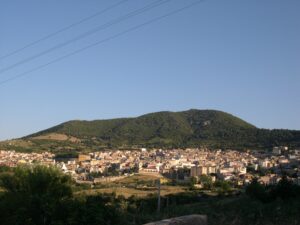
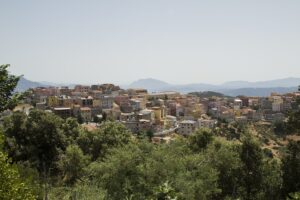
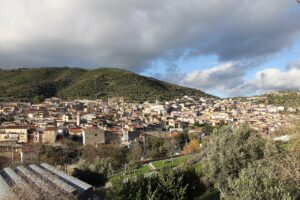
Oliena is a town of about seven thousand people at the foot of Monte Corrasi, the highest peak of the Supramonte, some 10 km from Nuoro. Its houses clustered around churches, its olive groves and the limestone wall towering above create one of the most spectacular views in inland Sardinia, and the town holds the Touring Club's Orange Flag award. From here you reach the Su Gologone spring, the Lanaittu valley and the Nuragic village of Tiscali, while in town you discover Nepente wine, fine embroidery and some of the Barbagia's most heartfelt festivals. It is ideal for hikers, archaeology fans, food lovers and anyone seeking authentic traditions.
What to see in Oliena
The old town
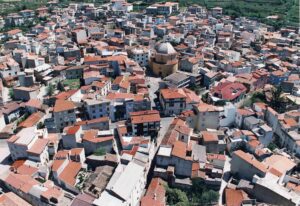
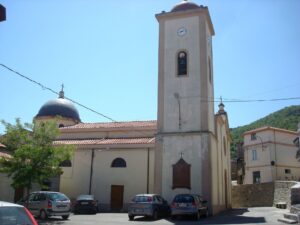
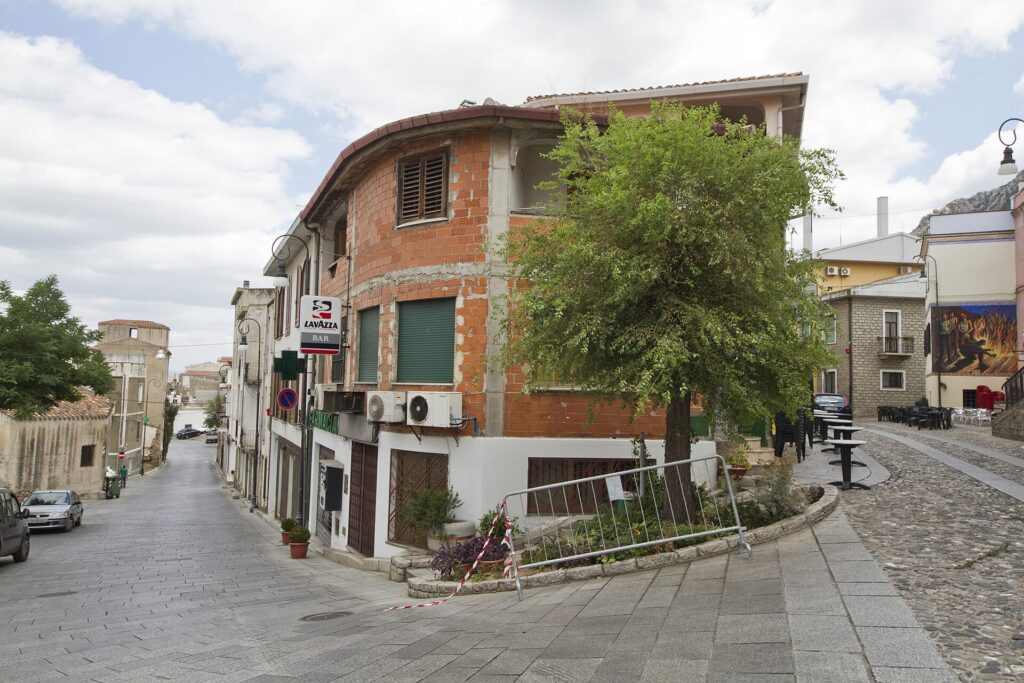
Explore on foot through paved lanes, stone houses with outdoor stairs and courtyards, always with the Corrasi as a backdrop. The religious heart is the church of Sant'Ignazio di Loyola, built by the Jesuits, who arrived in Oliena in 1665 and stayed until 1773. Also worth seeing are Santa Maria, one of the town's oldest churches (late 13th–early 14th century), which originally stood outside the village, and San Lussorio, the patron saint's church.
The Su Gologone spring
A few kilometres from town, in the Guthiddai valley, Su Gologone gushes out, one of Europe's best-known karst springs. The deep blue-green water rises from a narrow chasm in the limestone, feeds the Cedrino river and supplies drinking water to Oliena, Dorgali and the Baronie. Shaded by eucalyptus and holm oaks, it is a perfect place to pause.
The Lanaittu valley
A long karst valley in the heart of the Supramonte, full of caves and archaeological sites:
- Sa Sedda 'e Sos Carros: a Nuragic village where metal was worked and water was worshipped, with an important sacred spring.
- Corbeddu cave: named after a famous 19th-century bandit who hid here; traces of Palaeolithic humans have been found inside.
- Sa Oche and Su Ventu caves: two connected caves that can be explored with caving gear and expert guides.
- Tiscali: one of the trails to the Nuragic village hidden in a vast sinkhole on Monte Tiscali, inhabited roughly between the 15th and 8th centuries BC, starts in the valley.
Monte Corrasi
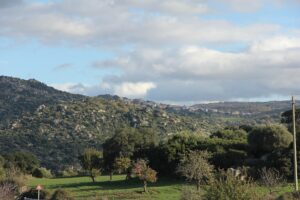
At 1,463 metres it is the Supramonte's highest summit. Its limestone cliffs, holm oak woods and views reaching the sea make it one of Sardinia's favourite hiking destinations.
Things to do in Oliena
Oliena is one of the best bases for discovering the Supramonte, on foot or by 4x4.
- Hike to Tiscali: the area's most famous trek, among rocks, ancient holm oaks and passages through the rock to the village in the sinkhole. Best with a guide.
- Climb Monte Corrasi: a demanding, unforgettable hike with views of the Gennargentu and the Gulf of Orosei.
- 4x4 tours in the Supramonte: tracks across plateaus, shepherds' huts and woods, often with lunch with shepherds.
- Caving: guided trips into the Lanaittu caves for a different kind of adventure.
- Rock climbing: the local limestone walls draw climbers from all over Europe.
- Tastings: Nepente di Oliena, extra virgin olive oil, cheeses and honey straight from the producers.
Further down this page you will find the experiences offered by operators in Oliena and the Supramonte: from the Tiscali hike to 4x4 tours, choose yours and book.
History
The area was inhabited in pre-Nuragic and Nuragic times, as the Corbeddu cave, Sa Sedda 'e Sos Carros and Tiscali show. The first permanent settlement on the site of today's town dates from Roman times. In the Middle Ages Oliena shared the fortunes of the Barbagia, later coming under Aragonese and Spanish rule. In 1665 the Jesuits arrived, giving a major boost to farming, winemaking and religious life until the order was suppressed in 1773. In the 19th and 20th centuries Nepente di Oliena became famous beyond the island, thanks to the praise of poet Gabriele D'Annunzio.
What to eat and buy
The town's pride is Nepente di Oliena, a Cannonau grown on the slopes of the Supramonte and praised by D'Annunzio. Alongside it come extra virgin olive oil from the surrounding groves, cheeses, honey and almonds. At the table look for macarrones de busa (pasta rolled around a thin iron rod), pani frattau (carasau bread layered with tomato sauce, cheese and egg), roast meats and sweets such as seadas and pistoccos; for Sant'Antonio locals make su pistiddu. Crafts include exquisite embroidery, such as the muncadore, the costume's headscarf, filigree jewellery, rugs, bedspreads and wooden chests.
Festivals and traditions
- Sant'Antonio Abate (night of 16 January): bonfires in every quarter, with su pistiddu and wine offered to all.
- S'Incontru (Easter Sunday): the final act of Holy Week, when the statues of the Madonna and the risen Christ, carried in procession, meet in piazza Santa Maria. One of Sardinia's most moving Easter rites.
- San Lussorio (mid-August): the patron saint's feast, deeply felt, peaking on 21 August.
- Autunno in Barbagia: in autumn the town opens homes and courtyards to show off its crafts and flavours.
The traditional hand-embroidered costume, su hustùmene, appears in all its splendour during festivals.
Nearby
- Nuoro: museums, Grazia Deledda's house and Monte Ortobene, about 15 minutes away.
- Orgosolo: the village of murals, in the heart of the Supramonte.
- Dorgali: the Ispinigoli cave and the road to Cala Gonone.
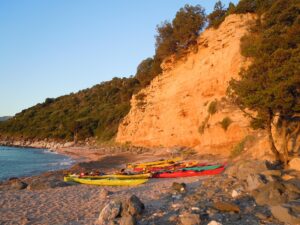
- Cala Gonone and the Gulf of Orosei: beaches, sea caves and boat trips, about 40 minutes away.
- Mamoiada: the Mamuthones and the mask museum.
Getting there and when to go
Oliena is about 15 minutes from Nuoro. The nearest airport is Olbia Costa Smeralda, about an hour and a quarter away on the SS131 DCN; Cagliari is just over two hours away. Spring and autumn are the best seasons for Supramonte hiking, with mild temperatures and glorious colours; in summer, walk early in the morning and pair it with the sea of the Gulf of Orosei. January and Easter are the most intense times for traditions.
Frequently asked questions
How long is the Tiscali hike?
From the Lanaittu valley allow a few hours for the walk in, the visit and the return, on a trail with some demanding stretches. Bring hiking boots and water, and ideally a guide.
Can you swim at Su Gologone?
Su Gologone is a natural monument and a drinking-water source: visit and photograph it, but it is not a place for swimming.
How many days do I need for Oliena?
At least two: one for the town and Su Gologone, one for Lanaittu and Tiscali. A third day lets you climb the Corrasi or explore the Supramonte by 4x4.
Is Oliena good for families?
Yes: Su Gologone and the Lanaittu valley are easy to reach and popular with children; for Tiscali and the Corrasi, consider your children's age and fitness.