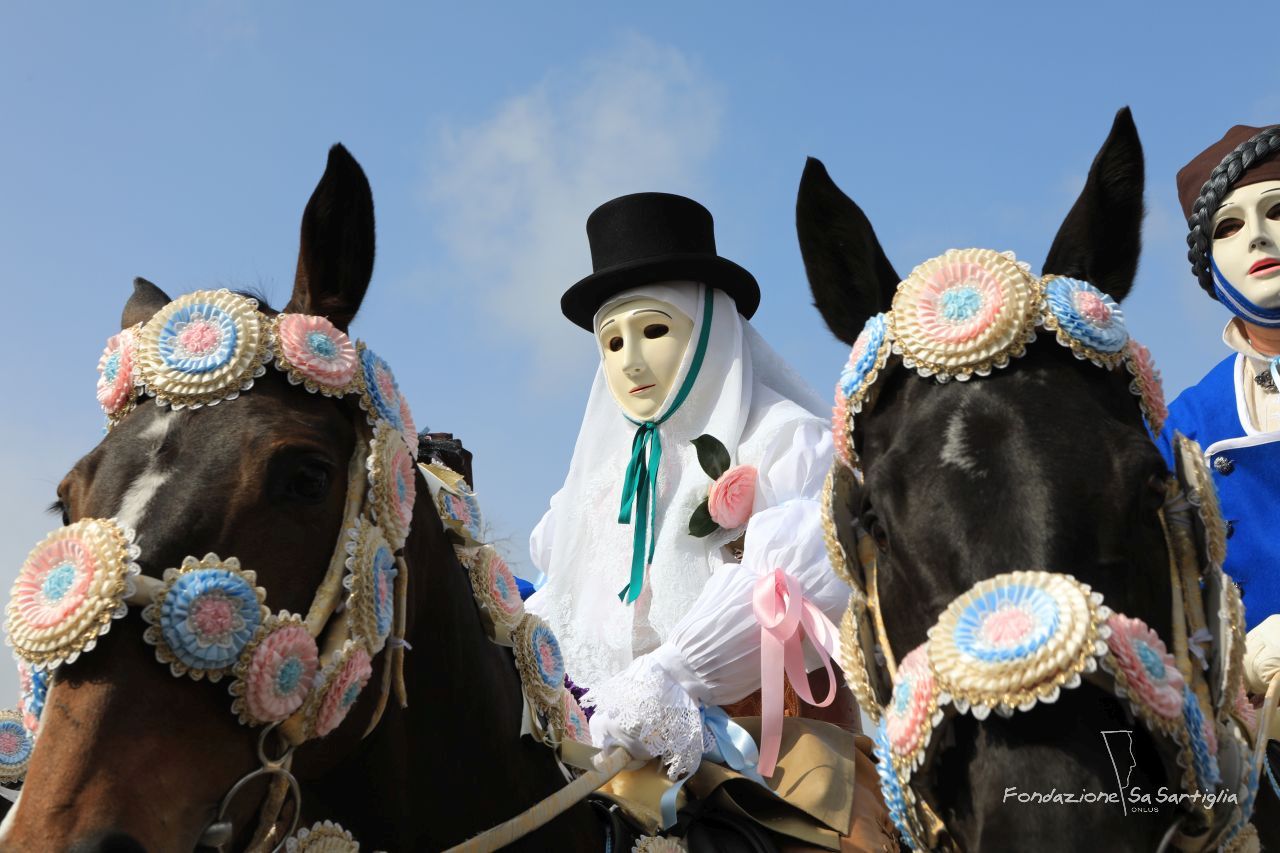
Masked horsemen galloping along a dirt-covered street, a sword pointed at a star hanging from a ribbon, drums and trumpets that make the walls shake. The Sartiglia of Oristano is the most famous horseback joust in Sardinia, and one of the oldest and most evocative Carnival festivals in the Mediterranean. It is run every year on the last Sunday of Carnival and on Shrove Tuesday.
In this guide we tell you about the history, rituals and characters of the Sartiglia of Oristano, the 2027 dates and how to plan your visit: where to stand, how to get a grandstand seat, where to stay and what to do nearby. At the end you will find 7 practical tips and links to the event page on Ajò Sardegna.
Contents
At Carnival, every prank goes.
Traditional Italian proverb
What is the Sartiglia
The Sartiglia is a race for the star: riders at full gallop try to pierce a metal star hanging above the course with a sword. But to reduce it to a contest would be a mistake. It is a collective ritual involving the whole city for weeks, with rules, gestures and characters handed down for centuries.
The name comes from the Castilian sortija, ring, which in turn comes from the Latin sorticula, linked to sors, fate. At its origin was the ring tilt, popular in European courts. In Oristano the ring became a star, and the fate is that of the farming year: according to tradition, the more stars are hit, the richer the harvest will be.
Sartiglia 2027: the dates
The Sartiglia follows the Carnival calendar, which changes every year depending on Easter. In 2027 the Sartiglia of Oristano 2027 is run on two days:
- Sunday 7 February 2027: the joust of the Gremio dei Contadini (Farmers’ Guild), under the protection of Saint John.
- Monday 8 February 2027: usually the day of the Sartigliedda, the young riders’ Sartiglia.
- Tuesday 9 February 2027: the joust of the Gremio dei Falegnami (Carpenters’ Guild), under the protection of Saint Joseph.
The official programme, with times, route and ticket information, is published by the Fondazione Sa Sartiglia on sartiglia.info. Check it a few weeks before you travel: times can change from year to year.
The day of the joust, hour by hour
Each year the official programme sets the exact times, but the day follows a pattern repeated for centuries. Knowing it helps you decide where to be and when to move.
- Morning: a procession of drummers and trumpeters accompanies the rider from the guild president’s house to the place of the dressing ceremony.
- Midday: the dressing ceremony begins, shown on the big screen in Piazza Eleonora.
- Early afternoon: the riders’ procession reaches Via Duomo and the race for the star begins.
- Mid-afternoon: after the remada, the festival moves to Via Mazzini for the pariglie.
- Sunset: return to the guild’s headquarters and the undressing, then celebrations in town until late evening.
The regional tourism portal, Sardegna Turismo, explains that the dressing begins at midday and the race on Via Duomo usually starts in the early afternoon. There is time for a quick lunch in between, but it is best to stay close to the course, because the centre fills up fast.
The gremi: guardians of the Sartiglia
The festival is organised by two gremi, the city’s ancient trade guilds: the Gremio dei Contadini, which runs on Sunday, and the Gremio dei Falegnami, which runs on Tuesday. Every year their leaders, the Oberaiu Majori and the Majorale, choose the rider who will lead the joust.
The chosen rider’s name is kept secret until 2 February, Candlemas, when it is announced and he receives a blessed candle. From that moment he prepares for the most important test of his life, because being chosen as leader of the joust is a great honour for the whole family.
Su Componidori, the faceless rider
The leader of the joust is called su Componidori and is the central figure of the Sartiglia. During the dressing ceremony he is transformed into a being halfway between human and divine, neither man nor woman: the androgynous mask, the veil and the black top hat erase his features. From that moment he may not touch the ground until the end of the day.
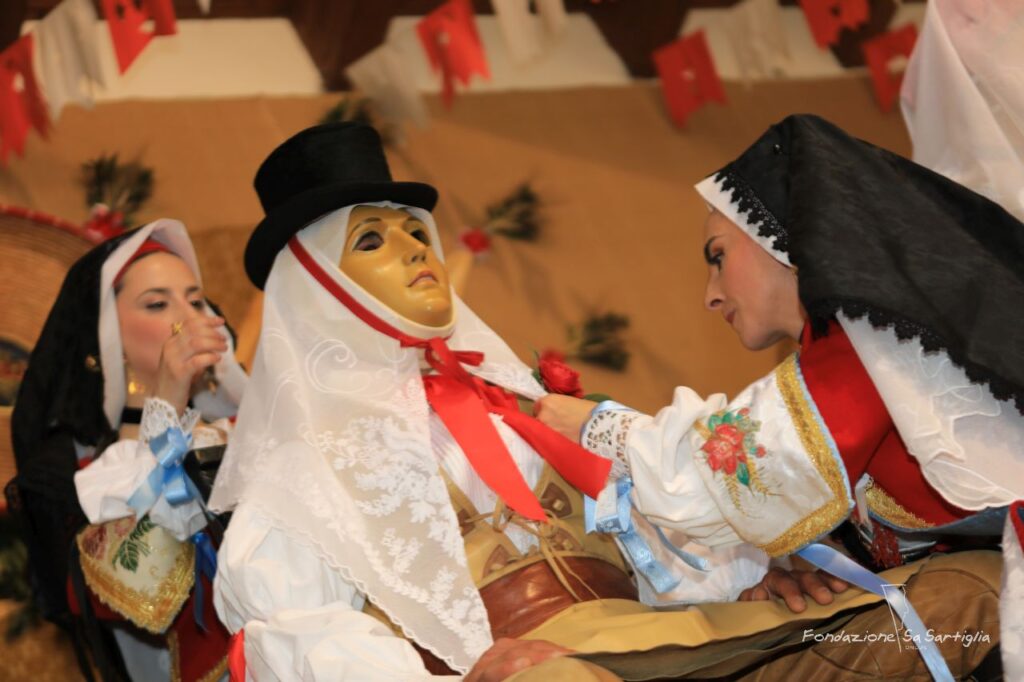
The dressing ceremony is one of the most moving moments of the festival. The rider, seated on a table, is dressed by the massaieddas, young women in costume led by sa massaia manna, in an almost religious silence. A white shirt with red ribbons on Sunday, pink and light blue on Tuesday; an earth-coloured mask for the Farmers, a white one for the Carpenters.
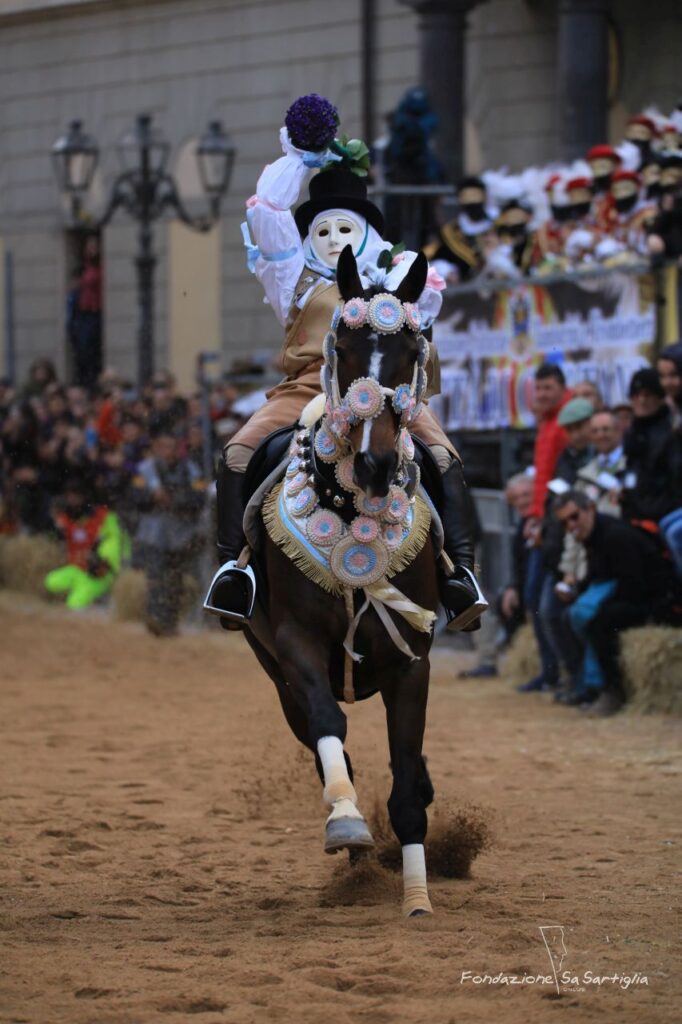
When the dressing is over, su Componidori mounts his horse straight from the table and rides out into the crowd, preceded by drummers and trumpeters. In his hand he holds sa pippia de maju, a sceptre of violets and periwinkles symbolising spring and fertility, with which he blesses the public along the way.
The race for the star
In the early afternoon the procession reaches Via Duomo, next to the cathedral, where the star hangs. Su Componidori crosses swords with his second, then spurs his horse to a gallop and is the first to try to hit the star. After him ride his two assistants and the riders to whom he has granted the honour of the sword.
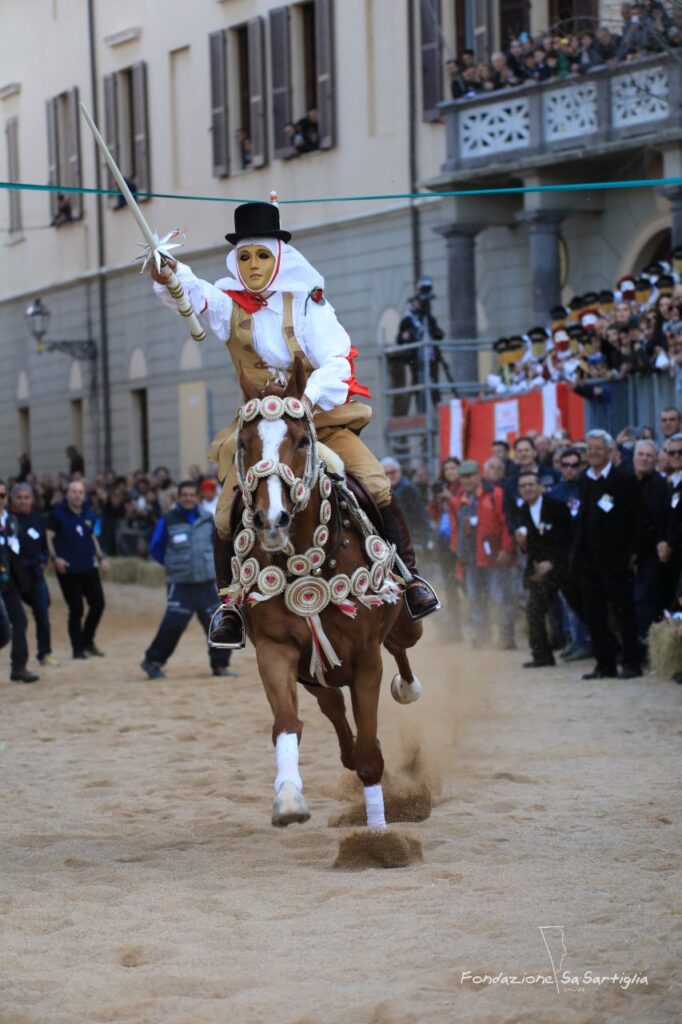
Whoever manages to pierce the star receives a small silver star and the applause of the whole street. At the end, su Componidori and his assistants get a second chance with su stoccu, a wooden lance. In all, over the two days, more than a hundred riders take part in the Sartiglia.
Sa remada: the blessing at full gallop
The race for the star ends with the most awaited moment: sa remada. Announced by trumpets and a drum roll, su Componidori launches his horse and lies back along its rump, blessing the crowd with the pippia de maju. It is the ultimate test of courage and balance, and the public watches holding its breath.
The pariglie: acrobatics on Via Mazzini
In the second part of the afternoon the festival moves to Via Mazzini, for the pariglie: teams of three riders on three horses side by side, at full gallop. Standing on the horses’ backs, they hold hands and form pyramids and acrobatic figures, sometimes with one rider balanced on the shoulders of the other two.
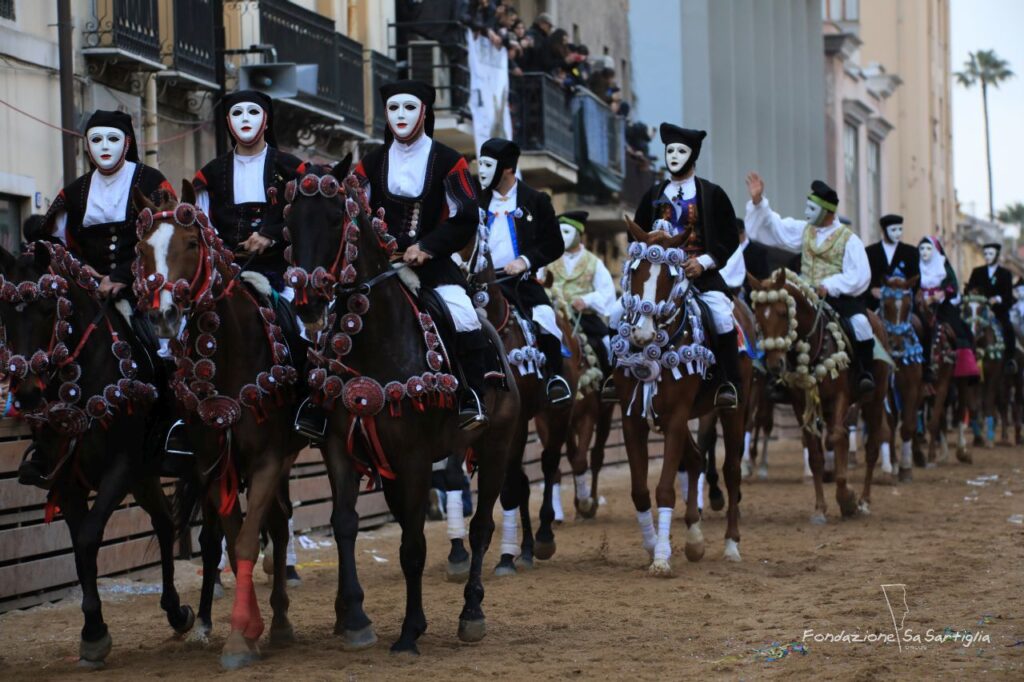
The pariglie are the most adrenaline-filled show of the day and require very long preparation: riders and horses train together for months. The first pariglia is always su Componidori’s, which closes the day with a second remada.
At sunset the procession returns to the guild’s headquarters for the undressing. To the sound of drums, su Componidori removes his top hat, his veil and finally his mask, and becomes a man again. The celebrations go on into the night with Vernaccia wine and zeppole, the fried sweets of the Oristano Carnival.
Sa Sartigliedda: the young riders’ Sartiglia
On Carnival Monday, Oristano usually hosts the Sartigliedda: a joust with the same rituals as the Sartiglia, run by young riders aged 5 to 17. It is a lovely occasion, more family-oriented and less crowded, and a great opportunity for children who want to see the festival up close.
Over the years the Foundation has also organised a summer Sartigliedda, in July, at Torre Grande, Oristano’s seaside district. If you are travelling in summer, check the calendar: it is a way to enjoy some of the joust’s atmosphere outside Carnival.
How to watch the Sartiglia of Oristano
The course is lined with barriers and grandstands. Along Via Duomo and Via Mazzini there are paid grandstands with numbered seats: they are the best way to see the race for the star and the pariglie clearly. Tickets are sold through the Foundation’s official channels and sell out fast, especially for Sunday.
If you do not have a grandstand seat, you can follow the festival from the free areas along the course, but you need to arrive very early. In Piazza Eleonora a big screen shows the dressing ceremony and other moments of the day, and it is the meeting point for those who enjoy the Sartiglia more informally.
7 tips for enjoying the Sartiglia
- 1. Book early: accommodation and grandstand seats sell out weeks ahead, especially for Sunday.
- 2. Arrive in the morning: for the dressing ceremony and to find parking outside the old town.
- 3. Dress in layers: in February the afternoon in the grandstand is long and it gets cold towards evening.
- 4. Respect the silence: during the dressing and the solemn moments the public stays quiet.
- 5. Never cross the barriers: the horses run at great speed; safety comes before the photo.
- 6. Try the zeppole: the fried Carnival sweets, best with a glass of Vernaccia.
- 7. Stay until evening: the undressing and the celebrations in town are as much part of the ritual as the race.
What to see in and around Oristano
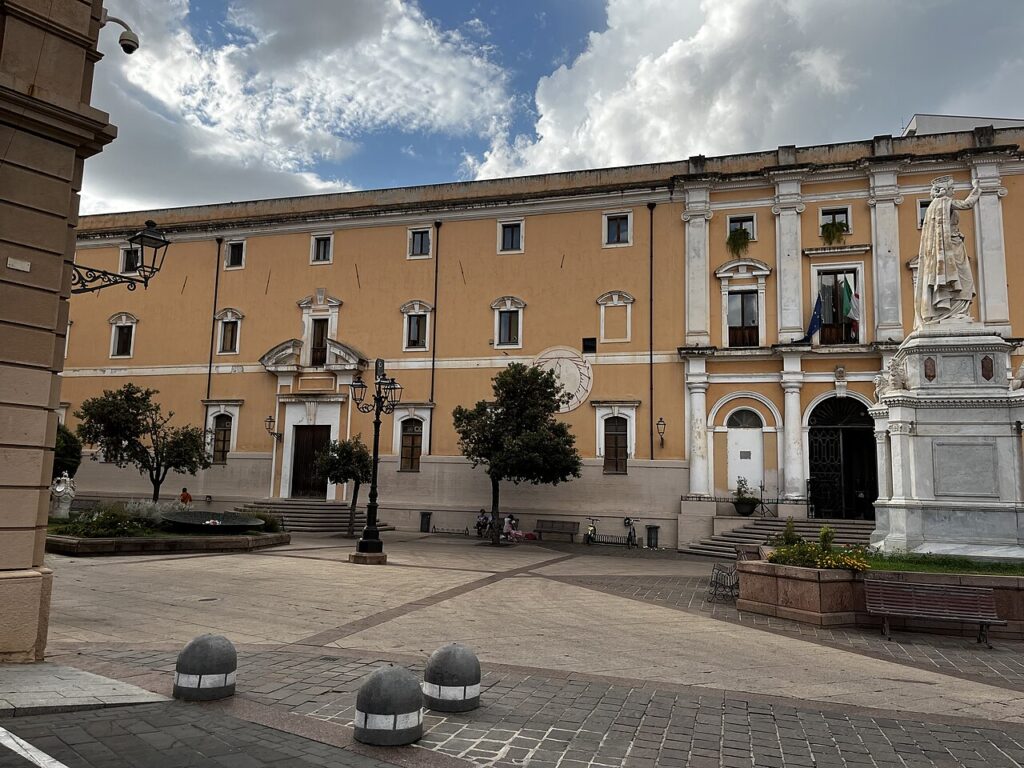
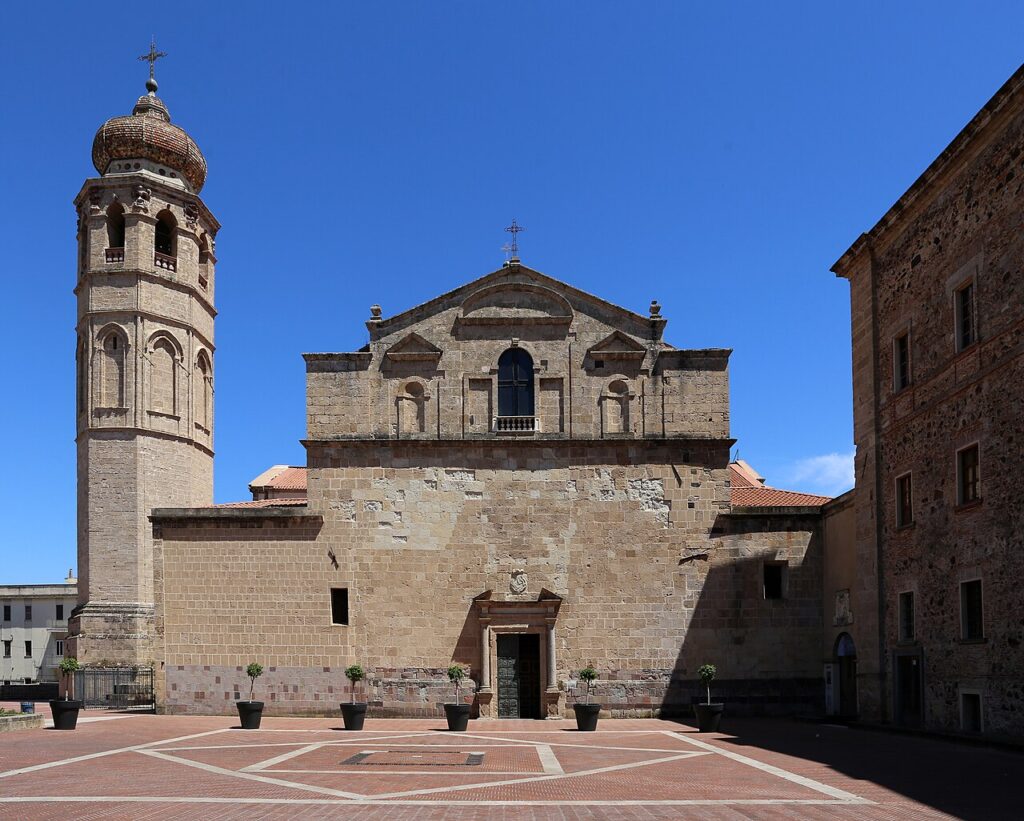
Oristano is worth a visit beyond the festival too. The old town has the Cathedral of Santa Maria Assunta, with its onion-domed bell tower, the Tower of Mariano II and Piazza Eleonora, dedicated to Eleonora of Arborea, the ruler who at the end of the 14th century promulgated the Carta de Logu, one of the first law codes in Europe written in a vernacular language.
A few kilometres away is Santa Giusta, with a splendid Romanesque basilica overlooking its lagoon. Towards the sea, the Sinis offers the ancient city of Tharros, in the municipality of Cabras, the quartz beaches of Is Arutas and lagoons full of flamingos, perfect for birdwatching even in winter.
Inland you can visit the sacred well of Santa Cristina in Paulilatino and discover all the archaeological sites and nuraghi in the area. In Milis and San Vero Milis citrus fruit is grown, while in Santu Lussurgiu the horse tradition is very strong.
In town and around it you will also find guided tours and experiences in culture and traditions. To taste Vernaccia di Oristano, one of the island’s oldest wines, look for the wineries and tastings of the Tirso valley.
Come back in spring: the Sinis from the sea
If the Sartiglia makes you fall in love with Oristano, come back in the warmer months to discover the gulf from the sea. Local skippers sail from the Oristano coast for aperitifs off Tharros, sunset dinners on board, trips to the island of Mal di Ventre or along the Costa Verde.
If you have more time, there are two-day sailing trips in the Sinis and cruises towards Bosa, Alghero and San Pietro Island: browse the sailing experiences. All the experiences in the area are on the Oristano and Sinis page.
Other horseback festivals and carnivals in Sardinia
The Sartiglia is not the only Sardinian festival where horses take centre stage. If you love it, put these events in your diary too:
- S’Ardia of San Costantino in Sedilo, 6 and 7 July 2027: a breakneck race around the sanctuary in Sedilo.
- The Feast of Sant’Efisio in Cagliari, from 1 to 4 May 2027, with ox carts, costumes and horsemen.
- The Sant’Antonio bonfires and the Mamuthones in Mamoiada, 16 and 17 January 2027, the start of the Barbagia Carnival.
To get to know the masks of Barbagia, visit Mamoiada and its Museo delle Maschere Mediterranee (Museum of Mediterranean Masks). And if you want to try riding yourself, the portal lists horse riding experiences and traditional festivals all over the island.
What people eat at Carnival in Oristano
Carnival in Sardinia is also a feast for the table. In Oristano the signature sweet is the zeppola, in Sardinian zippula: long, coiled fritters, often scented with orange zest and a dash of liqueur, fried to order and rolled in sugar. They are sold at stalls along the streets and in the pastry shops of the centre.
To drink, Vernaccia di Oristano is a must: an amber white wine, dry and fragrant, aged for a long time in barrels. In many villages on the island, on Shrove Tuesday, people also make broad beans with lard and pork rind, a hearty peasant dish marking the end of the festive days before Lent.
To discover other Sardinian flavours, try porceddu and seadas in the trattorias of the centre, along with malloreddus and culurgiones.
The Sartiglia with children
Children love the joust, but it requires some care. The crowds are big, the wait is long and the horses run just a few metres from the public. For little ones a grandstand seat is the safest and most comfortable choice; otherwise, pick a less crowded area and always hold their hands.
- Bring snacks, water and something to pass the time while waiting.
- Dress children warmly: the February cold is felt in the grandstands.
- Protect little ones’ ears from the drum rolls, which are very loud up close.
- For a first taste of the festival, Monday’s Sartigliedda is calmer and child-friendly.
Where to stay for the Sartiglia
During the Sartiglia, accommodation in central Oristano is the first to sell out. If you cannot find a room in town, look at the nearby villages: Cabras, Santa Giusta, Arborea and Riola Sardo are a few minutes’ drive away. Torre Grande, by the sea, is also a good base in the low season.
Getting there is easy: Oristano is on the SS131 highway, between Cagliari and Sassari, and has a station on the island’s main railway line. On festival days the centre is closed to traffic, so leave your car in the signposted car parks and walk to the course.
FAQ about the Sartiglia
When is the Sartiglia 2027?
On Sunday 7 February 2027 the Farmers’ Guild runs the joust, and on Tuesday 9 February 2027 the Carpenters’ Guild. On Monday there is usually the Sartigliedda of the young riders.
What does Sartiglia mean?
The name comes from the Castilian sortija, ring, and the Latin sorticula, linked to the word sors, fate. It was originally a ring tilt; in Oristano the riders try to pierce a star.
Do you need a ticket to watch the Sartiglia?
The grandstands along the course are paid and have numbered seats, while some areas along the barriers are free. In Piazza Eleonora a big screen shows the dressing ceremony and other moments of the day.
Who is su Componidori?
He is the leader of the joust, the rider chosen each year by the guild to lead the Sartiglia. During the dressing ceremony he puts on an androgynous mask and becomes a sacred figure: from that moment he does not touch the ground until the undressing.
Mark the dates and see the Sartiglia up close
The Sartiglia is one of those spectacles that stay with you forever: the gallop, the star, the silence of the dressing, the roar of the crowd. Mark the 2027 dates on the event page and plan your trip in good time. On Ajò Sardegna you will find festivals and events all year round, experiences in food and wine and local operators to contact directly, with no commission. If you have questions, write to Lia, the portal’s virtual assistant. Saddle up, and ajò!
