Things to do in Cabras
Things to do in Cabras, Sardinia: Tharros, the Giants of Mont'e Prama, San Salvatore and the Sinis quartz beaches like Is Arutas. Sea, history, food.
We are gathering the first experiences for this area. Check back soon, or tell us about an operator you know.
Cabras looks out over the waters of its great lagoon, a few kilometres from Oristano, and is the gateway to the Sinis peninsula on Sardinia's central-west coast. In a fairly small area it packs rare treasures: the Phoenician, Punic and Roman ruins of Tharros, the Giants of Mont'e Prama, the sanctuary village of San Salvatore and beaches made of quartz grains such as Is Arutas. It's a perfect choice if you love archaeology, the clear water of a marine reserve, birdwatching and seafood, and it works well for families too.
What to see in Cabras
Giovanni Marongiu Museum and the Giants of Mont'e Prama
In the village centre, the civic archaeological museum tells the story of the Sinis from the Neolithic to the Middle Ages, with finds from Tharros and from prehistoric villages on the lagoon shore. The most moving room holds the Giants of Mont'e Prama: large stone statues of archers, warriors and boxers, around two metres tall, alongside models of nuraghi (Bronze Age stone towers). They were found by chance by two farmers in 1974 and are among the oldest free-standing sculptures in the western Mediterranean; scholars still debate their exact date. Part of the collection is on display at the National Archaeological Museum in Cagliari.
Tharros and Capo San Marco
At the southern tip of the Sinis, Tharros was founded by the Phoenicians around the 8th century BC on a site already settled in Nuragic times. It became an important Punic port and later a Roman and Byzantine city. Today you can walk along its paved streets, past the baths, the tophet (sacred burial ground), temple remains and the two famous columns facing the sea. Above the site stands the Spanish tower of San Giovanni, and just beyond, the headland of Capo San Marco with its lighthouse offers one of the island's finest sunsets.
San Giovanni di Sinis
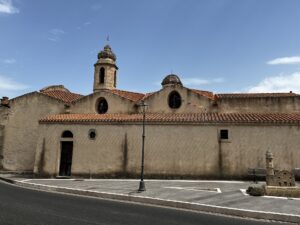
On the road to Tharros stands the church of San Giovanni di Sinis, of early Christian origin and considered one of the oldest in Sardinia: a small sandstone building, simple and atmospheric. Around it lies the hamlet of San Giovanni, with a few reed-thatched huts recalling the old fishermen's homes.
San Salvatore di Sinis
The village of San Salvatore is made up of cumbessias, low cottages once used by pilgrims, clustered around a small church. Beneath the church lies a very old underground sanctuary, with rock-cut rooms and Roman-era inscriptions and drawings. Almost empty for most of the year, the village served as a set for several western films in the 1960s.
The lagoon and the old town
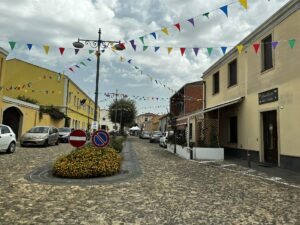
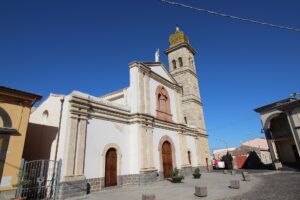
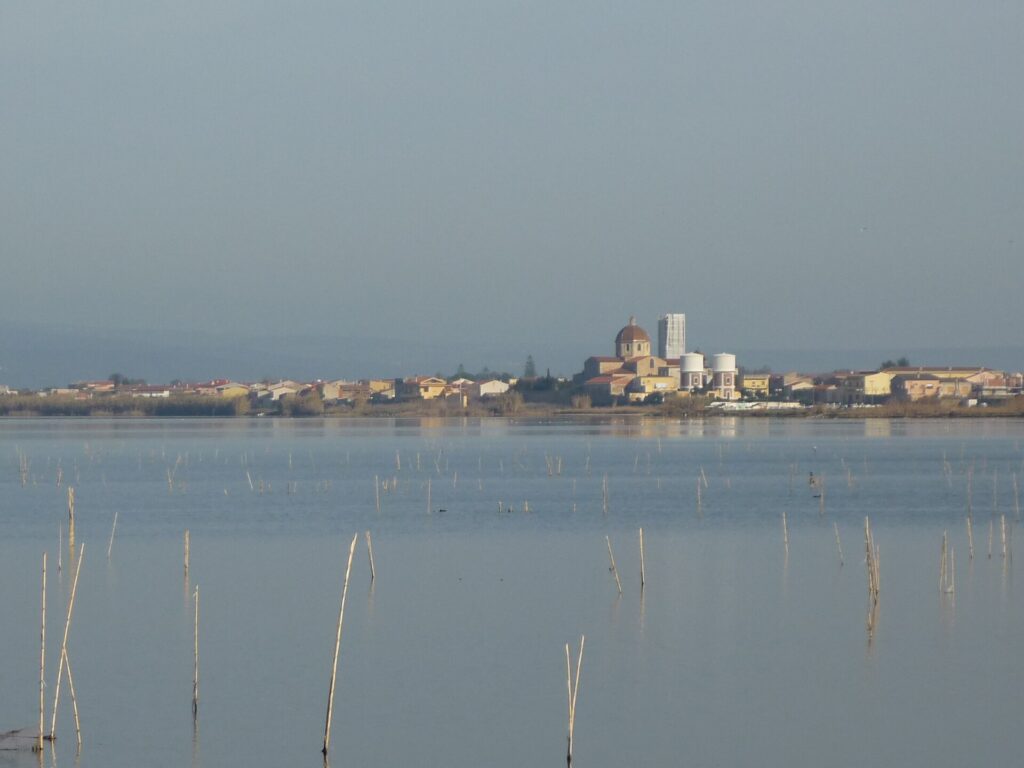
The Cabras lagoon, also known as Mari 'e Pontis, is one of the largest wetlands in Europe, home to pink flamingos, herons and many other birds. In the village, look out for the Baroque church of Santa Maria Assunta, the church of the Spirito Santo and the remains of the castle that often hosted the court of the medieval Giudicato (kingdom) of Arborea.
Things to do in Cabras
- Boat trips to the island of Mal di Ventre and along the coast of the "Sinis Peninsula – Mal di Ventre Island" marine protected area, with swimming stops in crystal-clear water.
- Snorkelling and diving over seagrass meadows and ancient wrecks.
- Guided tours of Tharros, the museum and the Nuragic sites of the Sinis, to really understand what you're looking at.
- Birdwatching on the Cabras and Mistras lagoons, especially in spring and autumn.
- Kayaking and SUP on calm days; windsurfing and kitesurfing on nearby beaches when the mistral blows.
- Cycling, hiking and horse riding on the flat roads of the Sinis, among fields, dunes and cliffs.
- Tastings of bottarga and Vernaccia di Oristano wine at local wineries.
Below you'll find the experiences offered by local operators in Cabras and the Sinis: choose your boat trip, archaeology tour or excursion and book it directly.
Beaches of Cabras
Is Arutas
The Sinis's most famous beach is made of tiny grains of white, pink and green quartz that look like grains of rice. The water is transparent and gets deep fairly quickly. Taking sand away is forbidden and fined: this natural heritage is already shrinking.
Mari Ermi and Maimoni
South of Is Arutas, Mari Ermi also has quartz sand and often turquoise water; Maimoni is wider, backed by dunes and with finer sand, good for families on calm days.
San Giovanni di Sinis
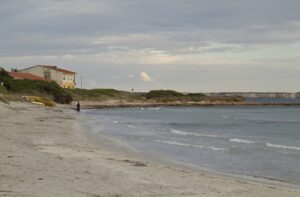
On the road to Tharros, a long beach of fine white sand, sheltered from the mistral and with shallow water: the best choice with small children, with views of the tower and the ruins.
History
People have lived around Cabras since the Neolithic, as shown by the village of Cuccuru is Arrius on the lagoon shore. In the Nuragic age the Sinis had dozens of nuraghi, and the Mont'e Prama sculptures belong to this era. The Phoenicians founded Tharros, which flourished under the Punics and Romans and was still inhabited in Byzantine times, when it served for a while as capital of the giudicato. Around the 11th century, as Tharros was abandoned, people moved inland and today's village was born, while the capital moved to Oristano. In the Middle Ages the castle of Cabras was a residence of the Arborea court; Aragonese and Spanish rule followed, bringing the coastal towers, and then the House of Savoy. For centuries village life revolved around fishing in the lagoon, still run today by fishermen's cooperatives.
What to eat and buy
Cabras is the capital of mullet bottarga, salted and dried grey mullet roe known as "Sardinian caviar": try it grated over pasta or sliced with olive oil and celery. Mullet is eaten grilled, stewed or as sa merca, boiled in salted water and wrapped in marsh herbs. Eels, clams, lagoon fish and almond sweets complete the table. To drink, there's Vernaccia di Oristano, an amber, aromatic wine from the Tirso valley. To take home: bottarga, Vernaccia and woven crafts; the tradition of the fassonis, small boats made of marsh reeds once used by lagoon fishermen, is still alive.
Festivals and traditions
The most famous event is the Corsa degli Scalzi ("Barefoot Run") on the first weekend of September: hundreds of men in white robes run barefoot for about 7 km carrying the statue of the Holy Saviour from Cabras to the village of San Salvatore, then run it back the next day. Tradition says the rite recalls the villagers who saved the statue from a Saracen raid. Religious feasts with processions and traditional singing take place throughout the year.
Around Cabras
- Oristano, about 10 minutes by car, with its old town, the Tower of Mariano and the cathedral.
- Putzu Idu and Su Pallosu (San Vero Milis), beaches loved by surfers and kiters.
- S'Archittu and the Montiferru, with a rock arch over the sea and the woods of Santu Lussurgiu.
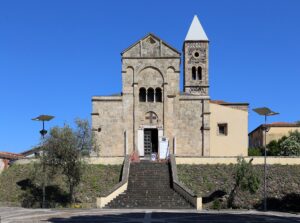
- Santa Giusta, with its beautiful Romanesque basilica and lagoon.
- Fordongianus, with its Roman baths, about 40 minutes away.
Getting there and when to go
The nearest airport is Cagliari-Elmas, about an hour and a quarter by car on the SS131; Alghero is about an hour and a half away and Olbia about two hours. The nearest railway station is Oristano. June to September is best for the sea; May and October are ideal for archaeology, birdwatching and uncrowded beaches. The Sinis is exposed to the mistral wind: on windy days pick San Giovanni di Sinis or sightseeing on land.
FAQ
How many days do you need for Cabras and the Sinis?
At least two: one for the museum, Tharros and San Giovanni di Sinis, one for the quartz beaches and San Salvatore. With three or four days, add a trip to Mal di Ventre and the surroundings.
Where can you see the Giants of Mont'e Prama?
At the Giovanni Marongiu Civic Museum in Cabras and at the National Archaeological Museum in Cagliari, which each hold part of the collection.
Is Cabras good for families?
Yes: San Giovanni di Sinis and Maimoni have shallow water, Tharros has easy paths and the lagoon's flamingos delight children.
Can you take sand from Is Arutas?
No. Removing sand, pebbles and shells from Sardinian beaches is illegal and punished with fines.