Things to do in Oristano
Things to do in Oristano, Sardinia: Mariano II tower, cathedral, the Sartiglia, Torregrande beach, Tharros and the Sinis, Vernaccia wine and bottarga.
We are gathering the first experiences for this area. Check back soon, or tell us about an operator you know.
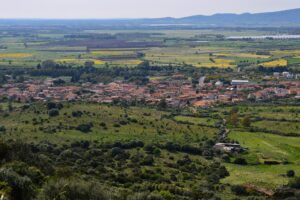
Oristano is the capital of the province of the same name in central-western Sardinia, set on the Campidano plain near the mouth of the Tirso river and the wide gulf that bears its name. It was the capital of the Judicate of Arborea, the realm of the judge-queen Eleonora, and is still an elegant, human-scale city of medieval towers, historic churches and lively squares. It's famous for the Sartiglia, one of the Mediterranean's most spectacular horseback festivals, and for its strategic location: within minutes you reach Torregrande beach, the Sinis peninsula with Tharros and its quartz-sand beaches, and lagoons full of flamingos. It's an ideal base for couples, families and curious travellers who want culture, sea and good food together.
What to see in Oristano
Piazza Eleonora and the old town
The heart of the city is Piazza Eleonora d'Arborea, dominated by a 19th-century statue of the judge-queen and lined with historic buildings, including the Palazzo degli Scolopi, now the town hall. From here, pedestrian streets for shopping and the evening stroll largely follow the layout of the medieval town.
The Tower of Mariano II
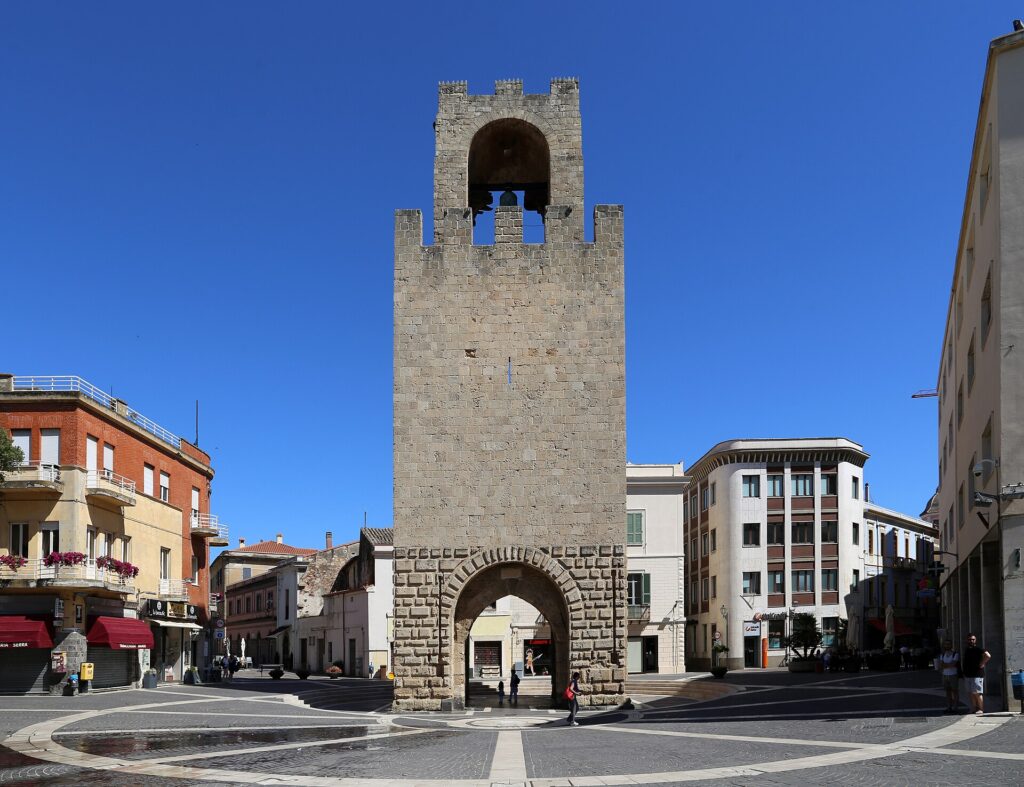
In Piazza Roma stands the Tower of Mariano II, also called San Cristoforo, built in 1290 as one of the main gates in the city walls. It is Oristano's symbol and a reminder of the power of the Judges of Arborea. On the eastern side of the old walls the smaller Portixedda tower also survives.
The Cathedral of Santa Maria Assunta
The cathedral was founded in the Middle Ages and later rebuilt in Baroque style. From the early phase, part of the apse and the bell tower remain, crowned by a dome covered in colourful majolica tiles that can be seen across the city. Inside, the Rimedio chapel holds medieval sculptures, and the church keeps the relics of Sant'Archelao, the city's patron saint.
San Francesco and Santa Chiara
The neoclassical 19th-century church of San Francesco holds a masterpiece: the Crocifisso di Nicodemo, a dramatic 14th-century wooden crucifix. Nearby, the church of Santa Chiara, founded in 1343 by Judge Pietro III, is a rare Gothic building in the city, with a single nave and square apse.
Museums
The Antiquarium Arborense displays archaeological finds from the area, many from Tharros, from prehistory to Roman times. The Pinacoteca Carlo Contini is devoted to modern and contemporary art.
Things to do in Oristano
Oristano is the perfect starting point for exploring the west coast. At Torregrande, minutes from the centre, the gulf is great for windsurfing, kitesurfing and sailing, with the marina as a base for boat trips. Further north, on the Sinis peninsula, you can hike among lagoons, dunes and beaches of quartz grains, snorkel in the protected marine area and join guided tours of Tharros.
- Birdwatching at the Cabras, Santa Giusta and Mistras lagoons, home to pink flamingos and herons.
- Cycling on flat roads between town, seafront and countryside.
- Horse riding: equestrian culture runs deep here, and not only at Sartiglia time.
- Wineries and tastings of Vernaccia in the Tirso valley.
- Old-town tours in the footsteps of Eleonora d'Arborea.
Below you'll find experiences offered by operators in and around Oristano: choose yours and book with people who have always known this city and its sea.
Beaches of Oristano
Torregrande
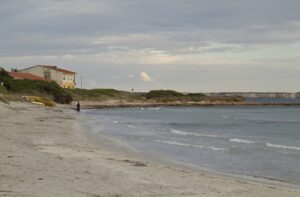
The city's beach is Torregrande, about 7 km from the centre: a long stretch of golden sand with facilities and a gently shelving seabed, ideal for families. It takes its name from the Torre Grande, built in the 16th century to guard the landing place and the mouth of the Tirso and considered the largest coastal tower in Sardinia. The seafront, lined with bars, comes alive on summer evenings.
The Sinis beaches
About half an hour away by car, in the municipality of Cabras, lie some of the island's best-known beaches: Is Arutas and Mari Ermi, with their grains of white, pink and green quartz, and San Giovanni di Sinis, next to Tharros. Further north, Putzu Idu and Is Arenas are favourites with surfers and families.
History
The area was inhabited in the Nuragic age, but the great ancient city here was Tharros, Phoenician, Punic and then Roman, on Capo San Marco. As Tharros was gradually abandoned in the early Middle Ages, people moved inland: in 1070 the archbishop moved his seat to the new town, and Judge Orzocco made it the capital of the Judicate of Arborea. Oristano's golden age came in the 14th century under Mariano IV and Eleonora d'Arborea, who ruled the Judicate and issued the Carta de Logu, a law code in Sardinian that stayed in force until 1827. After years of war with the Crown of Aragon, the Judicate was sold in 1420; the city became capital of the Marquisate of Oristano and, from 1479, a royal city. Later centuries brought mixed fortunes, with malaria and economic hardship, until 20th-century land reclamation. In 1974 it became a provincial capital.
What to eat and buy
Oristano's cooking brings together sea, lagoon and countryside. The lagoons supply grey mullet and the famous Cabras bottarga (cured mullet roe), as well as mrecca, boiled, salted mullet wrapped in marsh herbs. Also try eel, local cheeses and traditional sweets such as mostaccioli, diamond-shaped biscuits typical of the city. The signature wine is Vernaccia di Oristano, a dry, amber white with intense aromas and Sardinia's first DOC wine, superb as an aperitif or a sipping wine. To take home: Vernaccia, bottarga, sweets, ceramics and handmade textiles.
Festivals and traditions
The Sartiglia
The most famous festival is the Sartiglia, run on the last Sunday and Tuesday of Carnival. It is organised by the gremi, ancient guilds: the farmers on Sunday, the carpenters on Tuesday. The star is Su Componidori, the masked rider who leads the joust and who, once dressed, must not touch the ground until the festival ends. At full gallop, sword in hand, he tries to spear a star hanging from a ribbon: the more stars the riders win, the better the year will be. The afternoon ends with the pariglie, breathtaking stunts by riders standing on galloping horses. During the dressing ceremony and the race, the city lives days of intense emotion, with drums, trumpets and traditional costume.
Other festivals
The patron saint is Sant'Archelao, venerated in the cathedral. Nearby, in early September, the Corsa degli Scalzi ("Barefoot Race") in Cabras carries the statue of San Salvatore at a run to the village of San Salvatore di Sinis, while Santa Giusta celebrates its patron saint in mid-May.
Nearby
- Tharros and Capo San Marco: the ruins of the ancient city by the sea, about 25 minutes away.
- Cabras: the lagoon, bottarga and the museum with the Giants of Mont'e Prama, Nuragic stone statues unique in the world.
- Santa Giusta: a splendid 12th-century Romanesque basilica, a few kilometres away.
- Santa Cristina at Paulilatino: one of Sardinia's finest Nuragic sacred wells, about half an hour away.
- Arborea: the 1928 new town, with beach and pine wood.
Getting there and when to go
Oristano lies on the SS131 Carlo Felice, the island's main road, and on the railway between Cagliari and northern Sardinia. The nearest airport is Cagliari-Elmas, about an hour by car or train; Alghero is about an hour and a half away. The most convenient ports are Cagliari, Porto Torres and Olbia. May to October is best for the sea; Carnival, with the Sartiglia, is the most thrilling time to feel the city's soul, while spring and autumn are ideal for Tharros, the lagoons and strolls through the centre.
FAQ
How many days do you need in Oristano?
One day covers the old town; with Torregrande, the Sinis and Tharros, stay at least three or four days.
Does Oristano have a beach?
Yes: Torregrande, about 7 km away, has a long sandy beach, and the Sinis beaches are about half an hour away.
When is the Sartiglia?
On the last Sunday and Tuesday of Carnival, so between February and early March depending on the year.
Is Oristano good for families?
Yes: the centre is flat and easy to explore, and Torregrande beach has shallow water and facilities.