Things to do in Laerru
Things to do in Laerru, Sardinia: Monte Ultana archaeological park, Bopitos tomb, Su Coloru cave, Santa Margherita church and briar pipes.
We are gathering the first experiences for this area. Check back soon, or tell us about an operator you know.
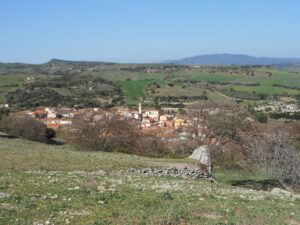
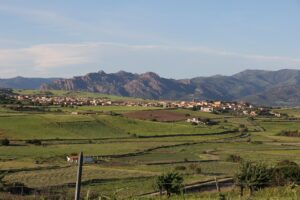
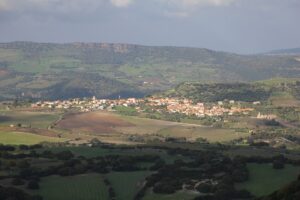
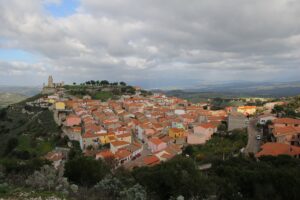
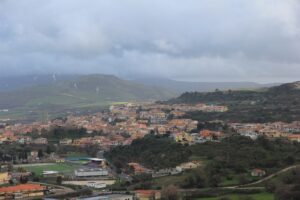
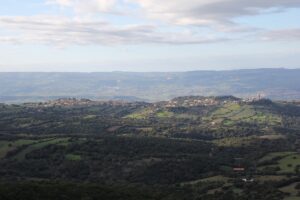
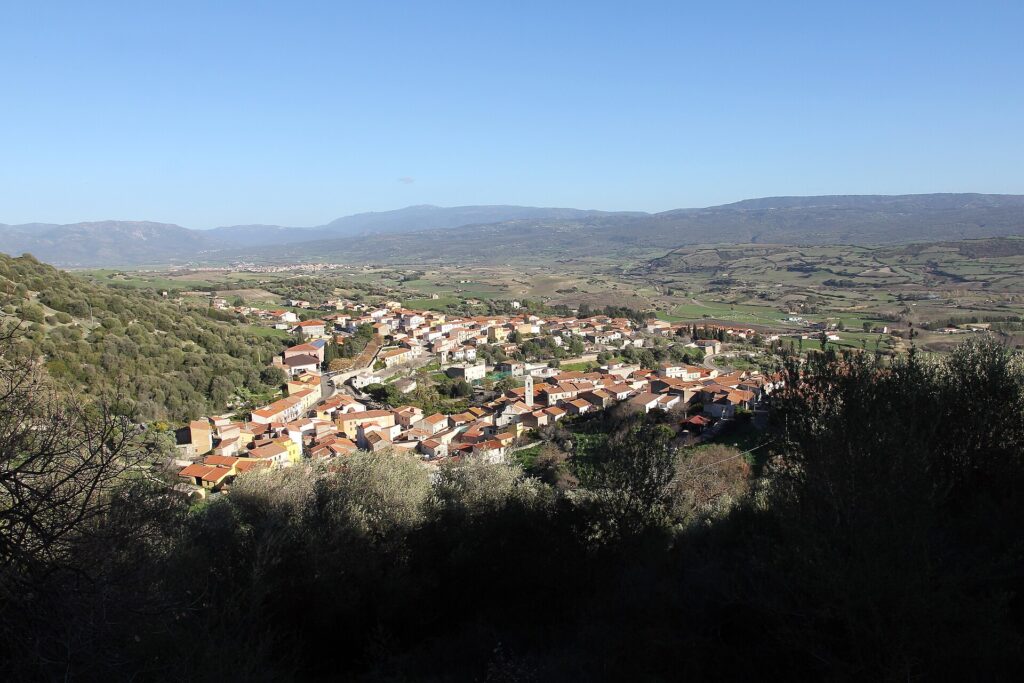
Laerru is a village of around 800 people in the heart of Anglona, set on a hillside at the edge of the Tanca Manna plateau, about 30 km from Castelsardo. Its name is thought to come from the Latin alaternus, the Italian buckthorn, an evergreen shrub common here. It is known worldwide for its briar pipes, and on Monte Ultana it has an archaeological park spanning prehistory to early Christian times. Perfect for lovers of caving, archaeology and fine craftsmanship.
What to see in Laerru
Church of Santa Margherita
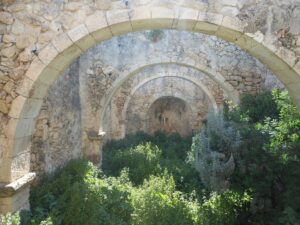
The parish church was built in the 16th century in late Gothic style and later altered; inside it has two Aragonese Gothic chapels. The village also has the Baroque 17th-century Rosario oratory and some 19th-century mansions.
Monte Ultana archaeological park
Monte Ultana brings together many eras: fossil trunks of a petrified forest, domus de janas (rock-cut tombs), a giants' tomb, a nuragic temple, a large nuraghe surrounded by its village and a 4th-century Christian tomb. The highlight is the Bopitos tomb, a megalithic burial from the 3rd millennium BC.
Rio Altana and Santa Vittoria
Along the Rio Altana, the area's earliest human traces were found, dating to the Lower Palaeolithic. At Santa Vittoria, not far from the village, are the ruins of a castrum and Roman tombs.
Things to do in Laerru
The Tanca Manna plateau is full of springs and caves: the most famous is Su Coloru, one of Sardinia's largest karst caves, to be explored only with experienced cavers. Rugged hills and green plains make the area great for hiking and cycling to find nuraghi, some very well preserved. A visit to a workshop making Sardinian briar pipes is well worth it. Browse the tours and experiences offered by local operators just below.
History
Inhabited since the Lower Palaeolithic and then in pre-nuragic, nuragic and Roman times, in the Middle Ages the village, once called Laerro, belonged to the Giudicato of Torres, one of Sardinia's medieval kingdoms. It then came under Doria influence and, around 1450, passed to the Aragonese. In the 18th century it joined the principality of Anglona and was freed from feudal rule in the 19th century.
What to eat and buy
The economy is based on farming: cereals, fruit, vines, sheep and cattle. The souvenir to take home is a Sardinian briar pipe, the craft that made Laerru famous worldwide.
Festivals and traditions
- San Giovanni, in late June, with the traditional feast of boiled mutton.
- Santa Margherita, the patron saint, in July.
Nearby
- Perfugas, with the Predio Canopoli sacred well and the archaeological and palaeobotanical museum.
- Martis, with San Pantaleo, the Carrucana petrified forest and the Triulintas waterfall.
- Bulzi, with the Romanesque church of San Pietro del Crocifisso.
- Castelsardo, a medieval seaside village, about 35 minutes away.
Getting there and when to go
Laerru is about 50 minutes by car from Sassari. The nearest airports are Olbia, about an hour and a quarter away, and Alghero-Fertilia, just over an hour; the ports are Porto Torres and Olbia. The station is on the tourist Trenino Verde line. The nearest beaches are at Valledoria and Castelsardo. Spring and autumn are ideal for hikes and archaeological visits.
Frequently asked questions
How long do I need for Laerru?
A couple of hours for the village; another half day for Monte Ultana with a guide.
Can I visit the caves of Laerru?
The karst caves are for cavers: visit them only with experienced guides.
Why is Laerru famous for pipes?
Thanks to a craft tradition that works Sardinian briar into fine pipes appreciated around the world.