Things to do in Tergu
Tergu in Anglona, Sardinia: the Romanesque basilica of Nostra Signora di Tergu, Monte Elias, nuraghi, the Lunissanti procession and nearby beaches.
We are gathering the first experiences for this area. Check back soon, or tell us about an operator you know.
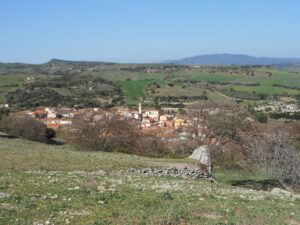
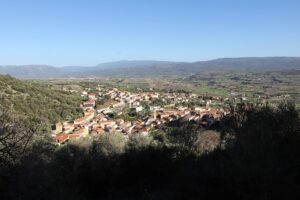
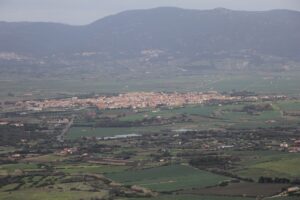
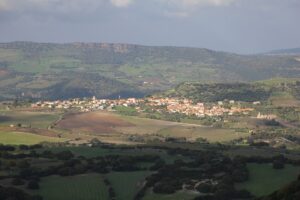
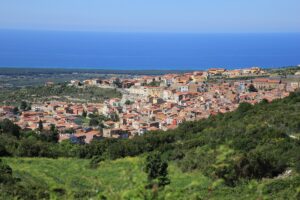
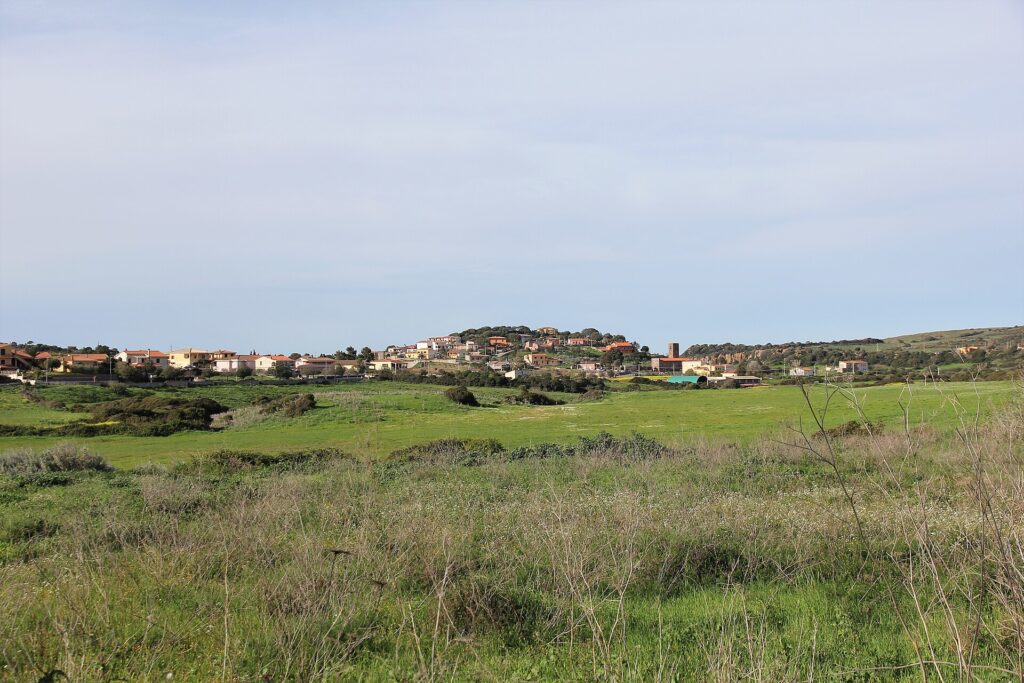
Tergu (Zelgu in Sassarese dialect) is a small farming village of around 600 people in Anglona, north-west Sardinia, about 10 minutes' drive from Castelsardo. Its name is tied to one of the masterpieces of Sardinian Romanesque, the basilica of Nostra Signora di Tergu, set in open countryside. It is the right place if you want medieval art, archaeology and quiet, with the sea of the Gulf of Asinara close by.
What to see in Tergu
Nostra Signora di Tergu
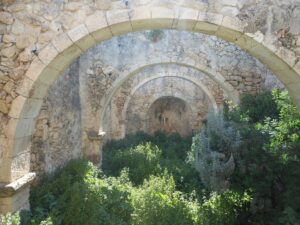
The church was built in the second half of the 11th century by the rulers of the Judicate of Torres and enlarged in the following century, when it became a Benedictine priory dependent on Montecassino. It was one of the island's leading religious centres. The façade alternates red-violet trachyte with white limestone for a striking colour effect, and the ruins of the monastery stand alongside.
Monte Elias
On top of this hill, a few minutes from the village, is a megalithic fortification later reused by the Romans. The view opens over the eastern side of the Gulf of Asinara.
Nuraghi and necropolis
The countryside holds about fifteen nuraghi (Bronze Age stone towers), including the three-lobed Tudderi and Riu Riu. At Monte Rizzu, near the Colbu nuraghe, a Roman necropolis from the 1st century BC to the 1st century AD has been found, with stelae, urns and grave goods.
Things to do in Tergu
Hills and farmland make for easy walks, bike rides and horseback routes between nuraghi and churches. Spend a morning on Romanesque art and an afternoon on the beaches of Castelsardo or Valledoria, or climb Monte Elias at sunset. Take a look below at the experiences offered by local operators and discover Anglona with people who really know it.
History
The area has been inhabited since Nuragic times and was also settled by the Romans. In the Middle Ages it belonged to the Judicate of Torres, and the Benedictine monastery made it a major religious centre, mentioned in Montecassino records from 1122. For centuries the land was split between Castelsardo, Osilo and Nulvi; Tergu, once part of Castelsardo, became an independent municipality in 1980.
What to eat and buy
Food is the farming and shepherding cuisine of Anglona: cheese, meat and homemade bread. The village is known for baskets woven from dried dwarf palm, a craft typical of this stretch of the north coast.
Festivals and traditions
- Lunissanti: on the Monday of Holy Week, Castelsardo's confraternities set off at dawn from the church of Santa Maria and walk to Nostra Signora di Tergu; they return at night by torchlight, singing ancient polyphonic chants.
- Feasts of Nostra Signora di Tergu, traditionally on 1 May and 8 September.
Nearby
- Castelsardo, with the Doria castle, the weaving museum and the Elephant Rock.
- Sedini, with the Domus de Janas La Rocca.
- Bulzi and the church of San Pietro delle Immagini.
- Valledoria and San Pietro a Mare beach.
Getting there and when to go
Tergu is about 35 km from Sassari. The nearest airports are Alghero, about 50 minutes' drive, and Olbia, about an hour and a half; the handiest port is Porto Torres, about half an hour away. The closest beaches are Lu Bagnu and Castelsardo's marina, about 15 minutes away. Holy Week is the most moving time to visit; spring and early autumn are perfect for the countryside without the heat.
FAQ
How long do I need for Tergu?
A couple of hours cover the basilica and Monte Elias; spend the rest of the day in Castelsardo.
Does Tergu have a beach?
No, the village is inland, but the beaches of Castelsardo and Valledoria are about 15–20 minutes by car.
When is the Lunissanti procession?
On the Monday of Holy Week, so the date changes every year with Easter.