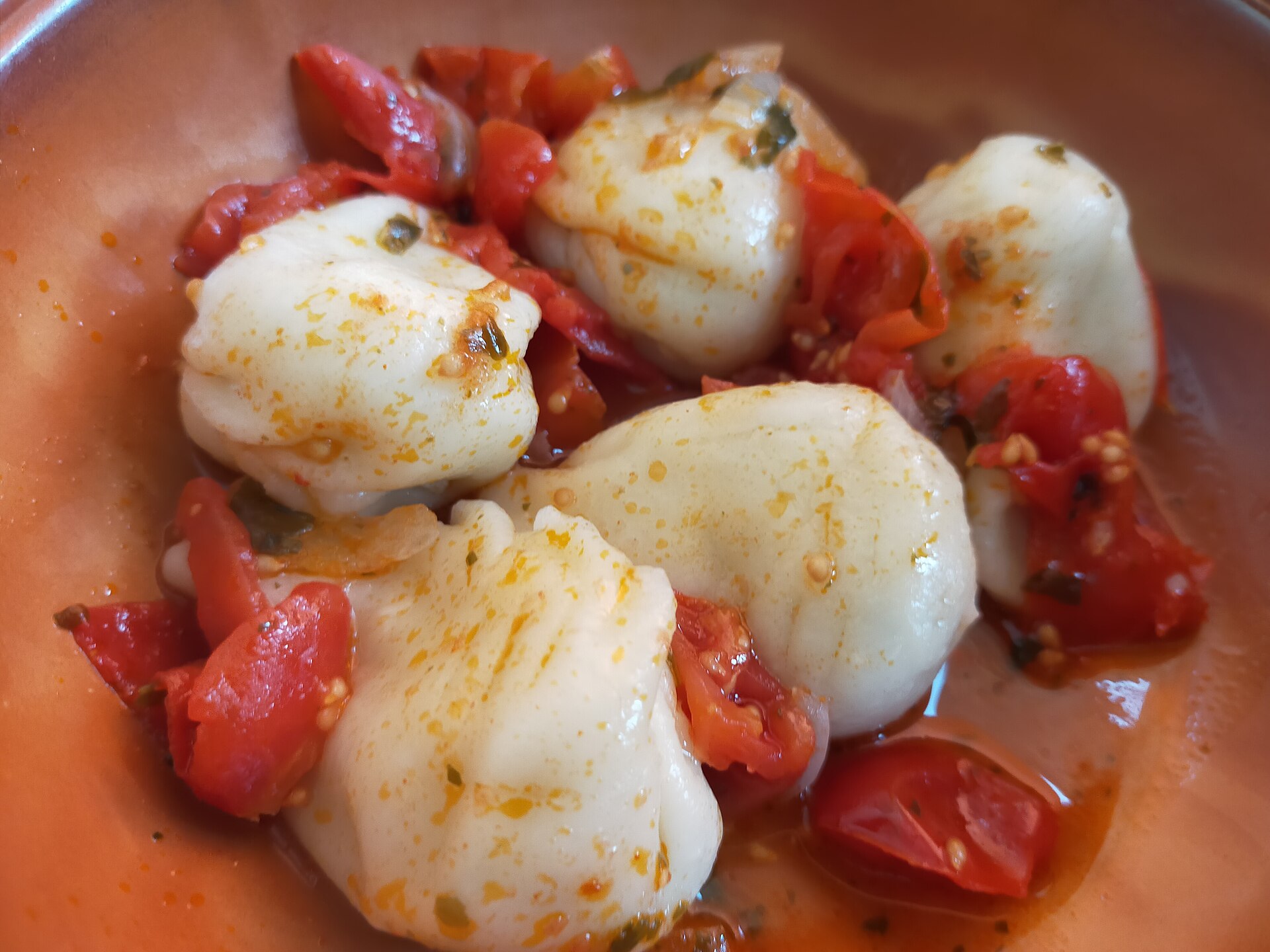
Culurgiones are the signature dish of Ogliastra: potato, cheese and mint ravioli sealed by hand with a pleat that looks like an ear of wheat. They were born in the frugal kitchens of shepherds and farmers, between the Gennargentu mountains and the sea at Tortolì, and in many homes they are still made together, around the table, on feast days.
In this guide you will find the original culurgiones recipe in 7 steps, with quantities for four people, the secret of the wheat-ear fold, the traditional sauces and the mistakes to avoid. Then we take you to Ogliastra, to the villages where culurgiones are really eaten, with experiences you can book on Ajò Sardegna directly with local people, with no commission.
Contents
What are culurgiones
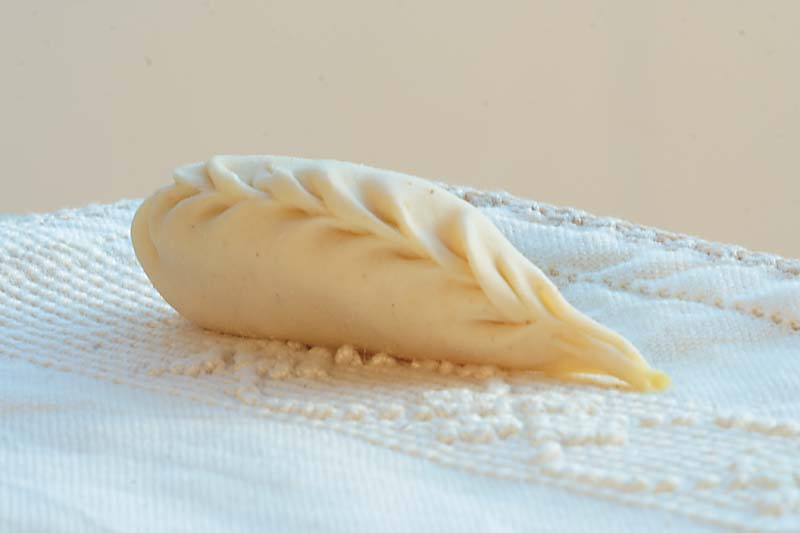
Culurgiones (in Sardinian also culurgionis, culurjones or culligionis, depending on the village) are a filled fresh pasta shaped like a little parcel. The dough is made from durum wheat semolina and flour; the filling is a soft mixture of potatoes, cheese, fat, garlic and mint. The shape is unmistakable: a small, plump pouch, closed with a zigzag seam that looks like an ear of wheat.
Since 2016 the Ogliastra version has been protected by the European Union as Culurgionis d’Ogliastra PGI, under Implementing Regulation (EU) 2016/1729. In other parts of Sardinia the same name refers to different ravioli, for example filled with ricotta: that is why, when people talk about potato culurgiones, they almost always add “d’Ogliastra”.
History and tradition of Sardinian potato ravioli
Culurgiones are a dish born of necessity: potatoes from the vegetable garden, cheese from the sheep and goats, a little fat and aromatic herbs from the fields. The PGI specification describes them as an expression of the agro-pastoral culture of Ogliastra, where fresh pasta was made at home and the folding technique was passed down from mother to daughter.
Some scholars link the wheat-ear shape to ancient farming rituals connected with fertility and the harvest. It is a hypothesis, but it explains why these Sardinian potato ravioli were made above all at important moments of the year: feasts, weddings, family celebrations. Even today, in the villages, some people see them as a wish for abundance.
Closing a culurgione is a gesture you learn by watching. That is why, in many villages in Ogliastra, making them is a group activity: the women of the house, the neighbours, the grandchildren learning. If you ever get the chance to join in, do not say no.
Cooking is a little rascal: it often drives you to despair, but it also gives you pleasure.
Pellegrino Artusi, La scienza in cucina e l’arte di mangiar bene (Science in the Kitchen and the Art of Eating Well, 1891), own translation
Culurgiones ingredients for 4 people
These are the quantities for a home recipe that respects the ingredients of the PGI specification. They usually make about fifty culurgiones, depending on size.
For the dough
- 300 g (about 1¾ cups) finely milled durum wheat semolina.
- 200 g (about 1⅔ cups) soft wheat flour (plain or all-purpose).
- About 250 ml (1 cup) lukewarm water.
- 1 tablespoon lard, or extra virgin olive oil.
- A pinch of salt.
For the filling
- 1 kg (2.2 lb) yellow-fleshed potatoes.
- 150 g (5 oz) grated aged pecorino, ideally partly Pecorino Sardo or Fiore Sardo.
- 100 g (3.5 oz) fresh sheep’s or goat’s cheese; in Ogliastra casu axedu is also used.
- 2 garlic cloves and a bunch of fresh mint.
- 3–4 tablespoons extra virgin olive oil, or a little lard.
The culurgiones recipe in 7 steps
The culurgiones recipe is not difficult, but it takes time: allow at least two hours, not counting the resting time for the filling. They are best made in company, as people do in Ogliastra.
- 1. Boil the potatoes: cook them in their skins in salted water, then peel and mash them while still hot.
- 2. Make the filling: add the cheeses, the garlic (very finely chopped or gently fried in the oil), the torn mint and the oil. Taste and adjust the salt.
- 3. Let it rest: leave the filling in the fridge for a few hours, or until the next day: it firms up and is easier to work.
- 4. Knead the dough: work the semolina, flour, salt, lard and water into a smooth, elastic dough. Cover and let it rest for half an hour.
- 5. Roll and cut: roll the dough out thinly, a couple of millimetres, and cut out discs of 7–8 centimetres (about 3 inches).
- 6. Fill and close: put a ball of filling in the centre of each disc and close it with the wheat-ear fold, as explained below.
- 7. Cook: drop them into plenty of salted water at a gentle boil and drain them a few minutes after they float to the surface.
How to choose potatoes, cheese and mint
With so few ingredients, quality makes all the difference. The potatoes should be floury and yellow-fleshed, and mashed while still hot, never blended: a blender makes them gluey. If they are very watery, dry them in a pan for a few minutes before adding the rest.
For the cheese, the rule in Ogliastra families is balance: an aged, savoury pecorino for character and a fresher or tangier cheese for softness. If you cannot find casu axedu, use a young pecorino, knowing the flavour will be slightly sweeter.
- Potatoes: floury, boiled in their skins so they do not absorb water.
- Pecorino: aged, finely grated, added a little at a time as you taste.
- Mint: fresh, torn by hand at the last moment, never dried.
- Fat: extra virgin olive oil for a lighter version; lard or tallow for the older one.
Variations from village to village
In Ogliastra they say every household has its own recipe, and it is no exaggeration. The PGI rules leave plenty of room: mint, garlic, basil and onion are optional, and the ratio of potato to cheese changes from family to family. Some prefer a more savoury filling, others want it more delicate and fragrant.
The size changes too: in some villages the Sardinian potato ravioli are small and densely pleated, in others larger and plumper. The fat tells a story as well: the oldest recipes used lard or tallow, while today many people choose extra virgin olive oil. Tasting them in different villages is the best way to see how alive this tradition is.
The secret of the wheat-ear fold
Closing them is the part that scares people most, but with a little practice it becomes natural. In Sardinian it is often called sa spighitta, “the little ear of wheat”. Here is how to do it:
- Hold the disc with the ball of filling in the palm of your left hand, slightly cupped.
- With the thumb and index finger of your right hand, pinch the dough at the bottom, the starting point.
- Fold one flap over the other, alternating right and left, pushing the filling inwards with each fold.
- When you reach the top, close with a firm pinch, like a little knot.
Do not worry if your first culurgiones come out crooked: it happens to everyone. What matters is that they are well sealed, so they do not open during cooking. The trick is not to overfill them and to keep the dough covered at all times, because once it dries out it will not seal.
How to serve culurgiones: sauces and toppings
The classic topping is a fresh tomato sauce with basil, finished with a sprinkling of grated pecorino. It is simple and lets the filling speak, with the mint coming through in every bite.
- With tomato: a light sauce, basil and pecorino, the everyday version.
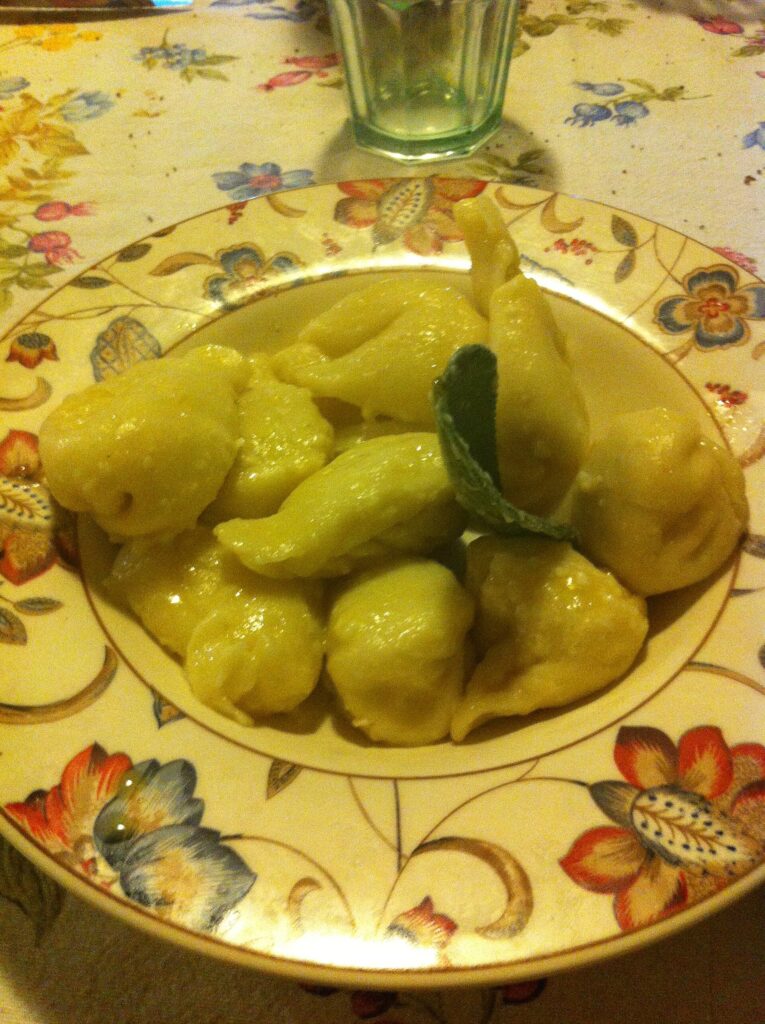
- Butter and sage: for a more delicate flavour that brings out the potato.
- With ragù: on feast days, with a meat or sausage sauce.
- Fried or pan-roasted: the next day, leftovers are browned in a pan until crisp.
To drink, the natural choice is a local red: Ogliastra has the Cannonau of Jerzu, one of the best known on the island. Look for the wineries and tastings open to visitors.
Mistakes to avoid
- Filling too soft: if it is damp it will not seal well; let it rest in the fridge.
- Too much mint or garlic: they should add fragrance, not overpower the cheese.
- Thick dough: it turns rubbery in the mouth; roll it thin but strong.
- A rolling boil: it can burst them open; a steady but gentle boil is better.
- Piling them up: lay them out on a floured tray, spaced apart, until you cook them.
Culurgiones can also be frozen raw: place them spaced apart on a tray in the freezer and, once hard, transfer them to a bag. Cook them straight from frozen, for a few minutes longer.
Where to eat culurgiones in Ogliastra
The PGI specification names Ogliastra as the production area, together with, by tradition, some neighbouring villages such as Esterzili, Sadali and Escalaplano. Here culurgiones are on the menus of trattorias, farm stays and restaurants, and in many villages you can buy them fresh from pasta workshops. For a driving route through Lotzorai, Villagrande Strisaili, Osini, Ulassai and Jerzu, there is also the itinerary I culurgiones pieni di gusto (Culurgiones full of flavour) from Sardegna Turismo.
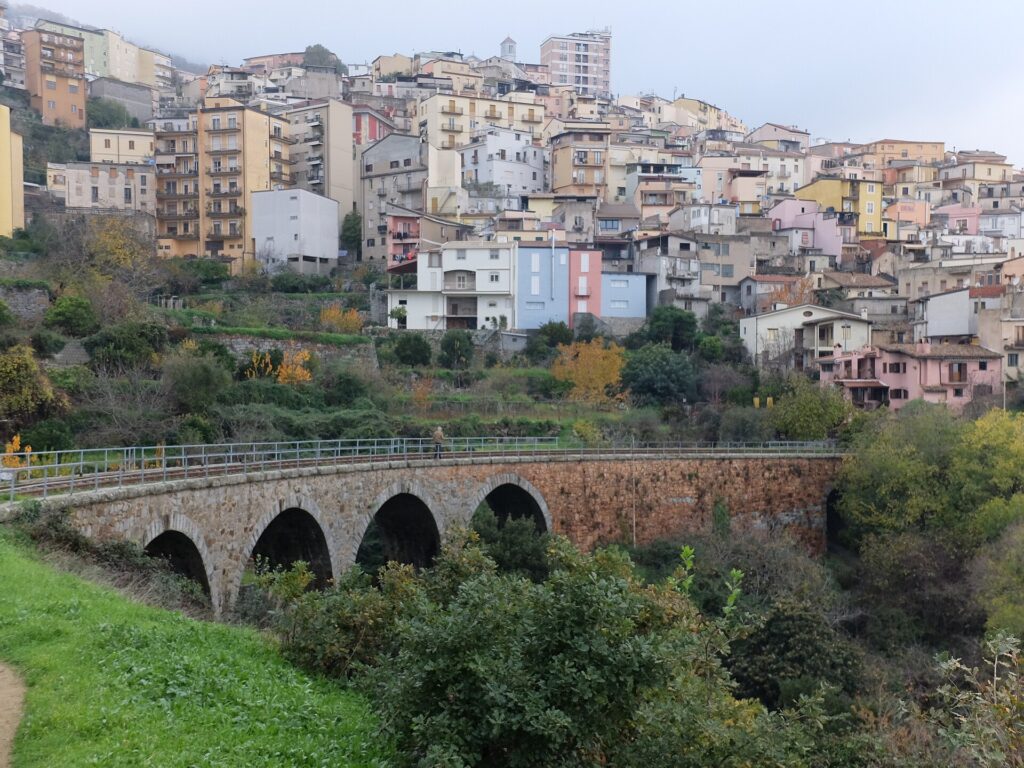
- Lanusei and Ilbono: on the hills, with sea views and plenty of trattorias serving home cooking.
- Tortolì and Lotzorai: on the coast, handy if you are staying by the sea.
- Jerzu and Ulassai: among the Tacchi, where culurgiones come with Cannonau.
- Villagrande Strisaili, Arzana and Talana: mountain villages and shepherds’ cooking.
- Baunei and Urzulei: perfect after a hike in the Supramonte.
A practical tip: in the villages, always ask whether the culurgiones are handmade in-house. Many places say so with pride, and you can taste the difference. If you want to buy some to take away, look for the artisan pasta makers and farms in the area.
How to serve them and how many to make
For a first course, allow about a dozen per person, a few more if they are small or if there are big eaters at the table. Serve them piping hot, just drained and dressed, with grated pecorino in a bowl on the side so everyone can add as much as they like.
If you want to prepare everything ahead, make the filling the day before and close the ravioli in the morning. Keep them covered with a tea towel on a tray dusted with semolina until it is time to cook them. In Sardinia, at lunch, they often come before the roast meat: so keep portions moderate if the menu is long.
A trip to Ogliastra for food and landscapes
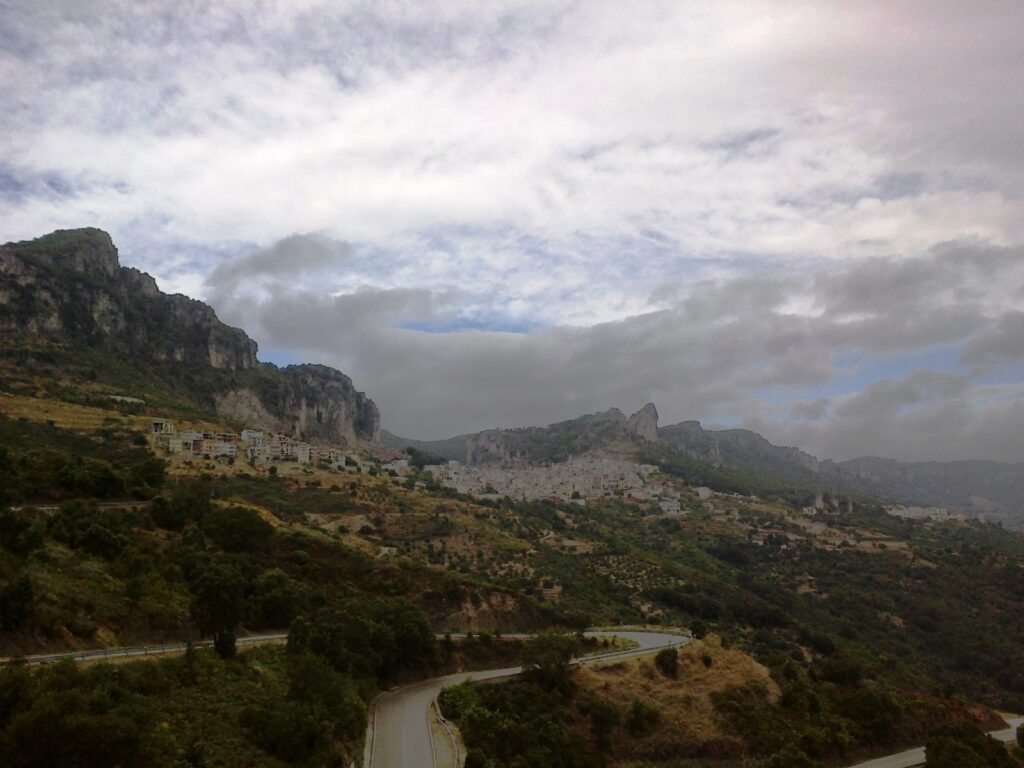
Culurgiones are a great reason to discover Ogliastra, one of the most varied areas of Sardinia: in less than an hour you go from the sea to the Gennargentu mountains, from the limestone Tacchi to the holm oak woods.
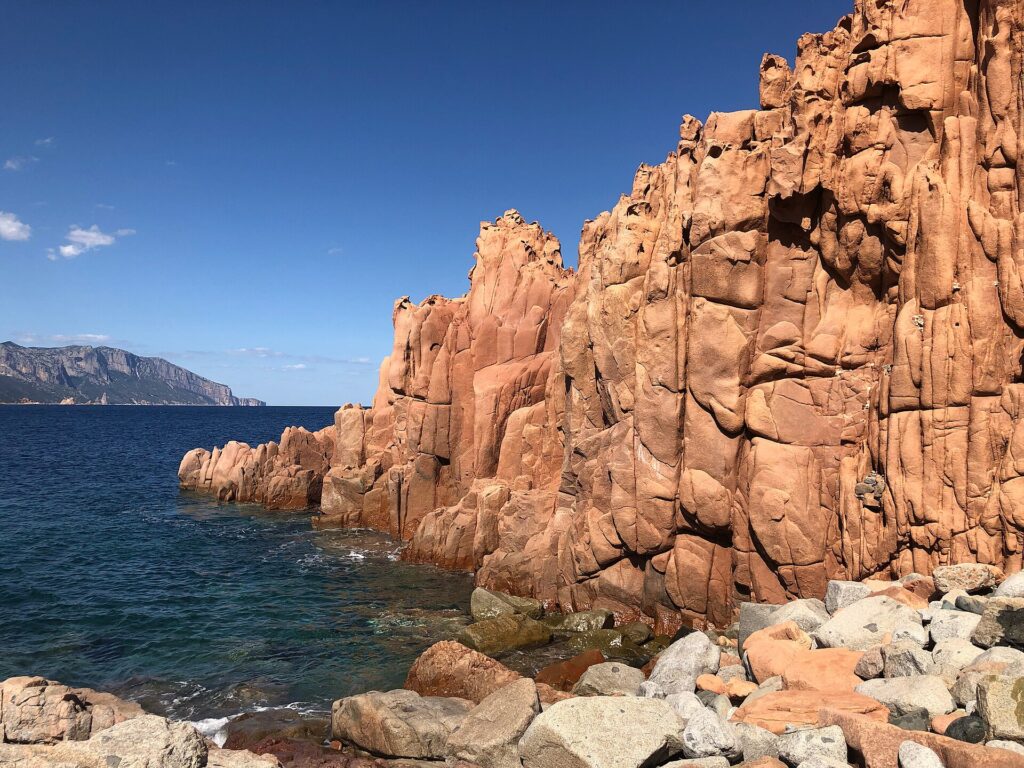
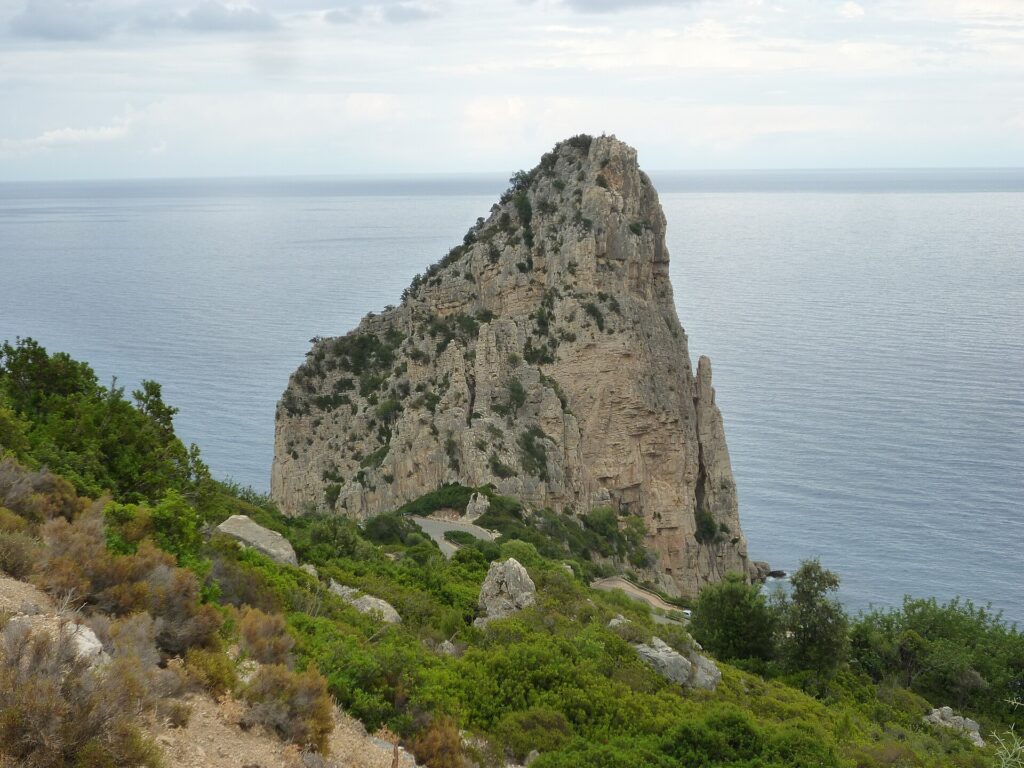
- The sea: the red rocks of Arbatax, in Tortolì, and the Baunei coast with Pedra Longa and the coves of the Gulf of Orosei, best seen on boat trips.
- The mountains: trails between Talana, Urzulei and the Supramonte, all the way to Gorropu Gorge, with guided hikes.
- The Tacchi: the limestone towers of Jerzu, Ulassai and Osini, ideal for hiking and climbing.
- Longevity: Ogliastra is part of the Sardinia Blue Zone, the land of centenarians.
Learn to make culurgiones: cooking classes and experiences
The best way to understand culurgiones is to get your hands in the dough. In Sardinia many operators run fresh pasta workshops, farm lunches and days with shepherds, where you also learn the wheat-ear fold. On Ajò Sardegna you will find cooking classes, lunches with shepherds and educational farms for families.
Children love it too: kneading, filling and closing culurgiones is a game, and at the end you eat what you have made. For more ideas, see the families and kids section and the activities for kids.
Beyond culurgiones: more Sardinian dishes to try
If you loved culurgiones, Sardinian cuisine has much more to offer. Here are a few dishes to try on the same trip, with their pages in the Flavours section of Ajò Sardegna:
- Malloreddus Campidano-style, small semolina gnocchi with sausage sauce and saffron.
- Fregula with clams, on the coast.
- Roast porceddu and pane carasau, the crisp shepherds’ flatbread.
- Seadas with honey, the island’s best-loved dessert.
To complete the picture, see the page on culurgiones from Ogliastra in the Flavours section, and browse all the food and wine experiences.
When to go to Ogliastra for culurgiones
You can find culurgiones all year round, but the trip changes with the seasons. In summer Ogliastra means sea, food festivals and village feasts; in spring and autumn it is perfect for combining hiking and food, with fewer people and mild temperatures.
- Spring: trails in bloom and farm stays open; the ideal time for a cooking class.
- Summer: the sea in the morning and dinner in the inland villages, where evenings are cooler.
- Autumn: grape harvest and new wine; nearby there is also Autunno in Barbagia, with the Cortes Apertas in Seulo on 12 and 13 December 2026.
- Winter: the right days to make them at home, just as they do in Ogliastra.
FAQ about culurgiones
What is the difference between culurgiones and culurgionis?
They are the same dish: the name changes with the local dialect. The name protected by the European Union is Culurgionis d’Ogliastra PGI, but in everyday speech people mostly say culurgiones.
What is in the culurgiones filling?
Potatoes, sheep’s, goat’s or cow’s milk cheeses (including casu axedu and pecorino), animal fat or extra virgin olive oil. Mint, garlic, basil and onion are optional; mint is the one you find most often.
How do you close culurgiones?
You place the filling in the centre of a disc of dough and close it by pinching the pasta, alternating one flap to the right and one to the left all the way to the top. The final fold looks like an ear of wheat.
Where can you eat the best culurgiones?
In Ogliastra, where they come from: Lanusei, Tortolì, Jerzu, Ulassai, Villagrande Strisaili, Baunei and the other villages of the area. Always ask whether they are handmade: you can taste the difference.
Bring Ogliastra to your table
Now you know the culurgiones recipe and the secret of the wheat-ear fold: all that is left is to try it, or to taste them where they were born. On Ajò Sardegna you will find food and wine experiences, culture and traditions and local operators you can contact directly, with no commission. If you have questions about where to eat them or how to plan a trip to Ogliastra, ask Lia, the portal’s virtual assistant. Bon appetitu, and ajò!
