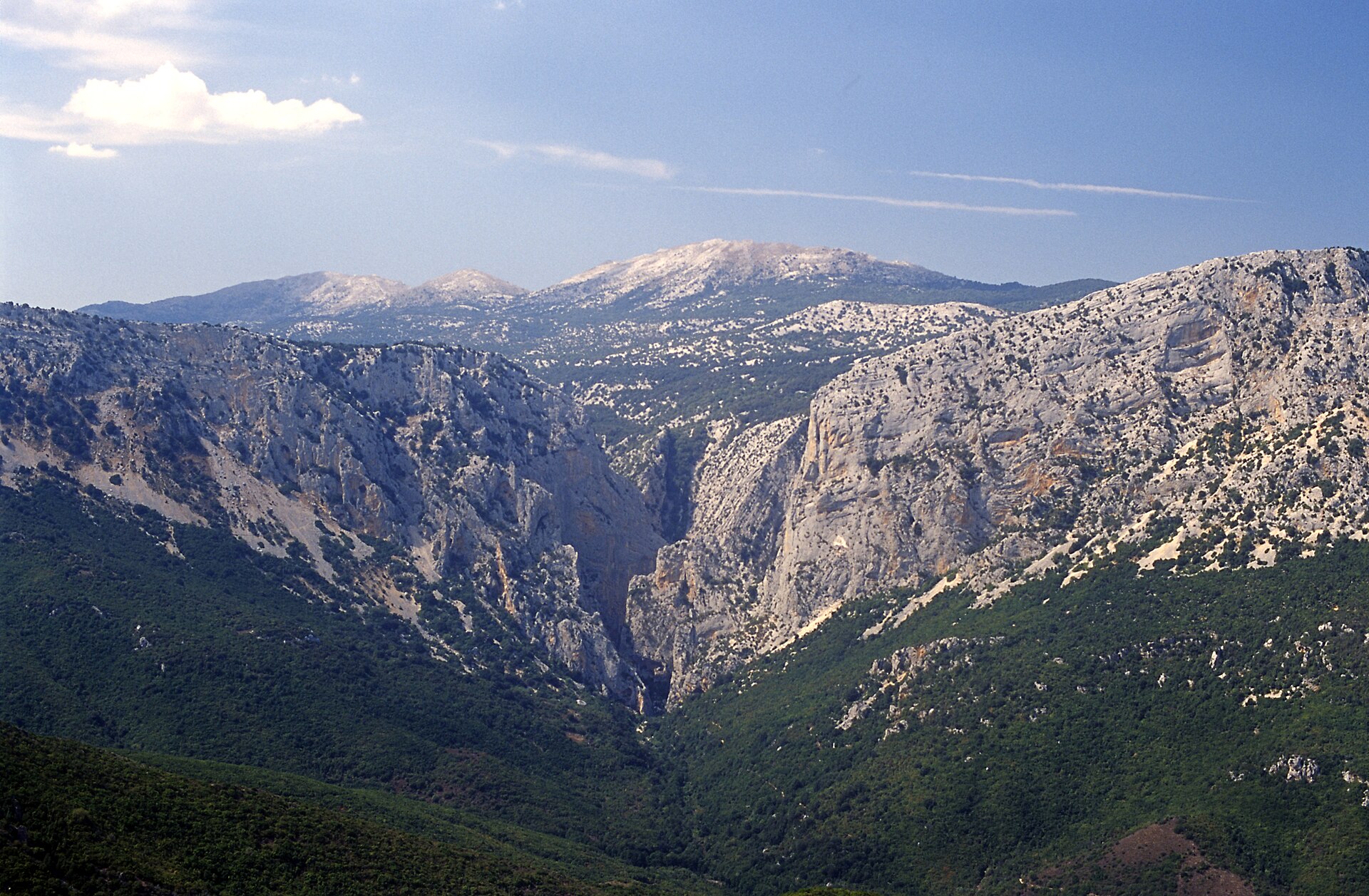
Gorropu Gorge is the canyon that the Rio Flumineddu has carved into the limestone of the Supramonte, on the border between Orgosolo and Urzulei, a few kilometres from Dorgali. Walls that rise for about 500 metres (1,640 feet), a passage that narrows in places to just a few metres, white boulders the size of houses and a silence you can feel: it is one of the most beautiful hikes in Sardinia, and also one that needs proper planning.
In this guide you will find the 3 trails that lead there, with times, difficulty and starting points, plus everything you need to plan your trip: when to go, what to bring, when a guide is worth it and what to see nearby, around Dorgali, Oliena and Ogliastra. At the end you will find the hiking experiences on Ajò Sardegna, which you can book directly with the people who lead walks in the Supramonte, with no commission.
Contents
What is Gorropu Gorge
Gorropu Gorge (in Sardinian Su Gorropu, often also spelt Gorroppu) is a canyon about one and a half kilometres long, in the heart of the Supramonte. It marks the natural border between the Barbagia of Orgosolo and the Ogliastra of Urzulei, and runs at the foot of Punta Cucutos, a limestone peak of almost nine hundred metres.
According to the official site manager, the gorge drops about 500 metres and at its narrowest point is just four or five metres wide. The regional tourism portal, Sardegna Turismo, lists it among the deepest canyons in Europe. Anyone who enters the Gorropu canyon notices it at once: the sky becomes a thin strip and the light changes with every hour.
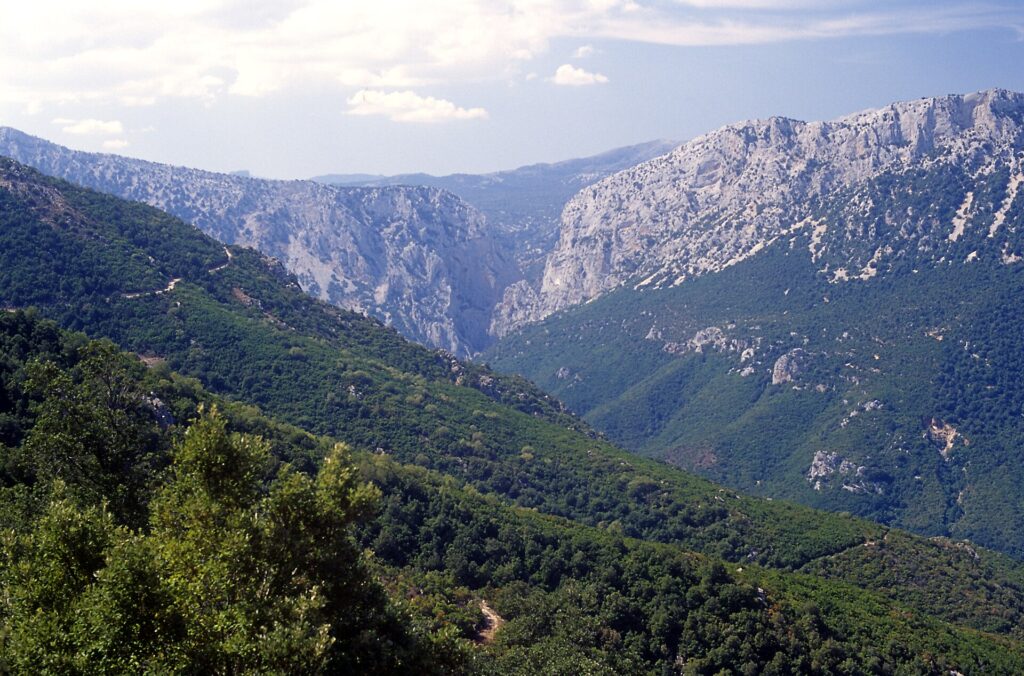
The canyon was formed by erosion: for millions of years the mountain water collected by the Flumineddu wore away and dissolved the limestone. Marine fossils can still be found in the walls, proof that these mountains were once seabed. Part of the water reaches the river underground, and in summer there is often hardly any to be seen inside the gorge.
Gorropu Gorge: how to get there
Gorropu Gorge is in central-eastern Sardinia, between the province of Nuoro and Ogliastra. The main road is the SS125 Orientale Sarda, which links Dorgali to Baunei over the Genna ‘e Silana pass. All the main access points start from, or are reached via, this road.
- From Nuoro: head down towards Oliena or straight to Dorgali, then take the SS125 heading south.
- From Olbia: follow the coast towards Orosei and Dorgali; by car it usually takes a couple of hours.
- From Ogliastra: from Tortolì and Baunei, drive north up the SS125, with bends and views all the way to the pass.
- From Cagliari: it is a long drive; it is best to spend a night in Ogliastra or Dorgali and set off early in the morning.
There is no convenient public transport to the trailheads: you need a car. If you do not drive, you can book a hike with transfer included, or rely on operators who organise the journey by off-road vehicle. On Ajò Sardegna you will find 4×4 jeep tours and guided hikes in the area.
The 3 trails to the Gorropu canyon
You reach the Gorropu canyon on foot: no road leads to the entrance. There are three main trails, very different in length, effort and scenery. The choice depends on how fit you are, how much time you have and where you are staying.
- From Genna ‘e Silana (east): the most popular; downhill all the way there and uphill all the way back.
- From the S’Abba Arva bridge, or Sa Barva (north): along the Flumineddu, longer but with less climbing.
- From Sedda ar Baccas (south): for experienced hikers only, past pools and waterfalls.
1. From Genna ‘e Silana: the classic trail
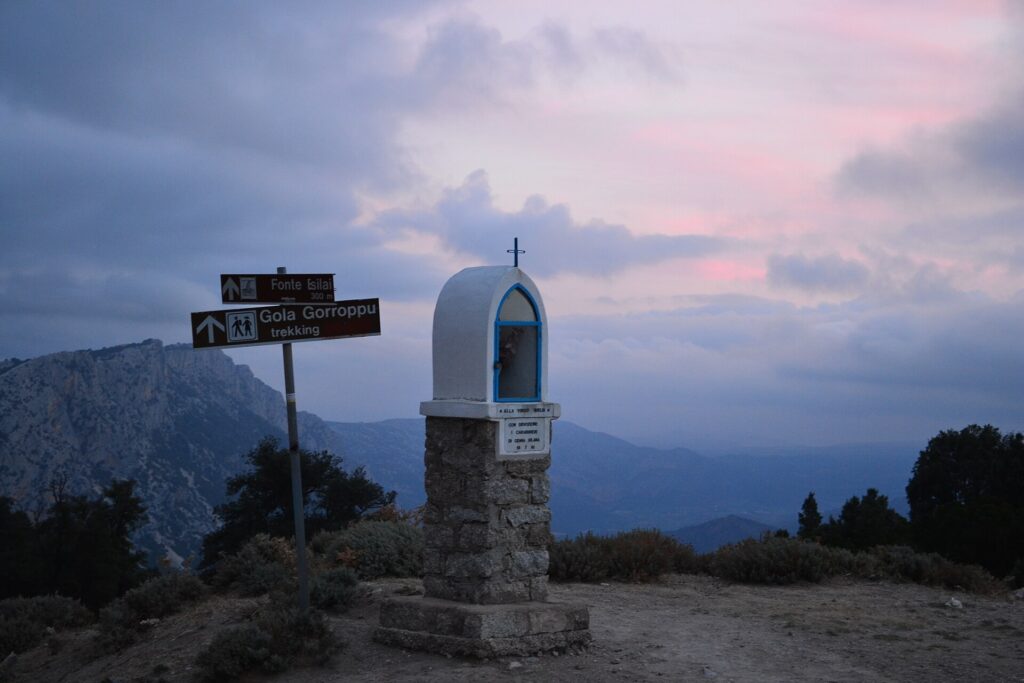
The Genna ‘e Silana pass is on the SS125, at over a thousand metres (3,280 feet), between Dorgali and Urzulei. You park near the old hotel and take the waymarked trail that descends through the holm oak woods, with ever wider views over the Supramonte and the Flumineddu valley.
According to Sardegna Turismo, the way down takes about an hour; the return, all uphill, takes roughly twice as long. Many hikers, including breaks, allow a good half day. The ground is stone and earth, steep in places: hiking boots are essential.
- Who it is for: hikers with a basic level of fitness, including teenagers used to walking.
- The hard part: the climb back, often in full sun in the middle of the day.
- The tip: set off early and keep at least one and a half litres of water per person for the return.
2. From the S’Abba Arva bridge: along the Flumineddu
The second access starts from the north, on the Dorgali side. By car you cross the Oddoene valley to the S’Abba Arva bridge, which many call Sa Barva. From here you walk along the bed of the Flumineddu, among oleanders, pools and large white boulders polished by the water, to the mouth of the gorge.
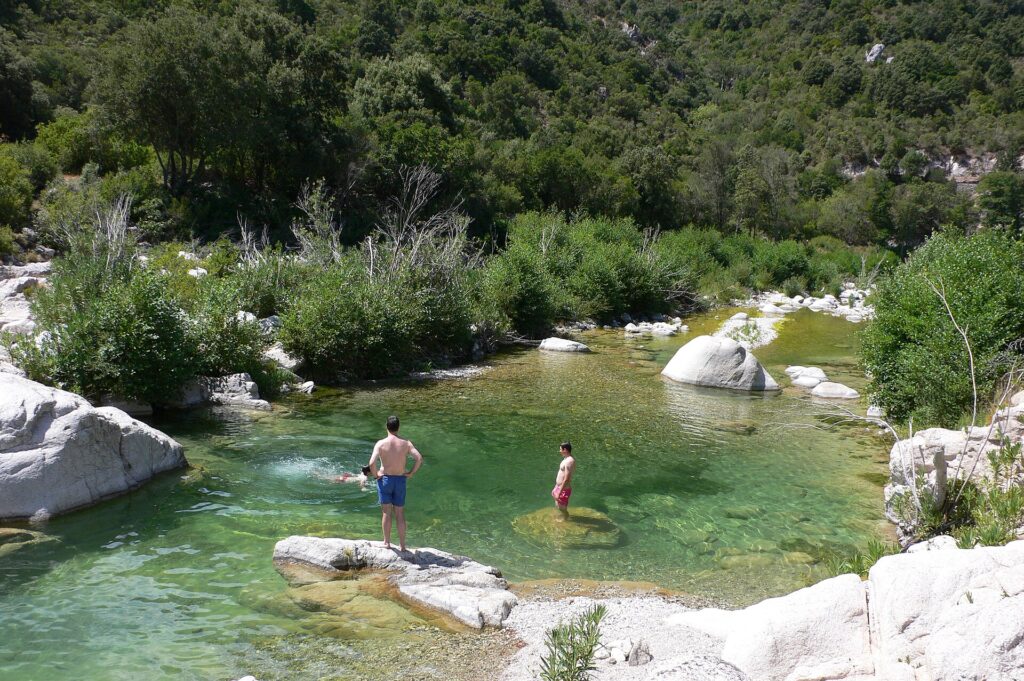
Sardegna Turismo gives about two hours’ walking to reach the gorge. There is less climbing than from Genna ‘e Silana, but the route is longer and, there and back, takes up most of the day. It is the loveliest trail in spring, when there is still water in the pools and the valley is green.
The trail to the nuraghic village of Tiscali also starts from the same bridge: if you have two days, you can do Gorropu on the first and Tiscali on the second, staying in Dorgali or Oliena.
3. From Sedda ar Baccas: the route for experts
The third access starts from the south, in the territory of Urzulei, at Sedda ar Baccas. According to Sardegna Turismo it is a route of about 12 kilometres (7.5 miles) there and back, roughly five hours’ walking, suitable only for experienced hikers.
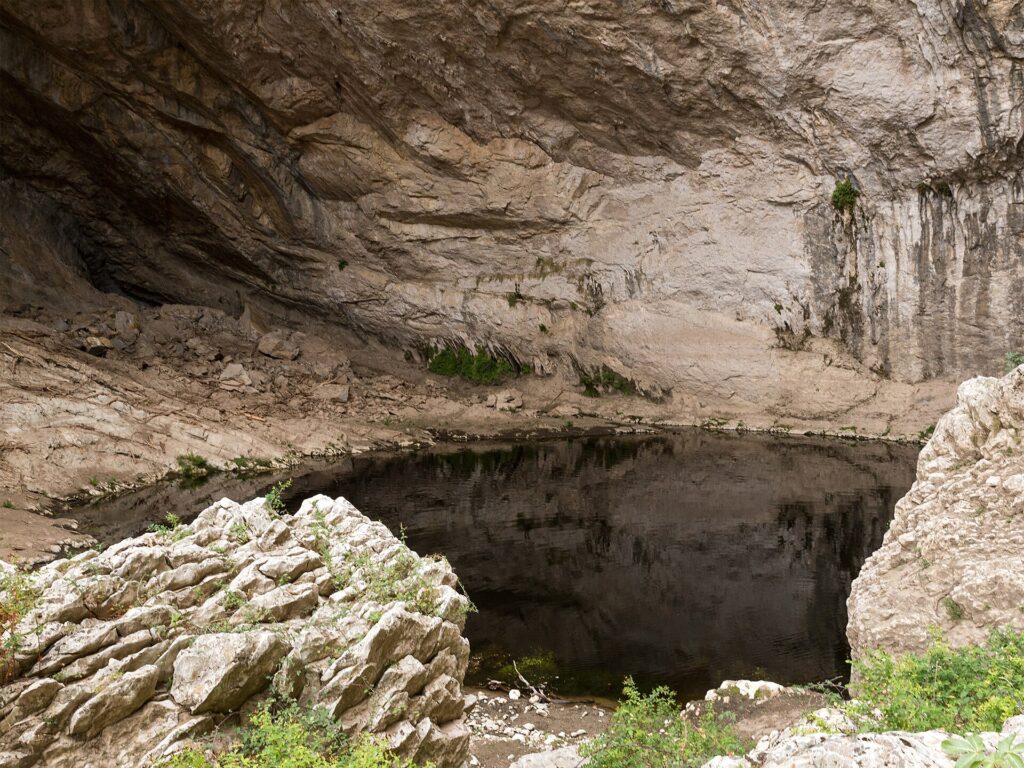
Along the way you pass Pischina Urtaddala, a natural pool among the rocks, and the sa Giuntura waterfall. This is the wildest side of the Gorropu canyon: faint paths, scrambling on rock and nowhere to stop for help. Without experience of the Supramonte, you need a guide here.
Inside Gorropu Gorge: what to expect
The main entrance to Gorropu Gorge is downstream, where the trails from Genna ‘e Silana and Sa Barva meet. Here you will find the visitor point and ticket office run by the official concession holder: there is a fee to enter the canyon, while the trails leading to it are free. Opening times and prices change with the seasons: check them beforehand on gorropu.info.
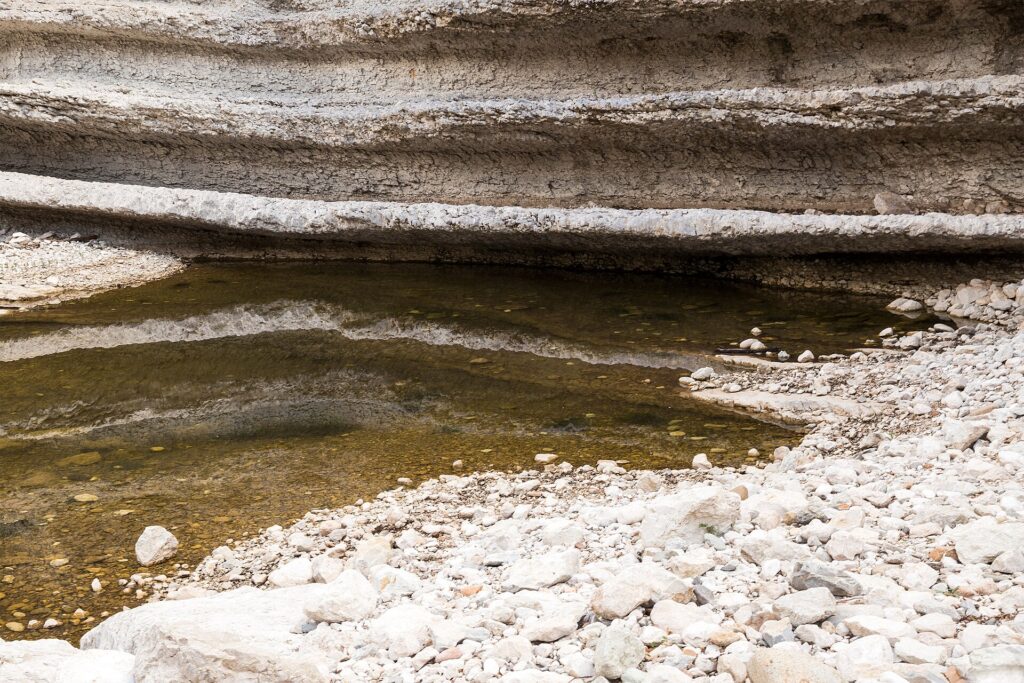
Inside, you walk on the dry riverbed, among pebbles and huge boulders. The route is marked and divided into sections of increasing difficulty: the first part is within reach of anyone who has made it this far, then the boulders get bigger and you need to use your hands. Further on is the passage to the most demanding section, to be tackled only with experience or with a guide.
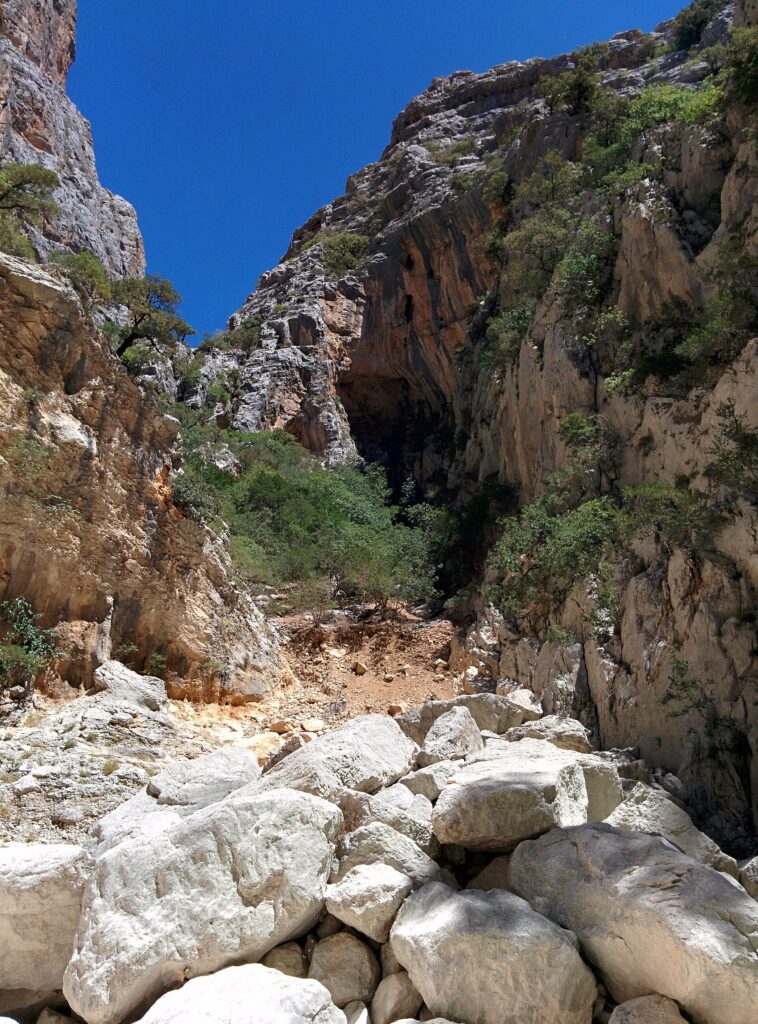
- Follow the signs: leaving the marked route is dangerous.
- Watch the rock: polished limestone is very slippery, especially when wet.
- Never after heavy rain: the Flumineddu can rise quickly and cut off the passages.
Which trail to choose
If it is your first time and you are in good shape, the trail from Genna ‘e Silana is the easiest to organise: parking on the main road, clear waymarking and a short walk in. If you prefer walking on the flat and have a full day, choose Sa Barva and the Flumineddu. Leave the route from Sedda ar Baccas to those who already know the Supramonte.
- Short on time: Genna ‘e Silana, a good half day.
- Less climbing: Sa Barva, almost a full day.
- Real adventure: Sedda ar Baccas, with a guide.
- With children: only teenagers used to walking; for younger kids, other hikes are better.
But there is an uncaptured Sardinia still.
D. H. Lawrence, Sea and Sardinia (1921)
With a guide or on your own?
The trails from Genna ‘e Silana and Sa Barva can be done independently, with good boots, water and a clear idea of the timings. A guide, however, changes the experience: they know the passages inside the gorge, can read the weather and bring the Supramonte to life, with its plants and the stories of the shepherds.
For the southern route, the most demanding section inside the canyon and night hikes, a guide is the right choice. On Ajò Sardegna you will find guided hikes, canyoning and climbing with local operators: you can write to them directly to ask about dates and difficulty.
When to visit Gorropu Gorge
The best months for Gorropu Gorge are spring and autumn, from April to June and from September to November. Temperatures are good for walking, the light is soft and, after the first rains, the river flows again in some stretches. In autumn the days get shorter: set off early.
You can go in summer, but the heat on the climb back is tough: leave at dawn, carry plenty of water and avoid the middle of the day. In winter the days are short and after storms the passages can become dangerous. Before you set off, always check the weather warnings issued by the regional Civil Protection.
- Spring: full pools, wildflowers, a green Flumineddu valley.
- Summer: only at dawn, with lots of water and a hat.
- Autumn: ideal weather, and the village festivals of the season: see the traditional festivals.
- Winter: possible on settled days, never after heavy rain.
What to pack in your rucksack
- Hiking boots with a grippy sole, already worn in: no trainers.
- At least one and a half litres of water per person, more in summer.
- A packed lunch, nuts and something salty.
- A hat, sunscreen and a light jacket: it is cooler inside the gorge.
- Cash for the ticket office, a small first-aid kit and a charged phone.
Leave your trekking poles at home if you plan to enter the boulder section: you need your hands free. And take back everything you bring: there are no bins in the Gorropu canyon and nature here is fragile.
What to see around Gorropu Gorge
Gorropu Gorge is the ideal starting point for discovering the Supramonte and the villages around it. With two or three days you can combine mountains, archaeology, sea and food, without driving too far.
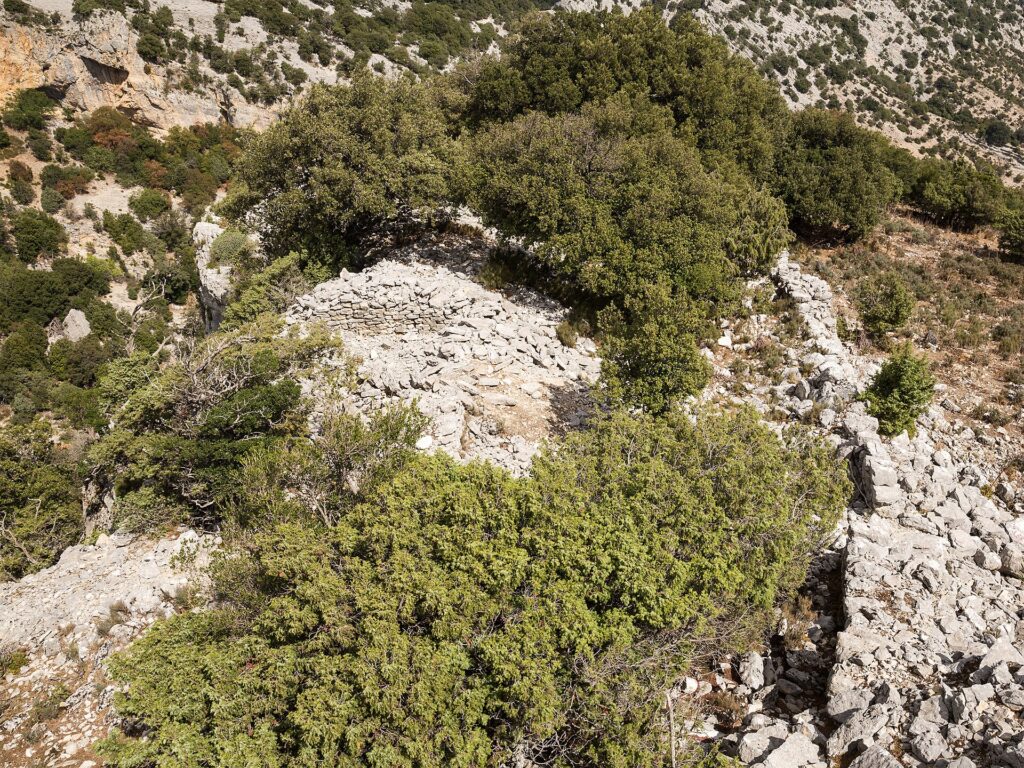
- Tiscali: the nuraghic village hidden inside a sinkhole, reachable on foot from Sa Barva or from the Lanaittu valley, in Oliena. Discover more archaeological sites and nuraghi to visit.
- Cala Gonone: the seaside hamlet of Dorgali, the departure point for boat trips in the Gulf of Orosei and kayak outings.
- Caves: the Supramonte is full of caverns; on Ajò Sardegna you will find caves and caving experiences.
- Orgosolo and its murals: in Orgosolo the house fronts tell decades of social and political history.
- Selvaggio Blu: the island’s most famous trek starts in the territory of Baunei; for more hikes, browse nature and hiking.
Where to eat and what to taste
After a day in Gorropu Gorge you will be hungry. In the villages of the Supramonte the cooking is shepherds’ food: roast meat, cheese, bread and red wine. Dorgali and Oliena have plenty of trattorias and farm stays, and inland you can try an open-air lunch with shepherds, at the cuiles or the sheepfolds.
- Porceddu, suckling pig slow-roasted on a spit.
- Pane carasau and Fiore Sardo, the pecorino of the Barbagia shepherds.
- Culurgiones from Ogliastra, potato-filled pasta sealed with an ear-of-wheat pleat.
- Seadas with honey, for a sweet finish.
To drink, the local wine is Cannonau: Dorgali, Oliena and nearby Ogliastra are home to great reds. Look for the wineries and tastings open to visitors, and for a wider choice browse the food and wine experiences.
A 3-day itinerary around Gorropu and the Supramonte
- Day 1: arrive in Dorgali, stroll around the village and have dinner with Supramonte produce.
- Day 2: Gorropu Gorge from Genna ‘e Silana, setting off at dawn; an afternoon of rest at Cala Gonone.
- Day 3: Tiscali from the Lanaittu valley or from Sa Barva, then lunch in Oliena or a visit to Orgosolo.
With an extra day, add a stop in Mamoiada, with the Museo delle Maschere Mediterranee (Museum of Mediterranean Masks), or a boat trip in the Gulf of Orosei. If you are travelling in late autumn, check the Cortes Apertas calendar: in December it is the turn of Fonni and Orune.
Where to stay near the canyon
The handiest bases for the Gorropu canyon are Dorgali and Cala Gonone, on the north side, and Urzulei or Baunei, on the south side. If you want to combine mountains and culture, choose Oliena or Nuoro, less than an hour’s drive away.
- Dorgali and Cala Gonone: for the sea in the evening and plenty of services.
- Urzulei and Baunei: for silence and an early start from Genna ‘e Silana.
- Oliena and Nuoro: to combine Gorropu, Tiscali and the villages of Barbagia.
Discover all the experiences in the areas of Baronia and the Gulf of Orosei, Ogliastra and Barbagia and the Nuoro area.
FAQ about Gorropu Gorge
How difficult is the trail to Gorropu Gorge?
The trail from Genna ‘e Silana is of moderate difficulty: about an hour downhill on the way there and roughly twice that uphill on the way back. The one from Sa Barva is longer but less steep. The route from Sedda ar Baccas is for experts only.
Do you have to pay to enter Gorropu Gorge?
Yes. The trails leading there are free, while entry to the canyon requires a ticket bought at the visitor point at the downstream entrance. Times and prices change with the seasons: check them on the official website gorropu.info before you set off.
Do you need a guide for the Gorropu canyon?
Not for the trails from Genna ‘e Silana and Sa Barva, if you are used to walking. A guide is recommended for the southern route, for the hardest boulder section inside the gorge and for anyone who does not know the Supramonte.
When is the best time to visit Gorropu Gorge?
Spring and autumn are ideal, with good walking temperatures. In summer it is best to set off at dawn to avoid the heat on the climb back. After heavy rain it is better to postpone, because the river can rise quickly.
Plan your hike in the Supramonte
Now you have everything you need to choose your trail to Gorropu Gorge: set off early, carry water and respect the mountain. On Ajò Sardegna you will find nature and hiking experiences, adventure and sport activities and local operators you can contact directly, with no commission. If you have questions about dates, difficulty or who is travelling with you, ask Lia, the portal’s virtual assistant. Happy hiking, and ajò!
