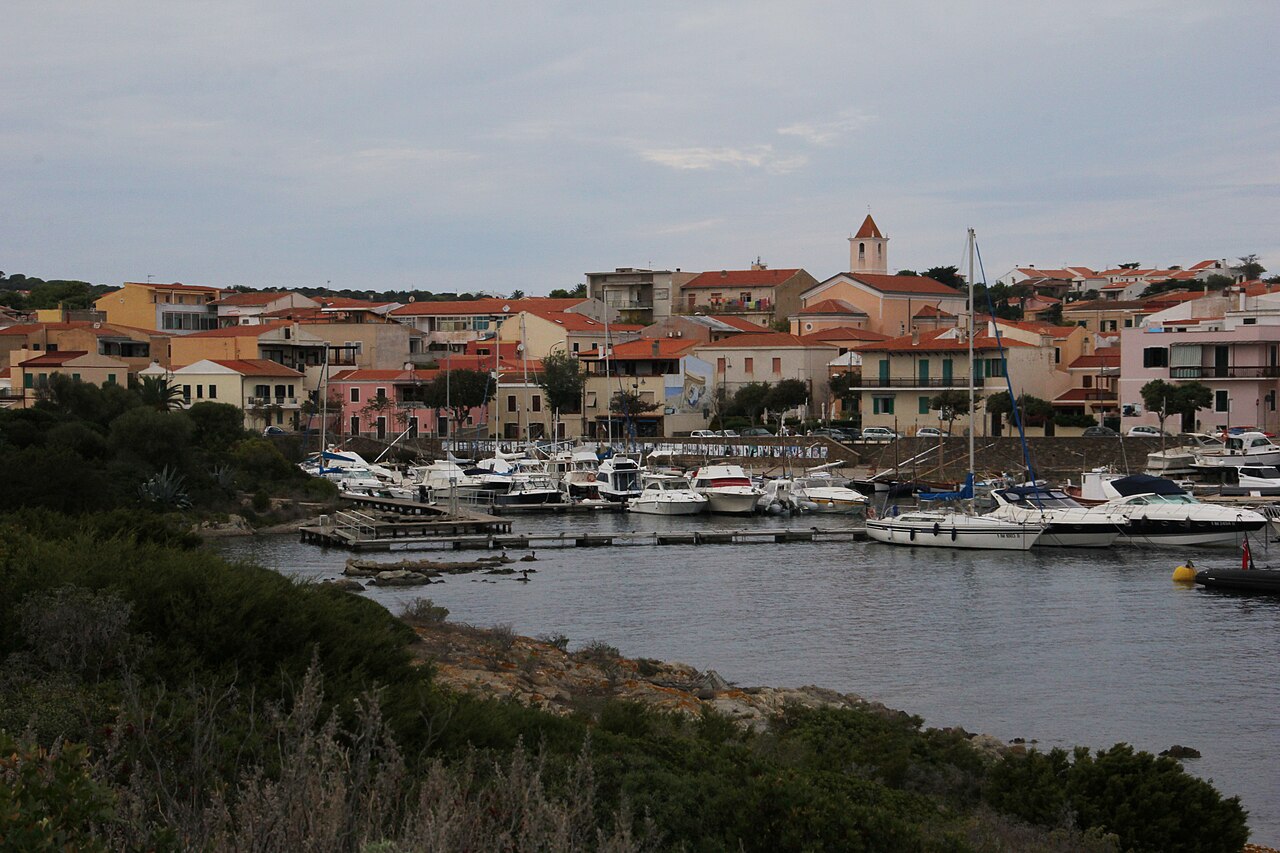
A day at sea with the people who work on it every day: that is the heart of fishing tourism in Sardinia, known in Italian as pescaturismo, the experience that takes visitors on board real fishing boats, alongside the fishermen. You set sail in the morning, watch the pots or nets being hauled in, learn to recognise octopus, cuttlefish and rockfish, and at lunch you eat what the sea gave up just a few hours earlier.
In this guide we explain what fishing tourism in Sardinia is, how a day on board works, what the law says, when to go and what to bring. Then we take you to 8 ports where you can try it, from Stintino and Asinara to Carloforte, with links to the Ajò Sardegna operators you can contact directly, with no commission.
Contents
A smooth sea never made a skilful sailor.
Traditional sailors’ proverb
What is fishing tourism in Sardinia
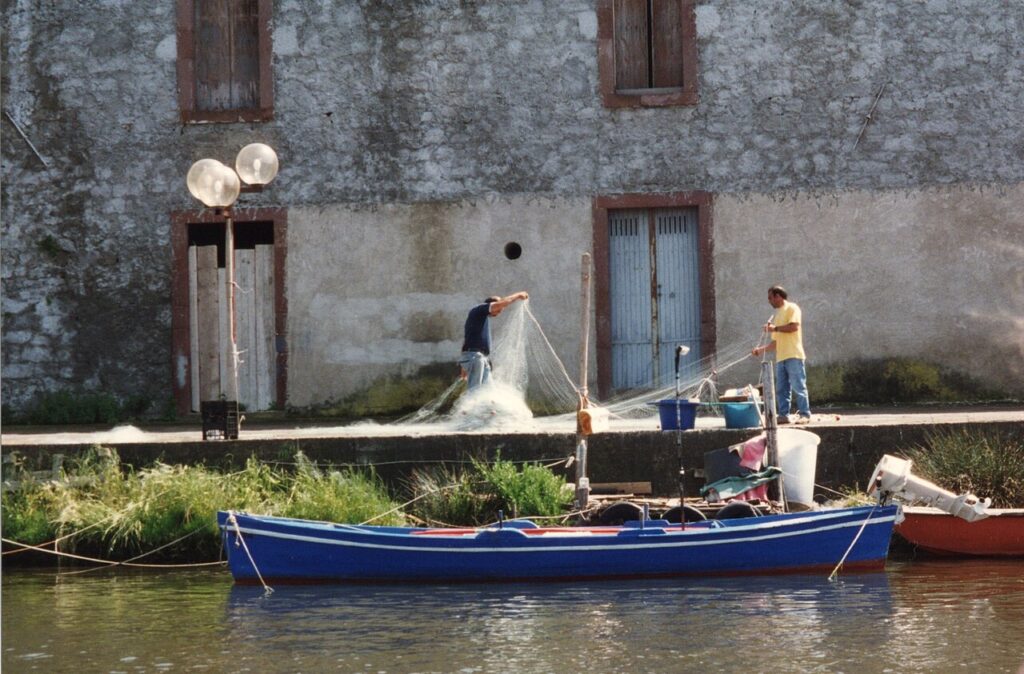
Pescaturismo is an activity that Italian law grants to professional fishermen: they can take people who are not part of the crew on board their fishing boat, for tourism and leisure. So it is not a trip on a tourist boat, but a real working outing, with the timing, tools and gestures of small-scale fishing.
For those who try it, it is a different way of seeing the coast. You sail slowly, stop where the nets have been set and listen to stories of wind, seasons and seabeds. Fishing tourism in Sardinia combines three things the island does brilliantly: crystal-clear sea, simple seafood cooking and the hospitality of fishing families. On Ajò Sardegna you will find these outings in the fishing trips category.
From a legal point of view, authorisation for pescaturismo was introduced by article 27-bis of Law 41 of 1982, added in 1992. The implementing regulation is Ministerial Decree 293 of 1999, while the definitions in force today are in Legislative Decree 4 of 2012, which lists pescaturismo and ittiturismo among the activities connected to professional fishing.
In practice, this means the boat must be a licensed fishing vessel, the skipper a fishing entrepreneur, and the boarding of passengers authorised by the maritime authority. For you, as a guest, it is a guarantee: you board a boat that is fully compliant, run by someone who knows that stretch of sea better than anyone.
Pescaturismo, ittiturismo and boat trips
The three terms are often confused, but they describe different experiences. Knowing the difference helps you choose the right one for you and your travel companions.
- Pescaturismo (fishing tourism): you go out on a fishing boat with the fishermen at work. You see fishing up close and usually have lunch on board with the catch.
- Ittiturismo: hospitality on land, in the fisherman’s home or facilities: meals, accommodation, educational and cultural activities linked to the sea.
- Boat trip: a tourist outing by RIB, motorboat or sailing boat, designed for swimming, snorkeling and coves. You will find many in the boat and RIB trips section.
If you are mainly interested in the sea and swimming, a classic excursion may be enough: look at the sailing and boat rental options too. If instead you want to understand how people make a living from fishing, taste fish just hauled in and feel part of the crew for a day, fishing tourism is the right choice.
How a day of fishing tourism works
Every operator has its own times and route, but a typical day follows a similar rhythm. You set off in the morning after meeting at the harbour and come back in the afternoon. Fishing tourism trips in Sardinia often last six to eight hours, lunch included, while some evening outings are shorter.
- Meeting point: at the harbour, usually about twenty minutes before departure, for introductions and the rules on board.
- Sailing: you head to the area where the gear has been set, often along the coast or between the islands.
- Fishing: the pots or nets are hauled in, the catch is examined, the fish to keep are chosen and those too small are released.
- Swimming stops: on hot days the skipper stops in a cove for a swim or some snorkeling.
- Lunch: the crew cooks the catch and serves it on board, at anchor in a sheltered bay.
- Return: in the afternoon, sometimes after setting the gear again for the next day.
You do not need to know how to fish or have any boating experience. The fisherman explains what he is doing and, when possible, lets you lend a hand. Remember, though, that you are on a working boat: the space is that of a fishing vessel, and decisions about the route, the stops and safety are always the skipper’s.
Pots, nets and lines: the techniques you will see
Small-scale Sardinian fishing uses simple, selective gear, very different from large trawl nets. Which you will see depends on the operator, the season and the sea that day.
- Pots: basket-shaped traps lowered to the seabed and hauled up after a few hours or the next day. They catch mainly octopus, crabs, lobsters and rockfish.
- Set nets: fine nets left upright on the seabed, such as trammel nets, used for red mullet, scorpionfish and fish for soup.
- Longline: a long line with many hooks, set on the bottom or in mid-water.
- Handline and bottom fishing: fishing with line and hook, which guests can sometimes try.
- Squid jig: an artificial lure for squid and flying squid, used on evening trips.
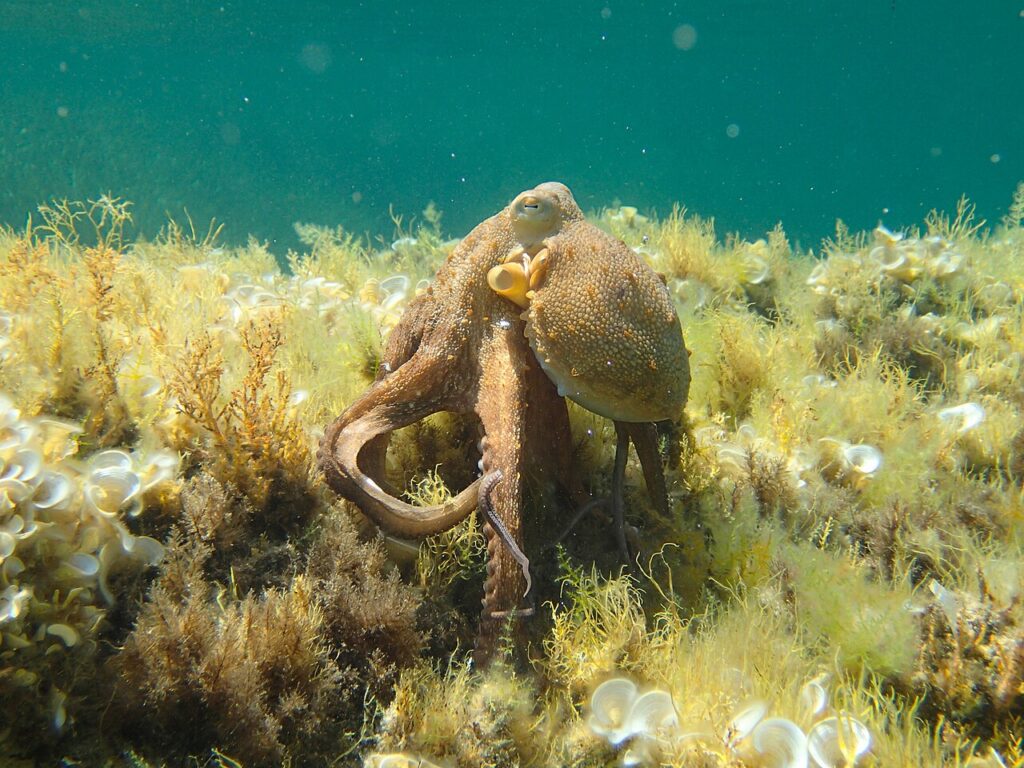
The most eagerly awaited moment is always when the gear comes back on board. You never know what will come up: sometimes an octopus, sometimes a cuttlefish or a crab, sometimes little or nothing. It is this uncertainty that makes every fishing tourism trip different, and that shows how hard a fisherman’s work is.
Lunch on board: the catch of the day
For many guests lunch is the best memory. While the boat is at anchor in a bay, the crew prepares a first and a second course with the catch: spaghetti with seafood, fish soup, octopus, grilled or fried fish. It usually comes with bread, local wine and a coffee.
The dishes depend on what the sea has given, so the menu is never fixed. If you love Sardinian seafood, on land try fregula with clams and look at the other dishes in the Flavours section, such as culurgiones. If you have allergies or intolerances or are coeliac, always say so when booking: there is no restaurant pantry on board.
1. Stintino and the Gulf of Asinara
Stintino, at the north-western tip of the island, is one of the most beautiful places for fishing tourism in Sardinia. The village was born as a fishing village, and the sea in front of it, between La Pelosa and the island of Asinara, is protected by Asinara National Park and its Marine Protected Area. Here small-scale fishing is still part of daily life.
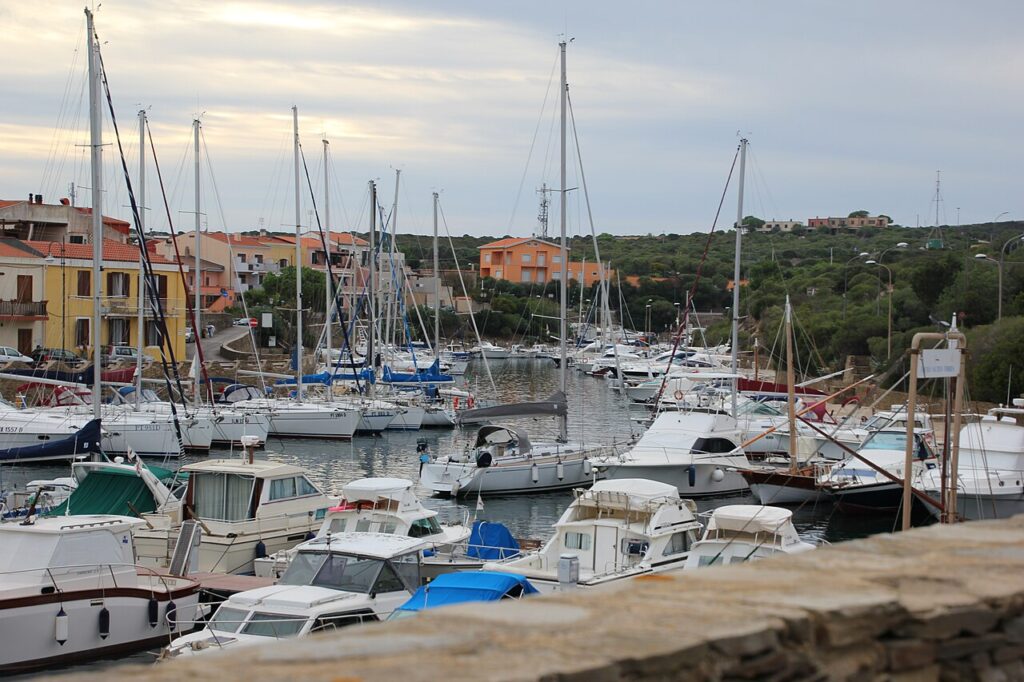
On Ajò Sardegna you will find the fishing tourism trip to Asinara from Stintino with lunch on board run by Pescaturismo Stintino, the business of Davide and Silvia. You board the Motopesca Alex, a real working boat, with a maximum of 12 guests. You leave at 9:30 am from Porto Mannu and return at around 5:30 pm, after a full day among pots, coves and the Park.
Davide explains pot fishing and the moment they are hauled up; depending on the season you find octopus, crabs, cuttlefish and fish for soup. Then there are swimming stops in coves such as Cala del Granito, Cala degli Inglesi and Cala delle Barche Napoletane. Lunch, with a first and a second course of fish, local wine, coffee and a digestif, is prepared on board with the catch of the day.
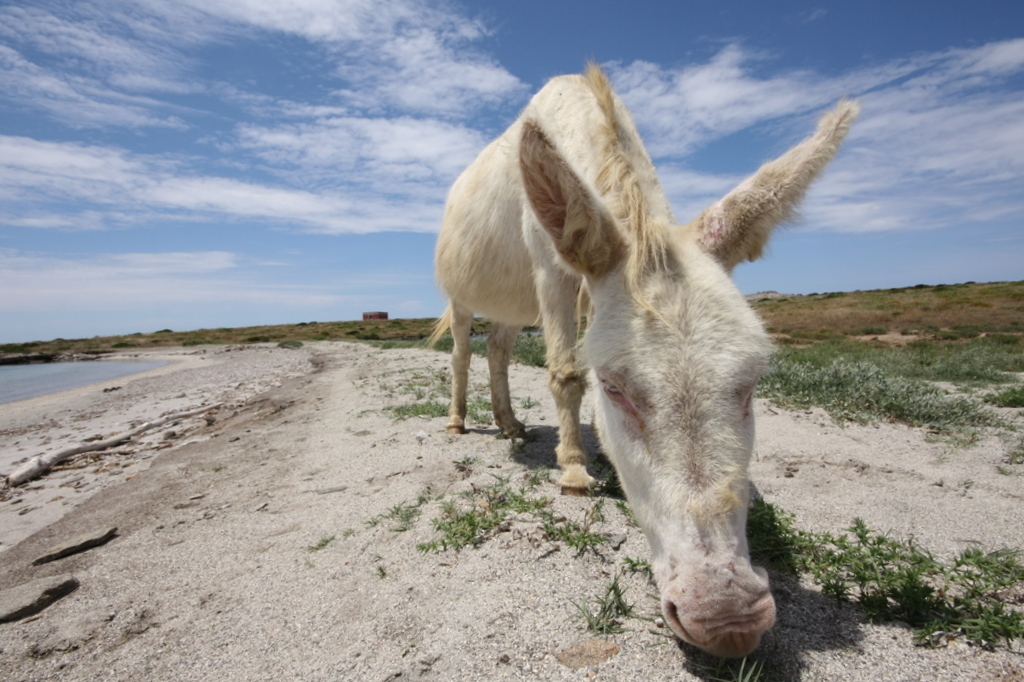
There is also a guided visit on land at Cala Reale, with the sea turtle rescue centre, the former quarantine station and the Palazzina that now houses the Park Authority. The trip runs all year round, weather permitting: it is one of the few sea experiences you can enjoy in autumn and winter too. Rates vary by month and are shown on the experience page.
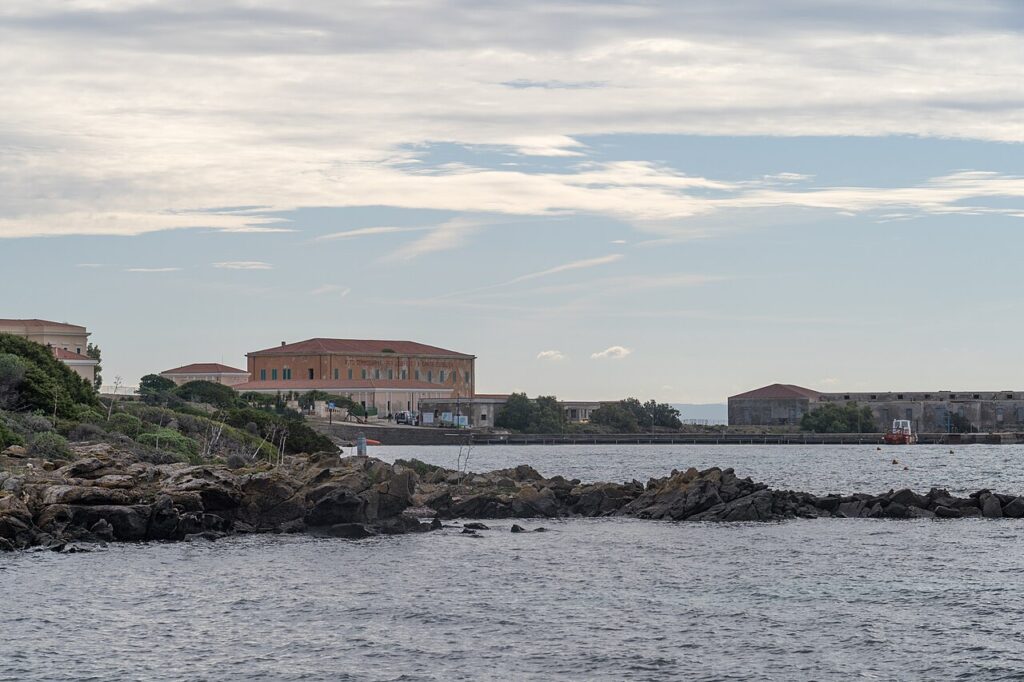
If you prefer sailing, also from Stintino Asinara’s Latin Sails offers the lateen sailing boat trip in the Gulf of Asinara, on board the wooden gozzo “Il Professore”, from June to October and with just a few guests. It is not fishing tourism, but it tells the story of the same sea at the slow pace of traditional boats. To plan a visit to the Park, ferries also leave from nearby Porto Torres.
2. Alghero and the Coral Riviera
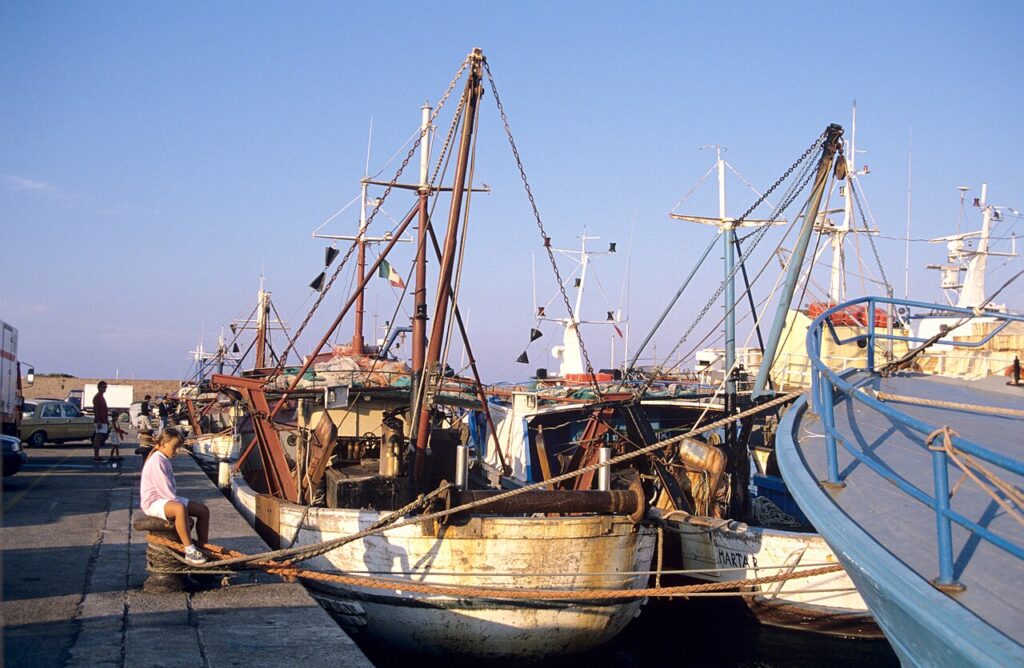
Alghero has a long fishing tradition, linked above all to lobster and to the red coral that gave its coast its name. In the harbour, alongside the pleasure boats, fishing boats still moor that go out at night and come back in the morning, and in town seafood cooking is taken seriously.
To experience Alghero’s sea up close, you can choose the outings run by Sea Stories, which leave the harbour for Capo Caccia, Neptune’s Grotto and the bay of Porto Conte. There is a half-day trip, a full day with lunch on board and a private boat charter for special occasions. They are not fishing trips, but they are a great alternative for swimming, snorkeling and lunch at anchor.
3. Golfo Aranci: squid fishing at sunset
In Golfo Aranci, in the north-east, fishing tourism takes place by day and by evening. On evening trips squid and flying squid are caught with jigs as the sun sets behind Capo Figari, and dinner is often served on board with the catch. By day, nets and longlines are set and there are swimming stops in the local coves.
The gulf is also a place where dolphins are often sighted. From Olbia, a little further south, many RIB trips leave for Tavolara and Figarolo: you will find them in the sea section of the portal.
4. San Teodoro and Tavolara
From San Teodoro and Loiri Porto San Paolo you can quickly reach the island of Tavolara, at the heart of the Tavolara-Punta Coda Cavallo Marine Protected Area. Some local fishermen offer outings on traditional gozzi, with stops among the islands and a fresh fish lunch in a sheltered cove.
The charm of this coast is the contrast between the granite mountain of Tavolara, more than 500 metres high, and the shallow, clear waters around Molara. If you want to combine fishing and snorkeling, bring a mask and snorkel: the seabeds are among the most beautiful in northern Sardinia.
5. Cabras and the Sinis lagoons
Cabras is the capital of lagoon fishing in Sardinia. In the great lagoon, listed among the wetlands of international importance under the Ramsar Convention, fishermen catch grey mullet, eels, gilthead bream and sea bass. This is where the famous mullet bottarga is made, and where people once used fassonis, small boats made of woven rushes.
The Region’s official website, Sardegna Turismo, notes that the historic Mar’e Pontis fish weir is a centre of fishing-related tourism. Out at sea, from the coast near Oristano, you can sail to the island of Mal di Ventre with local skippers. And in the Sinis lagoons, birdwatching rewards you with flamingos and herons.
6. Carloforte and Calasetta: tuna country
In the Sulcis archipelago, Carloforte, on San Pietro Island, and Calasetta, on Sant’Antioco, have an ancient bond with bluefin tuna and the tuna trap. The Tabarchino communities who arrived here in the 18th century brought a unique seafood cuisine, still enjoyed today in every trattoria.
From these ports there are fishing trips with lunch on board and tours among the islands, the cliffs and the tuna traps. The sea here is often windy, so it is wise to leave a few spare days in your plans: if the mistral blows hard, the trip is postponed.
7. Teulada, Villasimius and the south coast
On the south coast, fishing tourism mainly operates from Teulada and Villasimius, where the waters of the Capo Carbonara Marine Protected Area are among the clearest on the island. Trips follow the coast among coves and islets, with a lunch of the catch and stops for a swim.
If you are coming from Cagliari, Villasimius is less than an hour’s drive away: you can stay in the city and devote a day to the sea. For more activities along the south coast, look at the sailing trips and the diving and snorkeling experiences.
8. La Maddalena and the Strait of Bonifacio
In the La Maddalena archipelago, a National Park since 1994, some fishermen take guests among the islands, with fishing, swimming stops and lunch on board. The park’s rules are strict and fishing zones are clearly marked: that is another reason why going out with a local fisherman is a lovely, respectful way to discover the archipelago.
Ferries to La Maddalena leave from Palau, and from Santa Teresa Gallura you can see Corsica on clear days. Wind is a constant here: always check the forecast and keep a plan B.
When to go fishing tourism in Sardinia
The main season runs from spring to autumn, when the sea is calmer and you can swim during the stops. July and August are the busiest months, so it is best to book ahead. May, June and September are often the best months: a mild sea, less heat and fewer people on board.
Some operators go out all year round, weather permitting. In winter there is no swimming, but the light is beautiful, the boats are almost empty and you see the fisherman’s real work, without the rush of summer. In every season, however, the sea decides: with strong wind or rough seas the trip is postponed or cancelled, and the operator usually offers another date.
Fishing tourism with children
Children love fishing tourism: they see octopus moving in the pots, learn the names of fish and understand where the food they eat comes from. Many trips are suitable for families, but the day is long and the sun is strong at sea, so consider your children’s age and how used they are to boats.
- Ask the operator whether there are life jackets for children.
- Bring a cap, a long-sleeved T-shirt and plenty of sunscreen.
- If your child suffers from seasickness, choose a calm day and ask a pharmacist for advice before you go.
- For more ideas, see the families and kids section or the activities for kids on the portal.
What to bring and practical tips
A day of fishing tourism needs little preparation, but a few details make the difference between a lovely experience and a tiring day.
- Clothing: swimsuit, T-shirt, a sweatshirt or windproof jacket even in summer, because it is cool at sea in the morning.
- Shoes: flip-flops or non-slip shoes; no heels.
- Sun: sunscreen, sunglasses and a hat.
- Sea: towel, mask, snorkel and fins for the swimming stops.
- Health: personal medication and, if you need it, something for seasickness.
- Punctuality: arrive early at the meeting point: fishermen follow the timetable of the sea.
Remember that the fishermen are in charge on board. Follow their instructions, do not touch the gear without asking and keep your hands away from moving winches and ropes. If you want to help, ask: they will almost always be happy to teach you something.
How to choose and book your trip
Before booking, check three things: how long the trip lasts, what is included (lunch, drinks, swimming stops, visits on land) and the maximum number of guests. A small group means more room on board and more time to talk with the crew. Also check the cancellation terms and what happens in bad weather.
On Ajò Sardegna you can write directly to the operators from the experience page, with no intermediaries and no commission. If you are looking for fishing tourism in north-western Sardinia, start with the Pescaturismo Stintino page; Stintino and Alghero are both in the North-West area.
Fishing tourism in Sardinia: FAQ
What is pescaturismo?
It is a legally recognised activity that allows professional fishermen to take people who are not part of the crew on board their fishing boat, for tourism. You watch the fishing, often go for a swim and have lunch with the catch of the day.
Do you need to know how to fish to try fishing tourism?
No. No experience is needed: the fishermen explain the techniques and, when possible, involve guests in hauling in the pots or nets. Just follow their instructions.
Can you go fishing tourism in Sardinia in winter?
Yes, some operators go out all year round, weather permitting, such as the fishing tourism trip from Stintino to Asinara. In winter there is no swimming, but the boats are less crowded and the sea has a special light.
Is fishing tourism suitable for children?
Generally yes, and it is a very educational experience. Consider the length of the day and how used your children are to the sea, ask whether there are children’s life jackets and bring a hat and sunscreen.
Book your fishing tourism trip with people who live the sea
Now you know how fishing tourism in Sardinia works and where to try it: choose your port, mark your dates and contact the people who truly live the sea. On Ajò Sardegna you will find experiences run by local operators, from the fishing trips category to boat trips, and festivals and events to round off your trip. If you have questions, write to Lia, the portal’s virtual assistant: she will help you choose the right outing for you. Fair winds, and ajò!
