Things to do in Sant'Antioco
Things to do in Sant'Antioco, Sardinia: catacombs, Tophet, underground village, Maladroxia and Cala Sapone beaches, boat trips, sea silk and the Sagra.
We are gathering the first experiences for this area. Check back soon, or tell us about an operator you know.
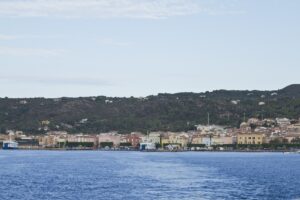
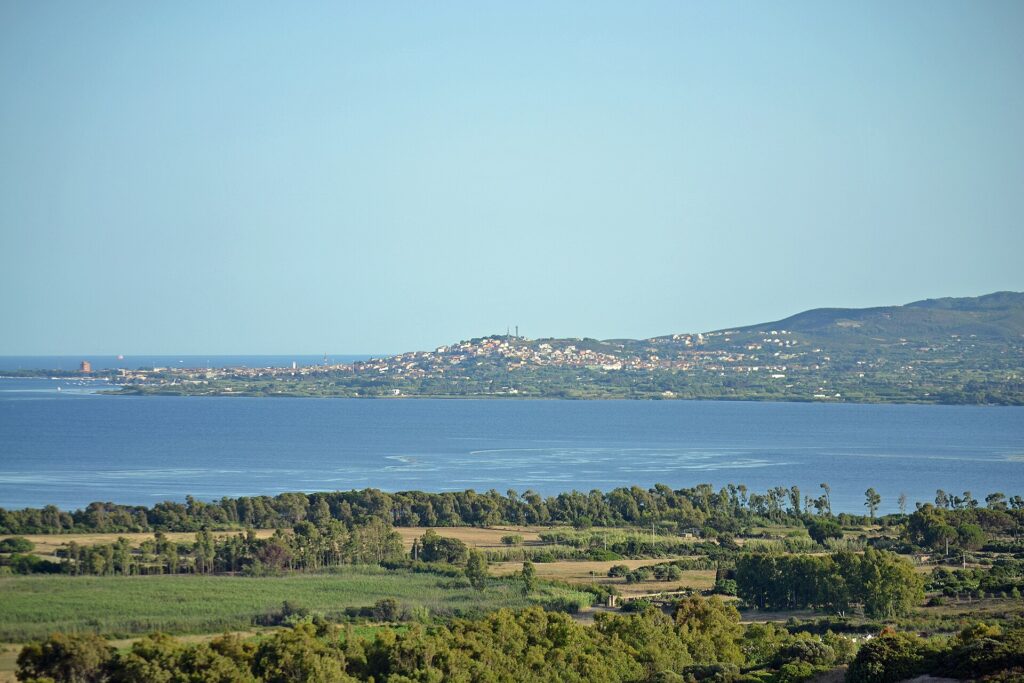
Sant'Antioco is the main town on the island of the same name, the largest in the Sulcis archipelago off south-west Sardinia, linked to the mainland by a causeway you can drive across. It's one of the oldest cities in the western Mediterranean: the Phoenicians founded Sulky here almost three thousand years ago, and today's town is built literally on top of its necropolises. It combines first-rate archaeology, a jagged coast of coves and cliffs, salt pans, living seafaring traditions and the rare craft of sea silk. Perfect if you love history, an authentic seaside and an island still far from mass tourism.
What to see in Sant'Antioco
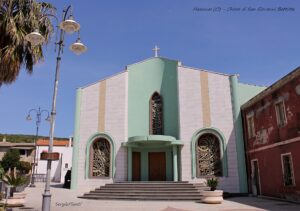
Basilica of Sant'Antioco Martire and the catacombs
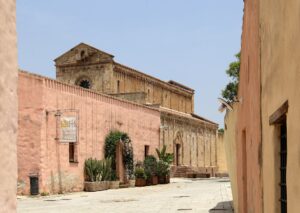
In the heart of town stands the Basilica of Sant'Antioco Martire, an early Christian church dedicated to the saint who, according to tradition, was martyred here in the 2nd century. Beneath it lie the catacombs, the only ones in Sardinia: ancient Punic tombs reused by the first Christians as a network of galleries and burial chambers. The church was made a minor basilica in 1991.
The Tophet and the Punic necropolis
The Tophet is an open-air Phoenician-Punic sanctuary on an outcrop of volcanic rock, where urns containing the ashes of children who died very young were placed. The Punic necropolis, on the town's hill, has many rock-cut chamber tombs. From the 18th century until the last century, some of these tombs were used as homes by the poorest families: this is the so-called villaggio ipogeo (underground village), whose gruttas (caves) you can visit today.
"Ferruccio Barreca" Archaeological Museum
The Ferruccio Barreca Archaeological Museum tells the island's story from prehistory to Roman times, with pottery, Tophet stelae, jewellery, sculptures and mosaics. It's the place to understand just how important Sulky was – one of the richest cities of ancient Sardinia.
The museums of tradition
Sant'Antioco also has small museums on everyday life of the past: the ethnographic museum Su Magasinu 'e su Binu ("the wine store"), with tools of rural work; the Museo del Bisso, explaining how "sea silk" is worked; and MuMa, the Museum of the Sea and of the Master Shipwrights, devoted to fishing and wooden boatbuilding.
Roman bridge, Forte Su Pisu and Grutti 'e Acqua
At the entrance to the island, by the causeway, is the Roman bridge. Above the town rises Forte Su Pisu, built in 1812, and on the coast stands the Torre Canai (1757). Inland, the nuragic complex of Grutti 'e Acqua, with a multi-towered nuraghe and a large village, shows that people lived here long before the Phoenicians.
Things to do in Sant'Antioco
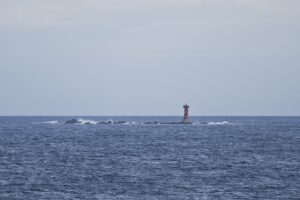
The best way to discover the island is from the sea: on a boat trip you sail past cliffs, caves and coves reachable only by water, out to the islets of Il Toro, La Vacca and Il Vitello, where Eleonora's falcon nests. Clear water and rocky seabeds are ideal for snorkelling and diving, and the more sheltered coast is great for kayaking and SUP. Sant'Antioco keeps one of Sardinia's liveliest lateen sail traditions: heading out on a traditional lateen-rigged boat is a rare experience.
On land you can walk or cycle the scenic roads to the south of the island, watch birds in the salt pans and lagoon (where flamingos are often seen), join guided tours of the Tophet, necropolis and catacombs, or take part in weaving workshops and Carignano wine tastings.
The experiences offered by Sant'Antioco operators are listed below: choose your boat trip, bike ride or archaeological tour and book it directly with them.
Beaches in Sant'Antioco
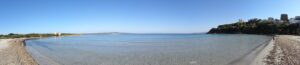
- Maladroxia: the best-known beach, in a sheltered bay with pale sand and a small harbour; marine thermal springs rise here. Good for families.
- Coaquaddus: a wide sandy beach on the south coast with clear water and views of the islets.
- Cala Sapone: a small cove among reddish rocks on the west coast, with crystal-clear water and gorgeous sunsets; excellent for snorkelling.
- Portu Sciusciau and Is Praneddas: wild, rocky inlets; near Is Praneddas is the Arco dei Baci ("Arch of Kisses"), a natural rock arch over the sea.
- Spiaggia dell'Istmo: a long strip of sand on the lagoon side at the island's entrance, convenient and shallow.
The west coast is wilder and exposed to the mistral wind: on windy days, choose Maladroxia or the beaches on the eastern side.
History
The island was already inhabited in the nuragic age, as Grutti 'e Acqua shows. In the first half of the 8th century BC Phoenician merchants founded Sulky, one of the first cities in the western Mediterranean. At the end of the 6th century BC it came under Carthage, and in 258 BC the Battle of Sulci was fought near the islets of La Vacca and Il Toro, won by the Roman fleet. Under Rome, from 238 BC, Sulci flourished as a rich, important port; Caesar fined it heavily in 46 BC for backing Pompey. According to tradition, Antiochus, a physician from the East, was martyred here in the 2nd century AD and later gave the island its name. After the Byzantines, Saracen raids emptied the area for centuries and the bishop's seat moved to Tratalias. The island was repopulated in the 18th century under the House of Savoy, mainly by families from Iglesias; in the 20th century the port became important for coal from the nearby Sulcis mines.
What to eat and what to buy
The cooking is all about the sea: fresh fish, shellfish, lobster, bottarga (cured roe) and the prized tuna of the Sulcis area. The island's vineyards, many on sandy soils, produce Carignano del Sulcis, a robust and fragrant red to enjoy with sheep's cheeses and homemade bread. For the saint's festival, people bake coccòi de su Santu, white breads decorated with great care. Souvenirs to take home: hand-woven rugs and textiles, items linked to byssus ("sea silk", made from the filaments of the Pinna nobilis, now a protected species), sea salt, Carignano wine and bottarga.
Festivals and traditions
The main event is the Sagra di Sant'Antioco, held fifteen days after Easter: groups in traditional dress arrive from all over Sardinia, and the town fills with processions, music and dancing; on the Saturday before, the Is coccoisi parade of votive breads takes place. The saint is also celebrated on 1 August with another procession and on 13 November, the official religious feast day. Holy Week rites are deeply evocative: on Good Friday a Catalan-style procession carries the dead Christ on a gilded catafalque, and on Easter morning S'Incontru sees the risen Christ and the Madonna meet in the main square.
Nearby
- Calasetta: the island's other town, of Tabarkan (Ligurian) origin, with pale beaches and ferries to Carloforte, about 15 minutes away.
- Carloforte and the island of San Pietro: a Ligurian-Tabarkan village, cliffs and tuna, reachable by ferry.
- Tratalias: the Romanesque cathedral of Santa Maria di Monserrato, once the bishop's seat of the Sulcis, about 25 minutes away.
- Carbonia: a town founded in 1938, with the Grande Miniera di Serbariu mining museum, about 20 minutes away.
Getting there and when to go
The nearest airport is Cagliari-Elmas, about an hour and a half's drive; from Cagliari take the SS130 towards Iglesias and then the roads to Carbonia and the Sulcis, or the south-west coastal road. You reach the island via the causeway, with no ferry needed. The nearest port for ferries from mainland Italy is Cagliari; ferries to Carloforte leave from Calasetta and Portovesme. The best time is May to October: June and September are ideal for the sea, while spring, with the big Sagra after Easter, is perfect for traditions, archaeology and nature.
Frequently asked questions
Do you need a ferry to get to Sant'Antioco?
No: the island is joined to Sardinia by a road causeway, so you can simply drive there. You only need a ferry to continue to Carloforte.
How many days do you need for Sant'Antioco?
One full day is enough for the main archaeological sites and museums; with three or four days you can add beaches, a boat trip and a visit to Calasetta and Carloforte.
Is Sant'Antioco good for families?
Yes: Maladroxia and the Istmo beach have shallow water, the town is relaxed, and the underground village and catacombs fascinate children too.
What is Sant'Antioco's sea silk?
Byssus is a filament produced by the Pinna nobilis, a large Mediterranean mollusc; worked by hand, it becomes a precious golden fabric. Sant'Antioco is one of the last places keeping this craft alive, and you can learn about it at the Museo del Bisso.