Things to do in Calasetta
Things to do in Calasetta, Sardinia: a Ligurian-founded village, the Savoy tower, beaches on Sant'Antioco, ferries to Carloforte and Carignano wine.
We are gathering the first experiences for this area. Check back soon, or tell us about an operator you know.
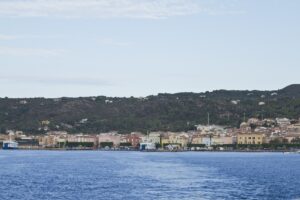
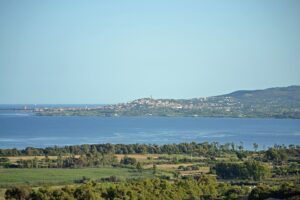
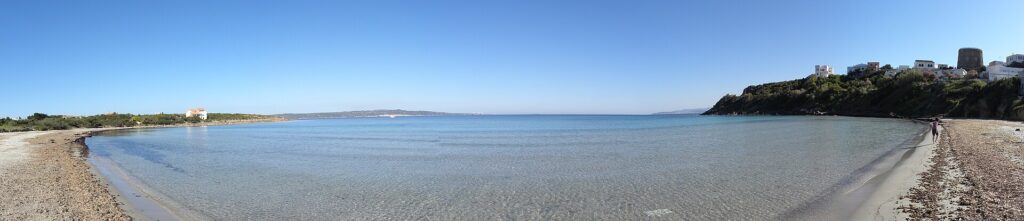
Calasetta sits at the northern tip of Sant'Antioco island, off Sardinia's south-west coast, facing the channel that separates it from San Pietro island. Founded in the 18th century by Ligurian settlers from Tabarka, it has straight streets, low white houses and its own dialect, Tabarchino, which sets it apart from every other Sardinian village. It is a relaxed base for clear water, rocky coves and fine sandy beaches, with the ferry to Carloforte right on the doorstep: ideal for families, couples and anyone who likes the slow pace of a seaside village.
What to see in Calasetta
The grid-plan old town
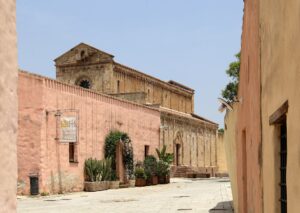
The village was planned on paper by the Piedmontese engineer Pietro Belly: a regular grid of parallel streets climbing from the harbour to the tower. Wandering among the whitewashed houses you will find small courtyards, shops and glimpses of the sea. Piazza del Municipio, with its clock turret and the bronze statue of a lookout soldier, is where the village gathers in the evening.
The Savoy Tower
Built in 1756, a few years before the village itself, the Torre Sabauda overlooks the centre. From its little hill there is a lovely view over the harbour, the channel and San Pietro island, especially at sunset.
San Maurizio church
The parish church, dedicated to the patron saint Maurice, was built in 1838 on a central plan.
MACC and the Tupei tombs
The old slaughterhouse now houses the MACC, a contemporary art museum with a collection focused on abstract art. In the Tupei countryside you can see domus de janas ("fairy houses"), prehistoric tombs carved into the rock some five thousand years ago.
Things to do in Calasetta
Life here revolves around the sea. The channel between Sant'Antioco and San Pietro is one of the finest stretches of the south-west: by boat or RIB you can reach the coves of the west coast and the cliffs of San Pietro, stopping to swim in crystal-clear water.
- Day trip to Carloforte: the ferry leaves from the village harbour and takes about half an hour to reach the area's other Tabarchino town.
- Snorkelling and diving: the rocky seabed around Mangiabarche and along the west coast is full of life.
- Kayak and SUP: sheltered coves make paddling easy even for beginners.
- Wine tasting: this is Carignano del Sulcis country, often from ungrafted vines growing in sand; a tasting makes a perfect late afternoon.
Just below on this page you will find boat trips, kayak outings and other experiences offered by local operators in Calasetta: pick the one that suits you and book.
Beaches in Calasetta
- Spiaggia Grande: the largest, south of the village, with fine sand, shallow water and facilities; great for families with small children.
- Sottotorre: the little beach beneath the tower, handy for a swim without the car.
- Cussorgia: towards the west coast, a mix of sand and rocks with very clear water.
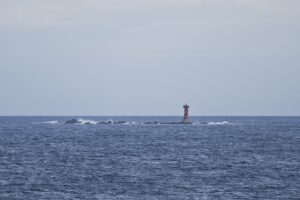
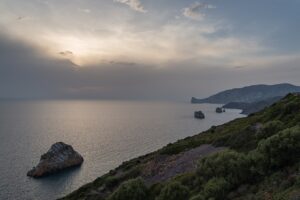
- Mangiabarche: dark rocks and a tiny lighthouse on a reef rather than a beach; spectacular at sunset and in rough seas.
History
The area was inhabited in prehistoric times, as the rock tombs show, and later fell within the orbit of nearby Sulky, the Phoenician, Punic and Roman city that is today Sant'Antioco. For centuries, however, this corner of the island was almost empty. Things changed in 1770, when the King of Sardinia granted the land to Ligurian families who had lived for generations on Tabarka, a small island off Tunisia, and to others from Tunis: that October about 130 settlers landed, led by Captain Giovanni Porcile. A few years later Piedmontese settlers joined them and were soon absorbed into the community. Fishing, vineyards and seafaring shaped the village until today's tourism.
Food and local products
The cooking blends Liguria, North Africa and Sardinia. Try cascà, the Tabarchino take on couscous with vegetables, fainé, a chickpea flatbread like Genoese farinata, and tuna in its many forms, from belly to dried roe. The signature wine is Carignano del Sulcis, a deep Mediterranean red. To take home: a bottle of Carignano, preserved tuna and local crafts.
Festivals and traditions
The most heartfelt celebration is for the patron San Maurizio in September, with a procession and events in the square. During the year you may see parades in the traditional Calasetta costume, and Tabarchino, still spoken at home and in the street, is a living part of local identity.
Nearby
- Carloforte on San Pietro island, reached by ferry: a Tabarchino town with the cliffs of Capo Sandalo and La Conca.
- Sant'Antioco, about 10 km away: the archaeological museum, the Punic tophet and the basilica with its catacombs.
- Portoscuso and Porto Pino on the mainland, for more beaches and the Su Pranu tuna fishery.
Getting there and when to go
The nearest airport is Cagliari-Elmas, about an hour and a half by car: take the SS130 towards Iglesias, then the roads to Carbonia and Sant'Antioco, which you reach across a causeway. Calasetta is about 10 km further on. You can also come from the port of Portovesme via Carloforte. The best time is May to October: June and September combine warm water with fewer people, while August is the liveliest month.
Frequently asked questions
How many days do you need in Calasetta?
The village takes half a day, but to enjoy the beaches, a boat trip and Carloforte, plan at least three or four days.
Is Calasetta good for families?
Yes: Spiaggia Grande has shallow water and fine sand, and the village is quiet and easy to explore on foot.
Why do people in Calasetta speak a Ligurian dialect?
Because the founders came from Tabarka, a Ligurian fishing colony off Tunisia: Tabarchino is a variety of Genoese with Sardinian words mixed in.