Things to do in Cagliari
Things to do in Cagliari, Sardinia: Castello old town, museums, Poetto beach, Molentargius flamingos, Sella del Diavolo hike, Sant'Efisio and local food.
We are gathering the first experiences for this area. Check back soon, or tell us about an operator you know.
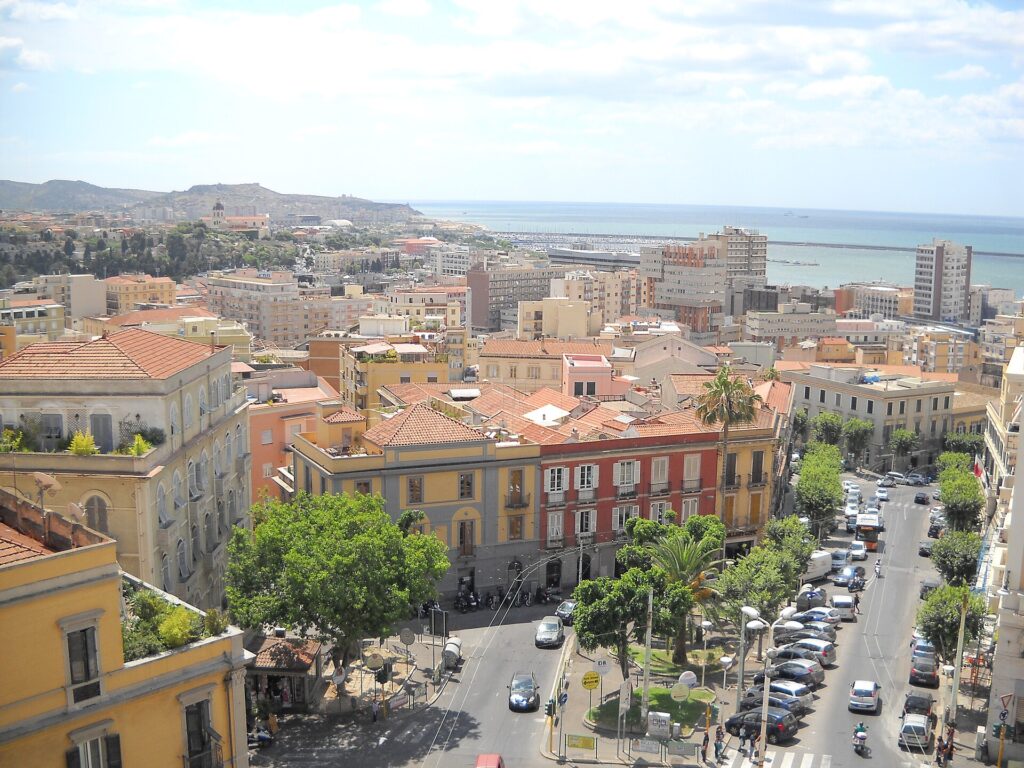
Cagliari is the capital of Sardinia, set on the wide bay in the south of the island that locals call the Golfo degli Angeli (Gulf of Angels). It's a city of sea and hills: in a few minutes you go from the medieval walls of the Castello district to the sand of Poetto beach, and pink flamingos live just a stone's throw from the houses. With almost three thousand years of history, first-class museums, generous seafood and an easygoing pace even in high summer, it suits everyone – couples, families, solo travellers and anyone looking for a convenient base to explore southern Sardinia.
What to see in Cagliari
The Castello district
The historic heart of the city is Castello (in Sardinian Casteddu, the name locals use for the whole of Cagliari), the fortified citadel the Pisans began building in 1217 on the highest hill. You enter through two great Pisan towers, the Torre di San Pancrazio and the Torre dell'Elefante, and wander through narrow lanes, noble palazzi and terraces overlooking the bay and the lagoons. Here you'll find the Cathedral of Santa Maria, with its Pisan Romanesque-style façade and a richly decorated Baroque interior, and the Palazzo Regio, once home to the viceroys.
Bastione di Saint Remy and the viewpoints
Built between the late 19th and early 20th century, the Bastione di Saint Remy links Castello to the lower districts with a monumental staircase and holds the large Belvedere terrace – at sunset it's one of the city's favourite spots.
Marina, Stampace and Villanova
Below Castello lie the other three historic districts. Marina, once home to fishermen and sailors, is now a maze of lively streets leading down to the arcades of Via Roma and the port. Stampace was the merchants' quarter, with the churches of Sant'Efisio and Sant'Anna; Villanova, the quarter of shepherds and farmers, still has low, colourful houses and flowery courtyards.
National Archaeological Museum and Cittadella dei Musei
Inside Castello, in the Cittadella dei Musei, the National Archaeological Museum is the place to understand Sardinia: nuragic bronze figurines, Phoenician, Punic and Roman finds, and part of the stone statues known as the Giants of Mont'e Prama, nuragic sculptures among the oldest in the western Mediterranean.
Roman and Punic Cagliari
The Roman amphitheatre, partly carved into the rock, held around ten thousand spectators. The Tuvixeddu archaeological park protects one of the largest Punic necropolises in the Mediterranean, with hundreds of shaft tombs.
Bonaria and San Saturnino
The Sanctuary of Nostra Signora di Bonaria, on the hill of the same name, is tied to the Aragonese and to seafaring tradition: the Madonna of Bonaria is the protector of sailors. The Basilica of San Saturnino, founded in the 5th century, is one of the oldest early Christian churches in Sardinia.
Things to do in Cagliari
Cagliari is a city to enjoy outdoors. The Molentargius-Saline Nature Park, between the city and Poetto, is a wetland where pink flamingos breed (in Sardinian sa genti arrubia, "the red people"): you can explore it on foot or by bike along flat trails, great with children. The Sella del Diavolo ("Devil's Saddle") headland offers a short but spectacular hike through Mediterranean scrub and old fortifications, with cliffs dropping into the sea.
From the water the city looks completely different: on a sailing trip or a RIB tour around the bay you can reach the coves below Capo Sant'Elia, swim away from the crowds and admire the Castello skyline. Poetto, breezy on summer afternoons, is a natural playground for windsurfing, kitesurfing, SUP and kayaking. Other ideas: walking tours of the old town, tastings of Sardinian wines such as Cannonau, Vermentino and Monica, cooking classes to learn how to pleat culurgiones (filled pasta), bike rides along the seafront, diving and day trips to Nora, Chia or Villasimius.
Further down this page you'll find the experiences offered by local operators in Cagliari: pick yours and book directly with the people who run it.
Beaches in Cagliari
Poetto
Poetto is the city's beach: about eight kilometres of pale sand from the Sella del Diavolo to the town of Quartu Sant'Elena. The seabed slopes gently, there are equipped lidos and free stretches, a long cycle path and kiosks open until late. It's perfect for families and water-sports fans, and locals enjoy it all year round, even just for a stroll.
Calamosca
Between Capo Sant'Elia and Poetto lies the small cove of Calamosca, tucked between rocks with clear water: more sheltered and quiet, it's ideal for snorkelling and a sunset swim.
History
The Phoenicians founded a landing place near the Santa Gilla lagoon; in the 6th century BC the city came under Carthage, the period of the Tuvixeddu necropolis. The Romans arrived in 238 BC: Karales became a municipium under Caesar and was the island's most important city. In the Middle Ages it was the seat of the Judicate of Cagliari, with its capital at Santa Igia; from 1217 the Pisans fortified the Castello hill, and in 1258 Santa Igia was destroyed. The Aragonese took the city between 1323 and 1326, followed by a long Spanish period and, from 1720, rule by the House of Savoy: Cagliari was capital of the Kingdom of Sardinia and hosted the royal court during the Napoleonic years. Heavy bombing in 1943 destroyed much of the city, which was rebuilt after the war and is today a lively regional capital, university city and gateway to the south of the island.
What to eat and what to buy
Cagliari's cooking is above all about the sea. Try fregula cun cocciula (fregola, a toasted semolina pasta, with clams), spaghetti with mullet bottarga (cured roe), local fish soup and, in the colder months, sea urchins, eaten raw or with spaghetti. From the wider Sardinian tradition come malloreddus (small gnocchi) with sausage sauce, culurgiones, carasau flatbread and sheep's cheeses. For dessert: ricotta pardulas, honey-drizzled sebadas, amaretti and almond brittle. The San Benedetto Market, one of Italy's largest covered markets, is the place to see and buy fish, cheese, cured meats and sweets. Good souvenirs: bottarga, Sardinian wine, myrtle liqueur, handmade knives, rugs, ceramics and gold or silver filigree.
Festivals and traditions
The great festival is Sant'Efisio on 1 May: for more than three and a half centuries the city has kept the vow made to the saint during the plague of 1652. Thousands of people in traditional dress from all over the island, traccas (decorated ox carts), horsemen and players of the launeddas (triple reed pipes) escort the saint's carriage through streets strewn with rose petals; the procession then continues on foot to Nora and returns a few days later. Holy Week rites are also deeply felt, as is the feast of the patron saint San Saturnino on 30 October.
Nearby
- Nora (Pula): a Phoenician-Punic and Roman town by the sea, with a theatre and mosaics, about 40 minutes by car.
- Villasimius: white beaches and the Capo Carbonara marine reserve, about an hour away.
- Sette Fratelli forest: granite mountains, Sardinian red deer and trails, about 45 minutes away.
- Su Nuraxi di Barumini: the UNESCO-listed nuragic complex, about an hour inland.
Getting there and when to go
Cagliari-Elmas airport is just a few kilometres from the centre, linked by train and bus. The port has ferries from mainland Italy and Sicily and plenty of cruise ships. The SS131 Carlo Felice highway connects Cagliari with Oristano, Sassari and the north. The best months are May, June, September and October: the sea is warm, crowds are thinner and temperatures are pleasant for sightseeing. July and August are perfect for the beach but hot; winter is mild and great for museums, food and walks – and in early May, Sant'Efisio alone is worth the trip.
Frequently asked questions
How many days do you need for Cagliari?
Two days cover Castello, the main museums, Poetto and Molentargius. With three or four you can add the Sella del Diavolo, a boat trip and an excursion to Nora or Villasimius.
Is Cagliari good for families?
Yes: Poetto has shallow water and facilities, Molentargius park is flat and full of birds to watch, and distances in the city are short.
When can you see flamingos in Cagliari?
Flamingos are at Molentargius practically all year round; in spring and summer it's easier to spot the breeding colonies.