Things to do in Carloforte
Things to do in Carloforte on San Pietro island, Sardinia: Tabarchino town, Capo Sandalo, Le Colonne, beaches, boat trips, tuna and Girotonno.
We are gathering the first experiences for this area. Check back soon, or tell us about an operator you know.
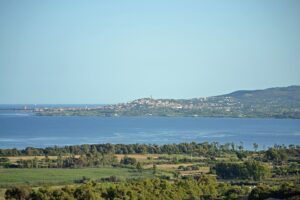
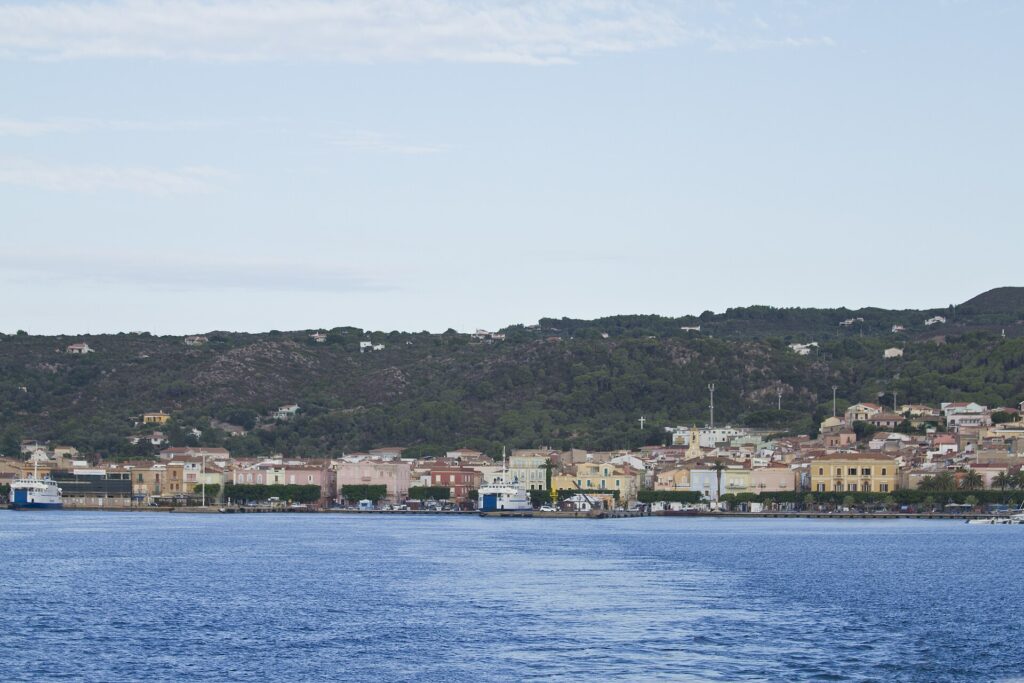
Carloforte is the only town on the island of San Pietro, off south-west Sardinia, just a few miles from the Sulcis coast. Founded in the 18th century by families of Ligurian origin who came from Tunisia, it has a character all its own: people speak tabarchino, a Genoese dialect, the colourful seafront houses look like a postcard from the Italian Riviera and the food blends Liguria, North Africa and Sardinia around bluefin tuna. All around are volcanic cliffs, coves, sea stacks and clear water to explore by boat. It's perfect if you want a laid-back island with great food, sea and nature, and it works well for families too.
What to see in Carloforte
The old town and the seafront
The heart of Carloforte is its seafront, with pastel façades, palm trees and the harbour where ferries dock and fishing boats come home. Here stands the monument to Carlo Emanuele III, the Savoy king who granted the island to its founders and gave the town its name. Behind it, steep Ligurian-style lanes called carruggi climb to the remains of the 18th-century defensive walls and the Porta del Leone (Lion Gate). The sunset stroll, when everyone comes out into the square, is a ritual not to miss.
Torre San Vittorio
Built in 1768 to defend the town, the hilltop tower later served as an astronomical observatory for studying variations in latitude. Today it houses a multimedia museum and is one of the best viewpoints over the town and the channel separating the island from Sardinia.
The churches
The parish church of San Carlo Borromeo dominates the centre, while the church of the Madonna dello Schiavo ("Our Lady of the Slave") holds the islanders' most beloved statue: tradition says it was found on a Tunisian beach by a Carloforte man kidnapped by pirates during his years of slavery, and brought back after his release. The little Chiesetta delle Fontane is also charming.
Capo Sandalo and the west coast
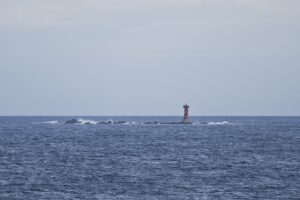
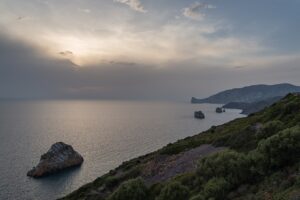
The island's western side is a succession of volcanic cliffs plunging into the sea. At its tip is Capo Sandalo, with its lighthouse and one of the most spectacular sunsets in Sardinia. This is home to one of the Mediterranean's most important colonies of Eleonora's falcon, which arrives in spring and leaves for Madagascar in autumn; part of the coast is protected as a LIPU (Italian bird protection league) reserve.
Le Colonne and the salt pans
To the south, two trachyte sea stacks, Le Colonne ("the Columns"), rise from the water near La Bobba beach: they're one of the island's symbols. On the edge of town, the salt pans are a wetland visited by pink flamingos and other waterbirds.
Things to do in Carloforte
- Boat trips around the island, by sailboat or dinghy: sea caves, coves you can only reach from the water, and Capo Sandalo and Le Colonne seen from the sea.
- Diving and snorkelling over rocky seabeds full of life, caves and shoals.
- Fishing tourism trips with local fishermen, to discover traditional sea crafts.
- Hiking and cycling on the island's trails and roads towards Capo Sandalo, Cala Fico and La Punta, among Mediterranean scrub and dwarf palms, Europe's only native palm.
- Kayaking along the sheltered shores.
- Birdwatching at the salt pans and on the falcon cliffs.
- Cooking experiences to learn cascà and traditional tuna recipes.
Just below you'll find the experiences offered by Carloforte's local operators: boat trips, dives, excursions and tastings. Pick yours and book before you go.
Beaches of Carloforte
La Caletta
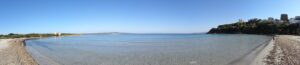
Also called Spalmatore, it's the island's widest beach: pale sand, turquoise sea and a gently sloping seabed between two headlands. The easiest choice for families with children.
La Bobba and Le Colonne
A small sand-and-rock beach on the south coast, looking out at the Colonne sea stacks. Great for snorkelling on calm days.
Guidi, Girin and Punta Nera
The south coast has small sandy beaches and rocky coves such as Guidi and Girin, cosy and intimate. Towards Punta Nera lies Giunco beach, one of the largest on the island.
Cala Fico and the rocky coves
On the west and north coasts the sea gets wilder: Cala Fico is an inlet of volcanic rock with deep, crystal-clear water, loved by swimmers and cliff-jumpers. Not suitable for small children.
History
San Pietro was known to the Phoenicians and Romans, who called it the "island of hawks" after the birds of prey nesting there; tradition says its current name recalls a landing by the apostle Peter. For centuries, though, it was almost uninhabited. Carloforte's story begins in 1738, when a group of Ligurian families, the Tabarchini, received permission from King Carlo Emanuele III of Savoy to settle on the island. They were descendants of coral fishermen who had left Pegli, near Genoa, in the 16th century for the islet of Tabarka in Tunisia. In 1798 a raid by Tunisian pirates carried more than nine hundred islanders into slavery; they only returned home five years later. In the following centuries the town lived from fishing, the tuna trap and maritime trade, keeping its Ligurian language and traditions to this day.
What to eat and buy
The star is bluefin tuna, caught with the historic tuna trap (tonnara) of Isola Piana: eat it fresh and in countless traditional ways, from ventresca (belly) to tuna bottarga, musciame (dried fillet) and preserves. Ligurian and Tunisian roots show in cascà, the Tabarchino couscous with vegetables, in fainà, an oven-baked chickpea flatbread, and in pesto, often paired with tuna. To take home: tuna preserves, bottarga, fish products and sea-themed crafts.
Festivals and traditions
- Tabarchino Couscous Festival, in the second half of April, dedicated to cascà.
- Girotonno, from late May to early June, during the tuna season: cooking contests, tastings and shows.
- Feast of San Pietro, on 29 June, with a procession at sea and decorated boats.
- Madonna dello Schiavo, in mid-November, the islanders' most heartfelt feast.
Alongside Italian, tabarchino is still the home language for most residents: hearing it at the market or by the harbour is part of the trip.
Around Carloforte
- Calasetta and Sant'Antioco, reached by ferry: Calasetta was also founded by Tabarchini, and Sant'Antioco has catacombs and an important archaeological museum.
- Portoscuso, near the port of Portovesme, with its historic tuna trap.
- Nebida, Masua and Pan di Zucchero, on the Iglesias coast, with seaside mines and Porto Flavia.
- Carbonia, with the coal museum in the Serbariu mine.
Getting there and when to go
Carloforte is reached by ferry from Portovesme, on the Sulcis coast, in about 35–40 minutes, or from Calasetta, on Sant'Antioco island, in about half an hour; the Calasetta route is more sheltered in rough seas. The nearest airport is Cagliari-Elmas, about an hour and a quarter by car from Portovesme. May to October is the best time; June and September combine warm sea, fewer crowds and, in early summer, the Girotonno. In August, book the car ferry ahead. The island is exposed to the mistral: on windy days choose the beaches on the east coast.
FAQ
How many days do you need in Carloforte?
A day trip lets you see the town and one beach, but to really enjoy the island, with a boat tour and Capo Sandalo, allow at least three days.
Do you need a car on San Pietro?
Not necessarily: the town is walkable and the beaches are a few kilometres away, easy to reach by bike or scooter. A car is handy for exploring the west coast.
Is Carloforte good for families?
Yes: La Caletta has shallow water, the town is calm and safe, and kids love the boat trips.
Why do people in Carloforte speak Genoese?
Because the town was founded by Tabarchino families of Ligurian origin, who have kept their dialect, tabarchino, for almost three centuries; most residents still speak it.