Things to do in Villasimius
Things to do in Villasimius, Sardinia: Porto Giunco and Punta Molentis beaches, Capo Carbonara marine reserve, boat trips, diving, flamingos and festivals.
We are gathering the first experiences for this area. Check back soon, or tell us about an operator you know.
Villasimius sits on the south-eastern tip of Sardinia, where the Gulf of Cagliari meets the open sea, about an hour's drive from the capital. It's one of the island's best-known beach destinations: dazzling white sand, water shifting from turquoise to deep blue, pinkish granite and a marine reserve among the most beautiful in the Mediterranean. The town itself is compact and lively, with little squares and a main street buzzing on summer evenings. It's perfect for families, couples and anyone who loves the sea, snorkelling, diving and boat trips.
What to see in Villasimius
Capo Carbonara Marine Protected Area
Created in 1998, the Capo Carbonara Marine Protected Area protects the waters around the headland, the Isola dei Cavoli (with its lighthouse) and the Isola di Serpentara. Below the surface you'll find posidonia seagrass meadows, granite shoals, groupers, barracuda and, on lucky days, dolphins. It's the main reason divers and snorkellers love Villasimius.
The Fortezza Vecchia
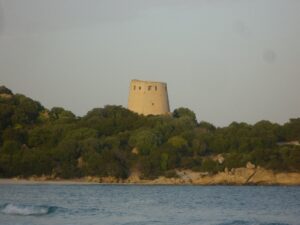
By the sea, near the marina, stands the Fortezza Vecchia ("Old Fortress"), a small Spanish-era fort built to defend the coast from Barbary raids. It overlooks the gulf and hosts exhibitions and events in summer. Several watchtowers from the same period dot the coast, including the one above Porto Giunco.
Archaeological Museum
The town's Archaeological Museum is small but well curated, with four rooms: the sea, the territory, the Phoenician sanctuary of Cuccureddus (possibly dedicated to the goddess Astarte) and the Isola dei Cavoli shipwreck, with finds from a ship that sank off the island. A good stop to discover thousands of years of history behind the beaches.
Notteri lagoon
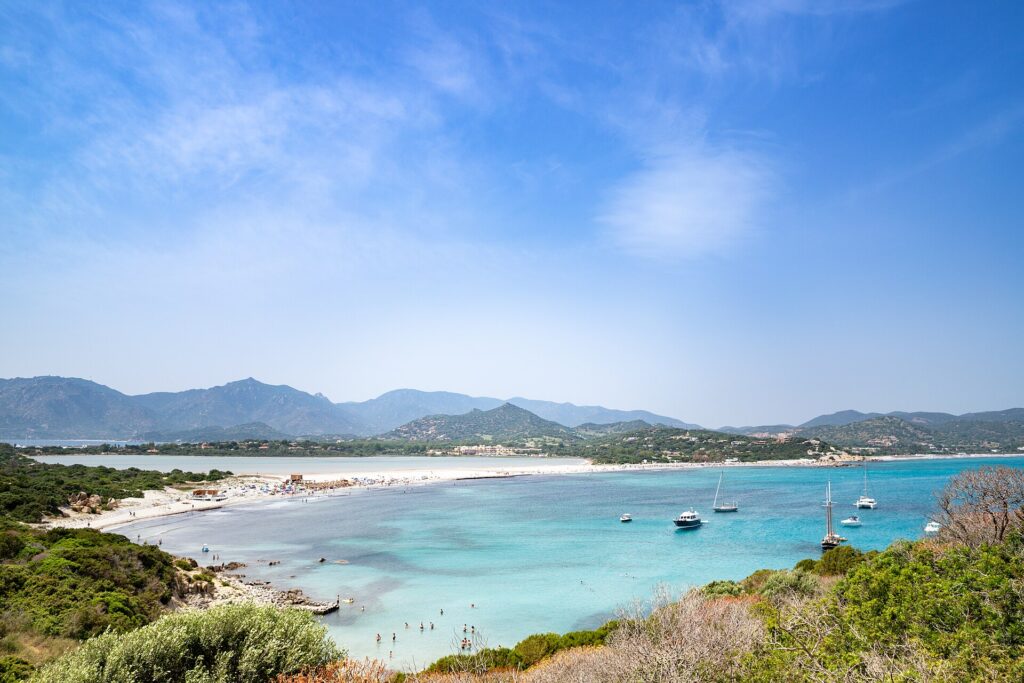
Between the beaches of Porto Giunco and Timi Ama lies the Stagno di Notteri, a brackish lagoon where pink flamingos often gather. Seeing them against a turquoise sea is one of Villasimius's signature images.
The town and the church of San Raffaele
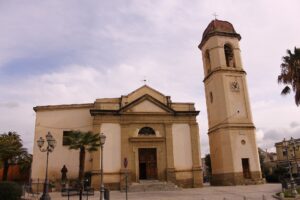
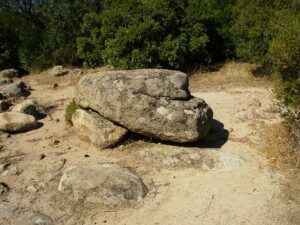
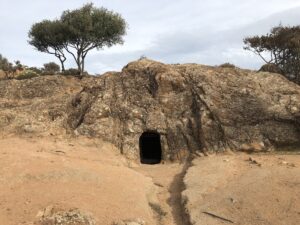
In the centre is the parish church of San Raffaele Arcangelo, the patron saint. The surrounding area also keeps older traces: domus de janas (prehistoric rock-cut tombs whose name means "fairy houses"), nuraghi such as the one at Cuccureddus, and the remains of the Roman baths of Santa Maria.
Things to do in Villasimius
Here the sea takes centre stage. A boat trip in the marine reserve is the experience not to miss: you sail past Capo Carbonara, Isola dei Cavoli and Serpentara, stopping to swim in coves you can only reach by sea. Divers will find some of Sardinia's finest granite shoals and walls, suitable for different levels; if you'd rather stay on the surface, snorkelling reveals sea life just a few metres from the shore.
You can also explore the coast by kayak or SUP, rent a small motorboat for a day of freedom, go out on a sailing boat at sunset or join a fishing trip. On land there are easy walks, such as the one up to the Porto Giunco tower, with a sweeping view over the Notteri lagoon and the beaches on either side, plus mountain-bike and horse-riding routes through the granite and scrub inland. In the evening the town comes alive with strolls, aperitifs and street markets.
Among the experiences offered by Villasimius operators, listed just below, choose your boat trip or excursion and book it directly with the people who run it.
Beaches in Villasimius
- Porto Giunco: the most famous beach, long and with very pale sand, turquoise water on one side and the Notteri lagoon with its flamingos on the other. Great for everyone, very busy in August.
- Timi Ama: the continuation of Porto Giunco on the other side of the lagoon, wide and bright, with views of Isola dei Cavoli.
- Simius: the beach closest to town, long and convenient, with shallow water and facilities – ideal for families with young children.
- Punta Molentis: a narrow strip of sand between two coves and granite rocks, one of the most photographed spots around; access is regulated in summer to protect it.
- Campulongu: near the marina, sheltered and calm, the starting point for many sea activities.
- Cala Caterina and Spiaggia del Riso: small rocky coves on the western side; the latter is named after its coarse, rounded grains of sand that look like rice. Perfect for snorkelling.
When the mistral (north-westerly) blows, choose east-facing beaches such as Porto Giunco or Simius; with the sirocco, head for the Campulongu side.
History
People have lived here for millennia, as domus de janas and nuraghi from the 2nd millennium BC show. From the 7th century BC the Phoenicians built a sanctuary at Cuccureddus, destroyed around 540 BC; the Roman era left baths, coins and a statue. In the Middle Ages there was a village called Carbonara, mentioned in 13th-century documents, while in the 16th and 17th centuries the Spanish built coastal towers and the Fortezza Vecchia against pirates. Carbonara became an independent municipality in 1853 and took the name Villasimius in 1862. For most of the 20th century it was a small community of fishermen and farmers; from the 1960s and 1970s tourism changed everything, and the creation of the marine reserve has helped preserve its beauty.
What to eat and what to buy
In Villasimius you'll mostly eat fish: shellfish, lobster, fregola with clams, spaghetti with bottarga (cured mullet roe), grilled fish and, in the colder months, sea urchins. Alongside the seafood you'll find classic Sardinian dishes: culurgiones (filled pasta), malloreddus (small gnocchi), porceddu (roast suckling pig), sheep's cheeses and carasau flatbread. Finish with honey-drizzled sebadas or almond sweets and a small glass of myrtle liqueur. To take home: bottarga, southern Sardinian wines such as Vermentino and Cannonau, honey, myrtle and small pieces of Sardinian craftwork.
Festivals and traditions
The most moving festival is the Madonna del Naufrago ("Madonna of the Shipwrecked"), held every summer since 1979 in mid-July. Off Isola dei Cavoli, about eleven metres down, lies a pink trachyte statue of the Madonna and Child by the Sardinian sculptor Pinuccio Sciola: during the festival a procession of boats leaves the harbour for the spot above the statue, where a wreath is laid in memory of those lost at sea. The patron saint, San Raffaele Arcangelo, is celebrated in autumn, around 24 October, with religious rites and festivities in town.
Nearby
- Castiadas: Cala Pira, Cala Sinzias and the former penal colony, about 20–30 minutes away.
- Costa Rei: a long beach of pale sand on the east coast, about 40 minutes away.
- Solanas and the scenic road to Cagliari: small coves and cliff-top viewpoints.
- Sette Fratelli forest: granite peaks, woods and Sardinian red deer, for a day of hiking.
- Cagliari: the Castello district, museums and Poetto beach, about an hour away.
Getting there and when to go
The nearest airport is Cagliari-Elmas, about an hour's drive away; ferries also arrive at Cagliari port. From Cagliari you can take the scenic coastal road (the SP17, winding and full of views) or the faster inland route. The town has a marina. The best time is May to October: June and September offer warm water, stunning colours and fewer crowds; July and August are high season, lively but busy. Spring and autumn are ideal for hiking and cycling.
Frequently asked questions
How many days do you need in Villasimius?
To see the main beaches and take a boat trip in the marine reserve, plan at least three days; a week lets you add diving, hikes and a visit to Cagliari.
Is Villasimius good for families?
Very: beaches such as Simius and Campulongu have shallow water and facilities, the town is quiet and child-friendly, and boat trips are an adventure for little ones too.
What is the most beautiful beach in Villasimius?
Porto Giunco is the most famous, with the flamingo lagoon behind it; Punta Molentis is the most spectacular. A lot depends on the day's wind.
Can you see flamingos in Villasimius?
Yes, in the Notteri lagoon behind Porto Giunco, where they're present for much of the year.