Things to do in Castiadas
Things to do in Castiadas, Sardinia: Cala Sinzias, Cala Pira and Costa Rei beaches, the Old Penal Colony, Sette Fratelli hikes, boat trips and local food.
We are gathering the first experiences for this area. Check back soon, or tell us about an operator you know.
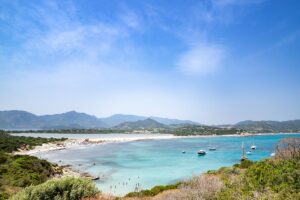
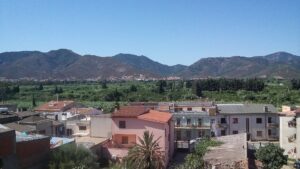
Castiadas lies in south-eastern Sardinia, between Villasimius and Muravera, in a fertile valley backed by the granite mountains of the Sette Fratelli ("Seven Brothers"). It's a "scattered" municipality: there's no real town centre, but many small hamlets among citrus groves, fields and scrub, and about 13 kilometres of coastline with some of the palest beaches in the south of the island, from Cala Sinzias and Cala Pira to the southern stretch of Costa Rei. It's the right place if you're after clear water, wide open spaces, nature and peace and quiet – ideal for families, campers, hikers and anyone who likes a less built-up Sardinia.
What to see in Castiadas
The Old Penal Colony
The symbol of Castiadas is the Vecchia Colonia Penale (Old Penal Colony). In the second half of the 19th century the state set up an agricultural penal colony here: inmates reclaimed a valley that had been abandoned for centuries and plagued by malaria, building houses, canals and farmland. The colony closed in the 1950s; today the large complex, with its courtyard, cells and old workshops, is a place of visits and memory that hosts exhibitions and events. Seeing it helps you understand how the farming landscape around you was born.
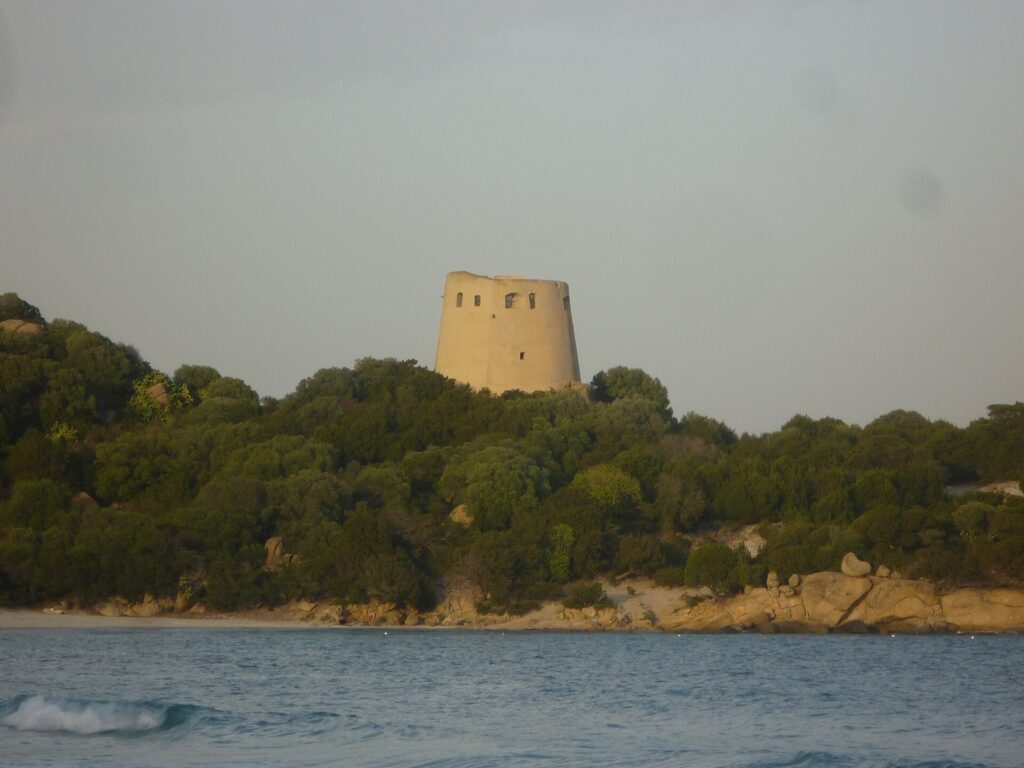
The Cala Pira tower
On the headland sheltering Cala Pira bay stands the Torre di Cala Pira, a Spanish-era coastal tower built to spot pirate ships. The climb is short and the view takes in the bay, the dunes and the island of Serpentara.
The hamlets and the church of San Basilide
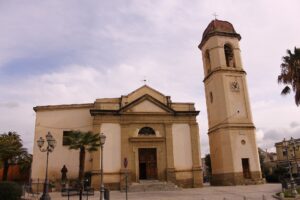
The hamlets of Castiadas tell the valley's recent history: some, such as Annunziata and Olia Speciosa, were founded after the Second World War with land reform, when plots were allotted to farming families. Among the places of worship is the church of San Basilide. The area also has traces of nuragic, Punic and Roman settlements.
The Sette Fratelli oasis
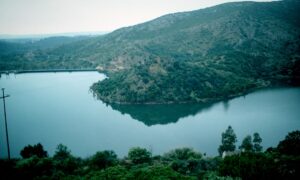
Behind the valley rise the Sette Fratelli mountains, one of the largest wooded areas in southern Sardinia: canyons, gorges, streams, holm oaks and cork oaks, home to Sardinian red deer and mouflon. One of its best-known natural monuments is the Arco dell'Angelo ("Angel's Arch"), a pink granite arch sculpted by erosion.
Things to do in Castiadas
A typical day in Castiadas is split between sea and nature. Long beaches and shallow water are perfect for swimming, snorkelling along the granite rocks and kayaking or SUP on calm mornings. On a boat trip you can reach the most hidden coves, the island of Serpentara and the waters of the Capo Carbonara marine reserve just to the south.
Inland you can explore on foot, by mountain bike or on horseback along dirt tracks, citrus groves and scrub-covered hills; fitter walkers can tackle the Sette Fratelli trails, ideally with a guide, to spot deer and reach the Arco dell'Angelo. Visits to the Old Penal Colony and tastings of local produce – citrus, vegetables, honey, olive oil and wine – are also well worth it.
Scroll down: just below you'll find the activities offered by Castiadas operators, from boat trips to excursions, to book directly with them.
Beaches in Castiadas
- Cala Sinzias: about two kilometres of soft, pale sand with clear water and a backdrop of pines, mastic shrubs and eucalyptus. The seabed slopes gently, making it great for families; campsites and camper areas are nearby.
- Cala Pira: a sheltered bay among dunes, junipers and granite, watched over by its tower. Turquoise water, shallow in the middle and with rocks on the sides for snorkelling.
- Costa Rei (Santa Giusta and Cannisoni): the southern part of the famous Costa Rei belongs to Castiadas, with the beaches of Cannisoni and Santa Giusta up to the well-known Scoglio di Peppino, a large flat rock at the water's edge on the border with Muravera. Fine pale sand, long walks along the shore and views of Serpentara.
- Cala Sant'Elmo: smaller, set among granite rocks; pleasant if you want more quiet.
- Cala Marina (San Pietro): a wide beach, easy to reach and with clear water.
Thanks to the mild climate, these beaches are lovely in spring and autumn too, when you'll often have them almost to yourself.
History
The Castiadas valley has been inhabited since prehistoric times, with nuragic, Punic and Roman traces. In the Middle Ages it belonged to the Judicate of Cagliari, then passed to Pisa and finally to the Crown of Aragon. In the 14th century the village of Villanova Castiadas was founded, only to be abandoned in the 16th century because of plague, malaria and raids from the sea. For more than three centuries the area stayed almost empty, until in the 19th century it was reclaimed with the creation of the agricultural penal colony. After the Second World War land reform brought new farming hamlets, and from the 1960s tourism began to discover the coast. Castiadas only became an independent municipality in 1986, separating from the territories of Villaputzu, San Vito and Muravera.
What to eat and what to buy
The valley is known for its citrus fruit and vegetables, grown in soil made fertile by land reclamation: oranges, mandarins and lemons are a speciality to buy directly from the farms. On the table you'll find fresh fish from the coast, culurgiones (filled pasta), malloreddus (small gnocchi), roast meats such as porceddu (suckling pig), sheep's cheeses and carasau flatbread, with Sarrabus wines such as Cannonau and Vermentino. Typical Sardinian sweets include honey-drizzled sebadas, ricotta pardulas and almond pastries. To take home: citrus, honey, olive oil, wine, cheese and myrtle liqueur.
Festivals and traditions
The patron saint, San Giovanni Battista (St John the Baptist), is traditionally celebrated on the last weekend of June, with a procession and festivities that bring the hamlets together. On 15 August the Assumption is celebrated in the heart of summer. As across the Sarrabus area, festivals are a chance to see traditional costumes, Sardinian singing and dancing.
Nearby
- Villasimius: Porto Giunco, Punta Molentis and the Capo Carbonara marine reserve, about 20–30 minutes away.
- Costa Rei (Muravera): the resort and the central part of the long beach, a few minutes away.
- Capo Ferrato and Muravera: cliffs, wild beaches, citrus groves and lagoons of the Sarrabus, about 30–40 minutes away.
- Sette Fratelli forest: woodland trails and Sardinian red deer, right behind the valley.
- Cagliari: the regional capital, with the Castello district and museums, about an hour away.
Getting there and when to go
The nearest airport is Cagliari-Elmas, about an hour's drive away; Cagliari port is also the reference point if you arrive by ferry. You can reach Castiadas from Cagliari via Villasimius and the coast road, or inland on the SS125 and the new Orientale Sarda road towards Muravera. Because the municipality is so spread out, a car is essential. The best time is May to October: June and September are ideal for warm water and fewer crowds; spring and autumn are perfect for hiking and cycling in the Sette Fratelli.
Frequently asked questions
Is Costa Rei in Castiadas or Muravera?
Both: the Costa Rei resort and the central part of the beach are in Muravera, while the southern stretch – Santa Giusta, Cannisoni and the Scoglio di Peppino – and nearby Cala Sinzias are in Castiadas.
Is Castiadas good for families?
Yes: wide, shallow beaches such as Cala Sinzias and Cala Pira, quiet surroundings and plenty of campsites make it a favourite with families with children.
How many days do you need for Castiadas?
Three or four days are enough for the main beaches and the Penal Colony; with a week you can add the Sette Fratelli, a boat trip and a day in Villasimius.