Things to do in Nuraminis
Nuraminis, Sardinia: San Pietro church, the Byzantine church of San Vito in Villagreca, nuragic sites, ancient springs and a fossil reef near Cagliari.
We are gathering the first experiences for this area. Check back soon, or tell us about an operator you know.
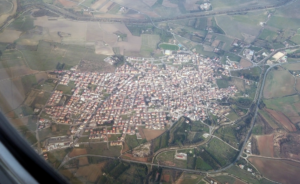
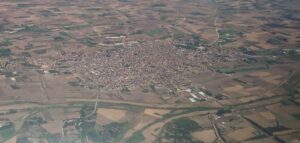
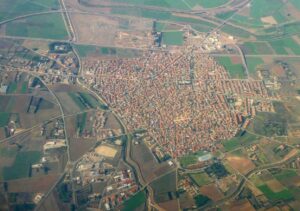
Nuraminis is a farming town on the Campidano plain, about 30 km from Cagliari, set among wheat fields dotted with low limestone hills inhabited since prehistory. Together with its hamlet of Villagreca it offers a rare treat: a church of Byzantine origin, plus nuragic sites, ancient springs and geological curiosities such as a fossil reef. A good choice if you enjoy archaeology, off-the-radar nature and farming traditions built around wheat.
What to see in Nuraminis
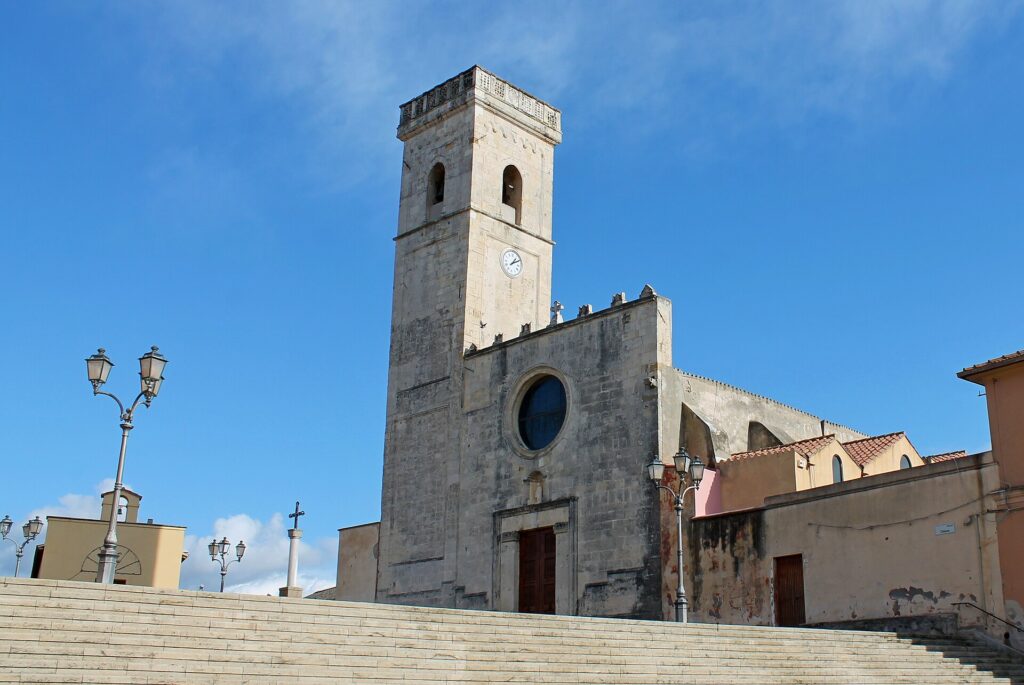
Parish church of San Pietro Apostolo
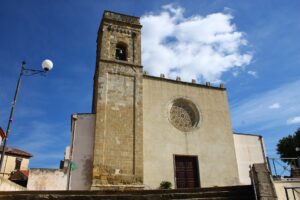
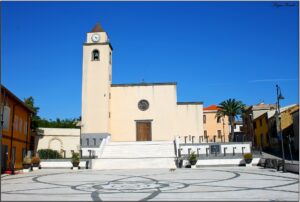
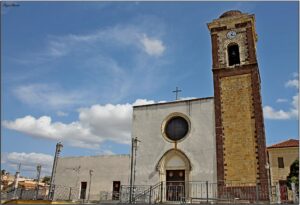
A Catalan Gothic church remodelled in the 18th century, with a bell tower about 30 metres high and a star vault in the apse. It holds a 17th-century altarpiece of the Mysteries of the Rosary. Set into the façade is a 10th-century Byzantine marble fragment with two facing birds and a cross, which inspired the town's coat of arms.
Church of San Vito in Villagreca
In the hamlet of Villagreca stands one of the rare examples of Byzantine architecture in Sardinia, remodelled in the 18th century in Catalan style. Inside are a 16th-century Flemish crucifix and two 18th-century altars.
San Lussorio and archaeological sites
In the countryside is the small Romanesque church of San Lussorio. The Santa Maria area, inhabited from the 3rd millennium BC to the early Middle Ages, preserves a village, burial ground, sacred well and remains of a Christian place of worship. Also worth seeing are the megalithic structure of Sa Corona, the Funtana 'e Siutas spring, with large stone slabs and steps down to the basin, the Serra Cannigas complex and the Sa Grutta cave.
Things to do in Nuraminis
The countryside is ideal for mountain biking or horse riding among wheat fields. Geology fans can look for the lava domes of Monte Leonaxi, the fossils of Genna Siutas and Monte Matta Murroni, and the limestone ridge of Coa Margine, known as the Villagreca limestones: a ridge about one kilometre long, the remains of an ancient coral reef, also used for climbing. Discover the experiences offered by local operators below.
History
Inhabited in pre-nuragic and nuragic times, the area has also yielded Roman columns and coins. In the Middle Ages Nuraminis was the capital of a district of the Giudicato (Sardinian kingdom) of Cagliari; after 1258 it passed to Pisa, then to the Aragonese, who made it a fief in 1355. It bought its freedom in 1839, when feudalism ended.
Food and local products
The town has a strong grain tradition: bread and pasta made with local durum wheat are its signature products.
Festivals and traditions
- Sagra del cereale, mid-June, celebrating the town's wheat-growing heritage.
- Semina a mano, in December: a re-enactment of age-old farming gestures.
Nearby
- Monastir and Monte Zara.
- Ussana, with the church of San Saturnino.
- Serrenti and Samatzai, in the heart of the Campidano.
- Cagliari, about half an hour away.
Getting there and when to go
The town lies just east of the SS 131 Carlo Felice highway: Cagliari-Elmas airport and Cagliari port are about 30 minutes by car. The nearest train station is Serramanna-Nuraminis. Spring and early summer are best.
FAQ
What can I see in Nuraminis in a few hours?
The parish church of San Pietro, the church of San Vito in Villagreca and the Santa Maria site.
Is Nuraminis by the sea?
No, it's inland; Cagliari's beaches are about 40 minutes away by car.
How much time do I need?
Half a day for churches and archaeology, a full day with a nature outing.