Things to do in Villa San Pietro
Things to see in Villa San Pietro, Sardinia: Romanesque San Pietro church, Mereu nuraghe, Monte Nieddu trails and the beaches of Pula and Chia nearby.
We are gathering the first experiences for this area. Check back soon, or tell us about an operator you know.
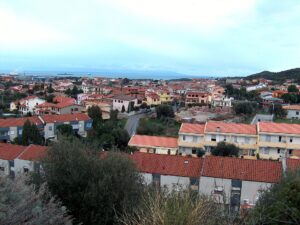
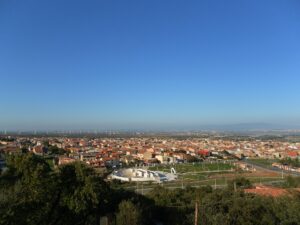
Villa San Pietro (Santu Perdu in Sardinian) is a small village of about 2,100 people on the south-western side of the Gulf of Cagliari, at the foot of Punta sa Cresia and a few kilometres from Pula. Around half an hour from Cagliari, it pairs the calm of a farming village with easy access to the beaches of Pula and Chia and the great forests of the Sulcis. A handy base for mixing beaches, archaeology and hiking.
What to see in Villa San Pietro
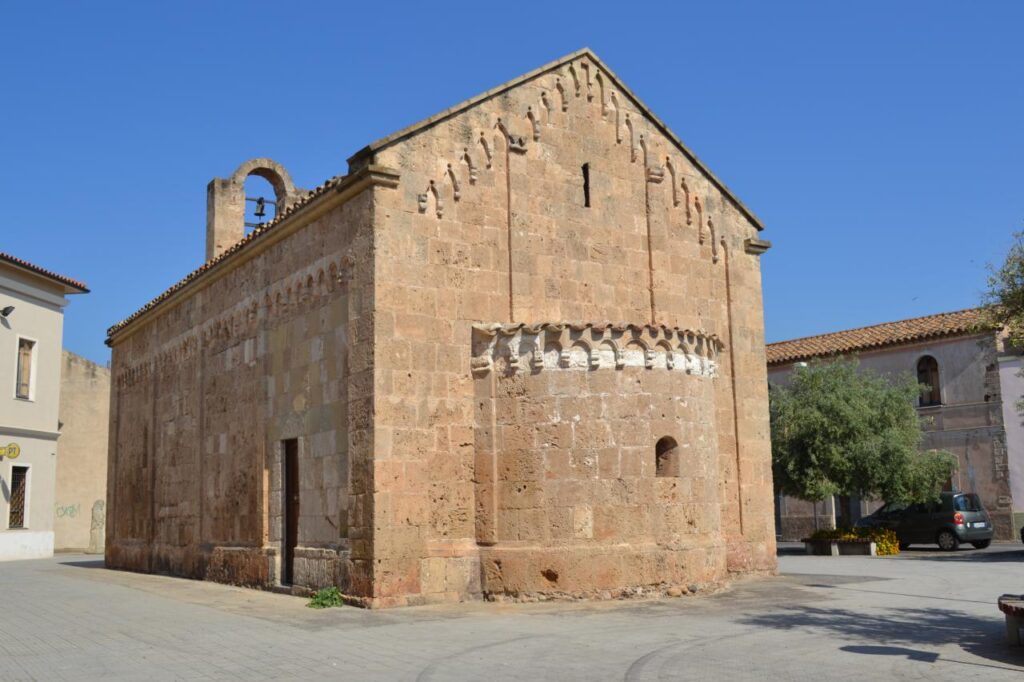
San Pietro church
The village takes its name from the small Romanesque church of San Pietro, from the late 13th century, with Gothic touches: a single nave with a wooden roof, a bell gable and a round window on the façade. It's the community's most treasured monument.
Mereu nuraghe and giants' tombs
On a hill on the border with Sarroch stands the Mereu nuraghe, still largely buried and perhaps surrounded by a village; a megalithic tomb lies a few dozen metres away. The area has three giants' tombs (Bronze Age collective burials) called su Cuccumeu, Perda 'e accuzzai and su Lilloni, as well as rock-cut tombs and the remains of the Porcili Mannu and sa Sucraxia settlements.
Things to do in Villa San Pietro
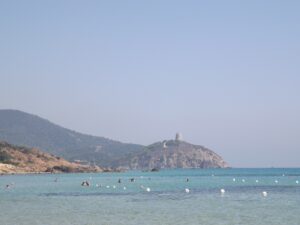
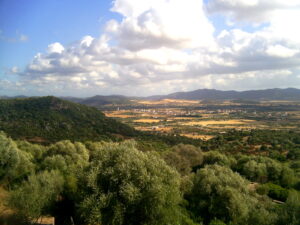
Behind the village stretches the Monte Nieddu forest on granite massifs, with waymarked trails through holm oak, scrub and conifers. From Punta Sebera, the highest point, you can see the Gulf of Cagliari and the south-west coast. Nearby, the Is Cannoneris reserve is home to Sardinian deer and fallow deer. In a few minutes you're on the beaches of Pula and Chia for swimming, snorkelling or a boat trip from the Perd'e Sali marina. Browse the experiences offered by local operators below.
History
The area has been inhabited since the Nuragic age, and the first village core dates from Roman times. In the Middle Ages it belonged to the Giudicato of Cagliari, first in the curatoria of Nora and then Capoterra. It then passed to the Della Gherardesca family and in 1355 to the Aragonese, within the county of Quirra; soon after it was abandoned, coming back to life in the 17th century as part of the barony of Pula. It became a municipality in 1839, when feudalism ended, and on 28 June 1949 officially took back the name Villa San Pietro, replacing San Pietro Pula.
What to eat and buy
The tradition is pastoral: sheep's cheese, olive oil, citrus fruit and wine from the Pula area, plus Campidano dishes such as culurgiones (filled pasta), malloreddus (small gnocchi) and almond sweets.
Festivals and traditions
- Sant'Efisio (May): on 2 May the saint's procession to Nora stops in the village, and on 4 May, heading back to Cagliari, it pauses at villa Atzori. A deeply felt moment, tied to a vow made in 1656.
- San Pietro, patron saint (late June): procession through the streets, shows and an open singing contest.
Nearby
- Pula and the ancient city of Nora, with the little church of Sant'Efisio and its beach.
- The beaches of Santa Margherita di Pula and Chia.
- The Punic site of Bithia.
- Sarroch, with Villa d'Orri and the Antigori nuraghe.
- Gutturu Mannu Park.
Getting there and when to go
Villa San Pietro is reached from Cagliari on the SS 195 Sulcitana road: Cagliari-Elmas airport and Cagliari port are about 40 minutes away by car. May, with Sant'Efisio, and June are great months; summer is perfect for the beach, spring and autumn for the Monte Nieddu trails.
FAQ
Is Villa San Pietro by the sea?
The village isn't on the coast, but Pula's beaches are a few minutes' drive away.
How long do I need for Villa San Pietro?
A couple of hours for the village and church; a full day for a Monte Nieddu hike.
Is it a good holiday base?
Yes: it's quiet and close to Pula, Nora, Chia and Cagliari.