Things to do in Monserrato
Things to do in Monserrato, Sardinia: Catalan Gothic church, mud-brick old town, historic winery, the Trenino Verde train and harvest feasts.
We are gathering the first experiences for this area. Check back soon, or tell us about an operator you know.
Monserrato is a town of almost 19,000 people in the heart of the Cagliari urban area, just north of the capital. Its Sardinian name is Pauli (marsh), and it has always been a place of vineyards and wine: Sardinia's first cooperative winery was founded here in 1924. Today it is home to the university campus and the station where the Trenino Verde tourist train sets off inland. It suits wine lovers, fans of Campidano traditions and anyone who enjoys slow travel by rail.
What to see in Monserrato
The old town
In the narrow streets you'll still see Campidano houses built of ladiri (mud and straw bricks), with Spanish-style loggias called lollas and carved wooden doors. Next to some gateways hangs a palm leaf, a traditional sign that the family sold its own wine. On Via Zuddas stands Casa Foddis, an elegant Art Nouveau building from the early 1900s.
Church of Sant'Ambrogio
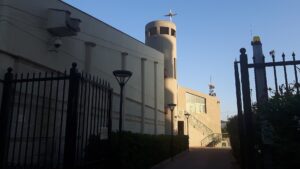
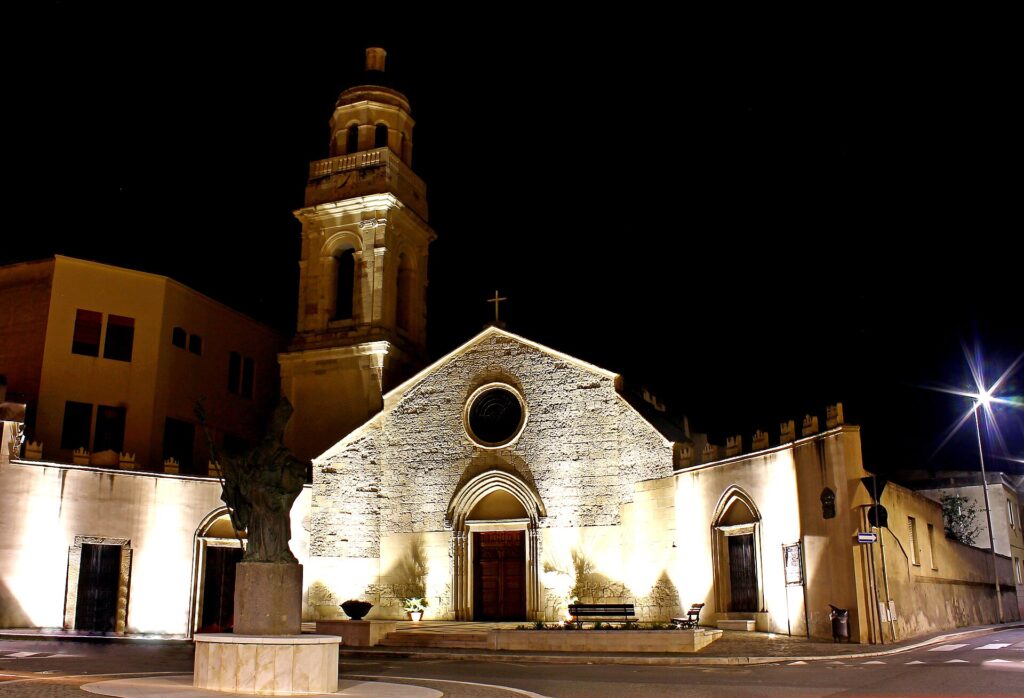
The parish church of the patron saint was built between the late 15th and early 16th century in Catalan Gothic style, with three naves and a facade with diagonal buttresses, a feature unique in Sardinia.
Santa Maria de Paulis
A Greek-cross church with a central dome, first recorded in the 12th century and linked to the September celebrations.
University campus
The University of Cagliari campus houses the Sardinian Museum of Anthropology and Ethnography. On the SS 554 next to it you'll spot the cable-stayed bridge, the only one on the island.
Things to do in Monserrato
The most original experience is the Trenino Verde: the summer tourist train leaves Monserrato and winds through the Parteolla and Trexenta countryside towards Mandas and inland Sardinia. Wine lovers can explore the local winemaking tradition and taste Nasco, Nuragus and Monica. Within minutes you can cycle around Molentargius park or hit Poetto beach. Browse the experiences offered by local operators below: tastings, bike tours and excursions to book.
History
The first settlement dates back to Roman times. In the Middle Ages the village of Pauli belonged to the Giudicato of Cagliari, then to Pisa and, from 1324, to the Aragonese. Emptied by the plague of 1348, it revived in the 15th century under the Sanjust family, who encouraged vine growing. In 1888 it took the name Monserrato, after Our Lady of Montserrat. Merged into Cagliari in 1928, it became independent again in 1991 after a referendum.
Food and shopping
Wine is the star: the cooperative winery makes Nasco, Nuragus, Monica, Moscato and Girò, among others. At the table you'll find home-style Campidano cooking: bread, ravioli, almond sweets and grape must syrup. Monserrato is also known for its rich traditional women's costume.
Festivals and traditions
- Su fogadoni de Santu Srebestianu, the great bonfire of Saint Sebastian, in January.
- San Lorenzo, in August.
- Feast of Santa Maria, on 8 September, just before the grape harvest.
- Grape harvest festival, on the last Sunday of September.
- Sant'Ambrogio, the patron, on 7 December.
Nearby
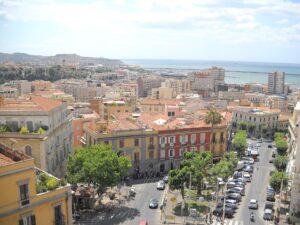
- Cagliari, about 10 minutes away.
- Selargius and its traditional wedding.
- Settimo San Pietro, with the Cuccuru Nuraxi Nuragic complex.
- Molentargius-Saline and Poetto beach.
Getting there and when to go
Cagliari-Elmas airport and Cagliari port are each about 15 minutes by car. Monserrato lies on the SS 554 and is linked to Cagliari by light rail and CTM buses. September is ideal, with the Santa Maria feast and the harvest; summer is Trenino Verde season.
FAQ
Where does the Trenino Verde leave from?
The tourist service towards Mandas and inland Sardinia departs from Monserrato station in summer.
How long do I need for Monserrato?
Half a day for the old town and churches; a full day if you add a train trip.
Is Monserrato good for families?
Yes, especially for the Trenino Verde ride, which children love.