Things to do in Orani
Things to do in Orani, Sardinia: the Nivola Museum, Monte Gonare sanctuary, Nuragic sites, the su bundhu carnival mask, crafts and travel tips.
We are gathering the first experiences for this area. Check back soon, or tell us about an operator you know.
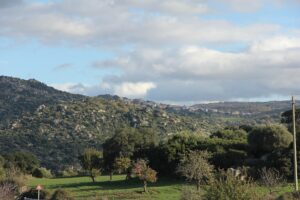
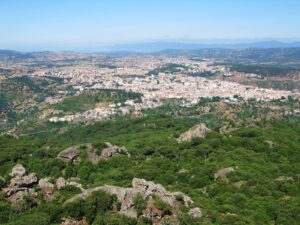
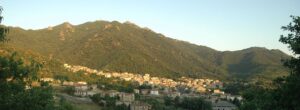
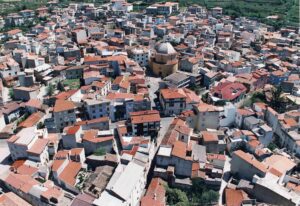
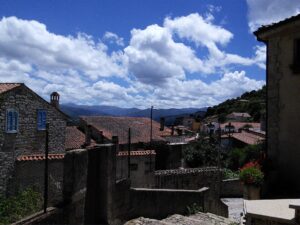
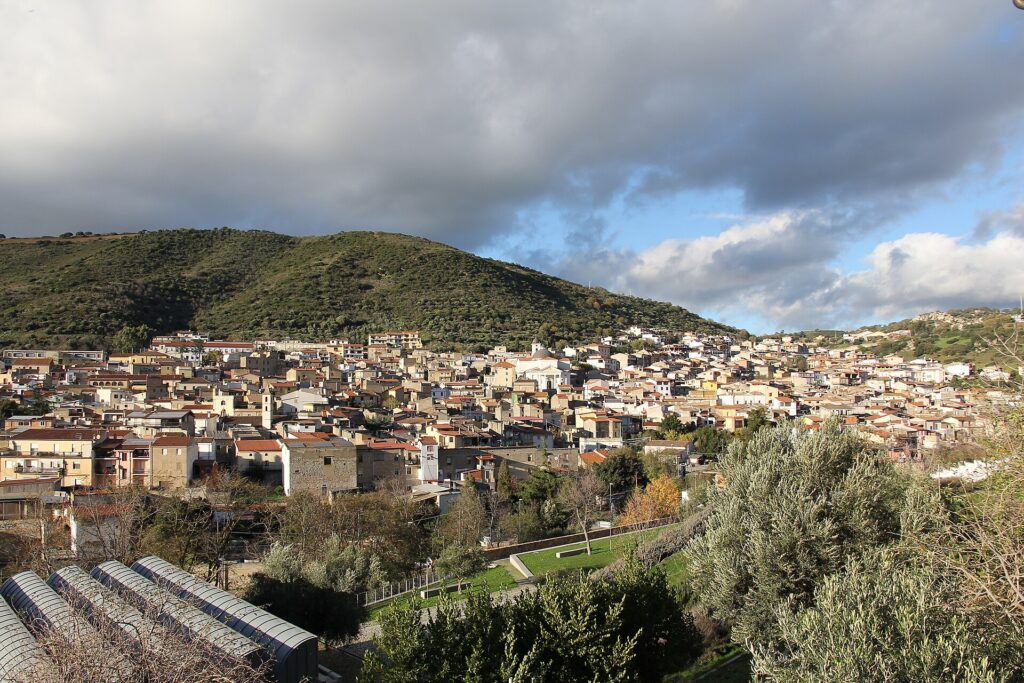
Orani is a village in Barbagia, in the province of Nuoro, sitting at around 500–600 metres at the foot of Monte Gonare, about twenty minutes' drive from Nuoro. It is the birthplace of Costantino Nivola, one of Sardinia's great twentieth-century artists, and the museum devoted to him is reason enough to make the trip. Around the village you'll find woodland, Nuragic sites and one of the island's best-loved mountain sanctuaries. It's a perfect stop if you enjoy art, authentic inland villages and peaceful walks.
What to see in Orani
The Nivola Museum
Opened in 1995 in the village's old public wash-house, on a hill overlooking the countryside, the Museo Nivola holds around two hundred sculptures, reliefs and paintings by Costantino Nivola (1911–1988), the Orani-born artist who made his name in New York worked with leading architects and became a friend of Le Corbusier. The garden, with its large outdoor sculptures, is very much part of the visit. Check the museum's website for opening times before you go.
The churches and the Delitala Collection
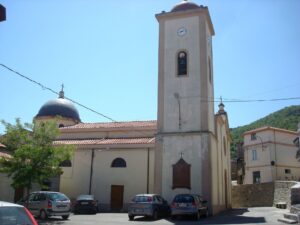
Orani was also home to the painter Mario Delitala, whose portraits, religious works and scenes of Barbagia life are shown in a collection in the Franciscan convent. One of his altarpieces hangs in the neoclassical parish church of Sant'Andrea apostolo, the patron saint. The façade of Nostra Signora d'Itria carries a 1959 graffito by Nivola, and the seventeenth-century Rosario church, with eighteenth-century frescoes, is also worth a look.
Monte Gonare and its sanctuary
Monte Gonare, shared with the neighbouring village of Sarule, rises just over a thousand metres and is cloaked in woods. On top stands the early seventeenth-century sanctuary of Nostra Signora di Gonare, one of the highest places of worship in Sardinia, with sweeping views across the centre of the island.
Archaeological sites
The area is packed with ancient remains: domus de janas (rock-cut tombs whose name means "fairy houses"), dolmens and menhirs, giants' tombs and some thirty Nuragic settlements. The best known is the Nurdole complex, while the Santoreddu dolmen lies about 2 km from the village.
Things to do in Orani
Orani is a place to take slowly. An ideal day combines the Nivola Museum with a stroll through the old centre's stone houses, churches and small squares. Nature lovers can hike or mountain-bike up Monte Gonare on woodland trails, ideally with a guide who can share the history and legends of the sanctuary. Archaeology fans will find dolmens, menhirs and nuraghi to explore nearby. In autumn, when the village opens its courtyards for Autunno in Barbagia, it's the best time to discover local crafts and food. Below you'll find the experiences offered by local operators: pick the one that suits you and book it.
History
People have lived around Orani since prehistory, as its rock-cut tombs, dolmens and nuraghi show; in Roman times there was also a small settlement with baths. In the Middle Ages the village belonged first to the Giudicato (medieval Sardinian kingdom) of Torres and then to Arborea, until the Aragonese conquest in the fifteenth century. In 1617 it became the seat of the Marquisate of Orani, and feudal rule only ended in 1839. In the twentieth century, alongside sheep farming, the economy relied for decades on talc mines, active from 1917 to 1978.
Food and local crafts
The cooking is classic Barbagia: pane carasau flatbread, sheep's cheeses, roast meats and home-made sweets. Local craftsmanship is varied and of high quality: carved wooden chests, loom-woven rugs and blankets, ironwork and granite, gold jewellery, velvet and orbace (wool cloth) garments, and the traditional leather gaiters and shoes known as cambales and cusinzos.
Festivals and traditions
- Carnival: from the Sant'Antonio bonfires in mid-January until Shrove Tuesday. The star is su bundhu, a cork mask with horns and a long snout and the symbol of the village, along with the figure of su maimone.
- Nostra Signora di Gonare: feasts at the sanctuary, organised in turn with Sarule; the most heartfelt is in early September, with a pilgrimage up the mountain.
- Autunno in Barbagia: in autumn, between late September and October, with open courtyards, artisans at work and local produce.
- San Daniele: three days of celebrations in mid-October.
Nearby
- Nuoro (about 20 minutes): the Costume Museum, Grazia Deledda's house and Monte Ortobene.
- Sarule: Orani's twin on Monte Gonare, known for rug weaving.
- Mamoiada (about 25 minutes): the Mamuthones carnival and Cannonau wineries.
- Orgosolo (about 35 minutes): the murals and the Supramonte.
Getting there and when to go
Orani is about 20 minutes by car from Nuoro. The most convenient airport and ferry port is Olbia, about an hour and a half away; from Cagliari it's roughly two hours along the SS 131. You will need a car. Spring and autumn are the best seasons, with mild weather for walking, colourful woods and the most genuine festivals; in winter, the carnival with su bundhu is worth the journey.
Frequently asked questions
How much time do I need for Orani?
Half a day covers the Nivola Museum and the old centre; with a full day you can add Monte Gonare or an archaeological site.
Is Orani good for families?
Yes: children enjoy the museum garden with its outdoor sculptures, and the Gonare woods are ideal for a day out in nature.
Who was Costantino Nivola?
A sculptor and painter born in Orani in 1911 who emigrated to the United States, known for art integrated into architecture and for his sand-casting technique.
When can I see the su bundhu masks?
During Carnival, which in Orani starts with the Sant'Antonio bonfires in mid-January and peaks in the days before Lent.