Things to do in Bitti
Things to do in Bitti, Sardinia: Romanzesu Nuragic sanctuary, the canto a tenore museum, Tepilora park, festivals, rugs and shepherd food.

We are gathering the first experiences for this area. Check back soon, or tell us about an operator you know.
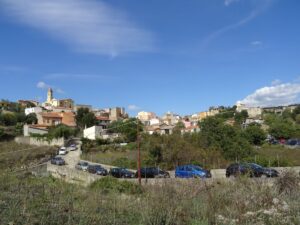
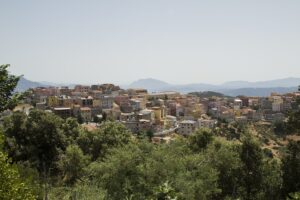
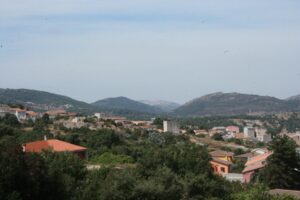
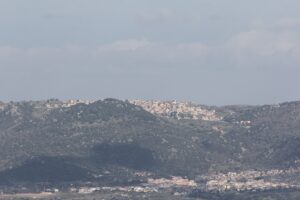
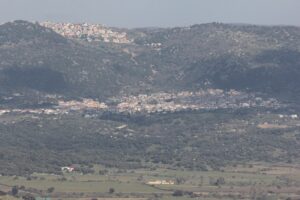
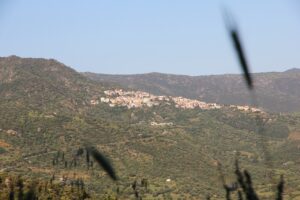
Bitti is a shepherding village in the Nuoro area, spread like an amphitheatre across a valley between the hills of Sant'Elia, Monte Bannitu and Buon Cammino, about 40 minutes' drive from Nuoro. It is known worldwide for canto a tenore, the four-voice folk polyphony recognised by UNESCO as intangible cultural heritage, and it guards one of Sardinia's most striking Nuragic sanctuaries, Romanzesu. Come here if you love traditional music, archaeology and the wild nature of inland Sardinia, far from mass tourism.
What to see in Bitti
The sanctuary village of Romanzesu
About 13 km from the village, in a cork oak forest at Poddi Arvu near the springs of the Tirso river, lies the Nuragic complex of Romanzesu. This Bronze Age village covers more than seven hectares, with a sacred well, around a hundred huts, two megaron temples, a rectangular temple, a stepped elliptical amphitheatre and an intriguing maze-like enclosure, probably linked to water rituals. Archaeologist Antonio Taramelli found the well in 1919. Wandering among trees and stones here is magical in any season.
The multimedia museum of canto a tenore
In the village, this museum brings canto a tenore to life with recordings, videos and interactive stations: you can hear the four voices (bassu, contra, mesu boghe and boghe) separately and together. It is the key to understanding Bitti.
The museum of pastoral and rural life
Tools, furniture and everyday objects show the work of shepherds and farmers and family life in the past.
The old town and its churches
The heart of the village is the parish church of San Giorgio Martire, surrounded by lanes and stone houses. Bitti has a remarkable number of churches and country sanctuaries, including the Madonna del Miracolo (Su Meraculu) and the Annunziata (S'Annossata). On the hill to the north-east is Gorofai, a former municipality merged with Bitti in 1874, with its church of Su Sarvatore.
Things to do in Bitti
Bitti's land includes much of the Tepilora Regional Nature Park, with Tepilora hill, the Crastazza state forest and the S'Illiorai and Sas Lapias waterfalls: a hiker's paradise of holm oaks, cork oaks and granite.
- Listen to canto a tenore: hearing local tenores sing, perhaps in an informal gathering, is something you will never forget.
- Hiking in Tepilora park: trails through woods and along streams, for all levels with an expert guide.
- Archaeology: a guided visit to Romanzesu and other sacred wells and nuraghi nearby.
- Shepherd experiences: lunch with shepherds, pecorino and salami tastings, a glimpse of life on the farms.
Scroll down to find the experiences offered by local operators in Bitti and the surrounding area, and book the one that sparks your curiosity.
History
People have lived here since prehistory, and the Nuragic age left important traces, starting with Romanzesu, whose name recalls Roman remains from the 2nd–3rd centuries AD. The first town took shape in Roman times. In the Middle Ages Bitti was the seat of a district of the Giudicato of Gallura, one of Sardinia's medieval kingdoms, then passed to Arborea and later to the Aragonese. It became a municipality in its own right in 1839, after feudalism was abolished. Sheep farming is still the main activity, with around 150 livestock farms.
What to eat and buy
This is shepherds' cooking: pecorino, sausage, roast meats and pane carasau, the crisp flatbread of the Nuoro area, plus traditional festive sweets. Among local crafts, look for hand-woven rugs made on vertical looms, art ceramics and iron and wood work: a Bitti rug is a precious, lasting souvenir.
Festivals and traditions
- Sant'Antonio (16 January): bonfires in the squares.
- San Giorgio (23 April): the patron saint's day.
- Holy Week: S'iscravamentu on Good Friday and S'incontru at Easter.
- Madonna dell'Annunziata (third Sunday of May) and Madonna del Miracolo (late September) at the country sanctuaries.
- Santissimo Salvatore in Gorofai (6 August).
- Cortes apertas (early September): Bitti opens its courtyards as part of Autunno in Barbagia.
- Christmas: Su Nenneddu and Cortes de Natale, with New Year customs.
Nearby
- Orune: the sacred well of Su Tempiesu, a short drive away.
- Lula: the sanctuary of San Francesco, a beloved pilgrimage site for Nuoro's people.
- Nuoro: museums, Monte Ortobene and Grazia Deledda's house, about 40 minutes away.
- Posada and the east coast: following the Tepilora park you reach the sea in just over an hour.
Getting there and when to go
The nearest airport is Olbia Costa Smeralda, about an hour and a quarter by car, as is Olbia's ferry port; Cagliari is around two and a half hours away. From Nuoro you drive along inland roads. Spring is ideal for hiking and wildflowers; September combines mild weather with Cortes apertas; summer is hot by day but cool in the evening.
Frequently asked questions
Where can I hear canto a tenore in Bitti?
At the multimedia museum of canto a tenore at any time of year, and live during village festivals and performances by local groups.
How long does a visit to Romanzesu take?
Allow about an hour and a half on site, plus the 13 km drive from the village.
How many days do I need for Bitti?
A full day for the village, museums and Romanzesu; add a day for Tepilora park.
Is Bitti good for families?
Yes: Romanzesu in the woods and walks in the park are a big hit with children.