Things to do in Austis
Things to do in Austis, central Sardinia: the Sa Crabarissa rock, churches, nuraghi, Roman history, granite hikes and shepherd cooking.
We are gathering the first experiences for this area. Check back soon, or tell us about an operator you know.
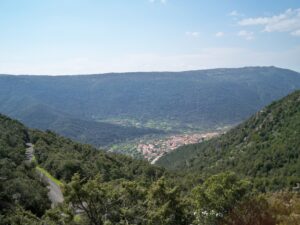
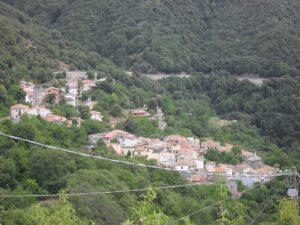
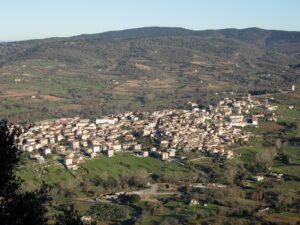
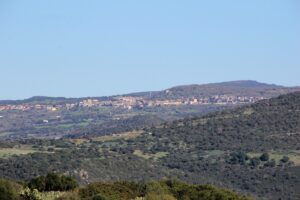
Austis is a mountain village at over 700 metres, on a granite plateau on the south-western slopes of the Gennargentu, almost at the exact centre of Sardinia. Its name comes from the Latin Augustis: in Roman times it was a military station on the road between Cagliari and Olbia. Around the village are woods of oak, cork oak and holm oak, and granite rocks shaped by the wind into surprising forms. It's a peaceful place for walkers, nature lovers and fans of shepherd cooking.
What to see in Austis
Sa Crabarissa
The village symbol is a granite rock that looks like a woman's figure. Not far away, Sa Conca de su Cannizzu is shaped like an eagle.
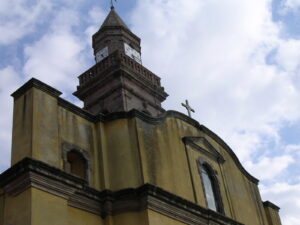
Church of the Beata Vergine Assunta
The parish church is dated 1567 by an inscription inside. It holds sculptures by local artist Elio Sanna, including a crucifix carved from a single piece of wild pear wood.
Church of Sant'Antonio da Padova
Built in 1669 at Sa Sedda de Basiloccu, it has a Baroque altar.
Nuraghi
Bronze Age nuraghi, from around 1700 BC, are scattered across the area.
Things to do in Austis
The granite rocks and woods are perfect for walks and hikes, also by bike or on horseback. Local farm stays let you taste shepherd cooking. For hikes and outdoor activities, explore what local operators offer below.
History
The area has been inhabited at least since the Bronze Age, as the nuraghi show. In Roman times Augustis was a military post on the road from Caralis (Cagliari) to Olbia via Forum Traiani (Fordongianus), guarding against raids by the mountain peoples. In the Middle Ages it belonged to the Judicate of Arborea; after 1420 it passed to the Aragonese and became a fief of the Amat family. In 1839 it was bought back and became a municipality.
What to eat and buy
The economy is based on sheep and goat farming, so cheese and meat are the basis of the table. The typical dish is sa fregula stufada, baked semolina pasta.
Festivals and traditions
- Sant'Antonio da Padova, the main religious festival, in late September.
As in nearby villages, the local Sardinian belongs to the mesania variety, a bridge between the northern and southern dialects.
Nearby
- Teti, with the Nuragic village of S'Urbale and the archaeological museum.
- Tiana and its orbace fulling mill.
- Sorgono and the sanctuary of San Mauro.
- Lake Cucchinadorza, towards Teti.
Getting there and when to go
It's about two hours by car from Cagliari-Elmas airport and about an hour from Nuoro. Spring and early summer are ideal for walks among the granite; in late September the village comes alive for Sant'Antonio.
FAQ
What is Sa Crabarissa?
A woman-shaped granite rock, the symbol of Austis.
How long do I need for Austis?
Half a day for the village and rocks; it pairs well with Teti and Tiana in one day.
Is Austis good for families?
Yes, kids enjoy spotting shapes in the curious rocks.