Things to do in Tiana
Things to do in Tiana, Sardinia's orbace village: working fulling mill and watermill, Mancosu rock tombs, forest walks, sweets and festivals.
We are gathering the first experiences for this area. Check back soon, or tell us about an operator you know.
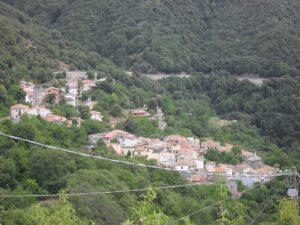
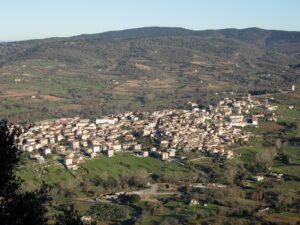
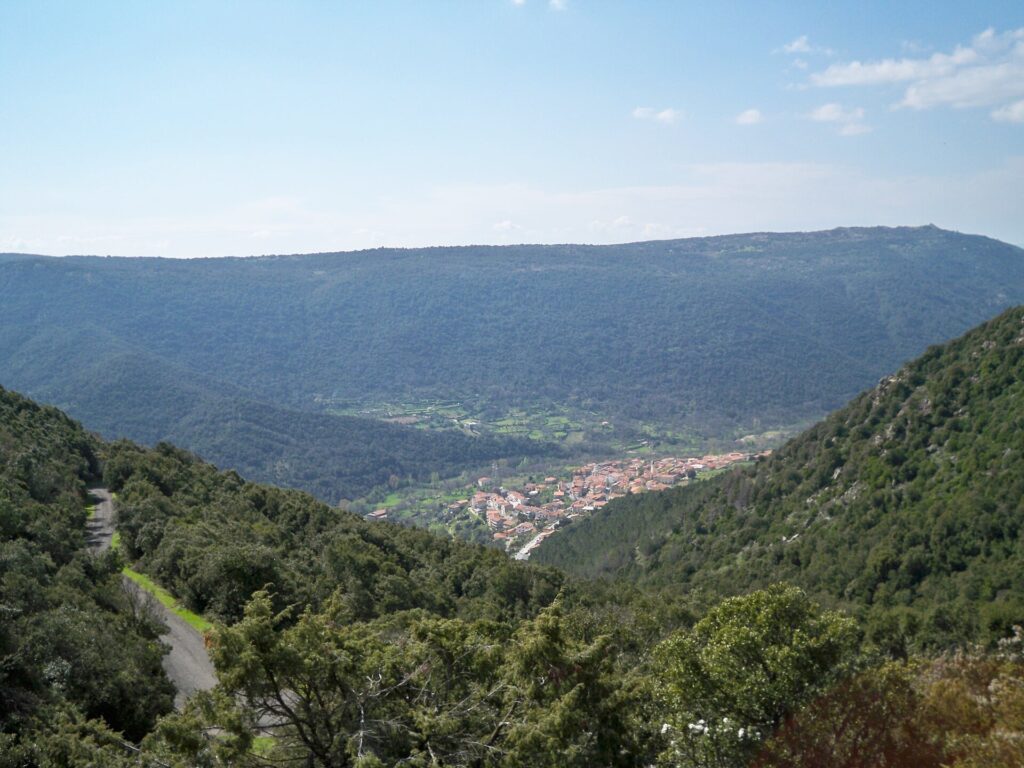
Tiana is a small village in the Barbagia di Ollolai, at about 600 metres on the western side of the Gennargentu, in the valley of the Tino river where the Torrei stream joins it. It's known as the village of orbace, the wool cloth of Sardinian costumes, because it keeps one of the last working fulling mills on the island. Over 85% of its land is forest. It's the right place if you're after authentic crafts, green trails and an old-time village atmosphere.
What to see in Tiana
The fulling mill and watermill
On the Torrei, about a kilometre from the village, the fulling mill Sa Cracchera de tziu Bellu is part of the Le vie dell'acqua industrial heritage museum: a big hammer driven by the current beats and felts the wool. Next to it stands a restored watermill. Both are a living museum you can see in action.
Old town
Narrow lanes, tightly packed houses and the corzos, the village's typical covered archways.
Church of Sant'Elena Imperatrice
The 18th-century parish church, dedicated to the patron saint.
Archaeology
The Mancosu necropolis has seven domus de janas, Neolithic tombs cut into the rock. Nuragic ruins lie at Sa Piraera and Tudulo.
Things to do in Tiana
After the mill, walk through woods of holm oak, downy oak, cork oak and chestnut towards Monte Mungianeddu, Bau 'e Fonne or sa Costa 'e Sili, or along the Torrei. Just outside the municipality lies Lake Cucchinadorza. For guided hikes and meetings with craftspeople and producers, explore the experiences of local operators below.
History
The area has been inhabited since the Neolithic and had Nuragic settlements. In the Middle Ages Tiana was a village of the Judicate of Arborea; from 1410 it passed to the Aragonese and became part of the barony of Austis. In 1839, with the end of feudalism, it became a municipality. Between the 18th and early 20th centuries dozens of mills and fulling mills worked along the rivers; orbace production declined after the Second World War.
What to eat and buy
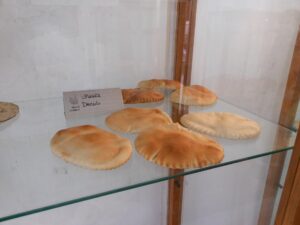
The most typical product is the Tiana bean. On the table you'll find carasau and fresa breads, culurgiones and seadas. Sweets include pardulas at Easter, papassinos for All Saints, almond-paste fruttine and sa panemanna. The woods provide hazelnuts and chestnuts. And of course, take home some orbace.
Festivals and traditions
- Sant'Antonio abate, the evening of 16 January, with a bonfire, wine and sa panemanna.
- Carnival, on Ash Wednesday, with blackened faces and a puppet burned at the end of the day.
- Holy Week, with traditional rites.
- Sant'Elena, the patron saint, mid-August.
- San Leone Magno, in September, with the statue carried on an ox-drawn cart.
- Autunno in Barbagia, in November.
Nearby
- Teti, with the Nuragic village of S'Urbale and the archaeological museum.
- Sorgono and the sanctuary of San Mauro.
- Austis and Sa Crabarissa.
- Lake Cucchinadorza.
Getting there and when to go
Tiana is about 50 km from Nuoro, just under an hour's drive; from Cagliari-Elmas airport it's about two hours. Spring and autumn are ideal for the woods; January and carnival bring the most heartfelt traditions.
FAQ
What is orbace?
A wool cloth spun and felted in a fulling mill, used for cloaks, blankets and traditional costumes.
How long do I need for Tiana?
Half a day for the mill and village; a full day with a woodland walk.
Is Tiana good for kids?
Yes, children love watching the mill's hammer at work.