Things to do in Desulo
Things to do in Desulo, Sardinia: historic quarters, the famous costume, Montanaru's house, hikes to Punta La Marmora, festivals and food.
We are gathering the first experiences for this area. Check back soon, or tell us about an operator you know.
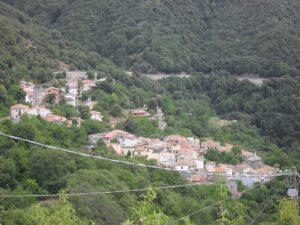
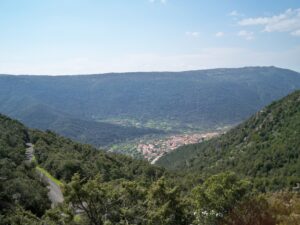
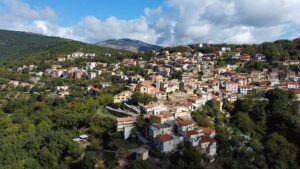
Desulo is a mountain village between 800 and 1,000 metres above sea level on the western slopes of the Gennargentu, in the very heart of Sardinia. It is the gateway to Punta La Marmora, the island's highest peak, and it is famous for its women's costume in red orbace (a heavy wool cloth) embroidered in bright colours, which older women still wear every day. Come for the authentic village life, the poetry of Montanaru and landscapes of chestnut woods and high pastures. It is ideal for hikers, mountain lovers and anyone looking for living traditions.
What to see in Desulo
The three quarters: Issiria, Ovolaccio and Asuai
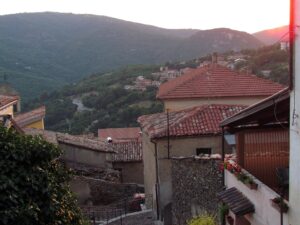
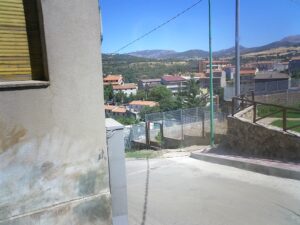
Desulo grew out of three mountain hamlets that merged in the 1960s and 1970s. Issiria, the highest and largest, has the parish church of Sant'Antonio Abate; Ovolaccio holds the birthplace of the poet Montanaru and the Carmelo church; Asuai, the lowest, is the quarter of the travelling traders, with some of Sardinia's highest vineyards. Walking through them, up steep lanes with mountain views, is the best way to feel the village's rhythm.
Montanaru's house and the ethnographic museum
Antioco Casula, known as Montanaru, is one of the great poets of the Sardinian language. His birthplace in Ovolaccio houses the ethnographic museum, with shepherding and farming tools, looms and implements for bread-making and wax-working: a vivid portrait of Desulo's culture.
The churches
The church of Santa Croce keeps a 16th-century wooden Christ, carried in procession on Good Friday in the rite of S'Interru de Deus. Near the Tascusì pass stands the small church of the Madonna della Neve, built in 1920 as a vow after a snowstorm caught a group of local traders in 1913.
Archaeology
The area has the giants' tomb of Sa Sedda 'e s'ena, the domus de janas rock-cut tombs of Occile and, at Ura 'e Sole, one of the highest-lying nuraghi in Sardinia.
Things to do in Desulo
Desulo is a classic base for trekking on the Gennargentu. From the Tascusì pass, at about 1,245 metres, trails lead to the ridges and up Punta La Marmora (1,834 m): on clear days the summit reveals much of Sardinia.
- Guided hikes: summit climbs, loops through pastures and springs, snowshoe outings when there is snow.
- Horse riding and mountain biking: tracks and mule paths across woods and uplands.
- Living culture: meet the women who sew and embroider the costume, listen to poetry and song in Sardinian.
- Mountain flavours: cheeses, cured meats, chestnuts and wine from the Asuai vineyards.
Below you will find the experiences offered by operators in Desulo and the Gennargentu: choose your hike and book it directly.
History
The area was settled in pre-Nuragic and Nuragic times, as rock-cut tombs, giants' tombs and nuraghi show. In the Middle Ages Desulo belonged to the Giudicato of Arborea, one of Sardinia's medieval kingdoms, in the Mandrolisai district; after 1420 it passed to the Aragonese and in 1711 became part of the county of San Martino. It was freed in 1839 when feudalism ended. For generations Desulo's travelling traders, the viagiantes or camminantes, roamed the island selling mountain produce; in Asuai a square in front of San Sebastiano church is dedicated to them.
What to eat and buy
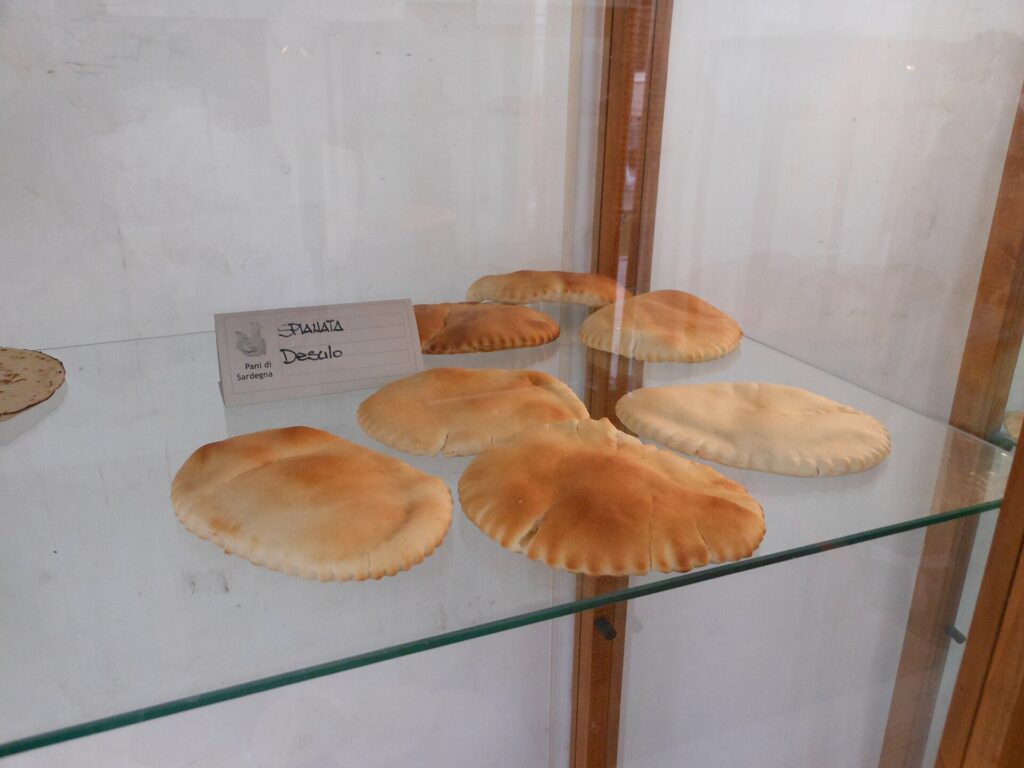
Expect hearty mountain food: sheep and goat cheeses, cured meats, roast meats, home-made bread, chestnuts, walnuts and honey. The village lies in the Mandrolisai, a red-wine area, and the Asuai vineyards are among the highest on the island. To take home: mountain produce and, for craft lovers, embroidery and textiles linked to the costume tradition.
Festivals and traditions
- Sant'Antonio Abate (January): su fogu 'e Sant'Antoni, bonfires in each quarter.
- San Sebastiano in Asuai: a winter feast on 19–20 January and a summer feast on the first Sunday of July.
- Holy Week: the rite of S'Interru de Deus on Good Friday.
- Madonna della Neve (first week of August): a festival at the Tascusì pass.
- La Montagna Produce (usually early November): local produce, crafts and the Montanaru literary prize for Sardinian-language poets.
Nearby
- Tonara: the village of nougat and cowbells, right next door.
- Aritzo: chestnuts, carapigna sorbet and the Texile rock.
- Fonni: over the Tascusì pass, with the Martiri basilica and the Bruncu Spina ski lifts.
- Sorgono: the heart of the Mandrolisai, with the Biru 'e Concas menhirs.
Getting there and when to go
From Nuoro, Desulo is about an hour's drive via Fonni and the Tascusì pass; from Cagliari about two hours, from Olbia more than two. The best airport depends on the rest of your trip: Cagliari for the south, Olbia for the north-east. The hiking season runs from May to October; autumn brings glorious colours and the November festival, and winter often brings snow to the peaks.
Frequently asked questions
Can I climb Punta La Marmora from Desulo?
Yes, Desulo and the Tascusì pass are among the most popular starting points. It is a full-day hike, best done in settled weather and ideally with a guide.
Where can I see the Desulo costume?
On the streets, worn by older women, and in all its splendour during village festivals.
How many days do I need for Desulo?
Half a day for the village and museum; one or two days if you want to add hikes on the Gennargentu.