Things to do in Santadi
Things to do in Santadi, Sardinia: Is Zuddas Caves, Pani Loriga, Pantaleo forest, Carignano wine and the Moorish Wedding in August.
We are gathering the first experiences for this area. Check back soon, or tell us about an operator you know.
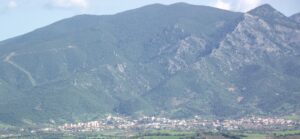
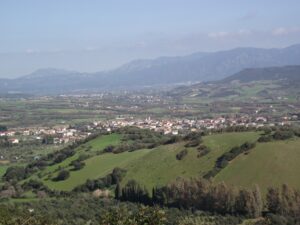
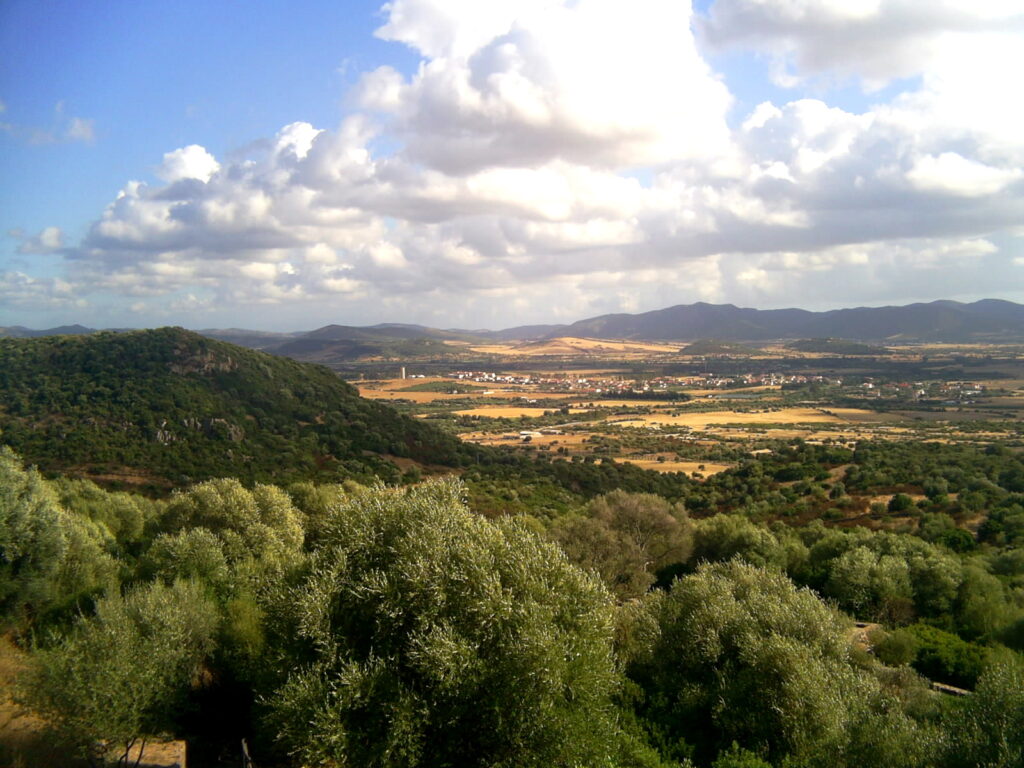
Santadi is a village in the Basso Sulcis, in south-west Sardinia, about an hour's drive from Cagliari, stretched along the Rio Mannu between hills of vineyards and olive groves and the great Sulcis forests. It is famous for the Is Zuddas Caves, among the most spectacular in Italy, for Carignano wine and for a unique tradition, the Moorish Wedding. It is perfect if you love nature, archaeology, wine and country cooking, and it pairs easily with a beach day at Porto Pino.
What to see in Santadi
The Is Zuddas Caves
Carved into the limestone of Monte Meana, the Is Zuddas Caves are known worldwide for their extraordinary concentration of eccentric aragonite, needle-thin crystals that grow in every direction as if defying gravity. The visitor route, about 500 metres long, passes through chambers decorated with stalactites, stalagmites and columns; the temperature stays around 16°C all year, so bring a sweater even in summer.
Pani Loriga
On a hill near the village lies the Phoenician-Punic settlement of Pani Loriga, with remains of houses and a necropolis. The site was already used in pre-Nuragic and Nuragic times and shows how the Phoenicians controlled the inland routes of the Sulcis.
Su Benatzu and the archaeological caves
Santadi has one of the highest numbers of caves in Sardinia. In the Nuragic cave sanctuary of Su Benatzu, discovered in 1968, archaeologists found a chamber full of pottery and bronze offerings from the 9th and 8th centuries BC. The caves of Monte Meana yielded Neolithic bone figurines linked to the cult of the Mother Goddess.
The village and its museums
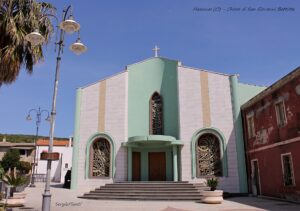
The Rio Mannu divides the village into Santadi Alto and Santadi Basso. The parish church of San Nicolò di Bari overlooks Piazza Marconi. Don't miss the ethnographic museum Sa Domu Antiga (the old house), which recreates a Sulcis farmhouse with traditional furniture and tools, and the Civic Archaeological Museum, with finds from local sites.
Pantaleo forest
Almost half the municipality is covered by the Pantaleo forest, part of the vast Gutturu Mannu Park, one of Europe's largest expanses of holm oak and Mediterranean scrub and home to the Sardinian red deer.
Things to do in Santadi
Santadi is a great base for slow, active travel. Head out hiking and mountain biking in the Pantaleo woods, where you may spot deer and birds of prey, or try guided caving in a landscape full of hollows. Wine lovers can visit wineries and olive mills and taste Carignano del Sulcis where it is made, while the countryside is lovely for horse rides among vines and olive trees. Below you will find experiences offered by local operators: excursions, tastings and outdoor activities ready to book.
History
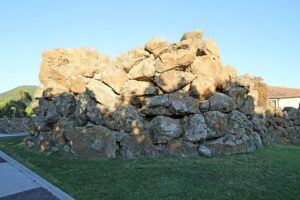
The local caves have been inhabited since the Neolithic, and the Nuragic age brought many nuraghi, the giants' tomb of Barrancu Mannu and the Su Benatzu sanctuary. Between the 7th and 3rd centuries BC the Phoenicians and then the Carthaginians settled at Pani Loriga; later the Romans built baths near Pantaleo. In the Middle Ages the village, recorded as Villa di Sant'Agata, belonged to the Kingdom of Cagliari, then passed to Pisa and Aragon and was largely abandoned. Recovery came in the 18th century with the furriadroxius, small scattered farm settlements typical of the Sulcis. The municipality was created in 1853. The founding of the cooperative winery in 1960 made Santadi one of the capitals of Sardinian wine.
What to eat and buy
Santadi is the land of Carignano del Sulcis, a deep, smooth red grown on the sands and hills of the south-west, and of excellent extra-virgin olive oil: the village belongs to the Città dell'Olio network. Wood-fired ovens bake civraxiu, coccoi (semolina bread shaped into decorative forms) and filled breads. Also try sheep's and goat's cheese, cured meats, honey and traditional sweets.
Festivals and traditions
- Santadi Carnival, with a parade of floats.
- Sa Coia Maureddina (the Moorish Wedding), on the first Sunday of August: a re-enactment of an old peasant wedding, with the dressing of the bride and groom, a procession of traccas (decorated ox carts), the ceremony in Piazza Marconi, sweets for everyone and a night of dancing and singing. It is the village's best-known event, organised by the Pro Loco since 1968.
- San Nicolò and Sant'Isidoro, on the first Sunday of September, with two processions.
- Santa Maria di Monte Fracca, on the second Sunday of September, with a procession through the Barrua countryside.
- Bread and Oil Festival, from late November to early December, with olive mill visits.
Nearby
- The Montessu necropolis in Villaperuccio, with large domus de janas (rock-cut tombs), a few minutes' drive away.
- Tratalias, with the Romanesque cathedral of Santa Maria di Monserrato, and Lake Monte Pranu.
- Porto Pino and its white beaches, about half an hour away.
Getting there and when to go
The nearest airport is Cagliari-Elmas, about an hour's drive away; Cagliari is also the most convenient ferry port. From Cagliari, follow the SS 195 towards the Sulcis or drive via Siliqua and Nuxis. Spring and autumn are ideal for hiking, wineries and olive mills; in summer the caves are a cool refuge and the sea is close by. August, with the Moorish Wedding, and the olive harvest season are the liveliest times.
FAQ
How long does a visit to the Is Zuddas Caves take?
The guided tour usually lasts under an hour. Add Pani Loriga and the museums, and Santadi fills a full day.
Is Santadi by the sea?
No, Santadi is inland, but Porto Pino's beaches are about half an hour's drive away.
Is Santadi good for families?
Yes: children love the caves, the Sa Domu Antiga museum shows how people lived in the past and the woods offer easy, shady walks.